
 Image 1 of 1
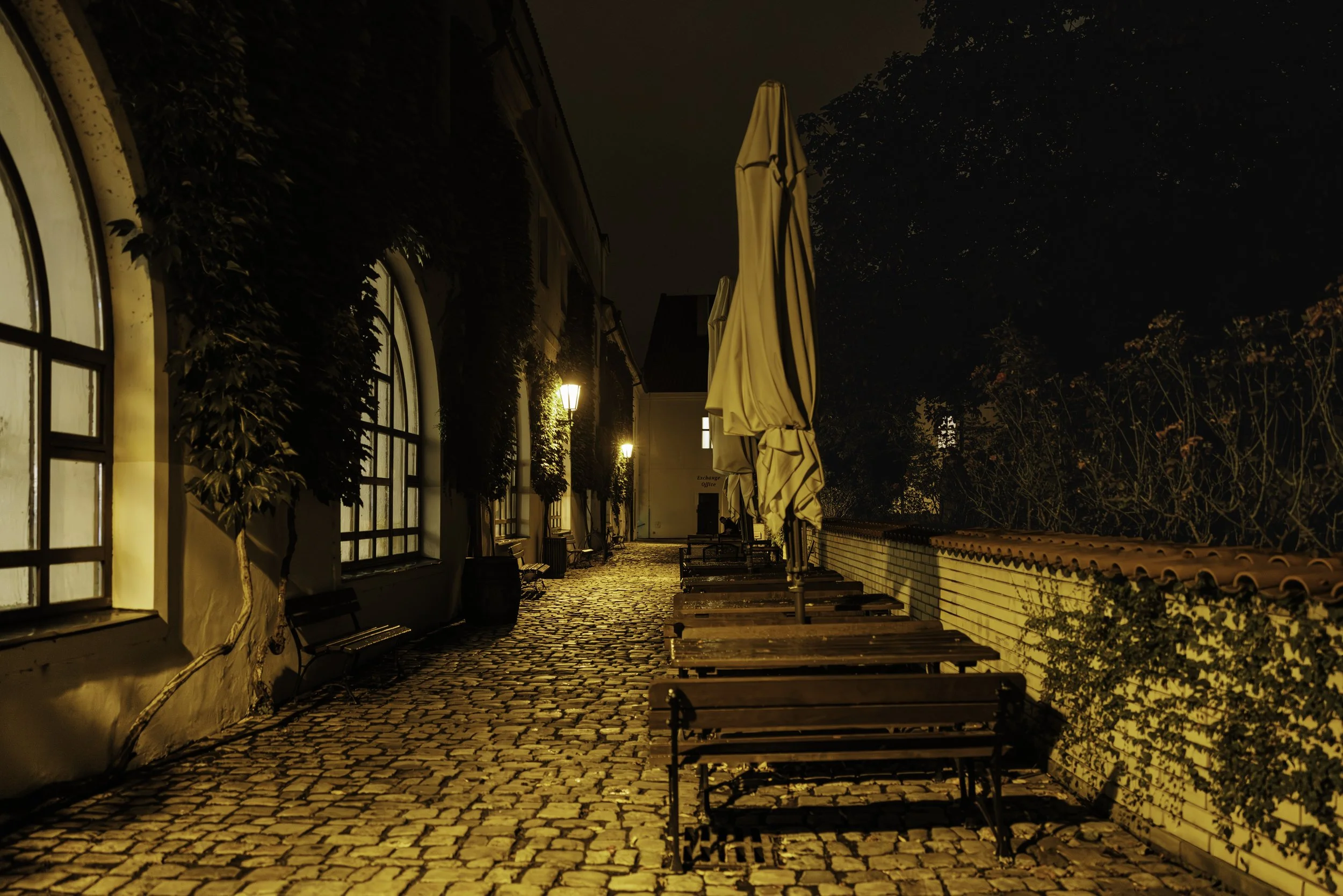
Where the Evening Waited is a contemplative study of atmosphere, memory, and the quiet intervals that exist between departure and return. Photographed in Prague after the day's activity had faded into evening, the image transforms an empty café terrace into a meditation on presence through absence. Rows of vacant tables, folded umbrellas, glowing streetlamps, and rain-darkened cobblestones combine to create a scene suspended between the end of one day and the beginning of the next. Drawing inspiration from the cinematic urban sensibilities of Wim Wenders and the luminous restraint of Ernst Haas, the photograph explores how light and place can evoke emotion long after people have disappeared from view.
Rather than focusing on Prague's celebrated landmarks, the composition invites attention toward a quieter and more intimate side of the city. The folded umbrellas stand like silent figures waiting in the darkness, while warm pools of lamplight guide the viewer through the narrow passageway toward a distant glow. The interplay between illuminated architecture, deep shadow, and reflective cobblestone textures creates a sense of anticipation and stillness. The resulting atmosphere is cinematic, contemplative, and timeless—an image less concerned with documenting a location than with capturing a fleeting emotional experience.
The photograph explores a recurring theme found throughout Robert Niemeier's work: the spaces people leave behind and the traces of human presence that remain. Empty tables suggest conversations already finished, while the illuminated windows and distant light hint at stories continuing beyond the frame. The image becomes an invitation to slow down and inhabit a moment that might otherwise pass unnoticed, revealing the quiet beauty found in ordinary places after the crowds have gone.
Design & Styling
The empty tables, folded umbrellas, and glowing streetlamps of Where the Evening Waited suit restaurants, cafés, bars, and dining rooms, where its quiet absence becomes a conversation piece. Low, warm lighting suits it best.
Curated Pairings
To create a cohesive gallery wall around atmosphere, urban texture, and implied human presence, consider these companion pieces:
For tonal harmony: Pair with Before the City Wakes, continuing the exploration of Prague through quiet streets, atmospheric light, and moments of stillness before the city fully awakens.
For narrative resonance: Complement this piece with The Bartender's Measure (Noir), extending the story of places shaped by human presence and the mood that lingers after the moment has passed.
For emotional continuity: Pair with Waiting for a Ride, which shares the same cinematic pacing and contemplative urban atmosphere with a more direct human element.
Fine Art Presentation
Available as a signed fine art print on ChromaLuxe® Metal (gloss, semi-gloss, or matte), Glossy Anti-Glare Acrylic (TruLife), canvas, wood, and archival paper (framed or unframed). Framed archival paper is the recommended presentation: its matte surface suits the quiet, rain-darkened scene and its rich tonal transitions. Acrylic is the alternative for the glow of the streetlamps, and ChromaLuxe® Metal for the crispest cobblestone texture.
Note: Custom and oversized photographic prints are available. Please contact the studio directly to discuss custom framing, matting, or specialized museum glass options.