
Art Fairs Art Fairs: Upcoming Juried Festival Appearances, Colorado, Illinois, & New Mexico & Missouri
Colorado
Highlands Art Festival — June 13–14
Broadmoor Traditions Fine Art Festival — July 4–5
Steamboat Springs, Art in the Park — July 11–12
Center for the Arts Evergreen, Summerfest — July 18–19
Avon Arts Celebration — July 25–26
Loveland, Art in the Park — August 8–9
Golden Fine Arts Festival — August 15–16
Gathering at the Great Divide — September 5–7
Park Hill Fall Arts Fest — September 12–13
Missouri
Schlafly Inside — January 30–31
Queeny Spring — March 27–29
Sunset Hills Makers Market — May 5
Webster Groves Art Fair — June 5–7
Illinois
Edwardsville Art Fair — September 25–27
Art Fairs: Upcoming Juried Festival Appearances
I look forward to sharing my latest fine art collections at premier art fairs across Colorado, St. Louis Metro East, and Missouri throughout the season.
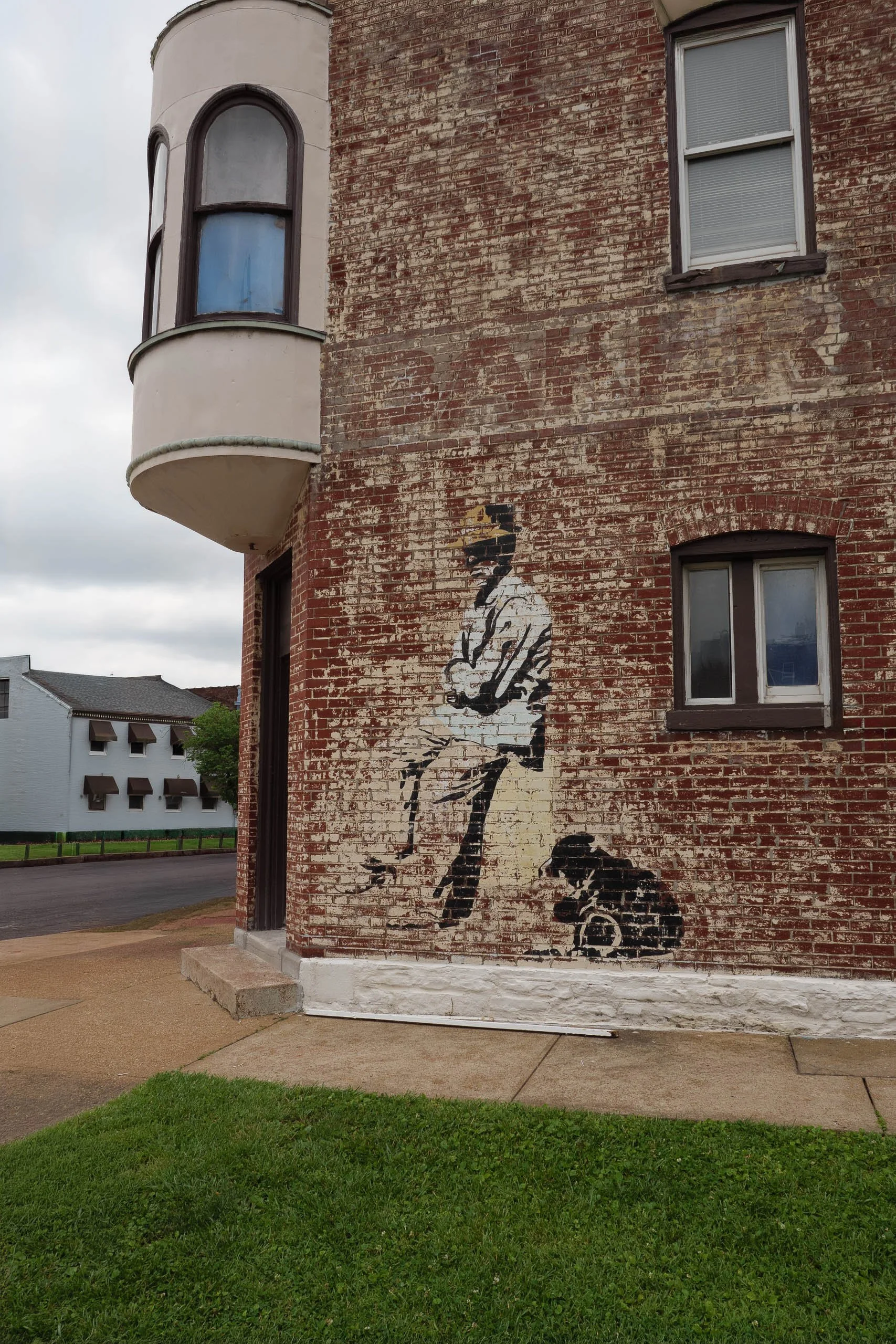
What the Wall Remembers finds a faded painted advertisement clinging to the corner of an old brick building — a hunter mid-stride, shotgun broken open for reloading, a dog crouched loyally at his feet. Decades of weather have stripped the paint down to fragments, leaving the figure more suggestion than picture: a hat, a white shirt rendered in a few confident black strokes, legs dissolving into bare brick. Ghost lettering fades in and out of visibility just above his head, a brand name the wall has almost entirely forgotten.
The building itself does as much storytelling as the mural. An Art Deco bay window turret curves along the corner above, a small architectural flourish that dates the structure as clearly as the sign does. The brick's own weathering — patches of raw red against sun-bleached cream — reads almost like a second, accidental artwork layered behind the intentional one.
This is Americana as accumulation rather than nostalgia for its own sake: a hundred years of paint, brick, and weather all visible in a single frame, none of it posed, none of it restored.
DESIGN & STYLING
What the Wall Remembers suits interiors that want texture, history, and a genuine sense of place — exposed-brick lofts, restaurants and breweries with an industrial-heritage feel, historic hotel lobbies, offices with character, and any hospitality space leaning into Americana rather than polish. Its muted red, cream, and black palette is neutral enough to anchor a room without dictating the rest of the color scheme.
The vertical composition and architectural subject also make it a strong fit for narrow hallway walls or alongside other brick-and-signage pieces in a gallery grouping.
CURATED PAIRINGS
For faded Americana signage: Pair with No Vacancy — two different vintage signs, one neon, one painted, both surviving well past their working life.
For weathered texture and time: Complement with Teeth of Time — a very different subject, same interest in what age and wear reveal.
For Americana color and nostalgia: Add Cottonwoods and Chrome to round out a wall built around the American vernacular.
FINE ART PRESENTATION
What the Wall Remembers is available as a signed fine art photographic print in multiple presentation styles. Framed archival paper suits this piece especially well — its matte, tactile surface complements the weathered brick and faded paint better than a glossy finish would. Canvas Framed adds further texture that echoes the subject itself. ChromaLuxe® Metal (gloss, semi-gloss, or matte) and Acrylic are both available for a more contemporary presentation if the space calls for higher contrast and shine.
Note: Custom and oversized photographic prints are available. Please contact the studio directly to discuss custom framing, matting, or specialized museum glass options.

Somewhere along a Steamboat Springs highway, a grinning neon rabbit still watches over travelers the way it has for decades. "No Vacancy" captures the Rabbit Ears Motel sign in full glow against total darkness — red-orange ears rising above a hand-lettered script, a bold green MOTEL beneath, and the telltale "NO VACANCY" burning at the bottom, proof that someone's already settled in for the night.
This is roadside Americana at its most sincere: a family-owned sign with real character, photographed the way it deserves to be seen — alone, illuminated, unbothered by anything else in the frame. A warm doorway glows quietly in the corner, a small human detail that grounds the whole scene in real, current use rather than nostalgia alone.
The composition leans into pure negative space, letting the neon do all the visual work the way Ernst Haas let color and light carry a frame without competing distraction. It's less a photograph of a motel and more a photograph of a specific, glowing piece of the American road — the kind of sign that makes you slow down, even if you already have a place to stay.
Design & Styling
No Vacancy is a natural fit for spaces that want personality and warmth — a game room, a bar or lounge area, a mountain-town office, or anywhere a bit of playful roadside nostalgia belongs. The saturated red and green pop dramatically against black, making it a strong graphic anchor in a room with darker or neutral walls. Especially well suited to hospitality settings — motels, restaurants, breweries — where its Americana charm and local Steamboat Springs recognition add real regional resonance.
Curated Pairings
For a Colorado roadside collection, pair with a piece from the Roads Through the World collection, or hang alongside other night photography for a moody, color-forward grouping.
Fine Art Presentation
ChromaLuxe® Metal (gloss, semi-gloss, or matte) in gloss is the strongest choice for this image — the saturated neon colors and deep black background both benefit from metal's high luminosity and contrast, and the tighter composition minimizes any glare risk from broad reflective surfaces. Acrylic is also an excellent option for added depth and a more contemporary presentation. Paper prints are not recommended for this piece; the impact depends on the vibrancy only a reflective substrate can deliver.
Note: Custom and oversized photographic prints are available. Please contact the studio directly to discuss custom framing, matting, or specialized museum glass options.

A rusted iron gear sits locked in place against a backdrop of weathered wood and old fencing, its teeth catching warm, low-angle light along every worn edge. Decades of rust have turned the metal into something closer to painting than machinery — deep blue-black patina giving way to bursts of orange and amber wherever the surface has been exposed longest. It's a study in texture and time: every scratch, pit, and rust bloom on this old mechanism tells its own small story of use, weather, and neglect.
Shot close and shallow, the composition isolates the gear as a piece of found sculpture — bolts, teeth, and curved iron arm rendered with the same careful attention Robert brings to a landscape or a portrait. The soft, sun-washed wood behind it keeps the piece grounded in place without competing for attention. A quiet tribute to abandoned machinery and the slow, patient work that rust does over years nobody was watching.
Design & Styling
The warm rust tones and strong industrial texture make this piece a natural fit for:
Offices, workshops, and creative studios — a grounded, masculine-leaning piece with real textural presence
Rustic and industrial-style interiors — farmhouse, loft, and reclaimed-material spaces where the subject matter echoes the room's own materials
Restaurants and breweries — especially spaces leaning into a reclaimed, working-history aesthetic
Curated Pairings
For subject continuity: Iron Cathedral — another study of aging iron and industrial texture, rendered with the same patient attention to rust and light
For color harmony: Kansas Sunrise With Wind Turbines — matching warm gold and amber tones in a wider American landscape
For visual contrast: Where the Road Pauses — a wide-open, airy Americana landscape that plays against this piece's tight, textural close-up
Fine Art Presentation
Available in framed archival paper, ChromaLuxe® Metal (gloss, semi-gloss, or matte), canvas, and gallery-grade acrylic. The rust texture and warm rim lighting hold up especially well on metal or acrylic, where the reflective surface deepens the blacks and makes the rust highlights genuinely glow. A mid-size presentation (16x20 to 24x30) keeps the intimate, close-observation feel of the original shot.
Note: Custom and oversized photographic prints are available. Please contact the studio directly to discuss custom framing, matting, or specialized museum glass options.
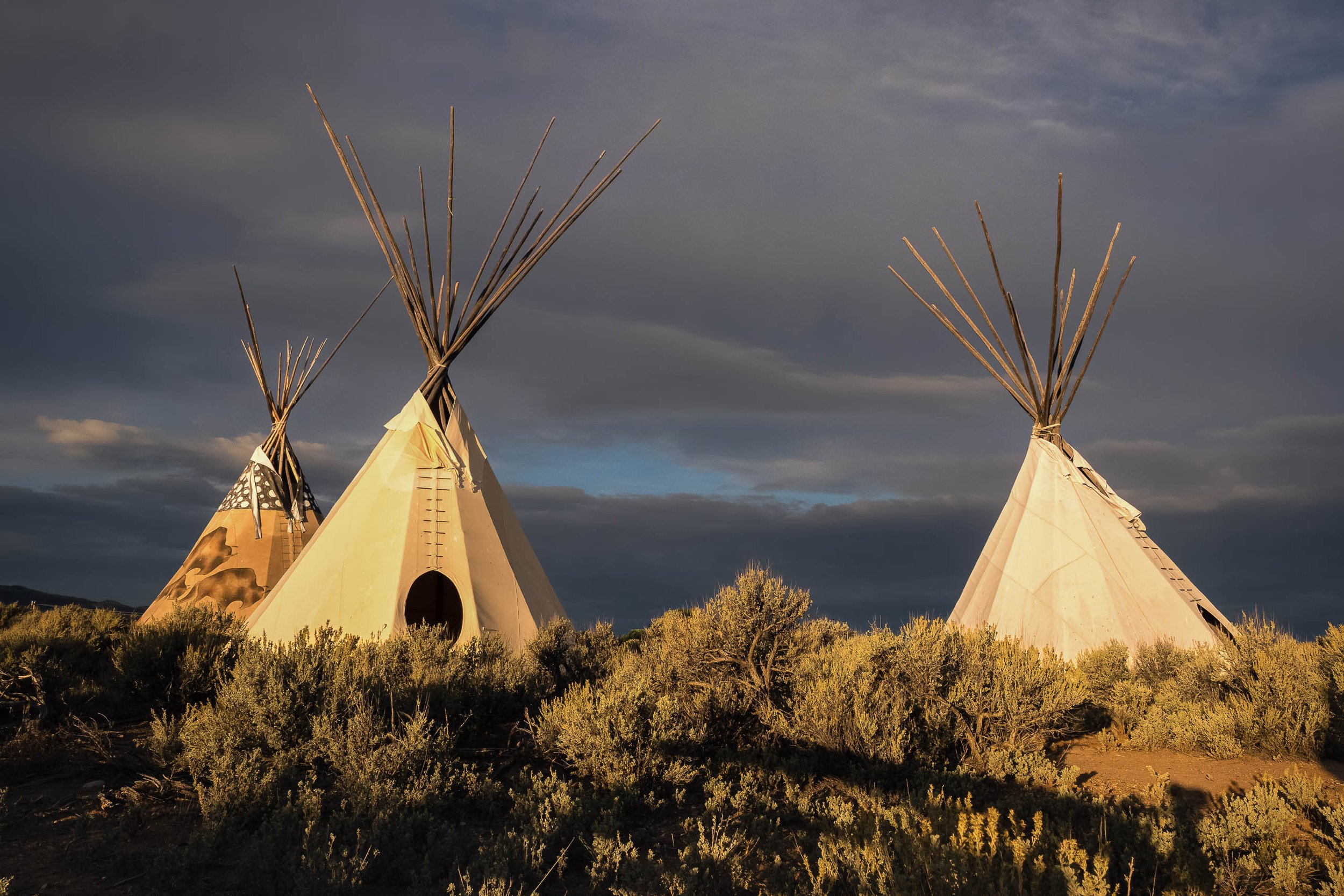
Shelter Beneath a Restless Sky is a study of warmth, weather, and the quiet strength of human shelter within the open Western landscape. Photographed as late sunlight breaks across three tipis beneath a heavy storm sky, the image is built around contrast: golden earthbound forms rising against a cool, unsettled atmosphere. The result is a photograph that feels both dramatic and contemplative, holding the tension between protection and exposure, stillness and movement, light and approaching weather.
The composition is anchored by three triangular structures, each reaching upward through a fan of wooden poles that cut into the sky like drawn lines. Their shapes create a visual rhythm across the frame, while the broad storm clouds above add scale and emotional weight. The warm light on the canvas and sagebrush suggests a brief opening in the weather, a moment when the land is touched by illumination before the sky closes again.
Rather than treating the scene as a simple Western landscape, the photograph focuses on atmosphere and presence. The tipis occupy the space with dignity and quiet force, not as props, but as forms of shelter shaped by relationship to land, weather, and horizon. The surrounding brush remains partially shadowed, allowing the illuminated structures to emerge from the landscape while still feeling rooted within it.
The restrained color palette strengthens the emotional pull of the image. Deep blue-gray clouds create a cool backdrop for the ochre grasses, weathered wood, and warm canvas. This balance of cool sky and golden foreground gives the photograph its central energy: a fleeting moment of light held against the pressure of a restless sky.
Design & Styling
Golden tipis beneath a heavy, unsettled sky make Shelter Beneath a Restless Sky a warm, dramatic piece for lodges, Western homes, hospitality lobbies, and offices. The contrast of warm earthbound forms against cool storm gives a large wall real presence.
Curated Pairings
To create a weather-driven Western wall, consider these companion pieces:
For weather and the road: Pair with Storm Gate, a stronger weather-driven Western wall built around road, sky, and approaching atmosphere.
For distance and travel: Complement with The Long Way West, a broader narrative of distance, travel, and the emotional pull of open country.
For Colorado mountain weather: Pair with Before Guanella Pass, a Colorado grouping centered on mountain weather, warm light, and Western quiet.
Fine Art Presentation
Available as a signed fine art print on ChromaLuxe® Metal (gloss, semi-gloss, or matte), Glossy Anti-Glare Acrylic (TruLife), canvas, wood, and archival paper (framed or unframed). Acrylic is the recommended presentation: its depth and luminosity suit the warm, sunlit tipis against a heavy storm sky, and it is how the piece is shown at fairs. ChromaLuxe® Metal is the alternative for crisper detail and strong contrast, and framed archival paper for a softer, more tactile read.
Note: Custom and oversized photographic prints are available. Please contact the studio directly to discuss custom framing, matting, or specialized museum glass options.

All Colors, One Night is a celebration of light, color, and the fleeting beauty of a moment that exists only for seconds before disappearing into darkness. Captured during a fireworks display filled with vibrant reds, blues, greens, golds, violets, and whites, the photograph transforms the night sky into a canvas of luminous color and movement.
Rather than focusing on a single burst, the image embraces the full spectrum of the display, revealing the extraordinary variety of colors and patterns created across the evening sky. The result is both energetic and painterly, recalling the expressive color explorations of Ernst Haas while remaining rooted in the excitement of a shared public celebration.
The photograph explores the relationship between permanence and impermanence. Each burst of light exists for only an instant, yet together they create a visual memory that lingers long after the final spark has faded. All Colors, One Night invites viewers to experience that brief moment when the sky becomes a celebration of color itself.
Design & Styling
With its vibrant palette and dynamic energy, All Colors, One Night is particularly well suited for hospitality environments, entertainment venues, contemporary residential interiors, children's healthcare spaces, and collectors drawn to bold color and visual optimism. The photograph serves as an uplifting focal point that brings energy and movement to a room.
Curated Pairings
For a complementary focal point: Pair with Where the Sky Breaks to create a dialogue between celestial wonder and human celebration beneath the night sky.
For tonal harmony: Complement the rich blues and vibrant colors of this piece with Ember and Silence, where color relationships similarly become a central visual element.
Fine Art Presentation
Available as a signed fine art print in ChromaLuxe® Metal (gloss, semi-gloss, or matte), framed paper, framed canvas, and acrylic presentation formats. For this image, ChromaLuxe® Metal is highly recommended, maximizing color saturation, luminosity, and the brilliance of the fireworks against the dark sky. Acrylic presentation is also an excellent choice for collectors seeking maximum visual impact and depth.
Note: Custom and oversized photographic prints are available. Please contact the studio directly to discuss custom framing, matting, or specialized museum glass options.
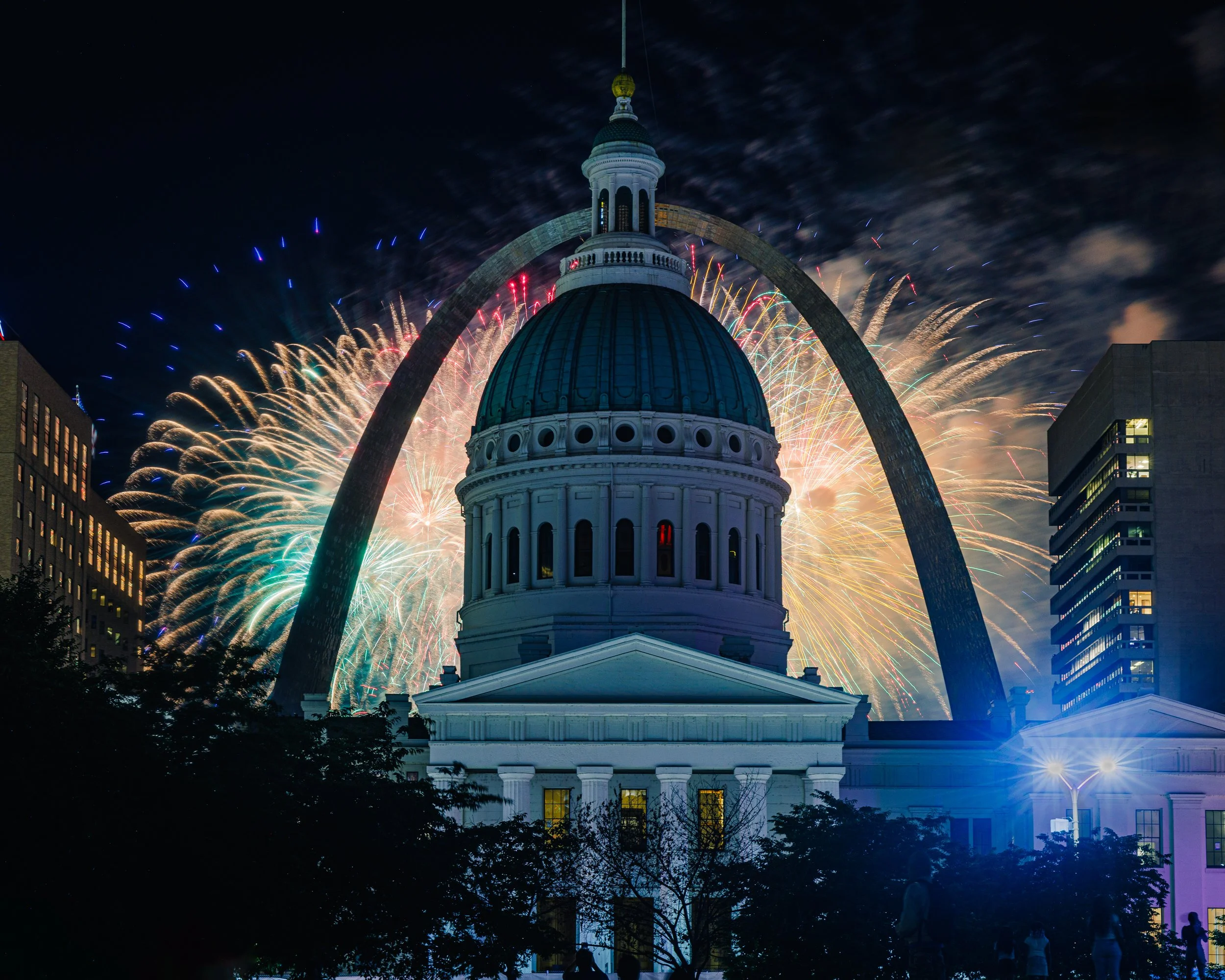
Crowned in Light is a cinematic urban landscape photograph capturing the historic St. Louis Old Courthouse framed beneath the Gateway Arch as fireworks illuminate the night sky behind the monument. Layered bursts of light, reflected architectural surfaces, and deep evening blues transform the familiar cityscape into a contemplative study of celebration, memory, and monumental space. Drawing from the luminous color sensibilities of Ernst Haas and the restrained cinematic pacing of atmospheric urban photography, the image balances spectacle and stillness through layered light, architectural symmetry, and restrained tonal control.
The composition places the illuminated courthouse dome beneath the sweeping curve of the Arch, allowing the fireworks to function not simply as celebration, but as atmospheric texture surrounding the city’s architectural identity. Rather than focusing solely on the event itself, the photograph explores the emotional relationship between civic space, light, and collective memory within the nighttime urban landscape.
The Old Courthouse is where Dred Scott sued for his freedom in the 1840s and 1850s, and the Gateway Arch, completed in 1965, is one of the best-known monuments in the country. Framing one beneath the other puts two eras of St. Louis history in one frame, and fireworks give both a moment of celebration.
Design & Styling
Fireworks behind the Gateway Arch and the Old Courthouse make Crowned in Light a natural fit for St. Louis law and financial offices, civic buildings, hospitality lobbies, restaurants, and the homes of collectors who love the city. The deep evening blues read well on charcoal or navy walls.
Curated Pairings
To create a cohesive gallery presentation around architecture and luminous urban light, consider these companion pieces:
For complementary architectural atmosphere: Pair with Reflections of Glass and Stone, extending the visual dialogue between urban structure, reflection, and layered light.
For the same deep blue: Complement this piece with Where Sisters Rise, where the same saturated blue sits over terracotta rock by day in the Southwest.
For St. Louis at night: Pair with Exit 280, the light trails of Interstate 64 beneath a black St. Louis night sky, another luminous view of the city after dark.
Fine Art Presentation
Available as a signed fine art print on ChromaLuxe® Metal (gloss, semi-gloss, or matte), Glossy Anti-Glare Acrylic (TruLife), canvas, wood, and archival paper (framed or unframed). ChromaLuxe® Metal is the recommended presentation: it holds the luminous fireworks bursts and the deep evening blues at full saturation and keeps the reflected surfaces crisp. Acrylic is the alternative for extra depth in the night sky, and framed archival paper suits a quieter, more traditional reading of the monument.
Note: Custom and oversized photographic prints are available. Please contact the studio directly to discuss custom framing, matting, or specialized museum glass options.
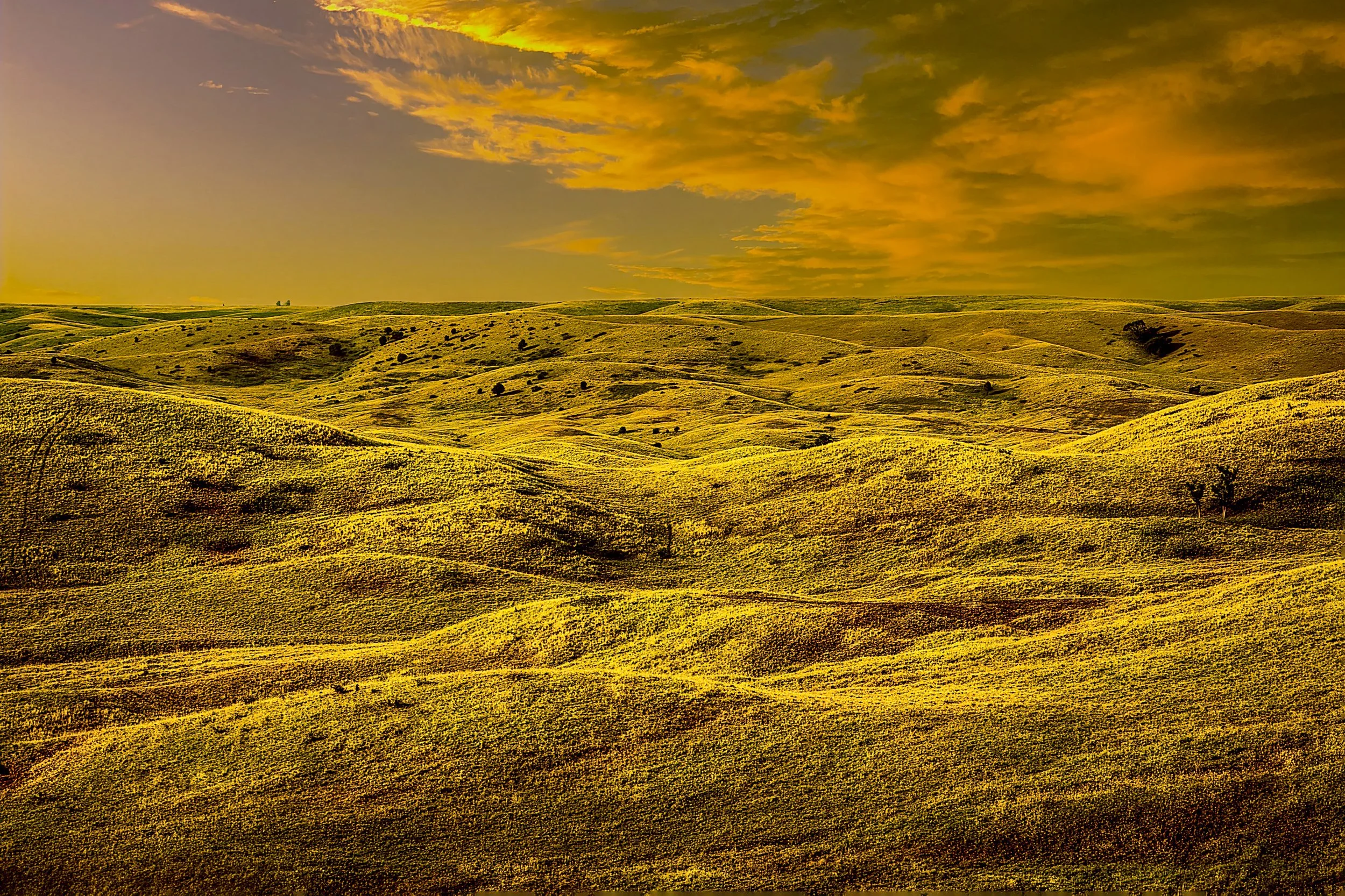
Stillness Over Flint Hills is an atmospheric prairie landscape photograph captured in the Flint Hills region of Kansas, exploring openness, weather, and the quiet emotional rhythm of the American grasslands. Layered clouds, expansive horizon space, and restrained tonal transitions allow the landscape to unfold gradually across the frame, transforming the rolling prairie into a contemplative study of stillness, distance, and light. Drawing from the luminous color sensibilities of Ernst Haas and the restrained pacing of contemplative landscape photography, the image emphasizes atmosphere, openness, and the subtle emotional calm carried by the Great Plains.
The composition balances expansive sky against the quiet texture of the prairie landscape, allowing negative space and layered weather patterns to become central elements within the image. Rather than focusing on dramatic spectacle, the photograph explores the emotional stillness that emerges when shifting light and open land settle briefly into visual equilibrium across the Flint Hills.
The Flint Hills hold the largest remaining stretch of tallgrass prairie in North America, preserved because the thin, rocky soil was never suited to the plow. That history is part of what makes the landscape feel so quiet: nothing has been built on it, and the eye travels across it without interruption.
Design & Styling
Layered clouds and a wide horizon give Stillness Over Flint Hills a calm, open presence for offices, lobbies, bedrooms, living rooms, and waiting areas where a restful view is welcome. Its restrained tones sit quietly in neutral, natural interiors.
Curated Pairings
To create a cohesive gallery presentation around the prairie and weather, consider these companion pieces:
For complementary prairie atmosphere: Pair with Waiting Out the Storm, extending the layered relationship between weather, horizon space, and contemplative light.
For expansive pacing: Complement this piece with Where the Light Gathered (Panorama), sharing the same restrained atmospheric transitions and cinematic openness.
For Kansas: Pair with Kansas Sunrise With Wind Turbines, another Kansas horizon, in warm sunrise color.
Fine Art Presentation
Available as a signed fine art print on ChromaLuxe® Metal (gloss, semi-gloss, or matte), Glossy Anti-Glare Acrylic (TruLife), canvas, wood, and archival paper (framed or unframed). Framed canvas is the recommended presentation: its soft texture suits layered clouds and restrained tonal transitions, giving the prairie a painterly calm. ChromaLuxe® Metal is the alternative for crisper cloud detail, and framed archival paper for a quieter, more classic read.
Note: Custom and oversized photographic prints are available. Please contact the studio directly to discuss custom framing, matting, or specialized museum glass options.

Hanging On is a study of endurance, weather, and the lingering presence of Colorado's mining past. Photographed just after a rainstorm in Creede, Colorado, the image centers on a weathered mining shack standing against the rugged landscape of the San Juan Mountains. Rain-darkened wood, muted earth tones, and soft post-storm light combine to create a scene that feels suspended between history and disappearance. Drawing from the quiet observational traditions of American landscape photography and the restrained atmosphere often found in the work of Andrew Wyeth, the photograph explores the resilience of structures shaped by isolation, weather, and time.
The composition balances the rough textures of aging timber against the softened landscape that surrounds it, allowing the shack to function as both architectural subject and symbolic presence. Rather than emphasizing abandonment, the image focuses on persistence. The structure remains, weathered but intact, carrying traces of the people, labor, and stories that once defined this remote mountain community. The subdued palette and post-rain atmosphere encourage a slower viewing experience centered on memory, place, and quiet endurance.
Creede was a silver boomtown of the 1890s, and the structures that remain in the San Juan Mountains are what is left of a very short, very intense era. Rain darkens the boards and softens the light, and the shack holds its ground the way the whole region seems to.
Design & Styling
A rain-darkened mining shack against the San Juan Mountains gives Hanging On a rugged, quiet character for lodges, cabins, restaurants, offices, and Western homes. Its muted earth tones sit comfortably beside timber, stone, and leather.
Curated Pairings
To create a cohesive gallery wall around Western endurance, consider these companion pieces:
For complementary Western history: Pair with Held in Shadow, extending the themes of endurance, landscape, and the passage of time across the American Southwest.
For tonal harmony: Complement this piece with Before the Road Disappears, sharing the same atmospheric restraint, subdued palette, and sense of quiet discovery.
For weathered structures: Pair with A Place Where Weather Waits, another weathered Colorado structure in quiet light.
Fine Art Presentation
Available as a signed fine art print on ChromaLuxe® Metal (gloss, semi-gloss, or matte), Glossy Anti-Glare Acrylic (TruLife), canvas, wood, and archival paper (framed or unframed). Framed archival paper is the recommended presentation: its matte surface and subtle transitions suit rain-darkened wood and soft post-storm light. Wood is the alternative where the grain can echo the boards, and ChromaLuxe® Metal adds crispness to the mountain backdrop.
Note: Custom and oversized photographic prints are available. Please contact the studio directly to discuss custom framing, matting, or specialized museum glass options.
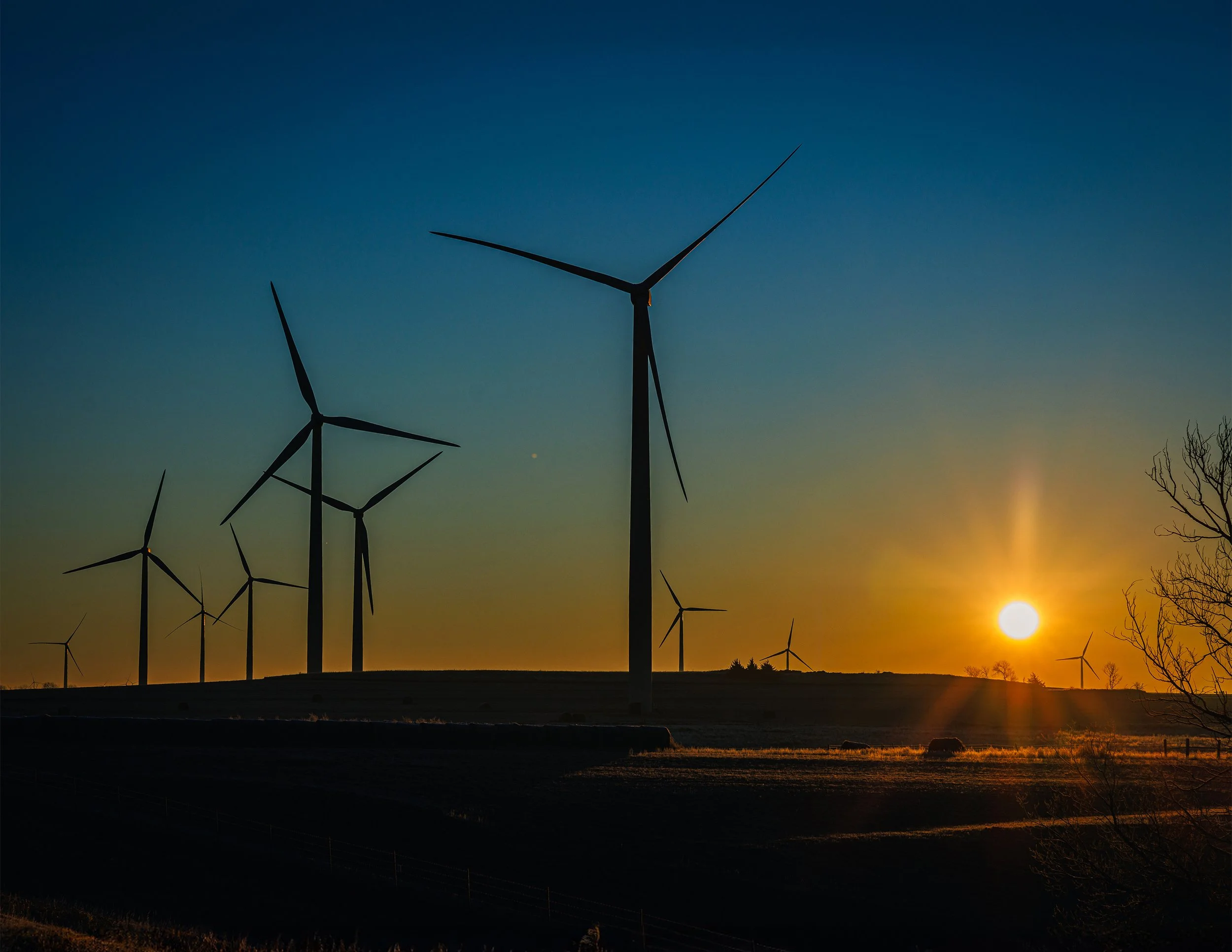
Kansas Sunrise With Wind Turbines is a study of light, landscape, and the evolving character of the American prairie. Photographed at sunrise in Kansas, the image captures towering wind turbines emerging from the open landscape beneath a sky filled with early morning color. Warm light spreads across the horizon while the turbines stand as contemporary landmarks within a region long defined by agriculture, weather, and vast open space. Drawing from the formal clarity of Ansel Adams and the luminous color sensibilities of Ernst Haas, the photograph explores the relationship between natural beauty and modern infrastructure.
The composition balances the strong vertical forms of the turbines against the expansive horizontal sweep of the prairie and sky. Rather than presenting technology in opposition to nature, the image reveals a visual harmony between the two. The turbines become part of the landscape itself, participating in the rhythms of light, weather, and season that have shaped the Great Plains for generations. The result is a photograph that speaks to both continuity and change, honoring the enduring beauty of the prairie while acknowledging the evolving story of the American heartland.
Kansas sits on some of the strongest wind resources in the country, and the turbines have become part of a landscape long defined by farms and weather. At sunrise, when the light is low and warm, they read less like machines than like slow, tall landmarks.
Design & Styling
Warm sunrise color and towering turbines make Kansas Sunrise With Wind Turbines a strong fit for the offices and lobbies of energy, engineering, agriculture, and utility companies, as well as modern homes and Midwest hospitality spaces. The clean vertical forms suit contemporary rooms.
Curated Pairings
To create a cohesive gallery wall around the American prairie, consider these companion pieces:
For complementary prairie atmosphere: Pair with Where the Plains Remember, exploring the evolving story of the American heartland through both historic and contemporary subjects.
For Kansas light: Complement with Stillness Over Flint Hills, another Kansas prairie horizon, in layered cloud and quiet light.
For the drama of sky: Pair with Where the Sky Breaks, another meeting of landscape and luminous sky, at night in Arches.
Fine Art Presentation
Available as a signed fine art print on ChromaLuxe® Metal (gloss, semi-gloss, or matte), Glossy Anti-Glare Acrylic (TruLife), canvas, wood, and archival paper (framed or unframed). ChromaLuxe® Metal is the recommended presentation: it holds the vibrant sunrise color and the clean lines of the turbines. Acrylic is the alternative for extra depth in the morning sky, and framed archival paper suits a softer prairie read.
Note: Custom and oversized photographic prints are available. Please contact the studio directly to discuss custom framing, matting, or specialized museum glass options.
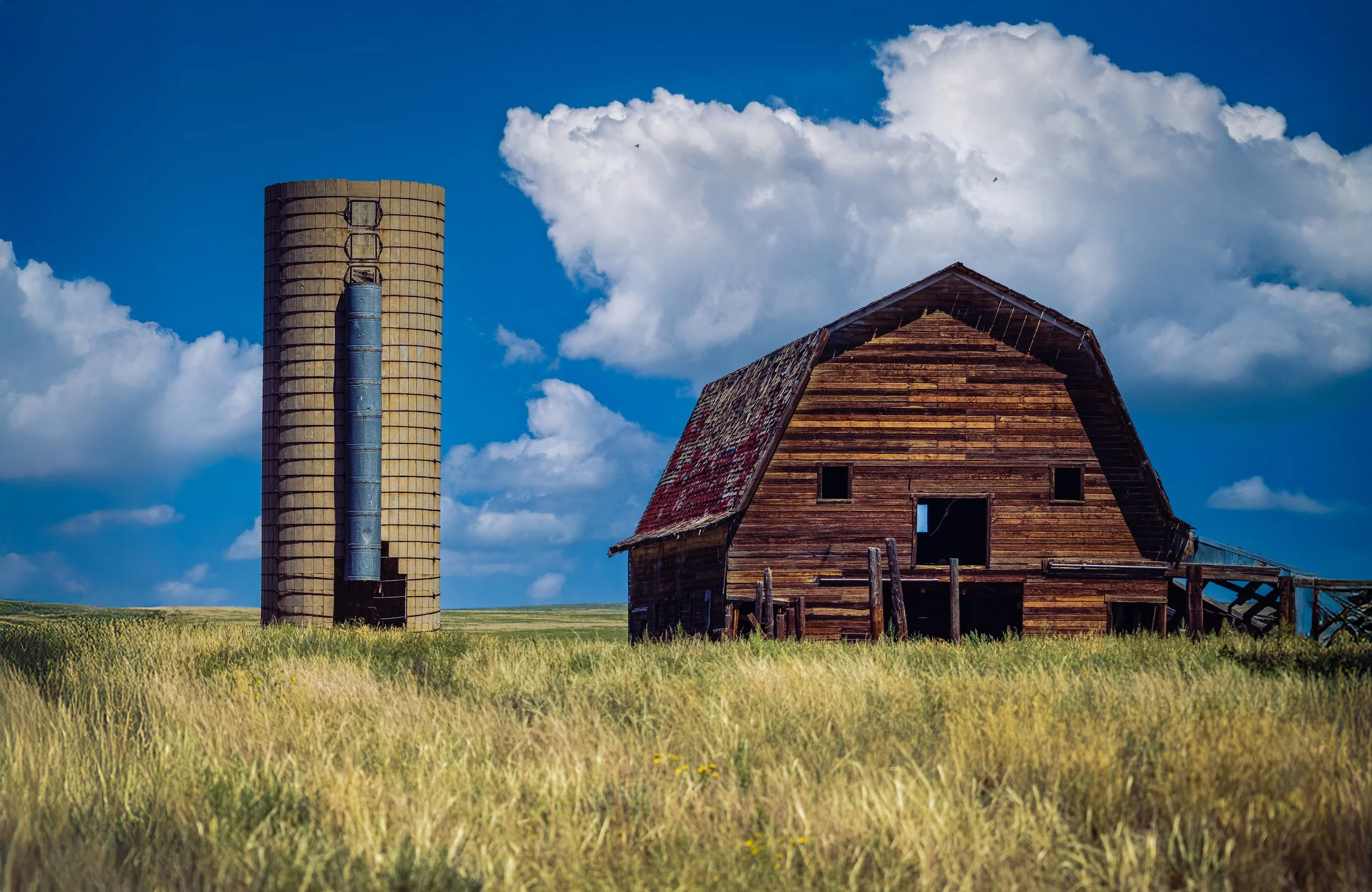
Where the Plains Remember is a study of memory, resilience, and the enduring presence of the rural American landscape. Photographed on a beautiful summer day beneath expansive prairie skies, the image centers on an abandoned homestead accompanied by a weathered barn and aging silo. Sunlit grasses, open horizons, and the quiet geometry of agricultural structures create a scene that feels both timeless and deeply connected to the history of the Great Plains. Drawing from the observational traditions of American landscape photography, the photograph explores how place can preserve stories long after the people who shaped it have moved on.
The composition balances the human-made forms of the house, barn, and silo against the openness of the surrounding prairie, allowing the structures to function as both historical artifacts and enduring symbols of settlement, perseverance, and connection to the land. Rather than emphasizing abandonment, the image focuses on continuity. The buildings remain part of the landscape, carrying traces of generations who worked, lived, and built their lives beneath these same skies. The result is a photograph rooted in both history and optimism, celebrating the quiet beauty of the American heartland.
Design & Styling
An abandoned homestead, a weathered barn, and an aging silo in sunlit grass give Where the Plains Remember a timeless rural warmth for farmhouse-style homes, lodges, offices, restaurants, and Midwest hospitality spaces. Natural wood and neutral textiles bring out its summer palette.
Curated Pairings
To create a cohesive gallery wall around rural memory and the American landscape, consider these companion pieces:
For weathered structures: Pair with Hanging On, Creede, Colorado, extending the visual narrative of weathered structures, endurance, and the evolving history of the American landscape.
For agriculture and weather: Complement this piece with A Place Where Weather Waits, sharing the same quiet pacing, agricultural character, and relationship between land, weather, and memory.
For homesteads: Pair with Where the Homestead Waits, another study of a homestead standing on after its people have gone.
Fine Art Presentation
Available as a signed fine art print on ChromaLuxe® Metal (gloss, semi-gloss, or matte), Glossy Anti-Glare Acrylic (TruLife), canvas, wood, and archival paper (framed or unframed). Wood is the recommended presentation: its grain complements weathered barn boards and the rural subject. Framed archival paper is the alternative for a quieter, more traditional read, and canvas for a softer, painterly summer.
Note: Custom and oversized photographic prints are available. Please contact the studio directly to discuss custom framing, matting, or specialized museum glass options.
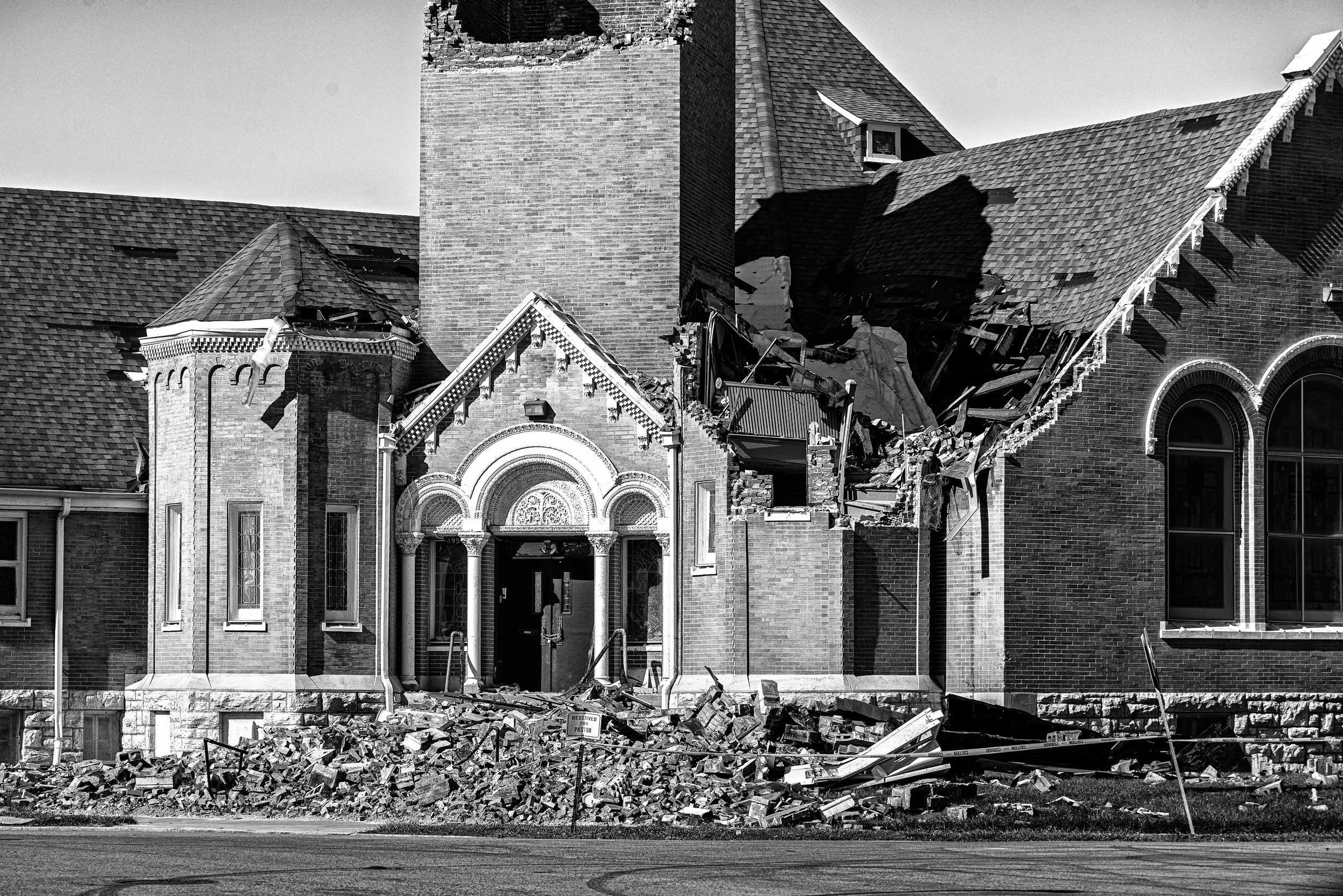
After the Collapse is a poignant, deeply arresting exploration of structural vulnerability, memory, and the aftermath of nature's raw power. Capturing the shattered geometry and exposed architectural layers of a St. Louis structure immediately following a devastating tornado, this composition focuses on a profound sense of quiet shock. Heavily influenced by the stark, light-filled psychological spaces of Edward Hopper and the quiet, melancholic realism of Andrew Wyeth, the image masterfully transforms a scene of localized ruin into a timeless visual meditation on impermanence, resilience, and the fragile spaces we inhabit.
A building torn open by a storm shows what it was made of: floors, walls, and framing that were never meant to be seen from outside. The photograph treats that cross-section with the quiet the scene asks for, and lets the wreckage speak for itself.
Design & Styling
The shattered geometry and quiet shock of After the Collapse suit civic and historical offices, museums, law and architecture firms, and the homes of collectors with an interest in St. Louis history and resilience. It is a serious piece that asks for a plain wall and room to breathe.
Curated Pairings
To create a cohesive regional or storytelling wall, consider these companion pieces:
For quiet twilight geometry: Pair with As the Glow Ends, the Missouri Botanical Garden's Climatron after dark, a St. Louis structure at its most composed against this one's ruin.
For stark structural lines: Complement with The Long Watch, a solitary architectural element held in transitional light with the same graphic restraint.
For the weather itself: Pair with Storm Over Metropolis, a Midwest summer storm breaking overhead, the other side of the weather whose aftermath this piece records.
Fine Art Presentation
Available as a signed fine art print on ChromaLuxe® Metal (gloss, semi-gloss, or matte), Glossy Anti-Glare Acrylic (TruLife), canvas, wood, and archival paper (framed or unframed). ChromaLuxe® Metal is the recommended presentation: it holds the complex textures of splintered wood, fractured brick, and twisted metal with crisp edges. Framed archival paper is the alternative for a more documentary, restrained read.
Note: Custom and oversized photographic prints are available. Please contact the studio directly to discuss custom framing, matting, or specialized museum glass options.
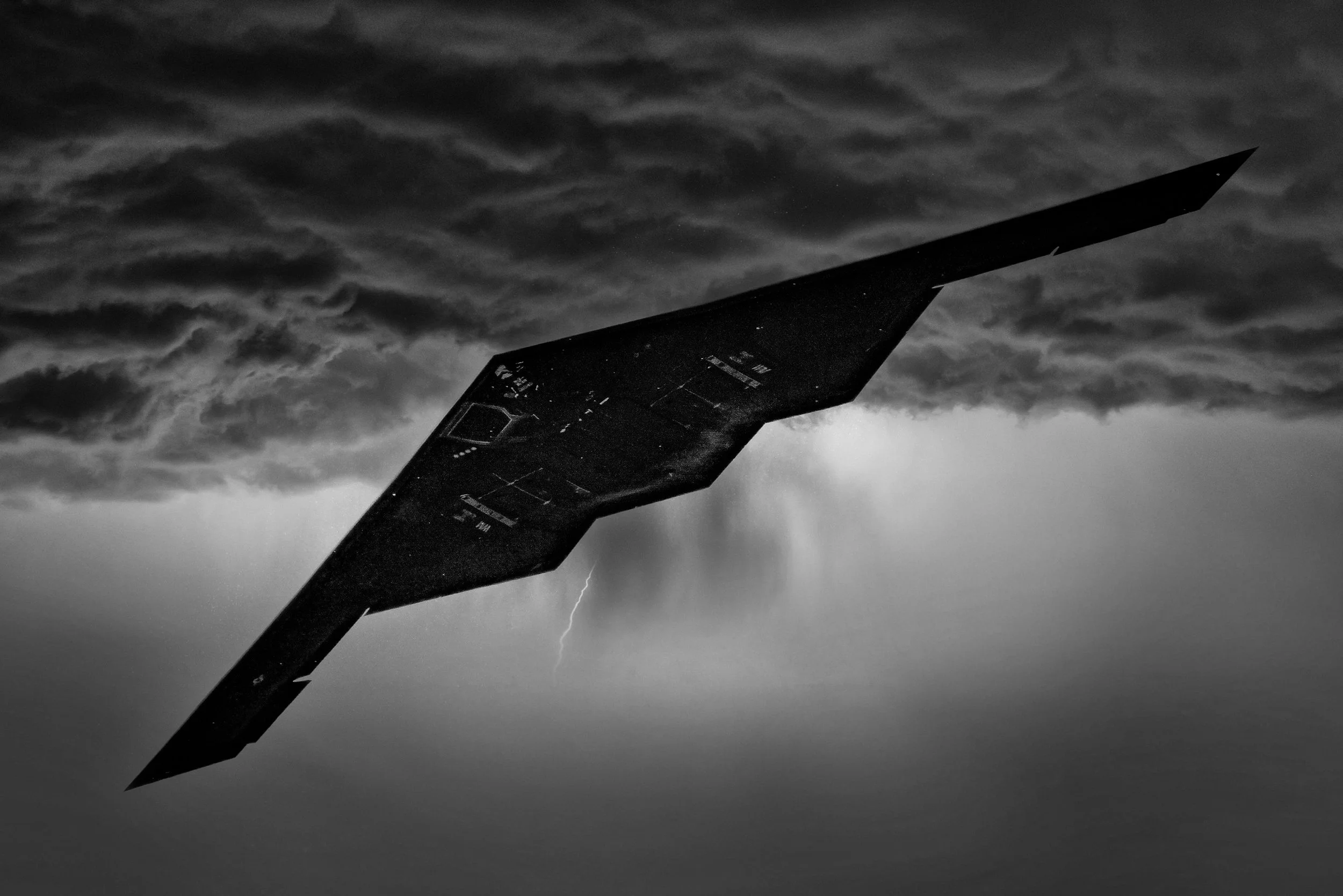
At the End of the World is a stark, deeply atmospheric exploration of military geometry, power, and technological isolation. Capturing the unmistakable, angular silhouette of a stealth bomber cutting through a heavy, mood-filled sky, this composition focuses on a profound sense of silent dominance. Heavily influenced by the high-contrast environmental scales of Ansel Adams and the quiet, melancholic gravity of Andrew Wyeth, the image masterfully transforms a modern emblem of aerial engineering into a timeless, minimalist visual meditation on vigilance, shadow, and the edge of the unknown.
Stealth aircraft are shaped by radar rather than by the eye, which is why their silhouettes read as angular and unfamiliar. Against a heavy sky, the flat, winglike form reads as a shadow more than a machine.
Design & Styling
The stark silhouette of At the End of the World suits aviation and military museums, defense and engineering offices, dens, and collector homes that appreciate powerful, graphic form. Its deep blacks look best on a plain, dark or pale wall with room around it.
Curated Pairings
To create a cohesive display around vigil, scale, and isolation, consider these companion pieces:
For a shared sense of vigil: Pair with The Long Watch, a solitary figure in vigil, with the same poignant vigilance.
For stark structural lines: Complement with After the Collapse, sharing the heavy structural shadows and graphic weight.
For the same isolation and scale: Pair with Sentinel of the Plain, a lone sandstone formation against a sky rendered nearly black at its zenith, the same single silhouette and monochrome weight.
Fine Art Presentation
Available as a signed fine art print on ChromaLuxe® Metal (gloss, semi-gloss, or matte), Glossy Anti-Glare Acrylic (TruLife), canvas, wood, and archival paper (framed or unframed). ChromaLuxe® Metal is the recommended presentation: it deepens the ink-like blacks of the aircraft's skin and gives the surrounding sky clean, graphic separation. Framed archival paper is the alternative for a quieter, more traditional reading.
Note: Custom and oversized photographic prints are available. Please contact the studio directly to discuss custom framing, matting, or specialized museum glass options.
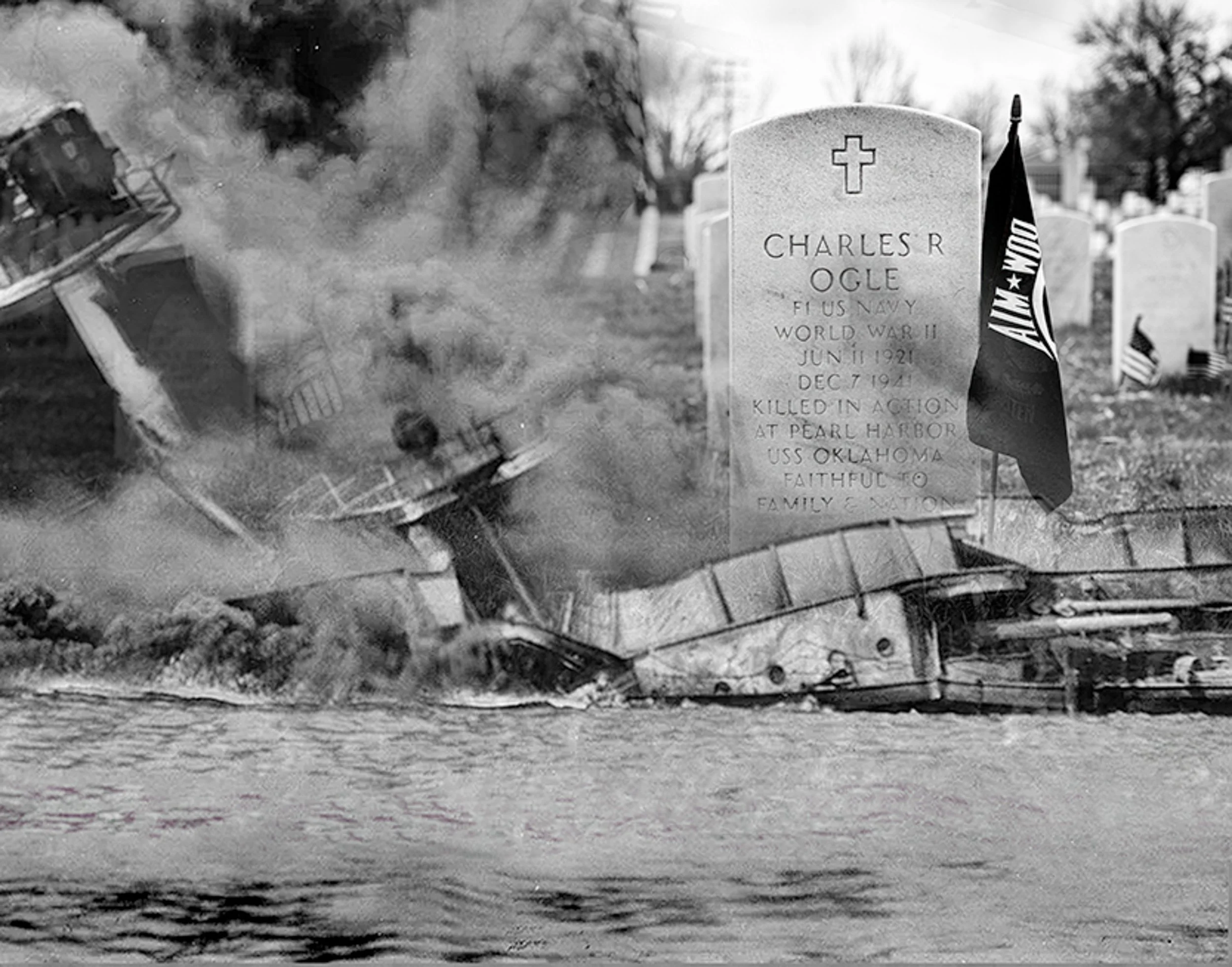
Some stories are told by a single stone. Faithful to the End is a memorial collage that fuses a grave at Jefferson Barracks National Cemetery in St. Louis with a public-domain photograph of one of the ships in the aftermath of the attack on Pearl Harbor, reflecting on the life of a man whose story ultimately ended there and linking personal remembrance with broader historical memory.
Rather than documenting either scene, the collage lets place and loss share one frame: a quiet grave in Missouri and a ship in the wake of the attack. Soft tonal transitions, layered imagery, and contemplative pacing allow the work to operate as memorial portrait, historical reflection, and meditation on loyalty, service, and human fragility across time.
It is a composite of two images, one of them a public-domain historical photograph, and is presented as one. Drawing from the quiet observational atmosphere of Wim Wenders and restrained monochrome storytelling traditions, it favors emotional resonance and reflective stillness over spectacle.
Collage, at its best, joins things that were never in the same place. Here it lets a grave in Missouri and a ship in the waters off Hawaii share one frame, the way a family's memory does.
Design & Styling
This piece is best in spaces where remembrance is welcome: veterans' organizations, museums, libraries, legal and civic offices, and residences of families with a service history. Its restrained tones ask for a quiet wall with room around it.
Curated Pairings
To create a cohesive gallery presentation around memory and absence, consider these companion pieces:
For historical atmosphere: Pair with The Last Recording, extending the visual dialogue between memory, absence, and objects that outlive the lives connected to them.
For contemplative stillness: Complement this piece with Among the Names - Monotone, sharing the same restrained pacing and centered on remembrance and historical presence.
For remembrance in a cemetery: Pair with Where Memory Waits, another photograph of a cemetery as a place of memory and endurance.
Fine Art Presentation
Available as a signed fine art print on ChromaLuxe® Metal (gloss, semi-gloss, or matte), Glossy Anti-Glare Acrylic (TruLife), canvas, wood, and archival paper (framed or unframed). Framed archival paper is the recommended presentation: its matte surface suits the layered tonal relationships and historical textures of a collage. ChromaLuxe® Metal is the alternative for a crisper, more modern presentation.
Note: Custom and oversized photographic prints are available. Please contact the studio directly to discuss custom framing, matting, or specialized museum glass options.
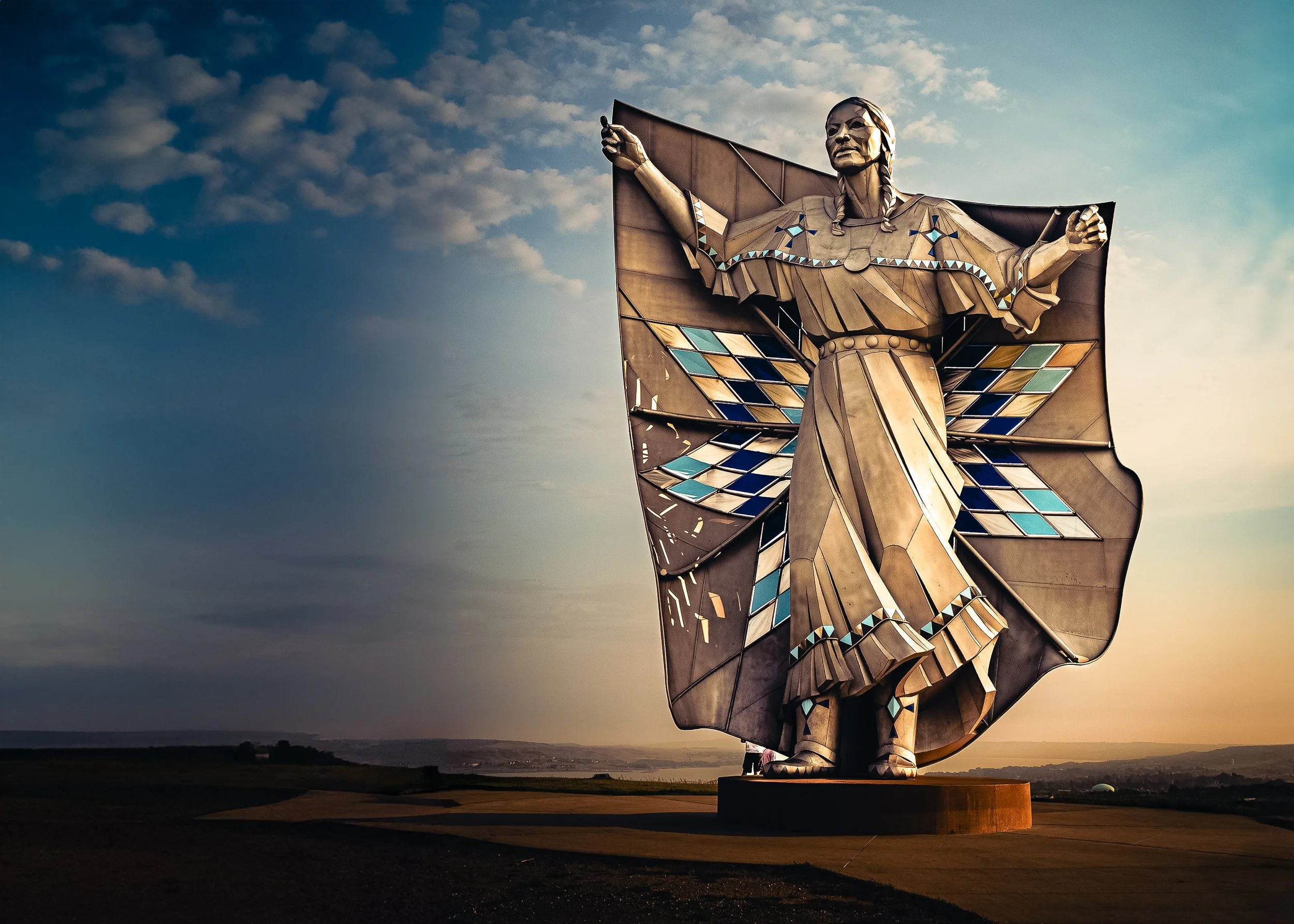
Dignity is a contemplative monument landscape photograph exploring resilience, cultural memory, and the quiet relationship between monumental form and expansive prairie light. Captured at dusk beneath layered clouds and fading atmospheric color, the image features the towering Dignity of Earth and Sky sculpture rising above the South Dakota landscape as evening light gradually dissolves into shadow. Drawing from the restrained cinematic pacing of contemplative Western photography and the luminous tonal atmosphere of Ernst Haas, the photograph emphasizes stillness, openness, and the emotional gravity carried by the monument’s solitary presence against the horizon.
The composition balances expansive sky and prairie space against the vertical sculptural form, allowing the monument to function simultaneously as landmark, silhouette, and symbolic figure within the landscape. Rather than focusing on spectacle, the image explores atmosphere, scale, and the quiet emotional resonance that emerges as light fades across the plains.
Dusk is when large forms are most legible. Detail drops out, edges sharpen against the sky, and a monument reads as pure shape. Here the fading light and layered clouds give the sculpture the same patience as the land around it.
Design & Styling
The monumental form against a fading prairie sky gives Dignity a quiet gravity for offices, civic and cultural spaces, lodges, and homes with an appreciation for the Western landscape and its symbols. Its layered dusk clouds keep it calm in neutral rooms.
Curated Pairings
To create a cohesive gallery presentation around the Western landscape at dusk, consider these companion pieces:
For expansive sky and solitude: Pair with Waiting Out the Storm, extending the relationship between wide sky, solitude, and contemplative Western light.
For monumental landscape pacing: Complement this piece with Where the Earth Breathes, sharing the same restrained atmospheric transitions and quiet sense of scale across the American West.
For prairie light: Pair with Stillness Over Flint Hills, another prairie landscape of layered clouds and open horizon space.
Fine Art Presentation
Available as a signed fine art print on ChromaLuxe® Metal (gloss, semi-gloss, or matte), Glossy Anti-Glare Acrylic (TruLife), canvas, wood, and archival paper (framed or unframed). ChromaLuxe® Metal is the recommended presentation: it holds the layered dusk color and keeps the silhouette of the sculpture crisp against the fading light. Framed archival paper is the alternative for a softer, more contemplative read of the clouds.
Note: Custom and oversized photographic prints are available. Please contact the studio directly to discuss custom framing, matting, or specialized museum glass options.
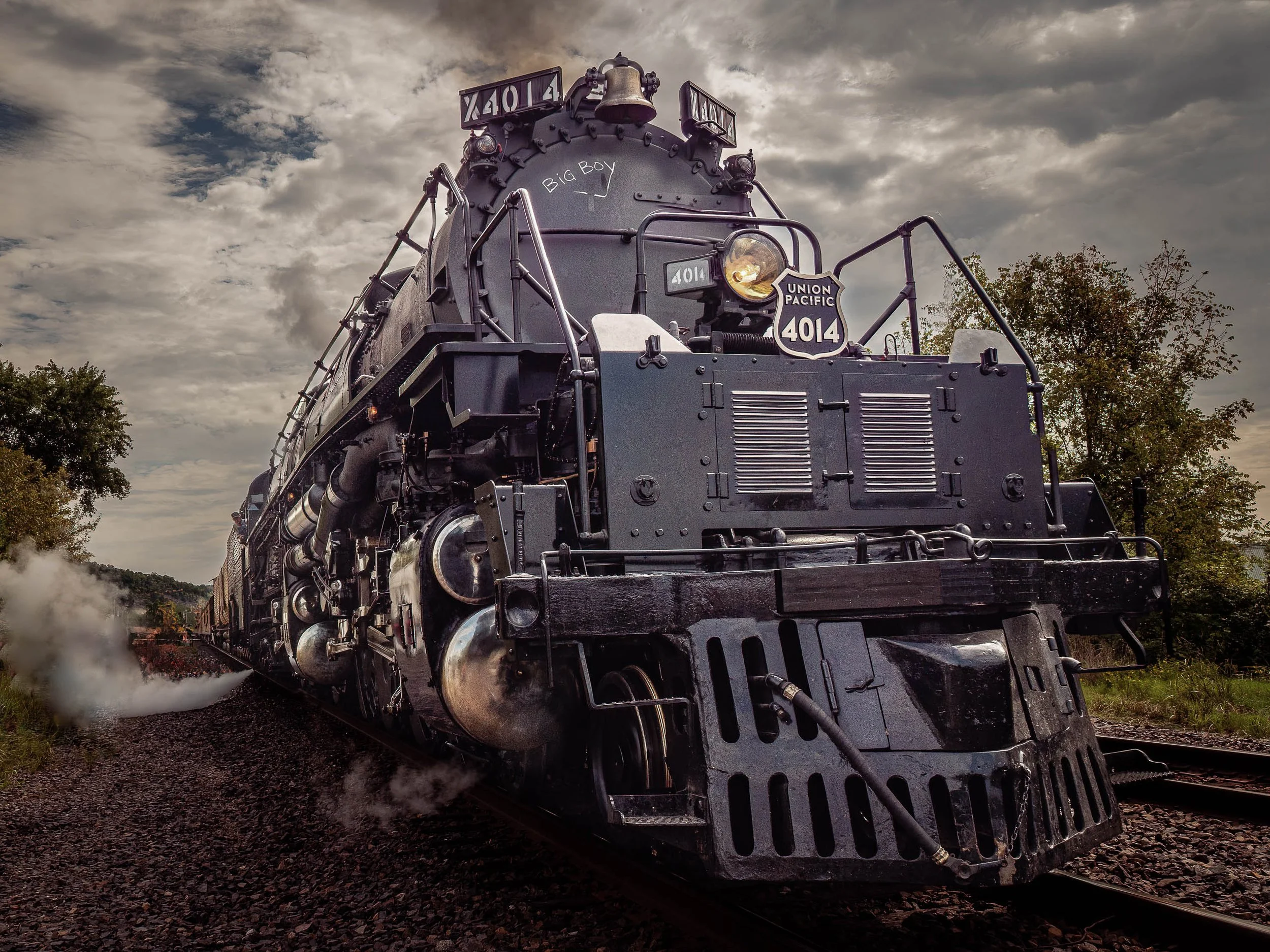
The Last Giant celebrates one of the most remarkable engineering achievements of the twentieth century. Photographed as Union Pacific's legendary Big Boy No. 4014 pauses along its journey through the American Midwest, the image captures a machine built on a scale that continues to astonish nearly a century after its creation. Rising above the viewer from a dramatic low perspective, the locomotive appears less like a vehicle and more like a monument to an era when railroads connected distant communities and powered the growth of a nation.
Constructed during the golden age of steam, Big Boy was designed to move enormous freight trains across the mountains and deserts of the American West. Its massive size, mechanical complexity, and enduring presence have transformed it from a working locomotive into a symbol of American ingenuity and industrial ambition. In this photograph, the locomotive emerges beneath a sky filled with shifting clouds, its polished steel surfaces reflecting the subdued light of an approaching weather front. Steam drifts across the tracks while the immense machinery dominates the frame, emphasizing both scale and craftsmanship.
Rather than focusing solely on nostalgia, the image explores the relationship between engineering and memory. The locomotive represents a period when industrial design combined utility, durability, and visual power in equal measure. The photograph invites viewers to consider not only the machine itself but also the generations of workers, travelers, and communities whose lives were shaped by the railroad.
Drawing inspiration from the documentary traditions of American photography and the enduring fascination with the nation's industrial heritage, The Last Giant becomes both a portrait of a locomotive and a reflection on the ingenuity, ambition, and craftsmanship that helped define the American experience.
Available in archival paper, framed archival paper, metal, acrylic, wood, canvas, and framed canvas. Most images are available up to 40×60 inches, with select wood prints available up to 48×32 inches.
Design & Styling
The low viewpoint and sheer scale of The Last Giant make it a strong fit for railroad and transportation offices, engineering firms, museum shops, dens, and collector homes where American industrial heritage is welcome. It suits large walls.
Curated Pairings
To create a cohesive gallery wall around American travel and heritage, consider these companion pieces:
For a celebration of American travel: Pair with Where the Road Pauses, exploring the roads, railways, and journeys that helped shape the American landscape.
For machinery and heritage: Complement this piece with Cottonwoods and Chrome, a dialogue between craftsmanship, machinery, and the enduring character of the American West.
For a broader Americana wall: Pair with The Welcome Tree, connecting themes of travel, memory, and the places that define the American experience.
Fine Art Presentation
Available as a signed fine art print on ChromaLuxe® Metal (gloss, semi-gloss, or matte), Glossy Anti-Glare Acrylic (TruLife), canvas, wood, and archival paper (framed or unframed). ChromaLuxe® Metal is the recommended presentation: it emphasizes the locomotive's structure and mechanical detail while preserving tonal depth through the clouds and steam, and the scale suits larger sizes. Acrylic is the alternative for extra depth in the sky.
Note: Custom and oversized photographic prints are available. Please contact the studio directly to discuss custom framing, matting, or specialized museum glass options.
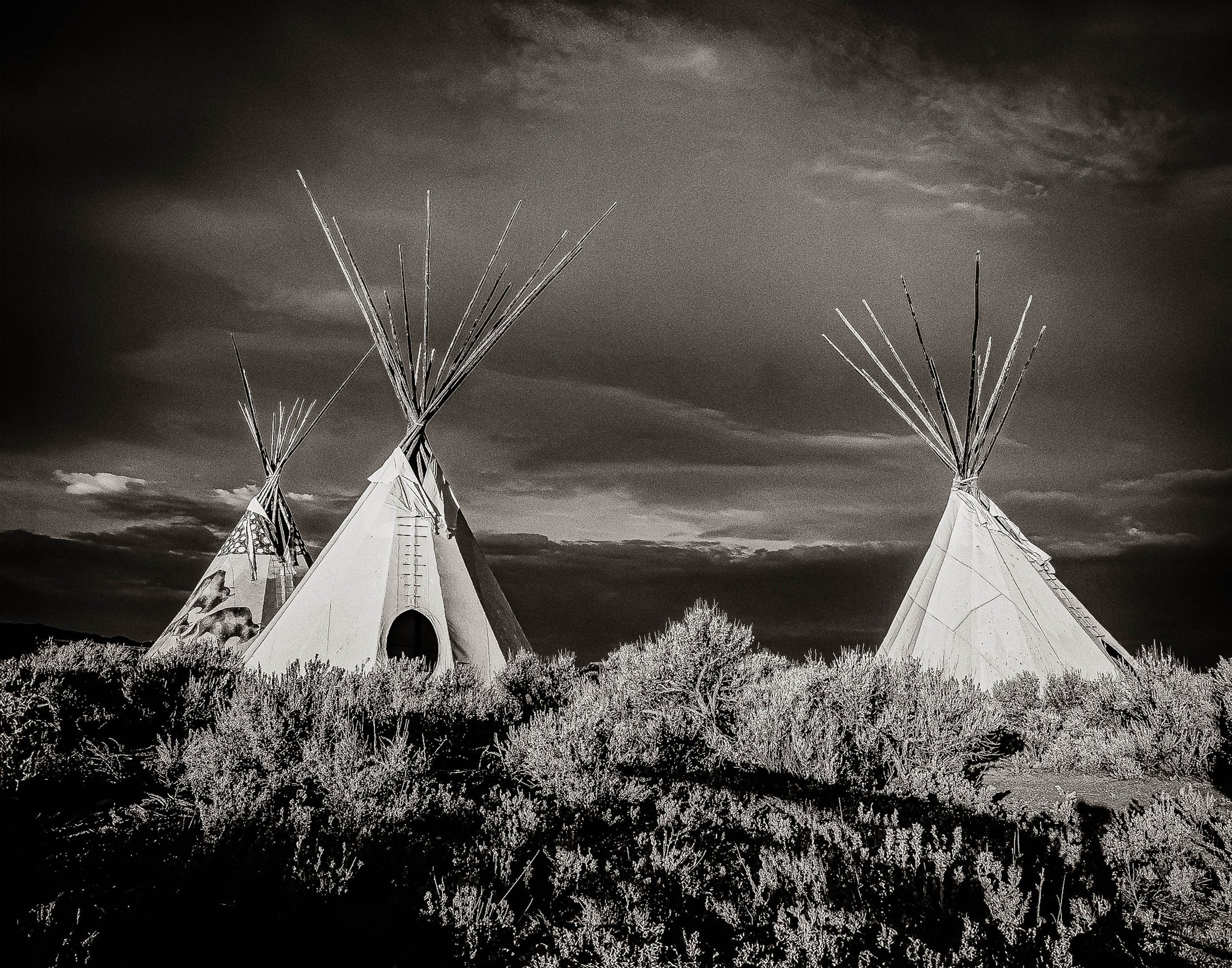
Shelter Beneath a Restless Sky is a study of resilience, protection, and the enduring relationship between people and landscape. Rendered in monochrome, the photograph removes the distraction of color and emphasizes form, texture, and atmosphere. Three tipis stand beneath a sky alive with movement, one painted with the images of a bear and a buffalo, its doorway a small crescent moon cut into the canvas, their simple geometric forms creating a visual counterpoint to the shifting clouds above.
Photographed at a company outside Taos, New Mexico that builds tipis and Native drums, the tipis here are working craft, not props. The absence of color transforms the image from a record of a specific place into a more universal meditation on shelter and belonging. The tipis become symbols rather than structures, representing the enduring human desire to create refuge within an unpredictable world. The sweeping sky introduces tension and uncertainty, while the structures themselves provide balance and stability.
The composition relies on repetition, negative space, and tonal contrast. The three forms establish rhythm across the landscape while the expansive sky reinforces both vulnerability and scale. The resulting image becomes less about the physical location and more about the timeless relationship between people, weather, and place.
Drawing inspiration from the traditions of Ansel Adams, Edward Weston, and Minor White, Shelter Beneath a Restless Sky explores themes of endurance, simplicity, and the quiet strength found within the landscape. The photograph invites viewers to contemplate both the fragility and permanence that coexist within the natural world.
Available in archival paper, framed archival paper, metal, acrylic, wood, canvas, and framed canvas. Most images are available up to 40×60 inches, with select wood prints available up to 48×32 inches.
Design & Styling
With its monochromatic palette, timeless subject matter, and strong geometric forms, Shelter Beneath a Restless Sky works particularly well in contemporary residences, executive offices, hospitality spaces, healthcare environments, and interiors emphasizing simplicity, reflection, and visual restraint.
Curated Pairings
For themes of endurance: Pair with Enduring Silence, creating a dialogue between shelter and permanence.
For a meditation on resilience: Complement this piece with Hanging On, exploring survival and persistence across different landscapes.
For atmospheric continuity: Pair with Storm Gate, extending themes of weather, light, and emotional atmosphere.
Fine Art Presentation
This image is exceptionally well suited to framed archival paper, ChromaLuxe® Metal (gloss, semi-gloss, or matte), and black-and-white fine art presentations. The monochrome treatment emphasizes texture, form, and tonal depth while creating a timeless gallery presence ideally suited to larger formats.
Note: Custom and oversized photographic prints are available. Please contact the studio directly to discuss custom framing, matting, or specialized museum glass options.
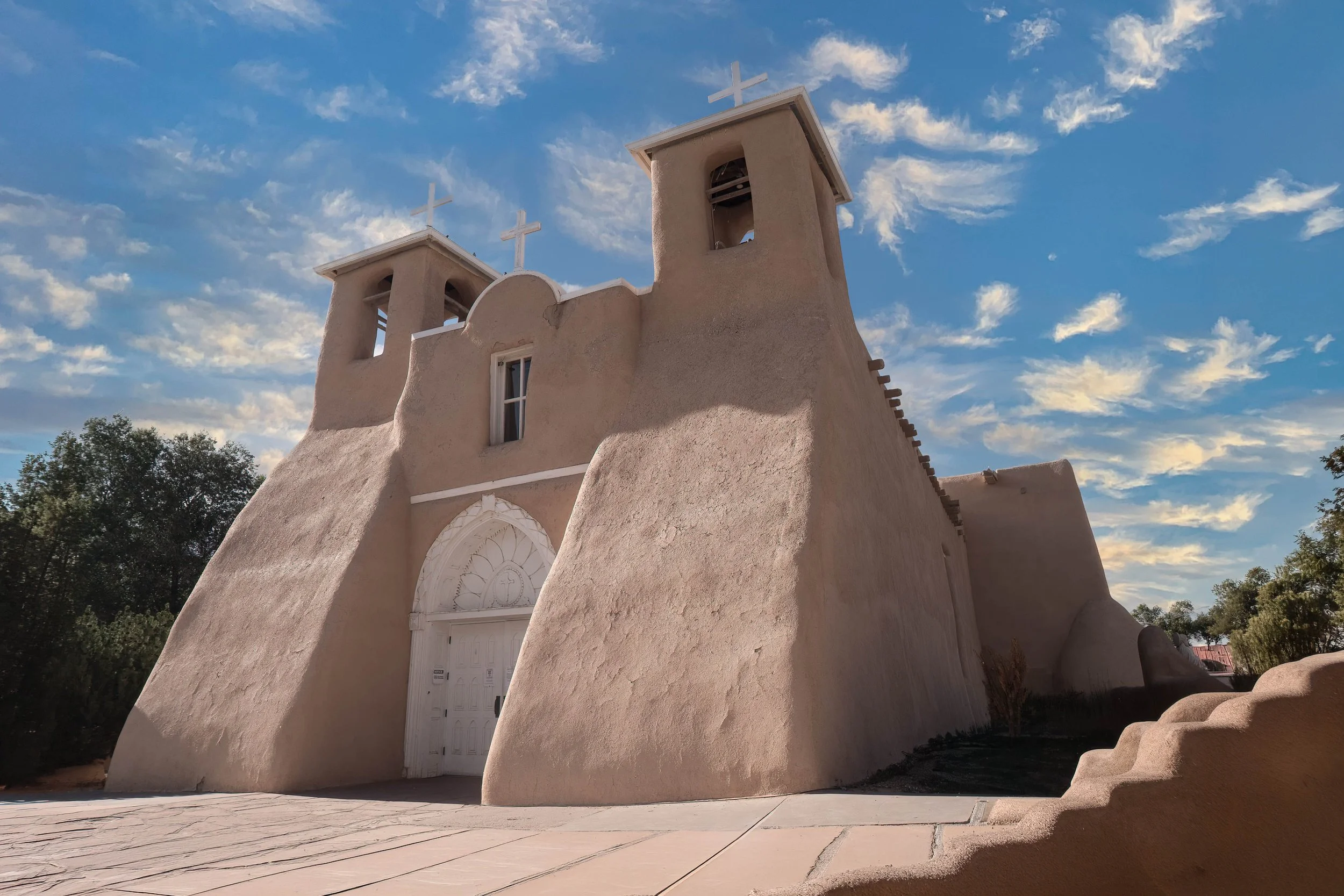
Beneath Watchful Wings explores the enduring presence of faith, architecture, and place through one of the most iconic structures of the American Southwest. Photographed at the historic St. Francis de Asís Church in Ranchos de Taos, New Mexico, the image presents the church from a low perspective that emphasizes its monumental adobe buttresses and sculptural form. For generations, artists, photographers, and architects have been drawn to this remarkable structure, finding inspiration in its simplicity, craftsmanship, and timeless relationship to the surrounding landscape.
Rather than focusing solely on the church as an architectural landmark, the photograph seeks to convey a deeper sense of presence. The massive adobe walls rise toward a brilliant blue sky where sweeping cloud formations appear to echo the shape of protective wings. The three crosses atop the church create a visual rhythm that guides the eye upward, reinforcing themes of faith, protection, and spiritual endurance. The resulting composition balances strength and grace, inviting viewers to contemplate both the physical structure and the beliefs it represents.
The church's distinctive buttresses, shaped by centuries of maintenance and restoration, speak to a long tradition of stewardship and community care. Light moves gently across the adobe surfaces, revealing subtle textures and tonal variations that reflect the handmade character of the building. The photograph becomes not simply a record of a famous landmark, but a meditation on permanence, devotion, and the quiet power of places that continue to serve as anchors within their communities.
Drawing inspiration from the architectural studies of Edward Weston and the reverence for place found throughout the American photographic tradition, Beneath Watchful Wings celebrates the enduring dialogue between faith, landscape, and human craftsmanship.
Available in archival paper, framed archival paper, metal, acrylic, wood, canvas, and framed canvas. Most images are available up to 40×60 inches, with select wood prints available up to 48×32 inches.
Design & Styling
With its warm adobe palette, dramatic sky, and timeless architectural character, Beneath Watchful Wings works particularly well in Southwestern interiors, hospitality spaces, executive offices, healthcare environments, religious institutions, and homes that emphasize history, craftsmanship, and a connection to place. The image introduces a sense of calm permanence while maintaining a strong visual presence, making it equally effective as a statement piece or as part of a larger collection exploring architecture, faith, and the American West.
Curated Pairings
For architectural continuity: Pair with Enduring Forms, creating a deeper exploration of the iconic architecture and sculptural beauty of Ranchos de Taos.
For themes of faith and resilience: Complement this piece with What They Saved, connecting two New Mexico churches through stories of stewardship, devotion, and community preservation.
For spiritual atmosphere: Pair with Sanctuary of Light, creating a dialogue between different expressions of sacred architecture while maintaining a unified sense of reverence and place.
Fine Art Presentation
The subtle textures of the adobe walls and luminous Southwestern sky make this image particularly well suited to larger presentation formats. Framed archival paper emphasizes the tactile quality of the architecture, while ChromaLuxe® Metal (gloss, semi-gloss, or matte) enhances the interplay between warm earth tones and cool sky. Wood prints provide a presentation that complements the handcrafted character of the church and its connection to the landscape. For collectors seeking maximum detail and tonal richness, framed archival paper, acrylic, or ChromaLuxe® Metal are highly recommended.
Note: Custom and oversized photographic prints are available. Please contact the studio directly to discuss custom framing, matting, or specialized museum glass options.
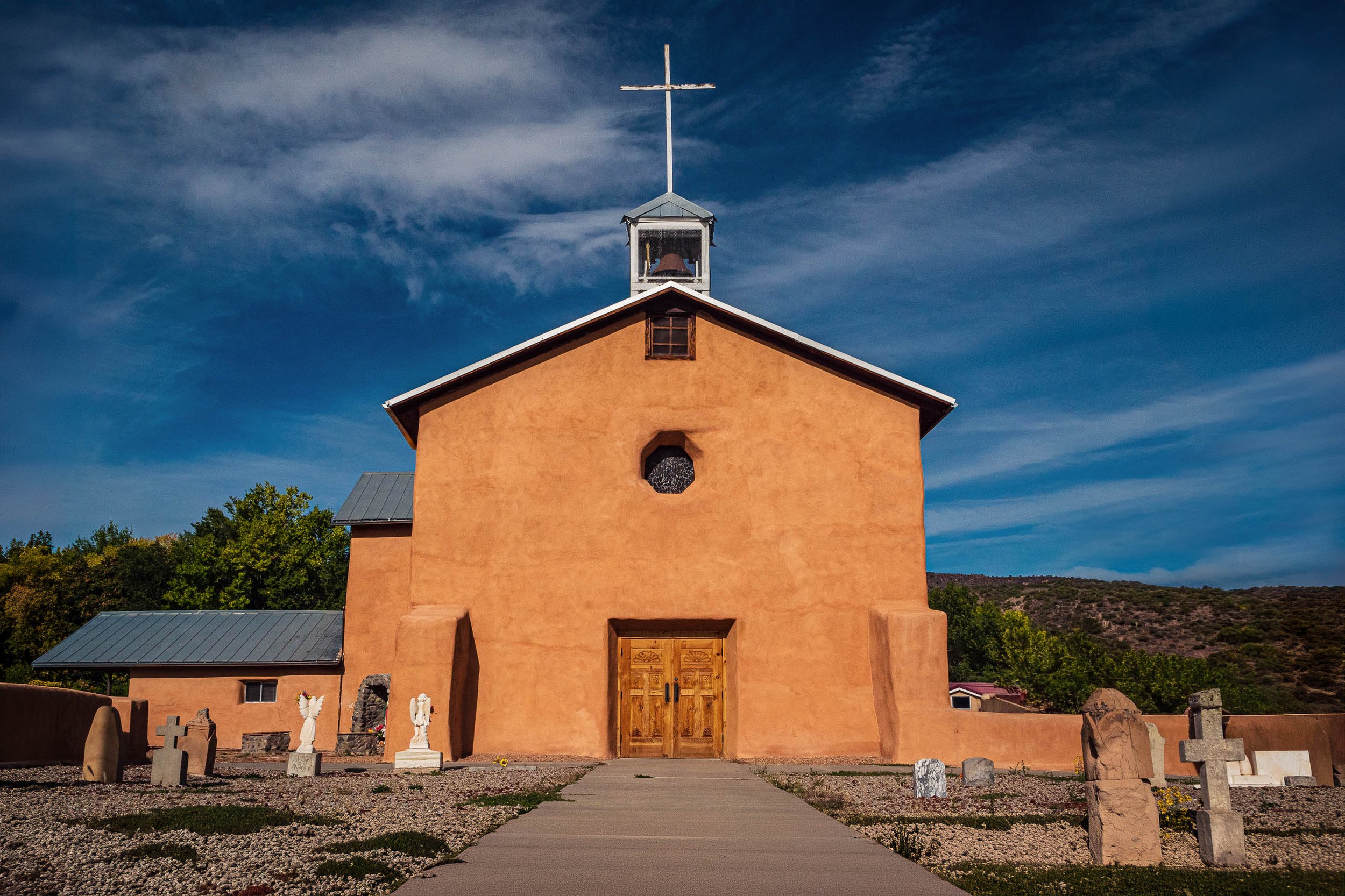
Where the Bells Remain is a meditation on endurance, faith, and the communities that continue to preserve the cultural heritage of northern New Mexico. Photographed at the historic San José de Gracia Church in Trampas along the High Road to Taos, the image captures one of the region's most significant adobe churches standing beneath a vast New Mexico sky. Surrounded by weathered grave markers and generations of history, the church remains a symbol of continuity in a landscape shaped by time, tradition, and devotion.
The composition embraces simplicity and permanence. A central walkway leads directly to the church doors while the bell tower and cross rise above the adobe walls, creating a strong vertical presence against the expansive sky. The symmetry of the structure reinforces a sense of stability and resilience, while the surrounding cemetery quietly reminds viewers of the generations who built, worshipped, and were ultimately laid to rest here.
Rather than focusing solely on architecture, the photograph explores the relationship between place and memory. The church becomes more than a building; it stands as a witness to the history of the community that has cared for it across centuries. The warm adobe walls glow beneath the rich blue sky, creating a visual dialogue between earth and sky, permanence and change.
Drawing inspiration from the documentary traditions of American landscape photography and the enduring architectural studies of the Southwest, Where the Bells Remain celebrates a place where history remains visible and where the passage of time has deepened rather than diminished its significance.
Available in archival paper, framed archival paper, metal, acrylic, wood, canvas, and framed canvas. Most images are available up to 40×60 inches, with select wood prints available up to 48×32 inches.
Design & Styling
With its warm earth tones, strong architectural lines, and sense of permanence, Where the Bells Remain works particularly well in Southwestern homes, hospitality spaces, executive offices, libraries, healthcare environments, and collectors' spaces focused on regional history, architecture, or the American West. The image brings both visual structure and a sense of calm reflection to a room.
Curated Pairings
Enduring Forms — Creates a powerful dialogue between two of northern New Mexico's most iconic adobe churches, exploring architecture, faith, and permanence.
Beneath Watchful Wings — Continues themes of spirituality, architecture, and the relationship between landscape and sacred space.
Where the Road Pauses — Extends the themes of history, place, and quiet contemplation within the New Mexico landscape.
Fine Art Presentation
This image performs exceptionally well as a larger print where the adobe textures, grave markers, and architectural details become more prominent. Framed archival paper provides a classic gallery presentation that complements the historical subject matter. ChromaLuxe® Metal (gloss, semi-gloss, or matte) enhances the rich blue sky and warm adobe tones, while acrylic offers additional depth and luminosity. For collectors seeking a museum-quality presentation, framed archival paper or ChromaLuxe® Metal are particularly recommended.
Note: Custom and oversized photographic prints are available. Please contact the studio directly to discuss custom framing, matting, or specialized museum glass options.
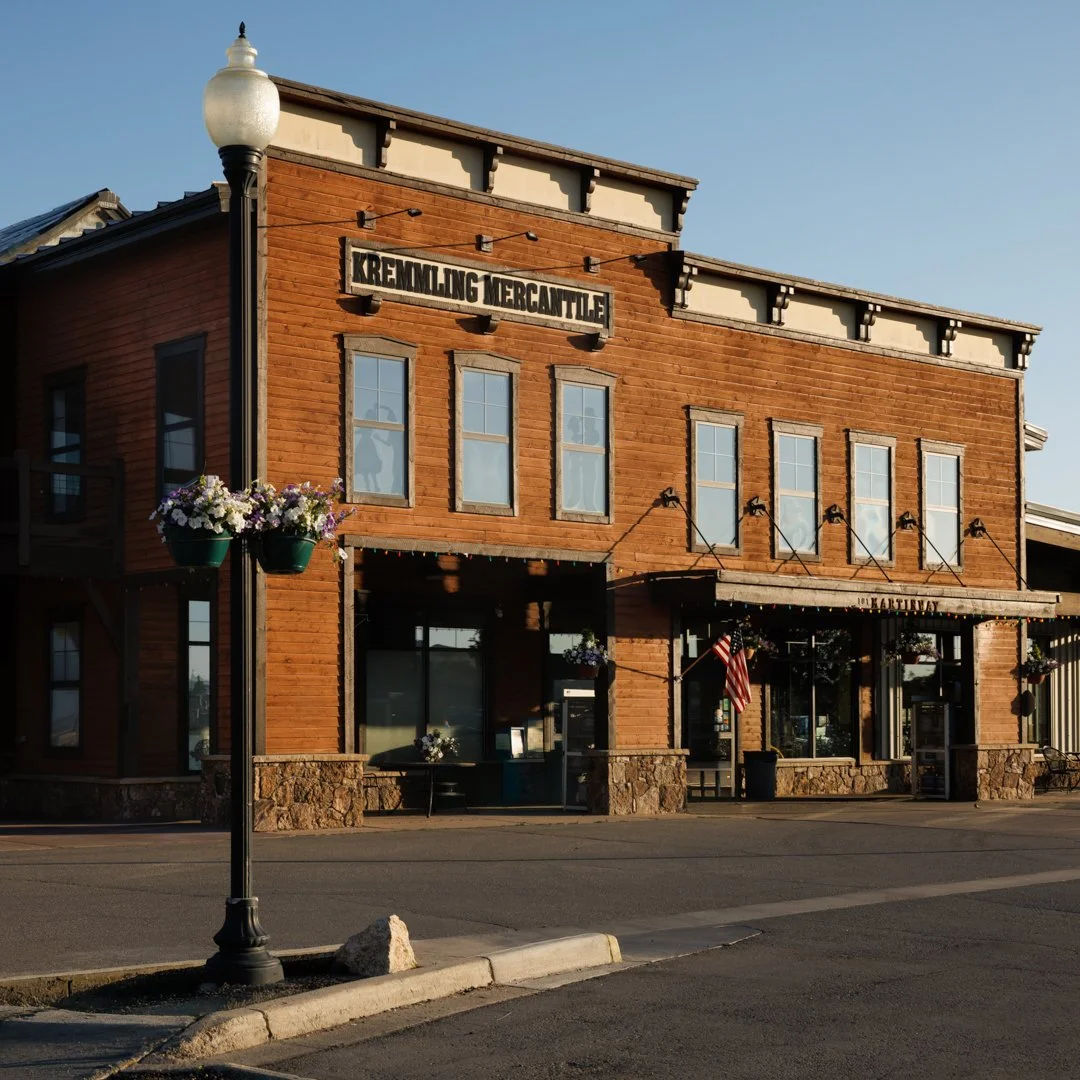
Below, the Kremmling Mercantile stands quiet in early light — warm wood siding, hand-painted signage, flower baskets swaying from an old street lamp. Above, two silhouetted figures move behind lace-curtained windows, caught mid-gesture, one arm raised as if dancing. The business is closed. Someone, it seems, is very much awake.
This is small-town Colorado at its most quietly cinematic — a well-preserved Western storefront doing its daytime job, while an entirely different, more private life plays out just above it. The photograph doesn't explain the figures; it simply lets them exist, glimpsed rather than announced, rewarding a longer look with a small mystery most viewers won't catch at first glance.
Shot in the low, warm light of a Colorado morning, the composition uses the street lamp and its trailing flower baskets as a foreground anchor, while the building's long facade recedes into soft shadow on one side and full sun on the other — the kind of quiet, observational framing that echoes Saul Leiter's instinct for finding a story in an ordinary storefront.
Design & Styling
Life Above the Mercantile brings warm, sunlit Western character to entryways, mountain-home offices, or any space wanting a touch of small-town Colorado charm. Its rich wood tones and clear blue sky pair naturally with rustic and transitional interiors, while the quiet narrative detail in the windows gives it staying power beyond a typical architectural print — the kind of piece a guest notices on a second or third visit. Well suited to hospitality settings in mountain towns, general stores, or local businesses with a personal connection to Kremmling or Grand County.
Curated Pairings
For a Colorado small-town collection, pair with a piece from the Colorado gallery page, or with other Western architectural work for a study in regional character and light.
For a Colorado small-town collection, pair with No Vacancy for a shared rural/grounded Western sensibility, or with The Long Way West for a study in how roads and buildings both carry a sense of Western journey and place.
Fine Art Presentation
ChromaLuxe® Metal (gloss, semi-gloss, or matte) in semi-gloss brings out the warmth in the wood siding and holds detail in both the sunlit and shadowed sides of the building without inviting glare across the sky. Framed and unframed paper prints on archival paper offer a softer, more traditional presentation, well suited to a rustic interior. TruLife Acrylic adds depth for a more contemporary space.
Note: Custom and oversized photographic prints are available. Please contact the studio directly to discuss custom framing, matting, or specialized museum glass options.
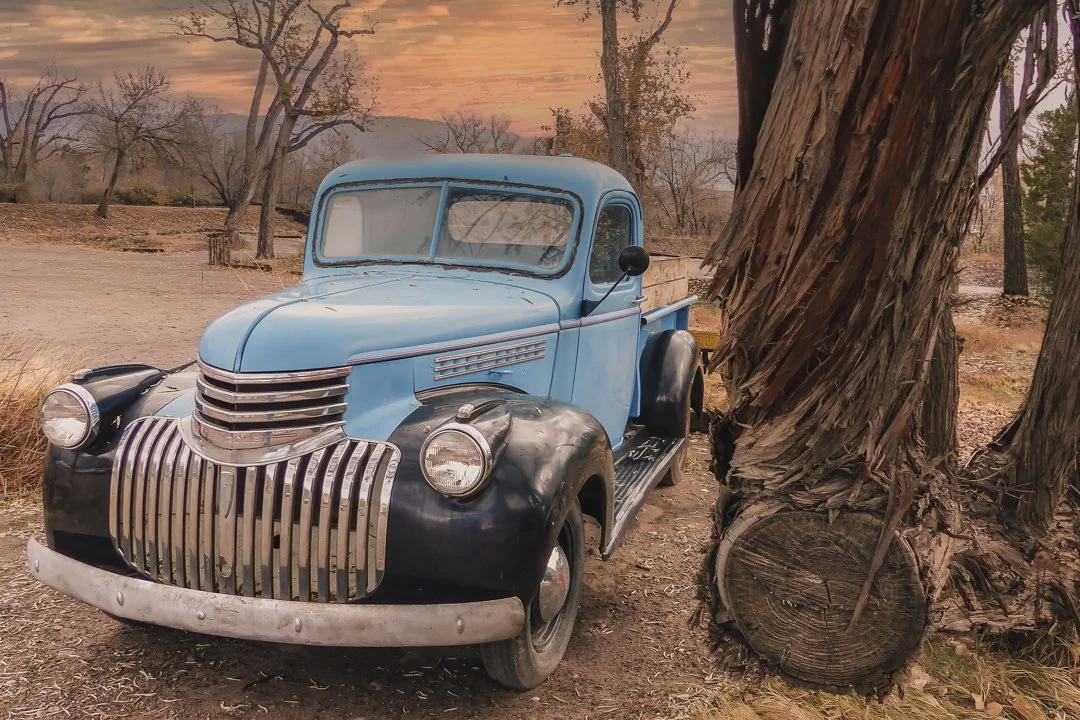
Cottonwoods and Chrome is a cinematic study of memory, weathered Americana, and the quiet stillness of the American Southwest. Captured at dusk beneath towering cottonwood trees, the photograph features a faded vintage blue truck resting within a subdued landscape of worn bark textures, muted earth tones, and soft evening light. Drawing from the restrained cinematic atmosphere of Wim Wenders and the observational pacing of classic American roadside photography, the image explores the emotional weight carried by forgotten places and aging objects shaped by time and landscape.
The composition balances the heavy organic textures of the cottonwoods against the worn chrome and faded paint of the truck, allowing the scene to function as both environmental portrait and quiet narrative. Rather than emphasizing nostalgia through spectacle, the photograph focuses on stillness, restraint, and the lingering atmosphere that exists within overlooked roadside spaces throughout the American West.
Cottonwoods grow where water is, and their deeply furrowed bark ages the way a truck does: both are surfaces that record time. The photograph lets the two grow old together in the same soft evening light.
Design & Styling
The faded blue truck, worn cottonwood bark, and muted earth tones of Cottonwoods and Chrome suit lodges, restaurants, dens, home offices, and ranch-style or mountain homes that want weathered Americana with a quiet, lived-in feeling. Warm wood, leather, and iron furnishings echo its palette.
Curated Pairings
To build a wall around weathered Americana and the open West, consider these companion pieces:
For roadside atmosphere: Pair with The Long Way West, extending the visual narrative of solitude, distance, and Western travel.
For the same dusk stillness: Complement with Waiting Out the Storm, a lone silhouetted tree beneath a turbulent western sky, sharing the subdued pacing and the layered color of dusk.
For weathered structures: Pair with Hanging On, Creede, Colorado, another weathered survivor of the American West, rain-darkened wood in soft light.
Fine Art Presentation
Available as a signed fine art print on ChromaLuxe® Metal (gloss, semi-gloss, or matte), Glossy Anti-Glare Acrylic (TruLife), canvas, wood, and archival paper (framed or unframed). Wood is the recommended presentation: the grain of the print surface echoes the worn cottonwood bark and the weathered paint of the truck. Framed archival paper is the alternative for a quieter, more traditional read, and canvas for a softer, more painterly dusk.
Note: Custom and oversized photographic prints are available. Please contact the studio directly to discuss custom framing, matting, or specialized museum glass options.

Some signs never go dark — they just keep glowing long after the era that built them has faded. Taos Inn calls itself "The Living Room of Taos," and this neon marquee is exactly the kind of welcome that tagline promises: Rooms, Dining, Cocktails, Curios, Vacancy, stacked and burning against a black New Mexico night, exactly as they have for decades.
The composition builds in layers: cool blue neon crowns the sign, warm orange spells out the name beneath it, and a soft pink glow bleeds down through Cocktails toward a small red Vacancy at the base. A blurred red adobe wall anchors the left foreground, giving the frame depth and keeping the sign from floating in pure black. The eye is pulled top to bottom through that hierarchy of words the way a traveler's eye once was — Inn, then Rooms, then Dining, then the invitation of Cocktails, then the practical fact of Vacancy.
There's a strong Ernst Haas quality here — his color-saturated night photography treated neon and reflected light as their own subject rather than mere illumination. There's also a Hopper undercurrent: the quiet, slightly melancholic glow of roadside America, a place built for travelers but caught here with no one in the frame at all.
Design & Styling
Glowing neon against a black New Mexico night suits restaurants, bars, hotel lounges, home bars, and dens, and any room that loves roadside Americana. On a dark wall the neon glows; on a pale wall it reads as a bold, graphic sign.
Curated Pairings
To create a cohesive gallery wall around neon and Americana, consider these companion pieces:
For neon and roadside Americana: Pair with No Vacancy, another vintage sign still glowing long after its heyday.
For the same New Mexico high country: Pair with Where the Bells Remain, photographed along the same High Road to Taos.
For weathered, fading signage: Pair with What the Wall Remembers, continuing the theme of hand-painted and hand-built American signage holding on against time.
Fine Art Presentation
Available as a signed fine art print on ChromaLuxe® Metal (gloss, semi-gloss, or matte), Glossy Anti-Glare Acrylic (TruLife), canvas, wood, and archival paper (framed or unframed). ChromaLuxe® Metal is the recommended presentation: its reflective surface intensifies the neon glow and deepens the blacks in a way paper can't match. Acrylic is the alternative for a deeper, glowing night, and canvas for a softer, more nostalgic read.
Note: Custom and oversized photographic prints are available. Please contact the studio directly to discuss custom framing, matting, or specialized museum glass options.
Waiting Out the Storm is an atmospheric study of endurance, stillness, and the emotional gravity of approaching weather. Captured in the American West, this panoramic landscape features a lone silhouetted tree standing beneath a turbulent sky layered with ember-orange light, deep cobalt blues, and drifting violet cloud formations. Drawing from the cinematic color sensibilities of Ernst Haas and the restrained tonal pacing of classic atmospheric landscape photography, the image explores the fragile calm that exists just before darkness fully arrives.
The composition balances expansive negative space with dramatic cloud architecture, allowing the solitary tree to function as both anchor and witness within the landscape. Rather than documenting the storm itself, the photograph focuses on the emotional tension of anticipation—the suspended moment when light, weather, and silence briefly coexist.
A silhouette is the most economical way to read scale. Without detail, a tree becomes a gesture, and the panoramic format lets the sky carry most of the weight. The lone form at the horizon gives the drama a human-sized anchor, patient against everything gathering behind it.
Design & Styling
Ember-orange, cobalt, and violet in a turbulent panoramic sky make Waiting Out the Storm a dramatic focal point for living rooms, lobbies, offices, and hospitality spaces. The lone tree gives a wide wall a single point of quiet.
Curated Pairings
To create a cohesive gallery wall around storm light and Western space, consider these companion pieces:
For storm light and horizon: Pair with Where the Light Gathered (Panorama), extending the layered storm light and expansive horizon of the American West.
For luminous color transitions: Complement this piece with Children Dancing in Blue Light, which shares luminous color transitions and quiet emotional tension, in a very different subject.
For layered clouds: Pair with Stillness Over Flint Hills, a calmer prairie horizon of layered clouds.
Fine Art Presentation
Available as a signed fine art print on ChromaLuxe® Metal (gloss, semi-gloss, or matte), Glossy Anti-Glare Acrylic (TruLife), canvas, wood, and archival paper (framed or unframed). Acrylic is the recommended presentation: its depth and luminosity carry the ember-orange, cobalt, and violet of the sky, especially across a panoramic wall. ChromaLuxe® Metal is the alternative for crisper cloud detail, and canvas for a softer, more painterly storm.