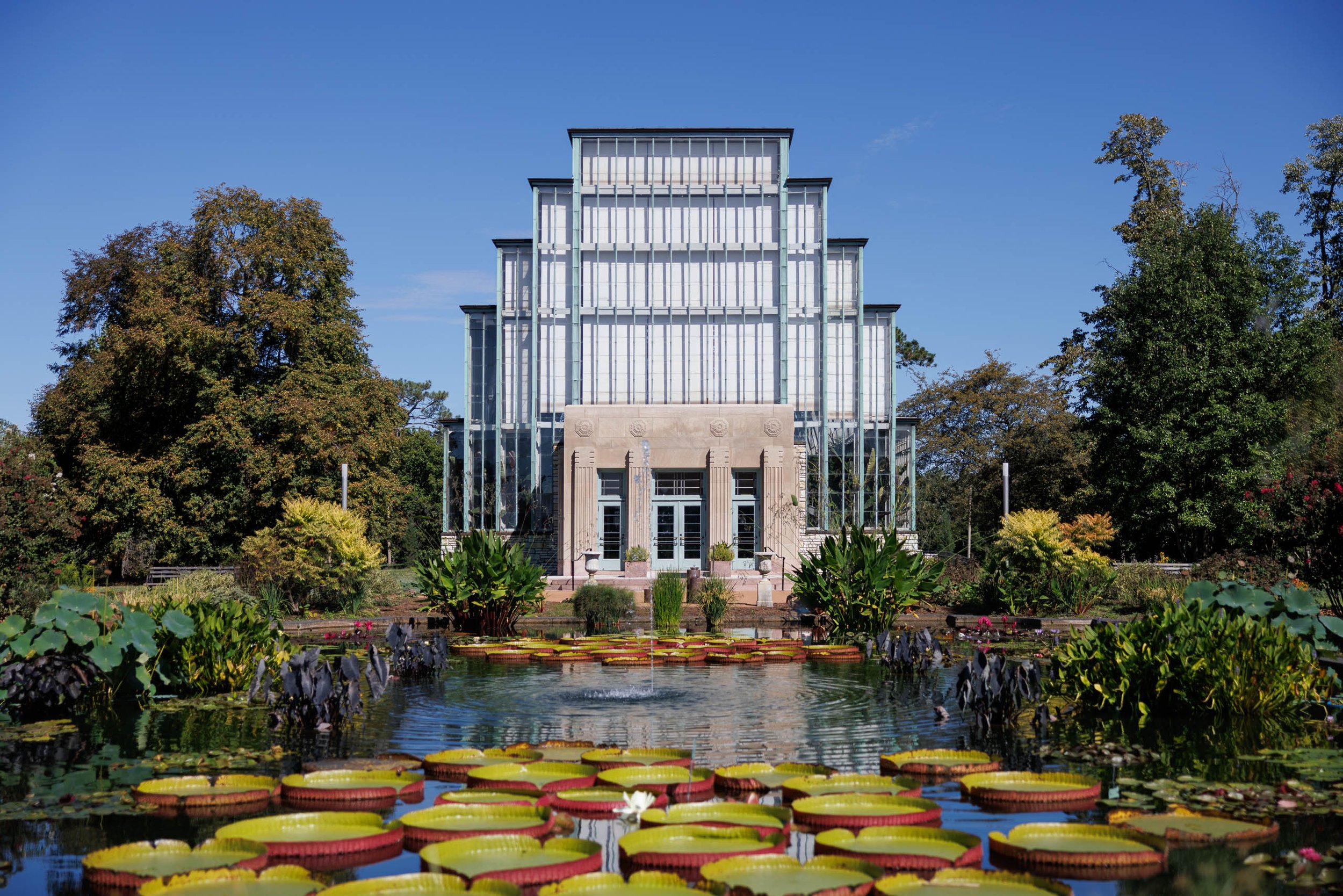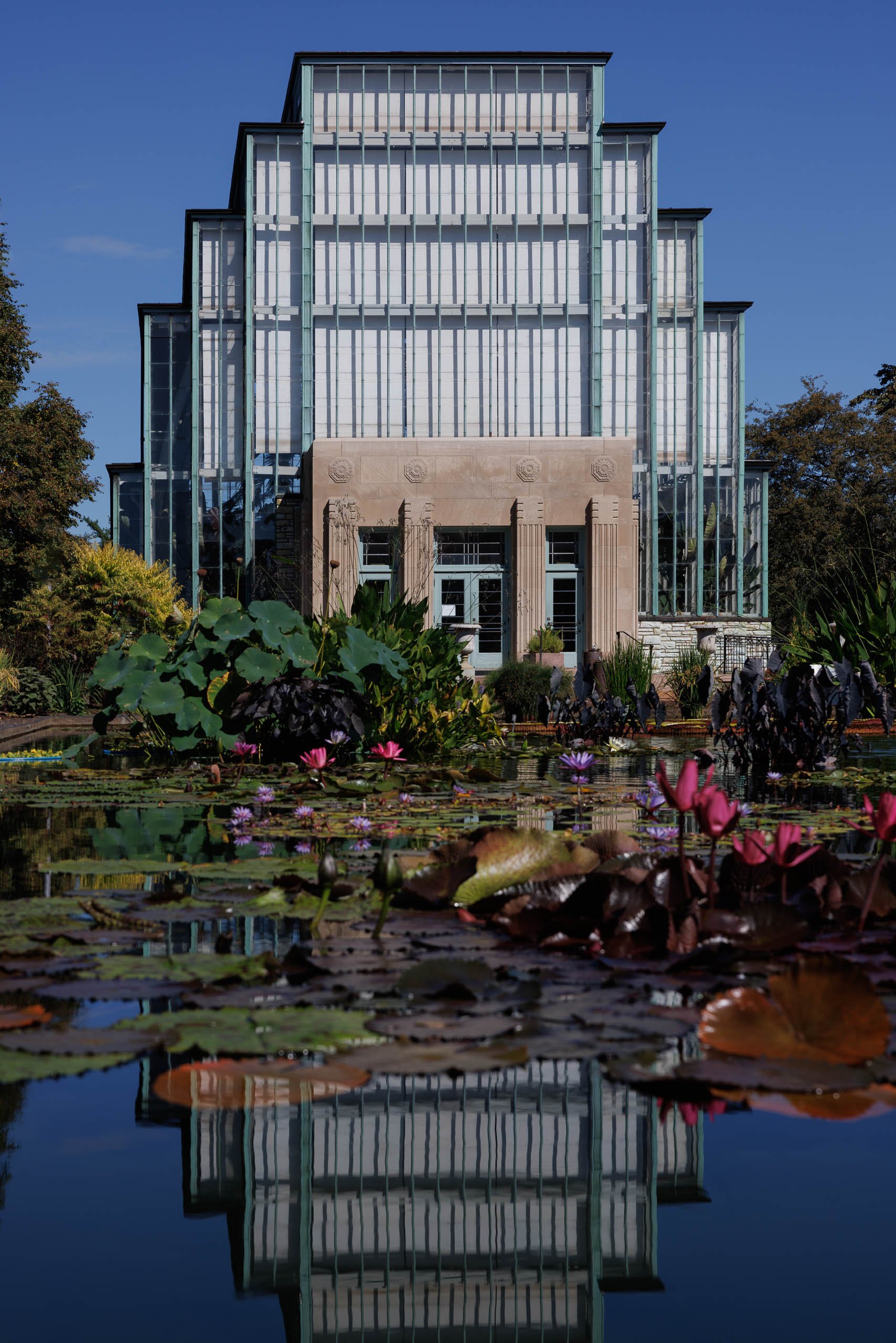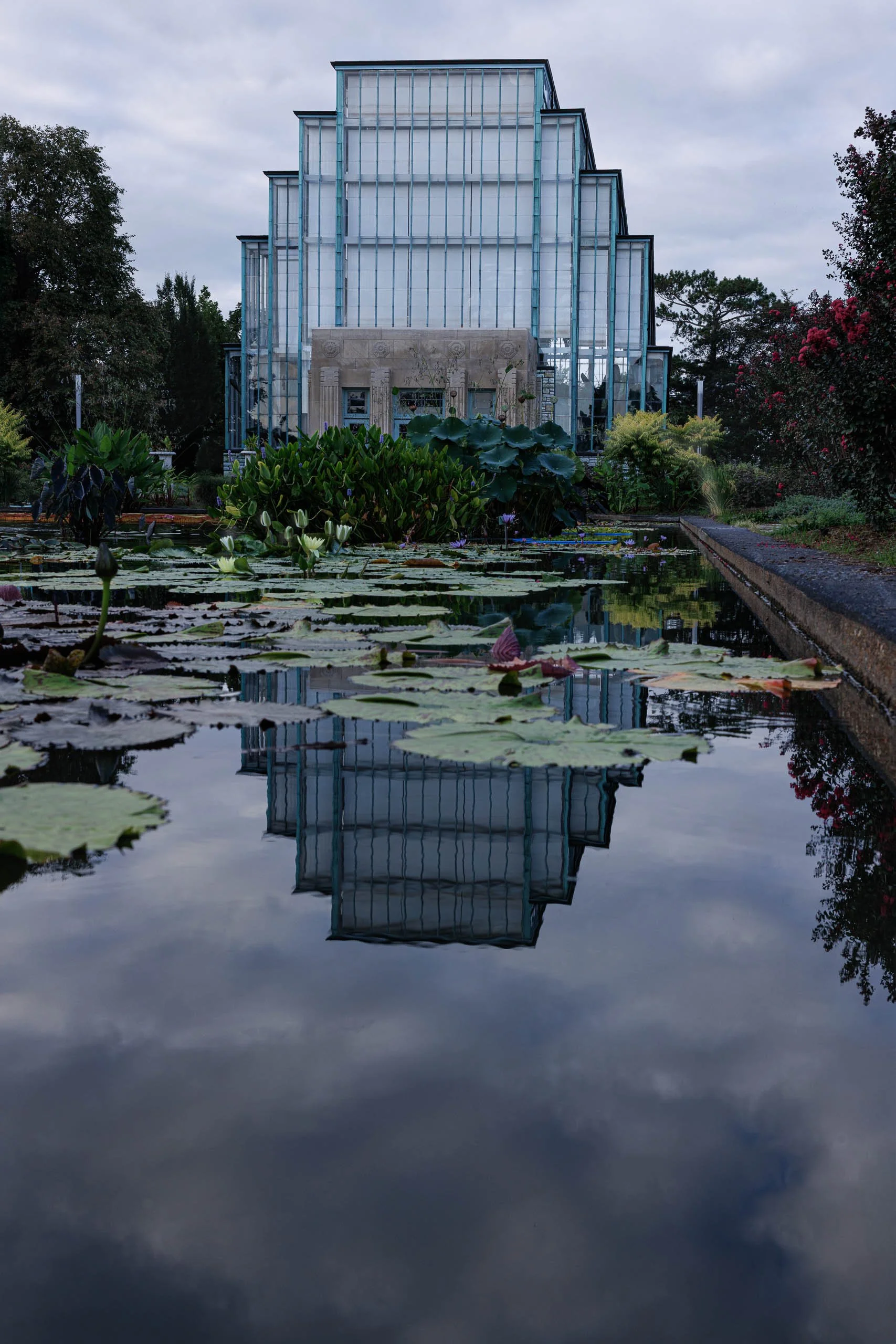
Midwest Quiet
A Closer Look
Explore the finer details of each photograph by hovering over an image to reveal subtle focus and texture, or click to expand the work into a distraction-free viewing environment. This immersive view allows each botanical study to be experienced at its full scale and proportion.
The Midwest is often defined by openness—broad skies, long horizons, winding rivers, quiet roads, and landscapes shaped as much by weather as by geography. The photographs in this collection explore those quieter places, focusing on moments of stillness, reflection, and the enduring relationship between people and the land.
Created throughout Missouri, Kansas, Colorado, and neighboring regions, these images celebrate the character of landscapes that are frequently overlooked. Country roads disappear into distant horizons. Rivers reflect changing skies. Fields, farms, trees, and small towns become studies in light, atmosphere, and season. Rather than seeking dramatic spectacle, the photographs embrace subtle beauty and the emotional resonance found in ordinary places.
Weather often plays a central role. Morning fog, approaching storms, snowfall, changing seasons, and the final light of day transform familiar scenes into moments of quiet discovery. These photographs reflect an appreciation for patience and observation, revealing how a landscape can change from one hour to the next while remaining deeply connected to its history and sense of place.
Influenced by the regional storytelling of Andrew Wyeth, the atmospheric color of Ernst Haas, and the landscape traditions of the American Midwest, these images explore themes of memory, solitude, resilience, and belonging. They are photographs about place, but also about the experiences and emotions that certain places continue to evoke.
Designed for collectors, healthcare environments, hospitality spaces, offices, and residential interiors, these photographs bring a sense of calm, openness, and connection to the natural world while celebrating the enduring beauty of the American heartland.
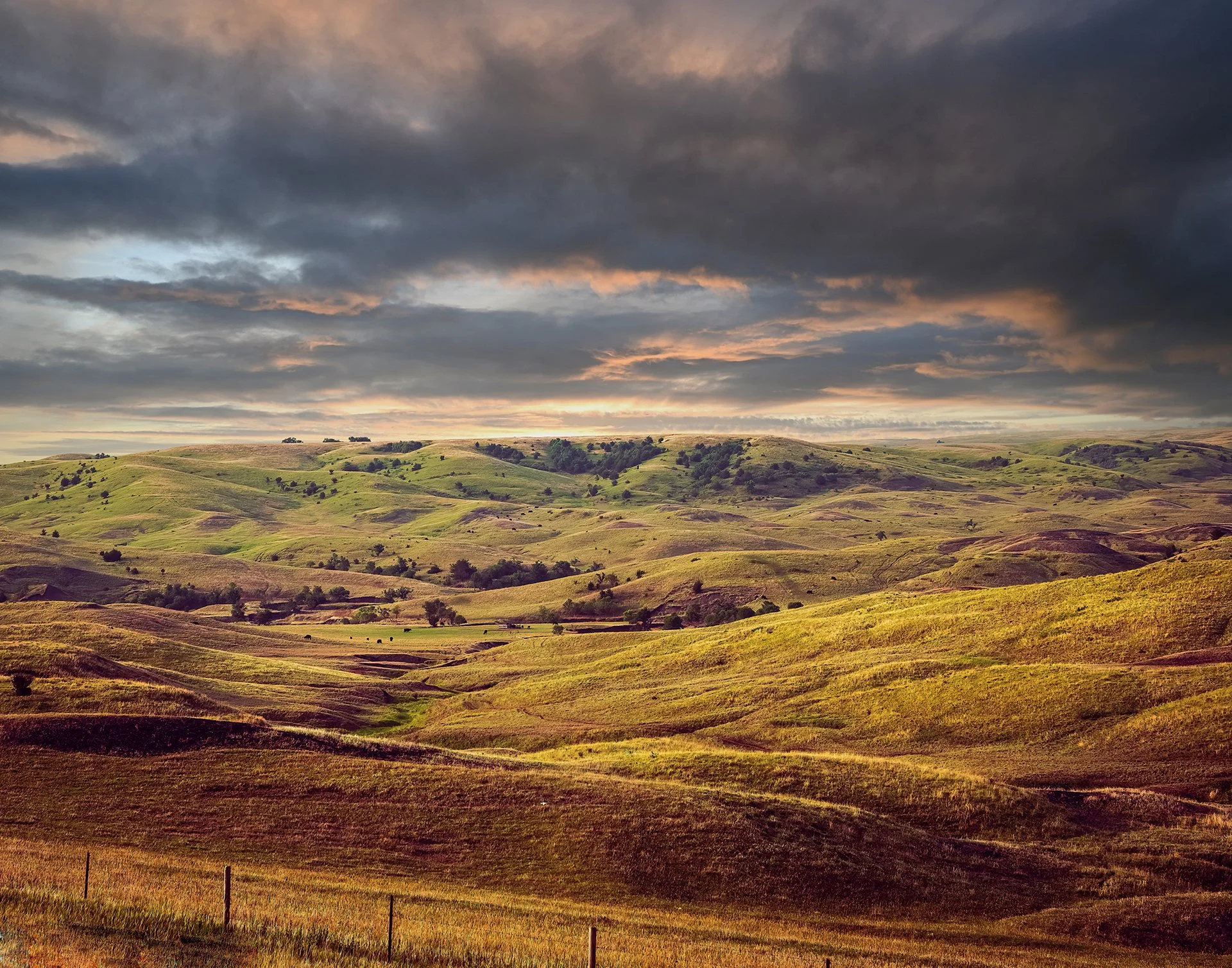
“Anybody can love the mountains, but it takes a soul to love the prairie.”
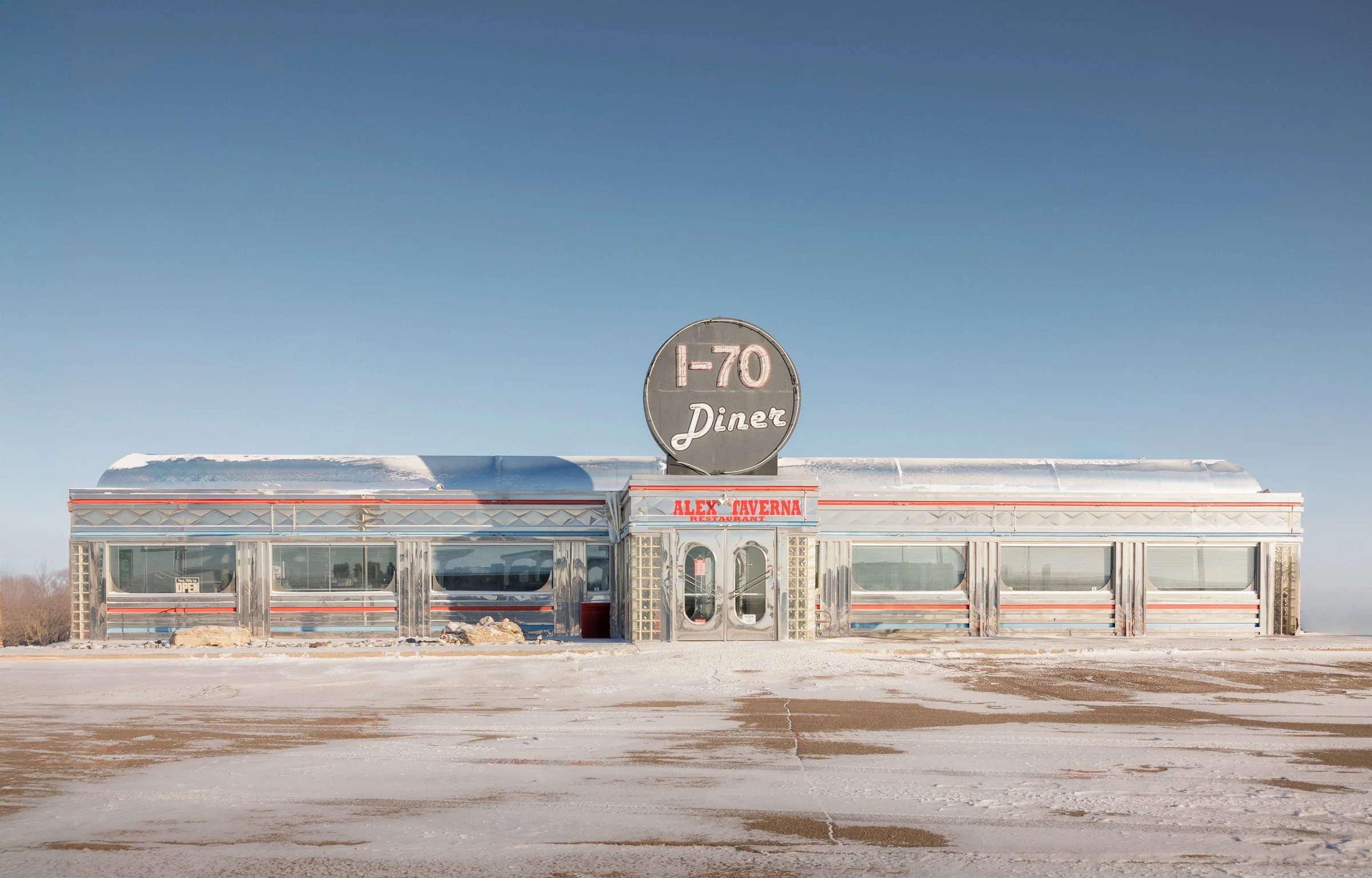
Between The Exits is a study of solitude, memory, and the fading landmarks of the American roadside. Photographed along Interstate 70 during winter, the image centers on an empty diner standing quietly beneath a cold sky, its presence softened by patches of snow and the stillness of the season. Once a place of movement, conversation, and passing travelers, the building now exists in a quieter state—suspended between past and present. Drawing inspiration from the cinematic observations of Wim Wenders and the quiet emotional realism of Edward Hopper, the photograph explores the atmosphere of places that remain long after the crowds have moved on.
The composition balances the diner against the openness of the surrounding landscape, emphasizing both isolation and endurance. Winter light and subdued tones reduce the scene to its essential forms, allowing the structure itself to carry the emotional weight of the image. The nearby interstate remains unseen but implied, a reminder of the movement that once defined the location. Rather than focusing on abandonment alone, the photograph reflects on transition and memory, capturing the lingering presence of a place caught between usefulness and nostalgia.
The result is a photograph that celebrates the quiet poetry of the American road—an image rooted in atmosphere, observation, and the stories that gather around overlooked places.
Design & Styling
With its subdued winter palette, cinematic Americana character, and contemplative atmosphere, Between The Exits works especially well in hospitality environments, executive offices, restaurants, residential interiors, healthcare spaces, and commercial settings seeking imagery that conveys authenticity, nostalgia, and a strong sense of place. The photograph introduces mood and narrative while maintaining the visual restraint associated with fine art photography.
Curated Pairings
To create a cohesive gallery wall, consider these companion pieces from the Americana and Road Series collections:
For complementary roadside atmosphere: Pair with The Long Way West to extend themes of travel, distance, and the emotional landscape of the American road.
For tonal harmony: Complement this piece with The Bartender's Measure, which shares the same sense of quiet observation, human absence, and cinematic atmosphere found throughout this collection.
Fine Art Presentation
Available as a signed fine art print in matte metal, framed paper, framed canvas, and acrylic presentation formats. To preserve the subtle winter tones, architectural detail, and cinematic atmosphere, Matte Metal or textured archival paper presentation is highly recommended.
Note: Custom and oversized photographic prints are available. Please contact the studio directly to discuss custom framing, matting, or specialized museum glass op tions.
Held Arch is a study of scale, permanence, and the relationship between architecture and place. Photographed from a dramatic wide-angle perspective in downtown St. Louis, the image presents the Gateway Arch as an overwhelming presence rising above the city it has come to symbolize. Rendered in monochrome, the photograph strips away distraction and color, allowing form, light, and structure to define the experience. Drawing inspiration from the architectural clarity of Ansel Adams and the urban contemplations of Wim Wenders, the image explores the dialogue between monument and city, between human ambition and the landscapes it seeks to define.
The composition emphasizes the immense curvature of the Arch as it looms over the surrounding skyline. Buildings that normally command attention become secondary elements beneath the monument's sweeping form. The wide-angle perspective exaggerates scale and creates a sense of tension between the permanence of the Arch and the ever-changing city below. Rather than functioning as a traditional skyline photograph, the image transforms a familiar landmark into a powerful sculptural presence that appears to hold the city within its embrace.
The result is a photograph that celebrates one of America's most recognizable monuments while inviting reflection on identity, place, and the enduring role of architecture in shaping collective memory.
Design & Styling
With its strong graphic structure, monochrome palette, and architectural presence, Held Arch works especially well in corporate environments, healthcare facilities, hospitality spaces, executive offices, urban residential interiors, and civic settings seeking imagery that conveys strength, sophistication, and a connection to place. The photograph introduces visual impact while maintaining the timeless restraint associated with classic black-and-white photography.
Curated Pairings
To create a cohesive gallery wall, consider these companion pieces from the Architecture and St. Louis collections:
For complementary urban atmosphere: Pair with Reflections in Glass and Stone to explore two distinct perspectives on the architectural character of St. Louis.
For tonal harmony: Complement this piece with Evening at the Pavilion, which shares the same appreciation for civic architecture, public space, and the enduring identity of the city.
Fine Art Presentation
Available as a signed fine art print in matte metal, framed paper, framed canvas, and acrylic presentation formats. To preserve the rich monochrome tonal range, architectural detail, and graphic impact of the image, Matte Metal or museum-quality archival paper presentation is highly recommended.
Note: Custom and oversized photographic prints are available. Please contact the studio directly to discuss custom framing, matting, or specialized museum glass op tions.
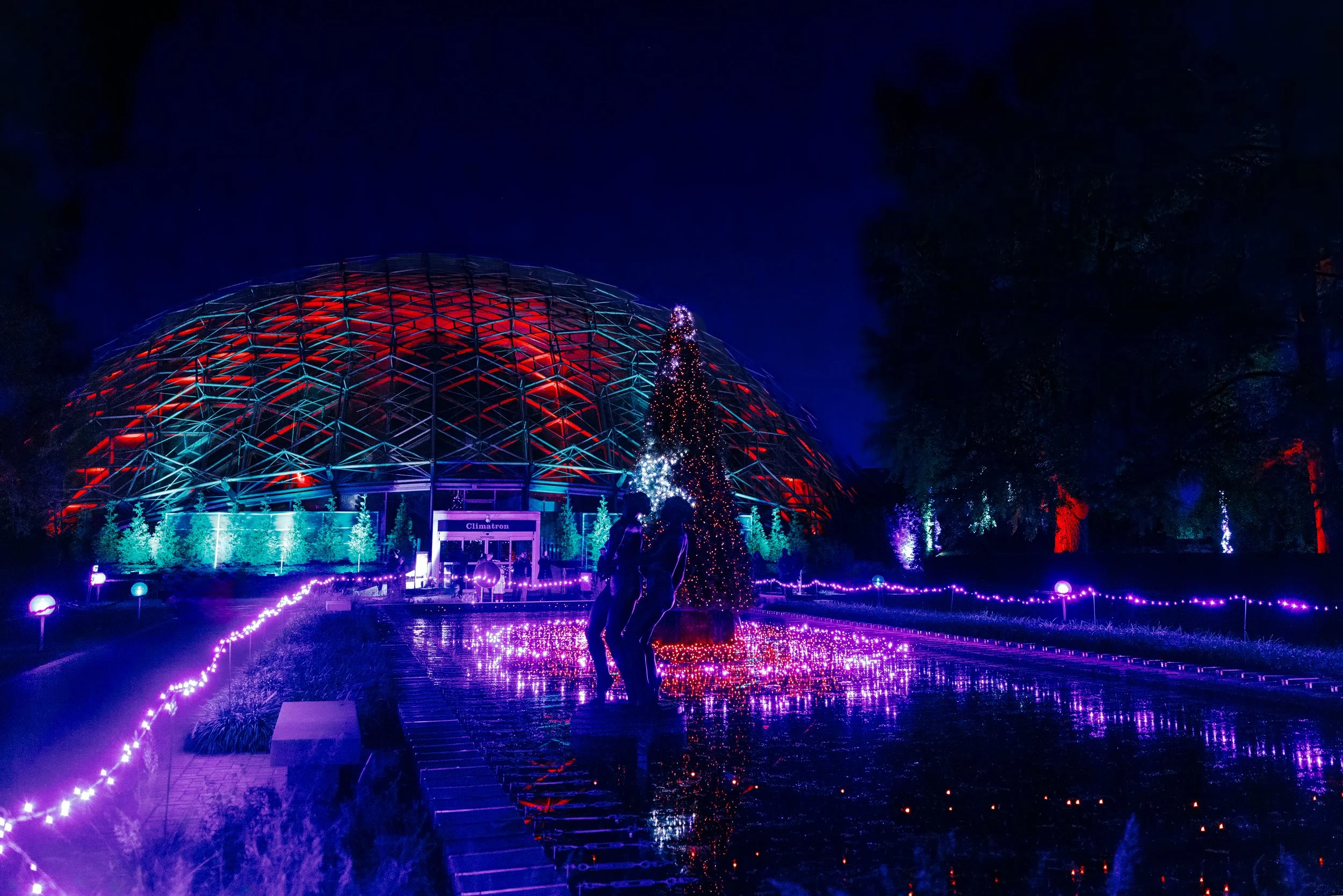
As the Glow Ends is a study of light, atmosphere, and the quiet transformation of architecture after dark. Photographed at the Missouri Botanical Garden in St. Louis, Missouri, the image captures the iconic Climatron illuminated against the night sky as the final traces of daylight disappear. The glowing geodesic structure emerges from the darkness like a lantern within the landscape, revealing a striking balance between technological innovation and natural beauty. Drawing inspiration from the luminous color sensibilities of Ernst Haas and the contemplative urban atmospheres found in the work of Wim Wenders, the photograph explores the emotional character of a place suspended between day and night.
The composition emphasizes the Climatron's distinctive geometric form while allowing light itself to become the primary subject. The illuminated structure stands in contrast to the surrounding darkness, creating a visual tension between transparency and mystery, presence and absence. Familiar during daylight hours, the Climatron takes on an entirely different personality at night, becoming less a botanical conservatory and more a beacon of light within the landscape.
Rather than functioning solely as an architectural study, the photograph reflects on transition—the quiet moment when public spaces become still and architecture begins to reveal a more intimate character. The result is an image that celebrates both the innovative design of the Climatron and the atmospheric beauty of St. Louis after dark.
Design & Styling
With its luminous color palette, contemporary architectural subject, and sophisticated nighttime atmosphere, As the Glow Ends works especially well in healthcare environments, hospitality spaces, executive offices, corporate interiors, and residential settings seeking imagery that conveys optimism, innovation, and calm. The photograph introduces visual energy and architectural elegance while maintaining the contemplative qualities associated with fine art photography.
Curated Pairings
To create a cohesive gallery wall, consider these companion pieces from the Architecture and St. Louis collections:
For complementary architectural atmosphere: Pair with Evening at the Pavilion to explore two iconic St. Louis landmarks transformed by evening light.
For tonal harmony: Complement this piece with Blue Interval, which shares the same fascination with contemporary architecture, reflection, color, and the changing character of light.
Fine Art Presentation
Available as a signed fine art print in matte metal, framed paper, framed canvas, and acrylic presentation formats. To preserve the luminous color, architectural detail, and dramatic nighttime atmosphere, Acrylic or Gloss Metal presentation is highly recommended.
Note: Custom and oversized photographic prints are available. Please contact the studio directly to discuss custom framing, matting, or specialized museum glass options.
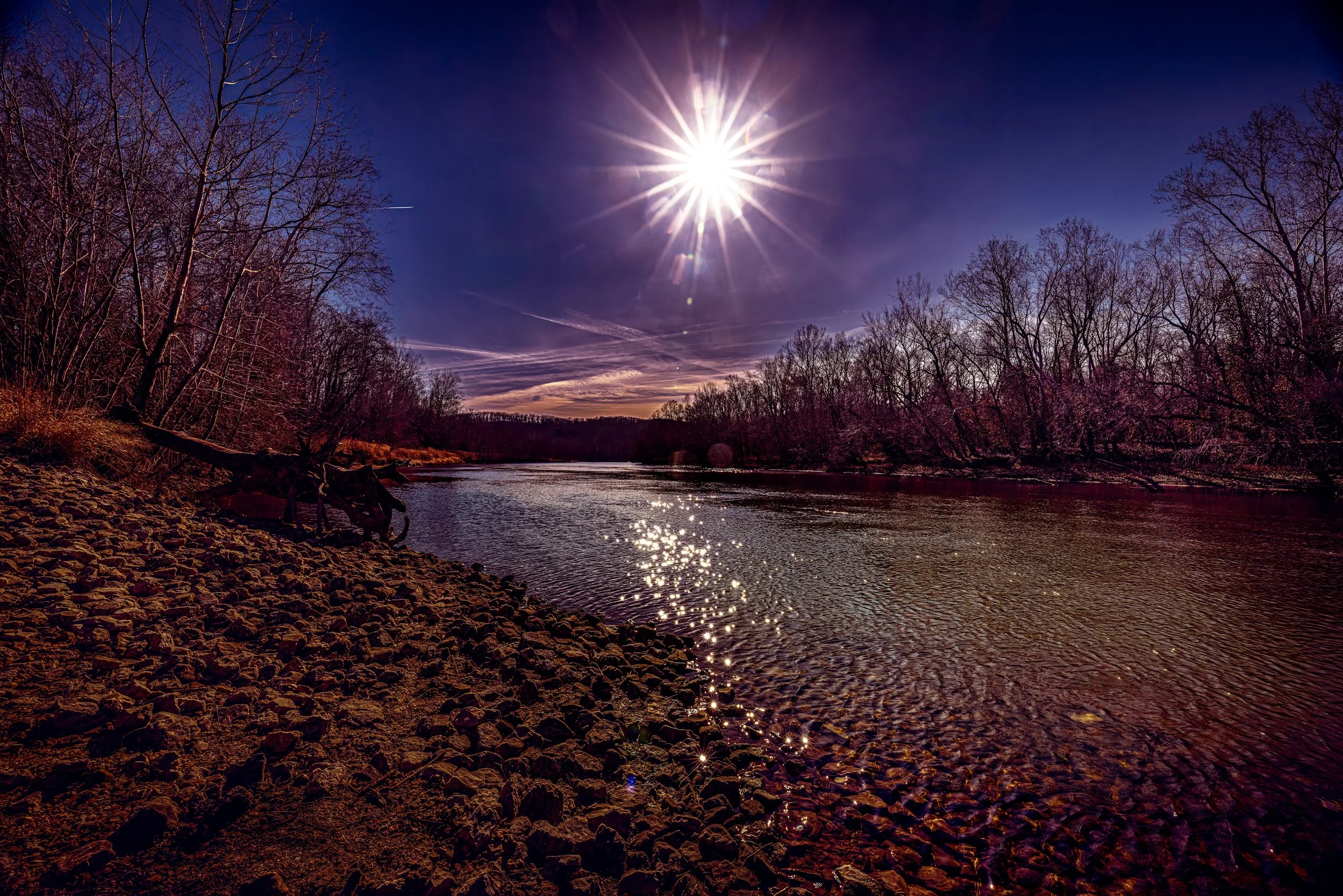
Dawn at the Meramec River is a study of stillness, reflection, and the subtle transition between night and day. Photographed during blue hour along the Meramec River in Missouri, the image captures the landscape in a brief interval when the world is illuminated not by direct sunlight, but by the soft, atmospheric glow that precedes sunrise. Cool tones, gentle reflections, and the quiet presence of the river combine to create a scene that feels suspended between darkness and morning. Drawing inspiration from the contemplative landscapes of Hiroshi Sugimoto and the atmospheric color sensibilities of Ernst Haas, the photograph explores the restorative qualities of light, water, and time.
The composition balances the calm surface of the river against the surrounding landscape, allowing reflections and subtle tonal transitions to become central elements of the image. The absence of dramatic sunlight encourages attention to quieter details—the movement of water, the layering of color, and the sense of anticipation that accompanies the arrival of a new day. Rather than emphasizing spectacle, the photograph embraces restraint, inviting viewers to slow down and experience the landscape as it gradually awakens.
The result is a photograph that celebrates the beauty of ordinary moments and the profound sense of calm that can be found within the natural rhythms of the landscape.
Design & Styling
With its cool blue palette, reflective atmosphere, and calming visual character, Dawn at the Meramec River works especially well in healthcare environments, hospitality spaces, executive offices, residential interiors, and restorative settings seeking imagery that promotes reflection, balance, and emotional well-being. The photograph introduces a sense of openness and tranquility while maintaining the sophistication associated with fine art landscape photography.
Curated Pairings
To create a cohesive gallery wall, consider these companion pieces from the Water and Quiet Landscapes collections:
For complementary river atmosphere: Pair with Where Winter Waited to extend themes of reflection, stillness, and the restorative qualities of water within the landscape.
For tonal harmony: Complement this piece with Enduring Silence, which shares the same contemplative pacing, atmospheric restraint, and emphasis on quiet discovery found throughout this collection.
Fine Art Presentation
Available as a signed fine art print in matte metal, framed paper, framed canvas, and acrylic presentation formats. To preserve the subtle blue-hour tonal transitions, reflective detail, and atmospheric depth, Matte Metal or Acrylic presentation is highly recommended.
Note: Custom and oversized photographic prints are available. Please contact the studio directly to discuss custom framing, matting, or specialized museum glass options.
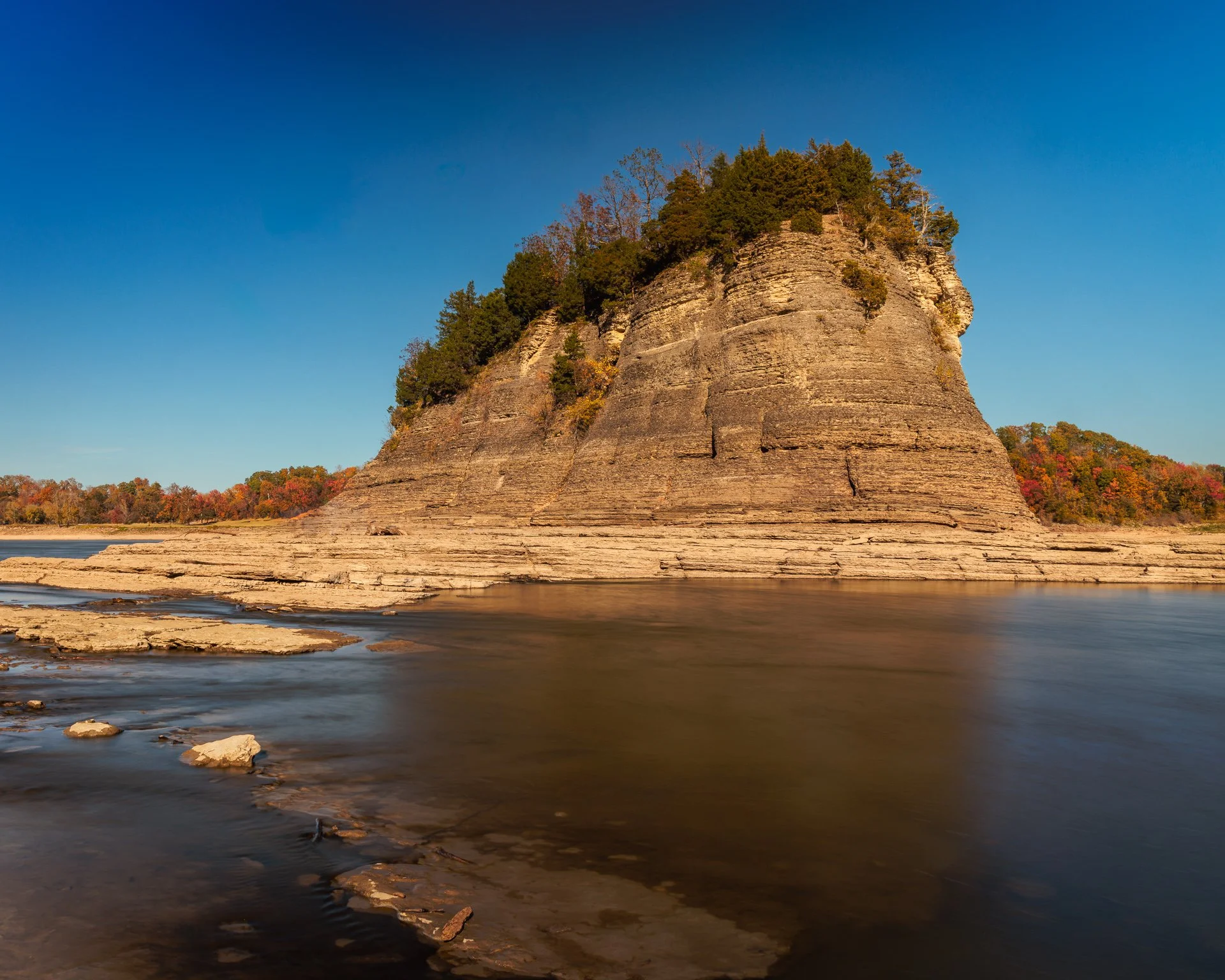
Held by the River is a study of permanence, landscape, and the enduring forces that shape the American heartland. Photographed at Tower Rock along the Mississippi River in Perry County near Wittenberg, Missouri, the image centers on one of the region's most distinctive natural landmarks. Rising from the river that has flowed around it for centuries, Tower Rock stands as a symbol of endurance against the constant movement of water, weather, and time. Drawing inspiration from the formal clarity of Ansel Adams and the contemplative atmosphere found in the work of Hiroshi Sugimoto, the photograph explores the relationship between permanence and change within the natural landscape.
The composition balances the solid mass of the rock against the flowing character of the river, allowing the contrast between movement and stability to become the central theme of the image. Light, reflection, and atmosphere work together to emphasize the rock's commanding presence while revealing the quieter beauty of the surrounding landscape. The river serves as both setting and participant, continuously shaping the environment while the ancient formation remains anchored within it.
Rather than presenting Tower Rock as simply a geological feature, the photograph explores its role as a witness to history—standing through changing seasons, shifting river levels, and generations of travelers who have passed along the Mississippi. The result is an image rooted in place, inviting reflection on resilience, continuity, and the enduring power of the natural world.
Design & Styling
With its timeless landscape character, atmospheric mood, and strong sense of place, Held by the River works especially well in healthcare environments, hospitality spaces, executive offices, residential interiors, and commercial settings seeking imagery that conveys stability, reflection, and connection to the natural world. The photograph introduces visual calm and depth while maintaining the refined presence associated with fine art landscape photography.
Curated Pairings
To create a cohesive gallery wall, consider these companion pieces from the Water and Landscape collections:
For complementary river atmosphere: Pair with Dawn at the Meramec River to explore two distinct expressions of Missouri waterways and their relationship to light and landscape.
For tonal harmony: Complement this piece with Enduring Silence, which shares the same contemplative pacing, sense of permanence, and reverence for landscape found throughout this collection.
Fine Art Presentation
Available as a signed fine art print in matte metal, framed paper, framed canvas, and acrylic presentation formats. To preserve the subtle atmospheric detail, landscape depth, and tonal richness of the image, Matte Metal or museum-quality archival paper presentation is highly recommended.
Note: Custom and oversized photographic prints are available. Please contact the studio directly to discuss custom framing, matting, or specialized museum glass options.
The American Heartland
Filters
No results found
No results match your search. Try removing a few filters.
Held Against the Sky
Held Against the Sky is a study in scale, stillness, and the quiet authority of open sky. Photographed on a high mountain hillside in Colorado, the image centers on a solitary cabin set low against a vast blue expanse, its dark form dwarfed by a single towering cumulus cloud drifting overhead. Drawing inspiration from Ansel Adams' disciplined command of scale and Josef Sudek's patient, restrained approach to light, the photograph explores the tension between human presence and the immensity of the landscape that surrounds it.
The composition balances the small, grounded geometry of the cabin against the soft architecture of the cloud and the deepening gradient of sky above it. A faint line of fence posts traces up the hillside, the only other trace of human hand in an otherwise wild meadow. Rather than emphasizing the drama of mountain weather, the image favors restraint — a sky that deepens toward indigo at its zenith, grass rendered in quiet textural detail, and a dwelling that holds its ground without asserting itself. The result is a photograph less about the cabin than about the vast, patient quiet that surrounds it.
The image reflects the qualities that draw people to the Colorado high country — a place where elevation, weather, and solitude combine to produce moments of genuine visual and emotional quiet.
Design & Styling
With its restrained palette, expansive sense of space, and calming visual rhythm, Held Against the Sky works especially well in healthcare environments, hospitality spaces, executive offices, residential interiors, and restorative settings seeking imagery that conveys openness, reflection, and quiet scale. The photograph introduces a sense of elevation and breathing room while maintaining the sophistication associated with contemporary fine art landscape photography.
Curated Pairings
To create a cohesive gallery wall, consider these companion pieces from the Built Environment and Western Silence collections:
For complementary Colorado atmosphere: Pair with Where The Homestead Waits to extend themes of solitary structure, weather, and quiet Colorado landscape.
For tonal harmony: Complement this piece with Enduring Shelter, which shares the same restrained palette, structural stillness, and sense of visual patience found throughout this piece.
Fine Art Presentation
Available as a signed fine art print in ChromaLuxe® Metal, Gallery Metal, TruLife Acrylic, and framed archival Photo Rag paper. To preserve the smooth tonal transitions across the sky and the fine textural detail in the grass and cloud, Gallery Metal or Acrylic presentation is highly recommended for the richest depth and cleanest gradient rendering.
Note: Larger and custom gallery sizing may be available. If custom scale photographic prints are required for your space, please contact us to discuss specialized matting, framing options, and museum glass selections.
Steel Echoes finds a quiet piece of public infrastructure — a run of stainless steel bike-rack rings — and turns it into a study of repetition and depth. Photographed low and close to the first ring, the composition uses the receding circles like a series of apertures, each one framing a smaller, softer version of the same green park beyond. The effect reads almost architectural: a tunnel built not of stone but of brushed steel and daylight.
The late-day light does real work here, warming the concrete path to a rich ochre while keeping the sky a cool, cloud-stacked blue — two temperatures meeting at the horizon just past the final ring. Each loop catches the light a little differently depending on its angle to the sun, so the sequence reads less like flat repetition and more like a series of related, individually lit gestures.
In the same spirit as Steel Wave's industrial minimalism, and drawing on Aaron Siskind's eye for abstraction hidden in plain civic objects, Steel Echoes treats an ordinary piece of municipal design as worthy of the same attention as any landscape — proof that geometry and light don't need a dramatic subject, just the right angle on an ordinary one.
DESIGN & STYLING
Steel Echoes suits contemporary and minimalist interiors built around geometry and repetition rather than literal subject matter — offices, tech company lobbies, design studios, modern residences, and any space where clean lines and quiet rhythm do more work than color or drama. The warm-cool palette (ochre path, blue sky, brushed steel) gives it real flexibility as a neutral-leaning accent piece.
The strong linear perspective also suits long hallways or narrow walls particularly well, where the receding rings create a sense of depth even in a tight space.
CURATED PAIRINGS
For material and mood: Pair with Steel Wave — both find abstraction in industrial steel, one through rust and reflection, one through repetition and light.
For repetition and pattern: Complement with A Break in the Pattern — a very different setting, same interest in rhythm and geometric repetition.
For public art in a garden setting: Add Glass and Gesture, another St. Louis-area piece finding art in public architecture.
FINE ART PRESENTATION
Steel Echoes is available as a signed fine art photographic print in multiple presentation styles. ChromaLuxe Metal is the natural match — printing a photograph of polished steel onto a metal substrate doubles down on the subject's own material, and the format's brightness and sharpness suit the clean geometric lines especially well. Acrylic offers a similar high-contrast pop with added depth. Framed Photo Rag paper and Canvas Framed are both available for a softer, more traditional presentation if the space calls for it.
Note: Custom and oversized prints are available. Please contact the studio directly to discuss custom framing, sizing, or specialized presentation options.
Through the Arch explores the relationship between architecture, perspective, and discovery within one of Budapest's most iconic historic spaces. Photographed at Fisherman's Bastion in Buda, the image uses a weathered stone archway as a natural frame, guiding the viewer toward a soaring tower, ascending stairway, and layered architectural forms beyond. The composition transforms a familiar landmark into a study of passage, inviting viewers to experience the space as a journey rather than a destination.
The photograph is built upon a series of visual transitions. The dark stone arch creates a sense of enclosure and anticipation, while the illuminated architecture beyond gradually reveals itself through layers of arches, stairways, and towers. The eye moves naturally through the scene, following the ascending staircase toward the central tower before drifting outward into the cityscape beyond. This progression creates a sense of movement and discovery that echoes the experience of walking through historic European cities.
Drawing inspiration from the atmospheric architectural studies of Wim Wenders and the color sensitivity of Ernst Haas, the image emphasizes mood, structure, and the passage of light across stone. The interplay between shadow and illumination allows the architecture to feel both monumental and inviting. Rather than functioning solely as a documentary record of place, the photograph explores how architecture shapes emotional experience through scale, rhythm, and perspective.
The result is a contemplative image that balances grandeur with intimacy. Through the Arch reflects the enduring appeal of historic architecture and the quiet moments of wonder that emerge when light, form, and viewpoint align.
Design & Styling
With its layered architectural forms, neutral stone palette, and strong sense of depth, Through the Arch works particularly well in executive offices, hospitality environments, libraries, healthcare spaces, studies, and contemporary residential interiors. The image introduces sophistication, history, and visual structure while maintaining a calm and contemplative atmosphere.
Curated Pairings
To create a cohesive gallery wall, consider these companion pieces from the European Texture & Light collection:
For architectural dialogue: Pair with Gateway of Time to continue the exploration of historic European architecture, passageways, and layered spatial experience.
For visual rhythm: Pair with Study in Yellow and Blue #4 to contrast monumental architecture with geometric simplicity, color relationships, and formal design.
For a travel-inspired collection: Pair with Inside the Hour to connect iconic European landmarks through themes of history, craftsmanship, and enduring place.
Fine Art Presentation
Available as a signed fine art print in metal, framed paper, framed canvas, and acrylic presentation formats. Satin Metal and Low-Glare Acrylic are particularly well suited to preserving the image's stone textures, architectural depth, and luminous sky detail.
Note: Larger and custom gallery sizing may be available. Please contact us regarding custom sizing, framing options, and installation recommendations.
Vertical Interval
Vertical Interval explores the relationship between movement, structure, and light within one of Prague's most unexpected architectural spaces. Photographed inside the elevator shaft of the Old Town Hall Clock Tower, the image transforms a functional interior into an abstract study of geometry and ascent. Curving steel rails, layered staircases, and the illuminated elevator cab converge toward a distant opening overhead, creating a visual journey from darkness into light.
The composition is built around repetition and rhythm. Circular forms echo throughout the frame while the surrounding stairways create a series of angular counterpoints. The upward perspective removes the viewer from ordinary scale and orientation, encouraging a more contemplative reading of the scene. What begins as a document of architecture gradually becomes an exploration of space itself.
The photograph reflects an ongoing interest in the ways built environments shape perception and experience. The elevator, suspended between floors, becomes a metaphor for transition and possibility. Light emerges from the center of the frame while shadows define the boundaries, creating a tension between certainty and mystery.
Influenced by the modernist sensibilities of photographers such as Berenice Abbott and the observational approach of Wim Wenders, Vertical Interval invites viewers to consider architecture not merely as structure, but as a framework through which movement, memory, and imagination unfold.
Design & Styling
With its strong geometric forms, monochromatic palette, and contemporary architectural character, Vertical Interval works particularly well in modern residential interiors, executive offices, healthcare environments, hospitality spaces, technology firms, and contemporary corporate collections.
The image introduces sophistication and visual energy without overwhelming a space. Its abstract quality allows it to function both as a conversation piece and as a contemplative architectural study.
Curated Pairings
To create a cohesive gallery wall, consider pairing Vertical Interval with:
Reflections in Glass and Stone — continues the exploration of modern architecture and layered visual space.
The Weight of Names — balances architectural structure with human narrative and memory.
White Curved Structure — complements the image through its emphasis on geometry, form, and modernist design.
Fine Art Presentation
Available as a signed fine art print in framed paper, metal, framed canvas, and acrylic presentation formats.
Recommended Presentation: Framed Fine Art Paper. Hahnemühle Photo Rag Metallic or Baryta papers preserve the deep blacks, luminous highlights, and subtle tonal transitions that define the image. A black frame paired with a Crescent Soft Cream mat creates a museum-quality presentation.
Matte metal is also highly effective for contemporary interiors, emphasizing the image's modern architectural character while maintaining excellent tonal separation.
Larger presentation sizes are particularly impactful, allowing viewers to experience the intricate network of lines, curves, and light throughout the composition.
Note: Larger and custom gallery sizing may be available. If custom-scale photographic prints are required for your space, please contact us to discuss specialized framing, installation considerations, and presentation options.
Quiet Crossing is a contemplative architectural landscape exploring symmetry, reflection, and the calming geometry of classical design. Captured beneath soft winter light, the photograph features a pale stone bridge arching quietly across still water, where muted reflections and restrained tonal transitions transform the scene into a study of balance, structure, and visual stillness. Drawing from the quiet formalism of modern architectural photography and the restrained pacing of minimalist landscape imagery, the composition emphasizes calm repetition, softened contrast, and restorative atmosphere.
The image balances the graceful curvature of the bridge against the subtle movement of reflected water, allowing the composition to function as both architectural study and meditative landscape. Rather than focusing on dramatic light or spectacle, the photograph explores the quiet emotional rhythm created through symmetry, reflection, and negative space.
Design & Styling
With its restrained palette, softened architectural geometry, and reflective water surfaces,Quiet Crossing works especially well in healthcare interiors, hospitality environments, waiting rooms, offices, and contemporary residential spaces. The image introduces a calming visual presence while maintaining structural elegance and understated sophistication suited for restorative and contemplative environments.
Curated Pairings
To create a cohesive gallery presentation, consider these companion pieces from the Lines of Quiet Architecture and Color & Atmosphere collections that share the same emphasis on reflection, geometry, and atmospheric restraint:
For complementary architectural rhythm:Pair with Reflections of Glass and Stone to extend the visual dialogue between structure, reflection, and quiet abstraction.
For atmospheric harmony:Complement this piece with Waiting Out the Storm, which shares the same restrained pacing and contemplative tonal atmosphere found throughout this collection.
Fine Art Presentation
Available as a signed fine art print in satin metal, framed paper, framed canvas, and acrylic presentation formats. To preserve the subtle tonal transitions, soft architectural detail, and reflective water textures, Satin Metal or Hahnemühle Photo Rag presentation is especially recommended.
Note: Custom and oversized photographic prints are available. Please contact the studio directly to discuss custom framing, matting, or specialized museum glass options.
Have Questions?
To accommodate grand residential or corporate spaces, larger scale photographic prints and custom dimensions are available upon request.
For collectors seeking ready-to-hang presentations, we welcome the opportunity to collaborate on custom framing, museum-quality matting, and specialized glass selections tailored to your unique aesthetic.
What the Tree Kept is a quiet study of time, endurance, and the unexpected ways nature absorbs the traces of human activity. Photographed in a residential neighborhood, the image centers on a section of weathered wrought iron fence that has become partially engulfed by the trunk of a mature tree. What was once a clear boundary now exists as a relic, slowly reclaimed by growth and transformed into something neither wholly natural nor entirely man-made.
The photograph explores the tension between permanence and change. The forged iron pickets, designed to resist weather and mark a property line, stand in contrast to the living tree that has gradually enveloped them. Decades of growth have altered the relationship between the two, creating a visual record of time's passage. The bark's intricate texture echoes the roughened surface of the iron, allowing the materials to appear increasingly connected despite their very different origins.
Rather than presenting a dramatic landscape or architectural subject, the image invites close observation of an ordinary scene. The shallow depth of field isolates the fence and trunk from the surrounding environment, encouraging viewers to consider the quiet narratives embedded within familiar places. Influenced by the observational traditions of photographers such as Andrew Wyeth's visual sensibility and the contemplative studies of rural American subjects, the photograph becomes an exploration of memory, persistence, and the gradual reshaping of human intentions by the natural world.
Design & Styling
With its subdued palette, rich textures, and contemplative subject matter, What the Tree Kept works especially well in studies, libraries, professional offices, healthcare environments, rustic residences, and interiors that emphasize history, craftsmanship, and natural materials. The image introduces visual interest through texture and narrative rather than color, making it an effective companion piece for spaces designed around calm, permanence, and reflection.
Curated Pairings
For a cohesive gallery wall, consider these companion pieces:
For thematic continuity: Pair with What Remains, continuing an exploration of aging structures, memory, and the persistence of place.
For rural character: Complement this piece with Hanging On, creating a dialogue between weathered human artifacts and the forces that shape them over time.
For visual harmony: Pair with Where the Plains Remember, extending themes of endurance, history, and the quiet passage of time across the American landscape.
Fine Art Presentation
Available as a signed fine art print in premium presentation formats including framed archival paper, canvas, metal, and gallery-grade acrylic. To fully preserve the intricate bark textures, weathered iron surfaces, and subtle tonal transitions throughout the image, Framed Archival Photo Paper is highly recommended. A matte presentation further enhances the photograph's contemplative character and emphasizes its emphasis on texture and detail.