
Introducing Hiroshi Sugimoto
What happens when photography stops documenting moments and begins exploring time itself? The work of Hiroshi Sugimoto offers one answer. Through quiet, contemplative images that blur the boundaries between memory, history, and perception, Sugimoto has created some of the most influential photographs of the modern era.
Art of Photographing Time
July 16
Written By Robert Niemeier
Time, Stillness, and Presence: What I Learned from Hiroshi Sugimoto
I did not arrive at photography through conceptual art. I arrived through places.
Roads through Monument Valley. Quiet mornings beside rivers. Rain-soaked streets in Prague. Snow-covered landscapes in Colorado. Empty spaces where weather, light, and memory seem to linger.
Yet the longer I photograph, the more I find myself returning to ideas explored by Hiroshi Sugimoto.
On the surface, our work looks very different. Sugimoto is known for minimalist black-and-white images created with large-format cameras and carefully controlled processes. My work often embraces color, atmosphere, weather, and the emotional possibilities of place.
But beneath those differences, I find common ground.
Sugimoto's photographs are often described as being about time. I think many of my photographs are as well.
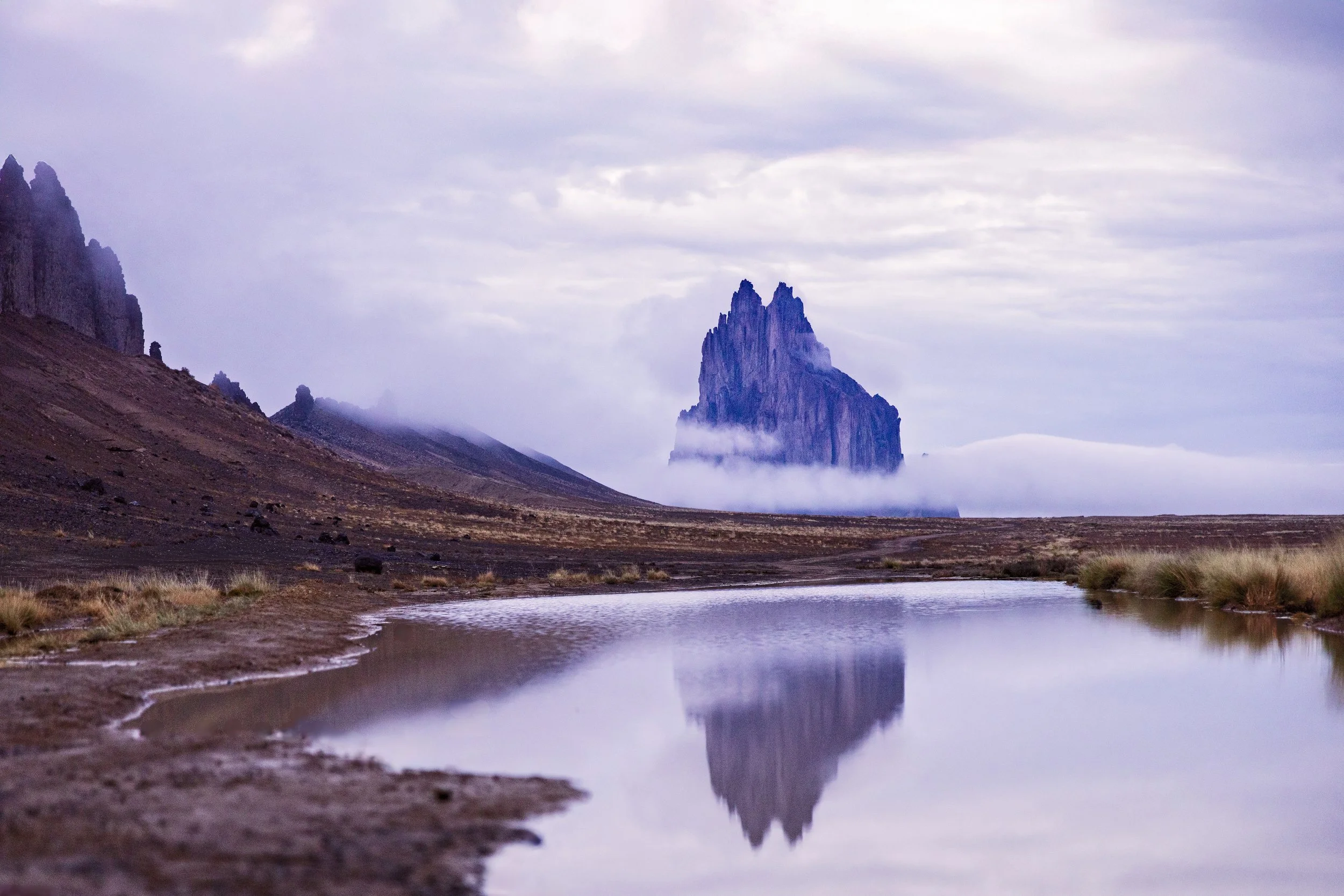
When I photograph Shiprock in Enduring Silence, I am not simply documenting a geological feature. I am trying to communicate a feeling of permanence that extends beyond the moment I pressed the shutter.
When I photograph puddle reflections in the Southwest, such as Stillness After Rain, I am interested in the brief moment when the landscape becomes something else—when stone, sky, and water seem suspended between reality and reflection.
In images like Before the City Wakes or Between Us, The Field, human presence becomes important precisely because it is small. The figures are not the subject in a traditional sense. They become a measure of scale, solitude, and time.
Sugimoto's work encourages me to slow down and ask a different question before making a photograph.
Not "What am I looking at?"
But "What am I experiencing?"
The answer is rarely a landmark or a location.
It is often silence.
It is anticipation.
It is the feeling that a place has existed long before I arrived and will remain long after I leave.
Many of my favorite photographs happen during transitional moments—before sunrise, after rain, during blue hour, or in changing weather. These are times when the world feels slightly less certain and slightly more reflective. Sugimoto's work has helped me appreciate that ambiguity.
Photography is frequently associated with decisive moments and dramatic events. Yet some of the photographs that stay with us longest are the quiet ones.
A horizon.
A road disappearing into distance.
A figure waiting.
A field beneath changing light.
Sugimoto's photographs remind us that stillness is not emptiness. It is presence.
That idea continues to shape the way I approach my own work. I am not trying to stop time. I am trying to create photographs that allow viewers to feel it.
Painting with Time
Photography is often described as "freezing a moment," but for the legendary Ernst Haas, it was about capturing the flow of it. Haas didn't want to stop the world; he wanted to show its pulse. As I curate my 2026 collection, Haas’s influence is what allows my work to move beyond a simple document and into the realm of visual poetry.
Ernst Haas and the Rhythmic Motion of Light Photography is often described as "freezing a moment," but for the legendary Ernst Haas, it was about capturing the flow of it. Haas didn't want to stop the world; he wanted to show its pulse. As I curate my 2026 collection, Haas’s influence is what allows my work to move beyond a simple document and into the realm of visual poetry.
The Haas Influence: Beyond the Sharp Edge
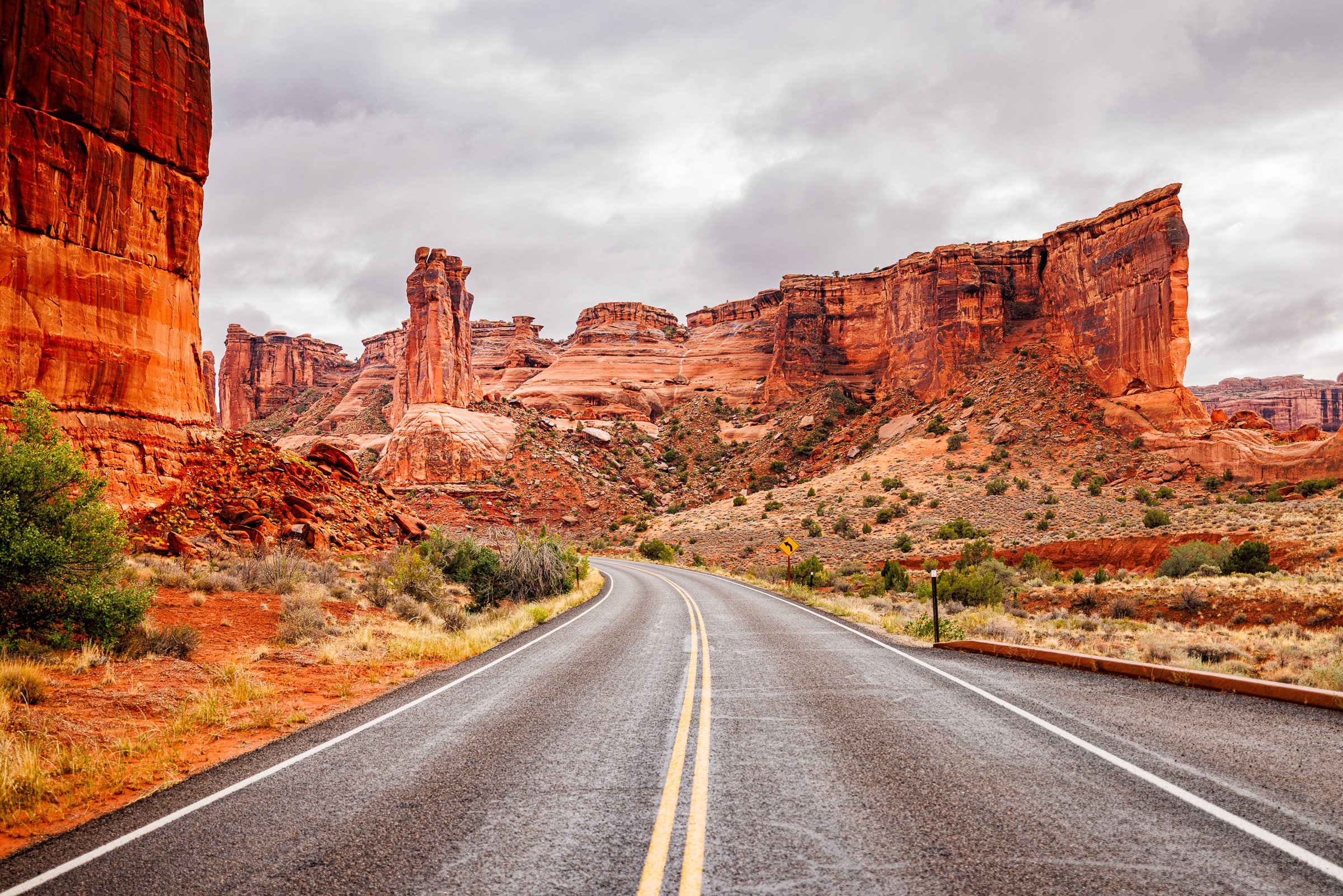
In pieces like Into the Canyon and Valley of Fire, Jeep, I find myself reaching for the same sense of rhythmic momentum that Haas pioneered.Here is how his legacy shapes my lens:Rhythm & Perspective: Haas taught us that a road isn't just asphalt; it’s a leading line that carries the viewer’s soul toward the horizon. By utilizing high-contrast tones, I aim to capture that same "vibration" of the open road. The Layered View: Haas loved reflections and the way glass can transform a city. In my urban studies, I look for those "painterly" layers where the ancient world and the modern world overlap in a single, blurred reflection.Emotional Color: Much like Haas’s iconic color work, I use color sparingly but intentionally. Whether it’s the warmth of a Teton field or the cool shadows of a Roman street, the color is there to tell you how the moment felt, not just how it looked.
The Metal Print: A Canvas for Light
To truly honor the Haas aesthetic, I often recommend Metal Prints with a Satin finish or Acrylic Presentations.Because Haas was about the "energy" of light, these mediums provide a luminous depth that makes the colors feel like they are radiating from within the art. It captures that "liquid" quality of motion and the rhythmic sharpness of my high-contrast compositions.
Introducing Ernst Haas
Photography is often described as "freezing a moment," but for the legendary Ernst Haas, it was about capturing the flow of it. Haas didn't want to stop the world; he wanted to show its pulse. As I curate my 2026 collection, Haas’s influence is what allows my work to move beyond a simple document and into the realm of visual poetry.
1. The Aesthetic: "The Color of Energy"
Haas was one of the first to be accepted into the prestigious Magnum Photos agency for color work.
The "Slow" Shutter: He was the master of intentional motion blur. He didn't want to freeze time; he wanted to show the passage of it. This is why your work focuses on rhythm—it implies a world in motion.
Abstract Impressionism: Haas looked for reflections in puddles, light through glass, and blurred shadows. He turned the real world into an abstract painting of light.
2. The Technique: Color as Subject
For Haas, color wasn't a "tint" added to a photo; color was the photo.
The "Haas Red": He used vibrant pops of color (like the red in your Jeep or the Pink House) to lead the eye through a high-contrast scene.
Layering: He loved shooting through things—windows, rain, or architectural gaps—to create depth. This is a direct link to your "Into the Canyon" or your glass reflections.
3. The Philosophy: The Poetry of the Lens
Haas believed photography should be "poetic realism." He didn't document a street; he documented the feeling of being on that street.