
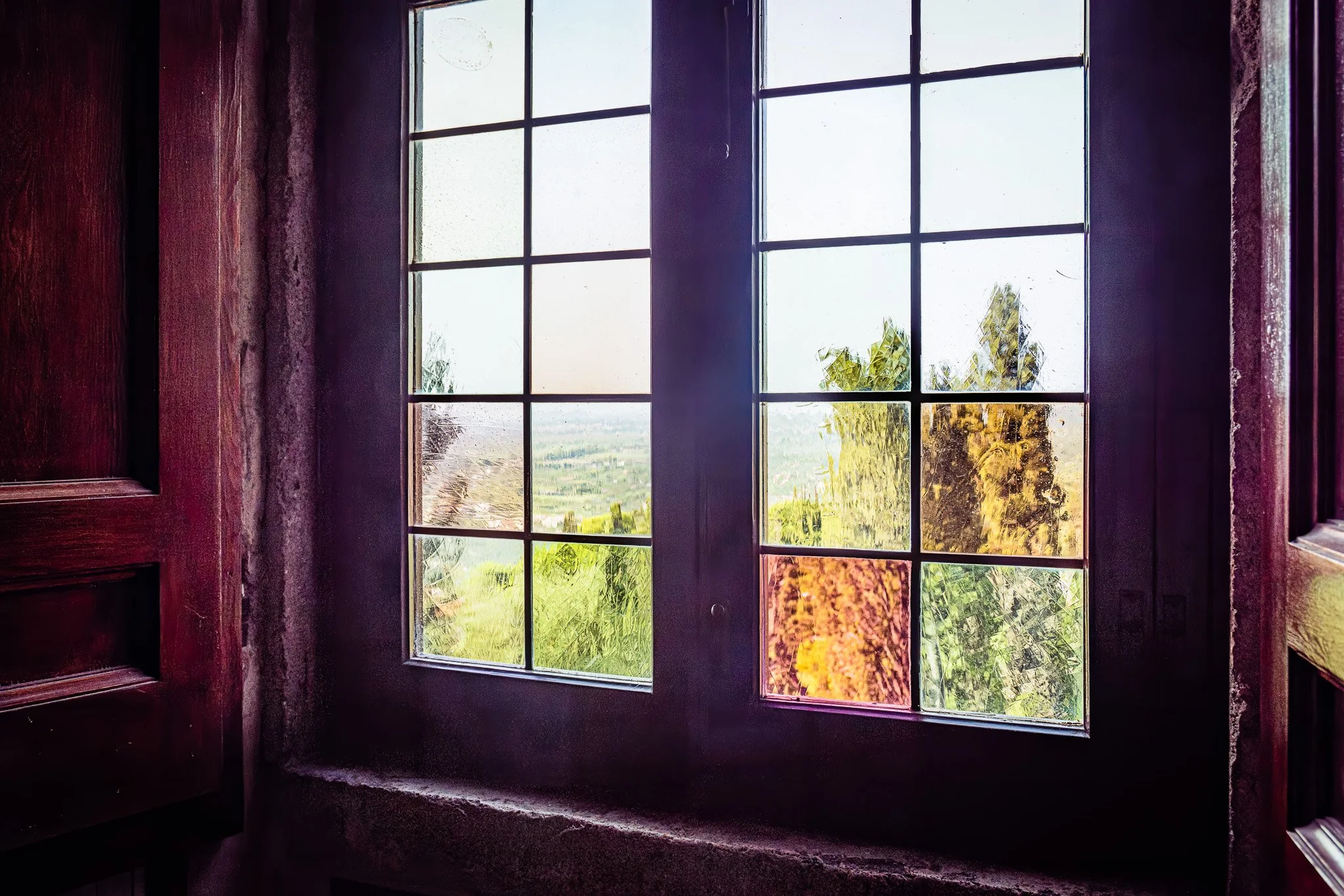
What I Learned from Frederick H. Evans
What I admire most about Frederick H. Evans is not simply his photographs of architecture. It is his belief that light reveals the true character of a place. That idea continues to shape the way I approach photography today.
Light Reveals the Place
Every photographer has artists whose work quietly shapes the way they see.
For me, Frederick H. Evans is one of those photographers.
Unlike many contemporary photographers, Evans worked with subjects that rarely moved. Cathedrals, stairways, arches, and historic interiors became his primary focus. At first glance, that might seem limiting. Yet his photographs reveal extraordinary depth because they are ultimately about something larger than architecture.
They are about light.
Evans understood that a building could look entirely different depending on the quality of light entering a space. A shaft of sunlight, a glowing window, or a subtle transition from shadow to highlight could transform an ordinary scene into something transcendent.
That lesson continues to influence my own photography.
When I photograph architecture, I am rarely interested in creating a purely documentary record. I want the image to communicate what it felt like to stand there.
I see Evans' influence in photographs such as Old Friends, where light and atmosphere help define the emotional character of the scene. I see it in architectural images such as The First Aperture, Forest Park Pavilion, and Reflections in Glass and Stone, where structure and light work together to create a sense of place.
Perhaps most of all, I see Evans' influence in the importance of patience.
Many of my favorite photographs happened because I waited.
I waited for clouds to move.
I waited for rain to stop.
I waited for blue hour.
I waited for a figure to enter the frame.
I waited for the light to become something more than illumination.
Evans reminds me that photography is often less about finding subjects and more about recognizing moments when light reveals them.
His work also reinforces my appreciation for craftsmanship. Strong compositions, careful tonal relationships, and attention to detail are not limitations on creativity. They are tools that allow an image to communicate more effectively.
Although our subjects differ, I find myself returning to Evans' photographs for the same reason I return to the work of other great artists. They encourage me to slow down.
To observe more carefully.
To trust patience.
And to remember that light is often the true subject of every photograph.
More than a century after they were made, Frederick H. Evans' photographs continue to demonstrate a simple truth: places reveal themselves to those willing to wait.
Introducing Frederick H. Evans
Long before photography was widely accepted as a fine art, Frederick H. Evans demonstrated that a camera could do more than document a building. Through patience, craftsmanship, and a remarkable sensitivity to light, he created photographs that transformed architecture into something spiritual and timeless.
The Architecture of Light
Among the pioneers of fine art photography, few photographers are as revered—and perhaps as overlooked today—as Frederick H. Evans.
Working during the late nineteenth and early twentieth centuries, Evans became known for his extraordinary photographs of cathedrals, churches, and historic architecture. While many photographers of his era focused on pictorial effects or manipulated printing techniques, Evans pursued clarity, precision, and the expressive power of light itself.
His most famous photographs were made inside great European cathedrals, particularly those in England and France. Rather than treating these structures as historical documents, Evans approached them as living spaces shaped by light, shadow, and atmosphere.
His photographs often depict soaring arches, columns, stairways, and windows illuminated by natural light. Yet the buildings themselves are only part of the story. What truly distinguishes Evans' work is his ability to reveal the emotional and spiritual qualities of a space.
He was famously patient. Evans often returned to the same location repeatedly, waiting for the precise conditions he envisioned. He understood that architecture changes throughout the day as light moves through windows, across stone surfaces, and into hidden corners.
In many ways, Evans photographed light as much as he photographed buildings.
His compositions are remarkably balanced and thoughtful. Every line contributes to the overall structure of the image. Every highlight and shadow feels intentional. The result is work that remains visually powerful more than a century after it was created.
Evans also played an important role in photography's struggle for recognition as a legitimate artistic medium. His photographs demonstrated that technical excellence and artistic vision could coexist. He helped establish photography as something more than mechanical reproduction.
Today, his influence can be seen in architectural photography, fine art landscape work, and any photographic practice that values patience, observation, and craftsmanship.
Frederick H. Evans reminds us that great photography is not always about dramatic subjects. Sometimes it is about standing quietly in a beautiful space and waiting for the light to reveal its character.
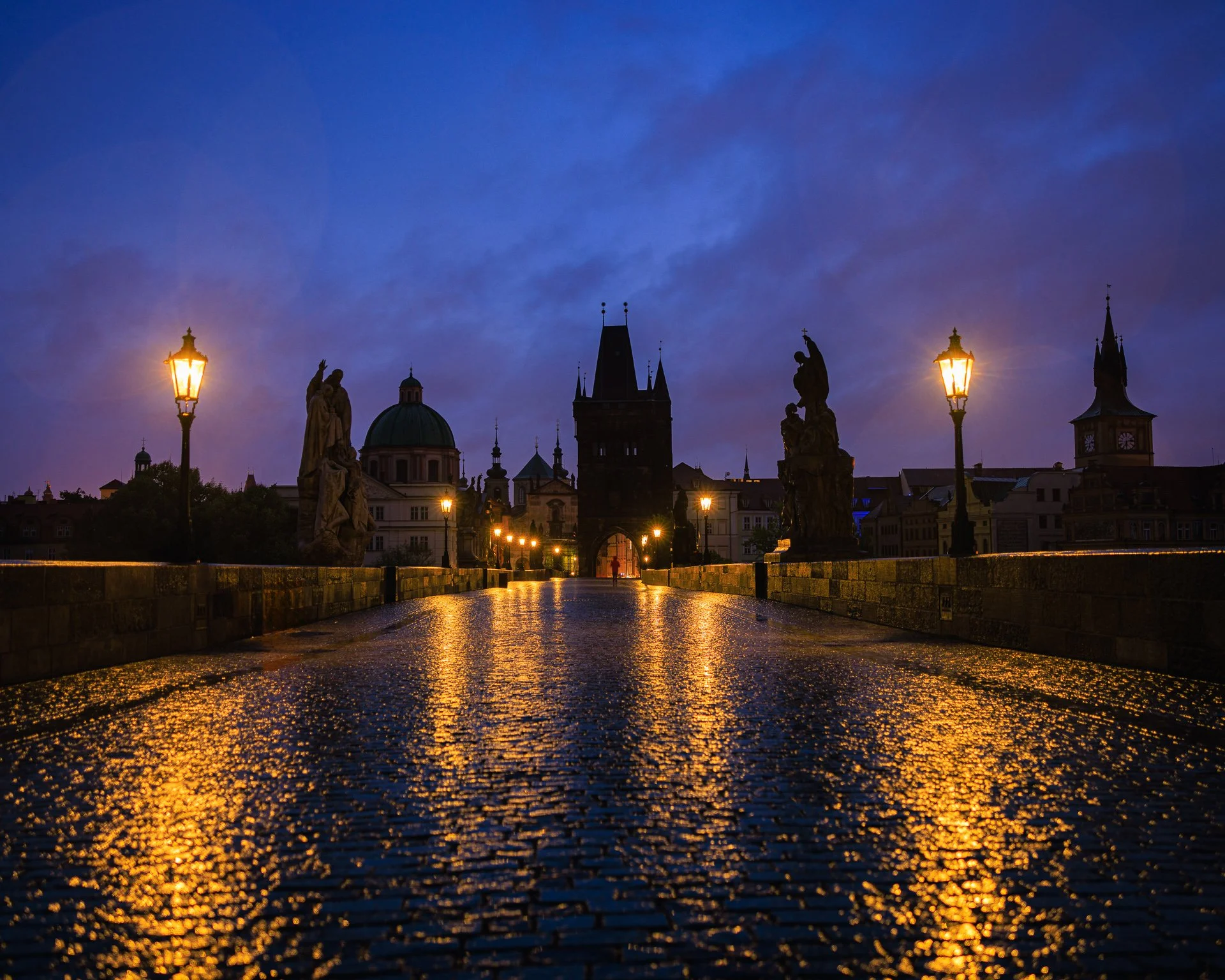
What I Learned from Wim Wenders
Wim Wenders is best known as a filmmaker, but his photography stands on its own as a remarkable exploration of place, solitude, and atmosphere. Through images of empty roads, overlooked landscapes, and quiet urban scenes, Wenders invites viewers to slow down and discover the stories hidden within ordinary spaces.
Place, Atmosphere, and the Human Trace:
If Hiroshi Sugimoto taught me to think about time, Wim Wenders taught me to think about place.
When I first encountered Wenders' photography, I was struck by how little seemed to happen within many of his images. There was no dramatic action, no decisive moment, no obvious subject demanding attention.
Instead, there were roads.
Buildings.
Empty spaces.
Weather.
Light.
And somehow, those simple elements felt deeply human.
That idea has stayed with me as I have developed my own photography.
Many of my photographs begin with a location, but they are rarely about the location itself. I am more interested in atmosphere than documentation. I want viewers to feel what it was like to stand in a place rather than simply know where the photograph was made.
I see that influence most clearly in photographs such as Before the City Wakes. The image is not really about Prague. It is about anticipation. The city becomes a stage for a feeling rather than a destination.
The same is true of Waiting for a Ride. The architecture, light, and solitary figure work together to create a narrative that remains unresolved. The photograph invites questions rather than providing answers.
Even in landscapes such as Between Us, The Field or Where the Morning Waited, I find myself drawn to the emotional character of a place. The land becomes more than scenery. It becomes part of a larger story about distance, memory, and human experience.
One of Wenders' great gifts is his ability to reveal traces of human presence even when people are absent. Roads suggest travelers. Buildings suggest lives lived within them. Empty spaces feel inhabited by memory.
I often find myself responding to places in much the same way.
A bridge after snowfall.
A rain-soaked street before dawn.
A road disappearing into Monument Valley.
A bartender standing beneath soft light.
A solitary figure crossing a historic square.
The photographs that interest me most are rarely about grand events. They are about moments when a place seems to hold a story just beneath the surface.
Wenders reminds me that photography can be an act of listening.
Not listening to people.
Listening to places.
Many of my favorite photographs begin when I stop searching for subjects and start paying attention to atmosphere. The light changes. Weather moves in. A person enters the frame. A space that seemed ordinary becomes something more.
That is what I admire most about Wim Wenders' work.
He shows us that places are never just places.
They are containers for memory, emotion, and possibility.
As a photographer, that remains one of the most valuable lessons I have learned.
Introducing Wim Wenders
Wim Wenders is best known as a filmmaker, but his photography stands on its own as a remarkable exploration of place, solitude, and atmosphere. Through images of empty roads, overlooked landscapes, and quiet urban scenes, Wenders invites viewers to slow down and discover the stories hidden within ordinary spaces.
Wim Wenders and the Poetry of Place
Many people know Wim Wenders as an acclaimed filmmaker. Films such as Paris, Texas and Wings of Desire helped establish him as one of the most distinctive visual storytellers of the last half-century. Yet alongside his filmmaking, Wenders has built an equally compelling body of photographic work.
His photographs are often quiet. Roads stretch toward distant horizons. Buildings stand empty beneath expansive skies. Motel rooms, storefronts, gas stations, and overlooked landscapes become subjects worthy of contemplation. Human figures appear only occasionally, and when they do, they are often small within the larger environment.
What makes Wenders' photography so compelling is his ability to transform ordinary places into something more meaningful. He is not searching for famous landmarks or dramatic events. Instead, he looks for moments where atmosphere, light, and place come together to create a sense of mystery.
Many of his images were made while traveling, yet they rarely feel like travel photography. They are less concerned with documenting a location than with capturing its emotional character. A road in the American Southwest becomes a meditation on distance. An empty building suggests forgotten stories. A city street feels suspended between past and present.
Wenders has often spoken about the importance of observation. His photographs encourage viewers to slow down and pay attention to places that might otherwise be ignored. In a world increasingly focused on speed and distraction, his work reminds us that meaning can often be found in stillness.
Perhaps that is why his photographs resonate so deeply with photographers and viewers alike. They suggest that every place has a story, even when no one is present to tell it.
The best photographs do not always provide answers. Sometimes they simply invite us to linger a little longer.
That invitation lies at the heart of Wim Wenders' photography.
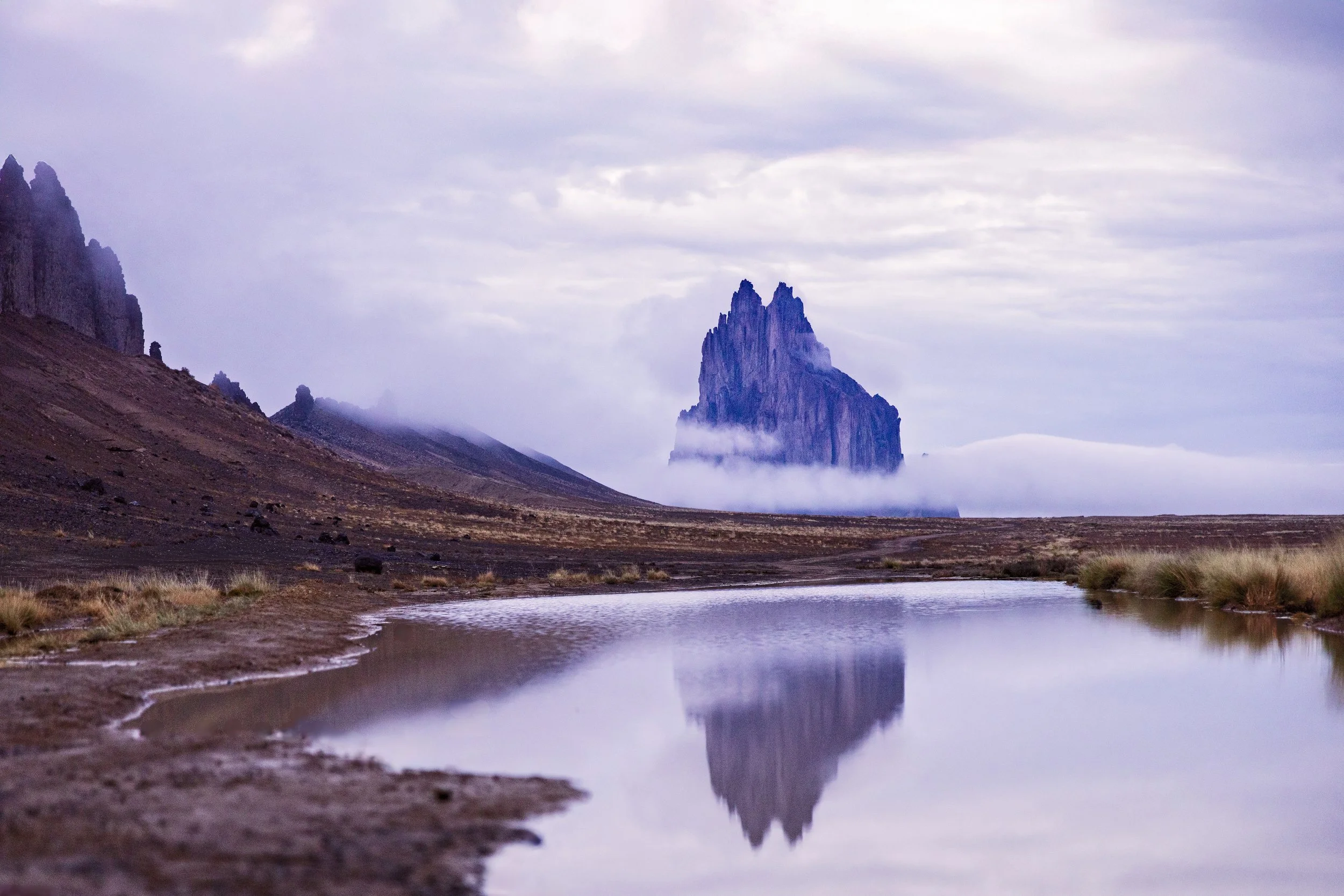
The Infinite Moment
Sugimoto believes photography can capture things the human eye cannot see—specifically, the passage of thousands of years in a single frame.
Hiroshi Sugimoto and the Art of Stillness
In a world that is constantly moving, there is a profound power in the image that stands still. As I develop my 2026 collection, I find myself deeply influenced by the Japanese master Hiroshi Sugimoto. While my work often focuses on the "rhythmic" and the "painterly," Sugimoto taught me the value of the meditative.
The Sugimoto Influence: Searching for the Timeless
In pieces like Enduring Silence and my Seascape studies, I reach for that same sense of infinite balance that Sugimoto perfected.
Here is how his philosophy shapes my 2026 gallery:
The Minimalist Horizon: Sugimoto’s seascapes show us that a simple line between sky and water can hold the weight of eternity. In my work, I look for those clean, rhythmic horizons that offer the viewer a place to breathe.
The Radiant Highlight: Sugimoto uses light to create "voids"—spaces that feel both empty and full. In my high-contrast compositions, I use the light to pull the eye toward the center of the story, leaving the rest to the imagination.
Technical Precision: Sugimoto’s dedication to the print itself is legendary. Whether I am preparing a Matte Fine Art Paper or a Low-Glare Acrylic, I am chasing that same "perfect" tonal range where the shadows feel deep and the textures feel tangible.
The Acrylic Presentation: A Window into Time
To honor the Sugimoto aesthetic, there is no better medium than Low-Glare Acrylic.
Because Sugimoto’s work is about depth and clarity, the acrylic mount acts as a physical lens. It creates a 3D effect that makes the horizon feel like it’s miles away, yet close enough to touch. It’s the ultimate way to experience the "Atmospheric Clarity" I strive for in every shot.
Introducing Hiroshi Sugimoto
What happens when photography stops documenting moments and begins exploring time itself? The work of Hiroshi Sugimoto offers one answer. Through quiet, contemplative images that blur the boundaries between memory, history, and perception, Sugimoto has created some of the most influential photographs of the modern era.
Art of Photographing Time
July 16
Written By Robert Niemeier
Time, Stillness, and Presence: What I Learned from Hiroshi Sugimoto
I did not arrive at photography through conceptual art. I arrived through places.
Roads through Monument Valley. Quiet mornings beside rivers. Rain-soaked streets in Prague. Snow-covered landscapes in Colorado. Empty spaces where weather, light, and memory seem to linger.
Yet the longer I photograph, the more I find myself returning to ideas explored by Hiroshi Sugimoto.
On the surface, our work looks very different. Sugimoto is known for minimalist black-and-white images created with large-format cameras and carefully controlled processes. My work often embraces color, atmosphere, weather, and the emotional possibilities of place.
But beneath those differences, I find common ground.
Sugimoto's photographs are often described as being about time. I think many of my photographs are as well.
When I photograph Shiprock in Enduring Silence, I am not simply documenting a geological feature. I am trying to communicate a feeling of permanence that extends beyond the moment I pressed the shutter.
When I photograph puddle reflections in the Southwest, such as Stillness After Rain, I am interested in the brief moment when the landscape becomes something else—when stone, sky, and water seem suspended between reality and reflection.
In images like Before the City Wakes or Between Us, The Field, human presence becomes important precisely because it is small. The figures are not the subject in a traditional sense. They become a measure of scale, solitude, and time.
Sugimoto's work encourages me to slow down and ask a different question before making a photograph.
Not "What am I looking at?"
But "What am I experiencing?"
The answer is rarely a landmark or a location.
It is often silence.
It is anticipation.
It is the feeling that a place has existed long before I arrived and will remain long after I leave.
Many of my favorite photographs happen during transitional moments—before sunrise, after rain, during blue hour, or in changing weather. These are times when the world feels slightly less certain and slightly more reflective. Sugimoto's work has helped me appreciate that ambiguity.
Photography is frequently associated with decisive moments and dramatic events. Yet some of the photographs that stay with us longest are the quiet ones.
A horizon.
A road disappearing into distance.
A figure waiting.
A field beneath changing light.
Sugimoto's photographs remind us that stillness is not emptiness. It is presence.
That idea continues to shape the way I approach my own work. I am not trying to stop time. I am trying to create photographs that allow viewers to feel it.
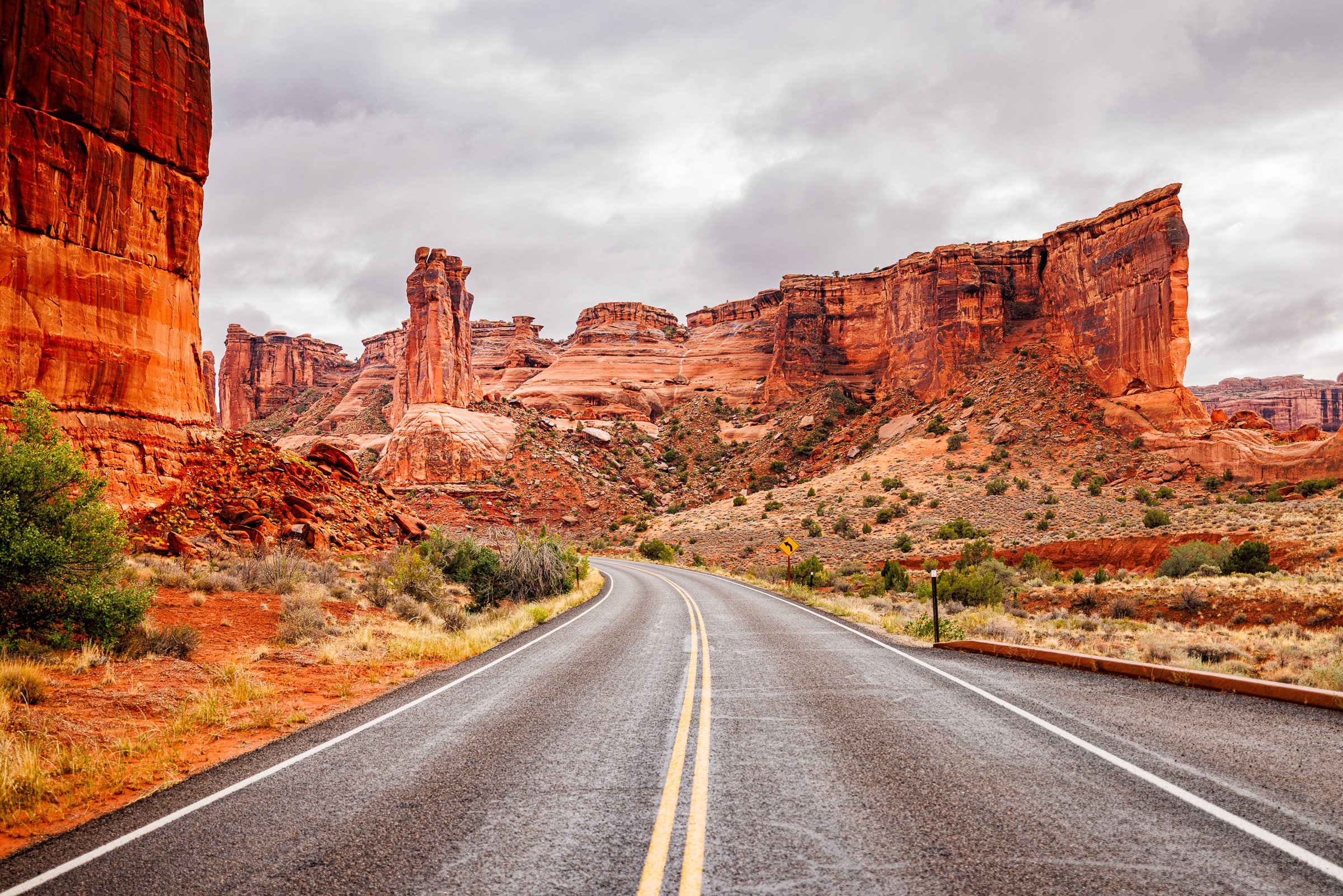
Painting with Time
Photography is often described as "freezing a moment," but for the legendary Ernst Haas, it was about capturing the flow of it. Haas didn't want to stop the world; he wanted to show its pulse. As I curate my 2026 collection, Haas’s influence is what allows my work to move beyond a simple document and into the realm of visual poetry.
Ernst Haas and the Rhythmic Motion of Light Photography is often described as "freezing a moment," but for the legendary Ernst Haas, it was about capturing the flow of it. Haas didn't want to stop the world; he wanted to show its pulse. As I curate my 2026 collection, Haas’s influence is what allows my work to move beyond a simple document and into the realm of visual poetry.
The Haas Influence: Beyond the Sharp Edge
In pieces like Into the Canyon and Valley of Fire, Jeep, I find myself reaching for the same sense of rhythmic momentum that Haas pioneered.Here is how his legacy shapes my lens:Rhythm & Perspective: Haas taught us that a road isn't just asphalt; it’s a leading line that carries the viewer’s soul toward the horizon. By utilizing high-contrast tones, I aim to capture that same "vibration" of the open road. The Layered View: Haas loved reflections and the way glass can transform a city. In my urban studies, I look for those "painterly" layers where the ancient world and the modern world overlap in a single, blurred reflection.Emotional Color: Much like Haas’s iconic color work, I use color sparingly but intentionally. Whether it’s the warmth of a Teton field or the cool shadows of a Roman street, the color is there to tell you how the moment felt, not just how it looked.
The Metal Print: A Canvas for Light
To truly honor the Haas aesthetic, I often recommend Metal Prints with a Satin finish or Acrylic Presentations.Because Haas was about the "energy" of light, these mediums provide a luminous depth that makes the colors feel like they are radiating from within the art. It captures that "liquid" quality of motion and the rhythmic sharpness of my high-contrast compositions.
Introducing Ernst Haas
Photography is often described as "freezing a moment," but for the legendary Ernst Haas, it was about capturing the flow of it. Haas didn't want to stop the world; he wanted to show its pulse. As I curate my 2026 collection, Haas’s influence is what allows my work to move beyond a simple document and into the realm of visual poetry.
1. The Aesthetic: "The Color of Energy"
Haas was one of the first to be accepted into the prestigious Magnum Photos agency for color work.
The "Slow" Shutter: He was the master of intentional motion blur. He didn't want to freeze time; he wanted to show the passage of it. This is why your work focuses on rhythm—it implies a world in motion.
Abstract Impressionism: Haas looked for reflections in puddles, light through glass, and blurred shadows. He turned the real world into an abstract painting of light.
2. The Technique: Color as Subject
For Haas, color wasn't a "tint" added to a photo; color was the photo.
The "Haas Red": He used vibrant pops of color (like the red in your Jeep or the Pink House) to lead the eye through a high-contrast scene.
Layering: He loved shooting through things—windows, rain, or architectural gaps—to create depth. This is a direct link to your "Into the Canyon" or your glass reflections.
3. The Philosophy: The Poetry of the Lens
Haas believed photography should be "poetic realism." He didn't document a street; he documented the feeling of being on that street.