
 Image 1 of 5
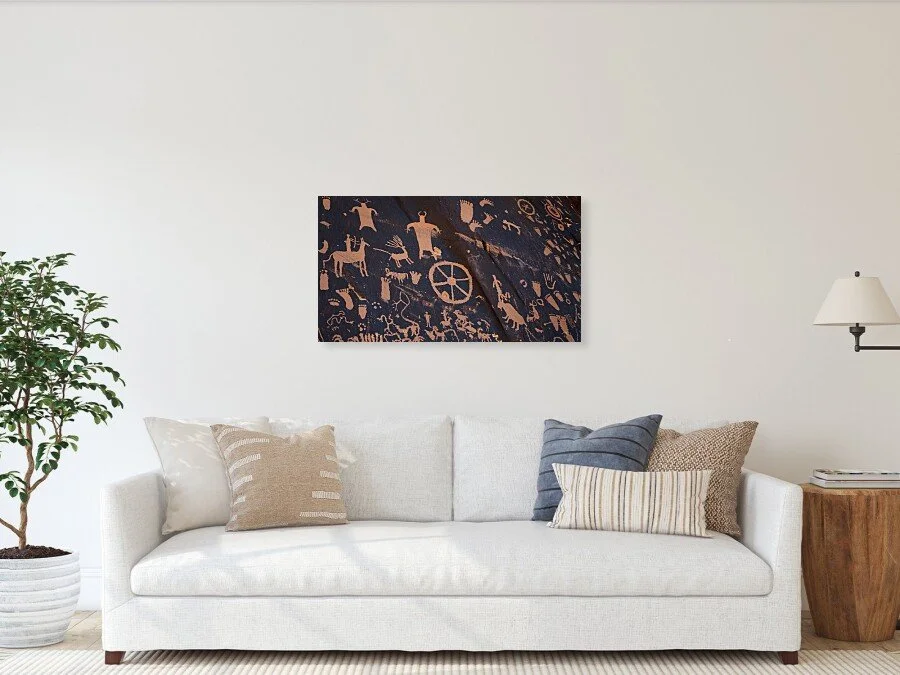 Image 2 of 5
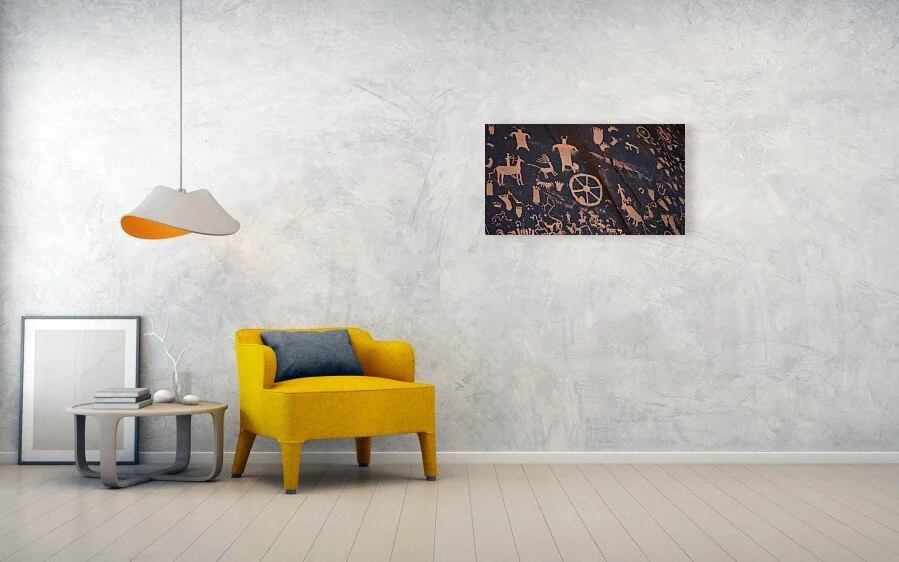 Image 3 of 5
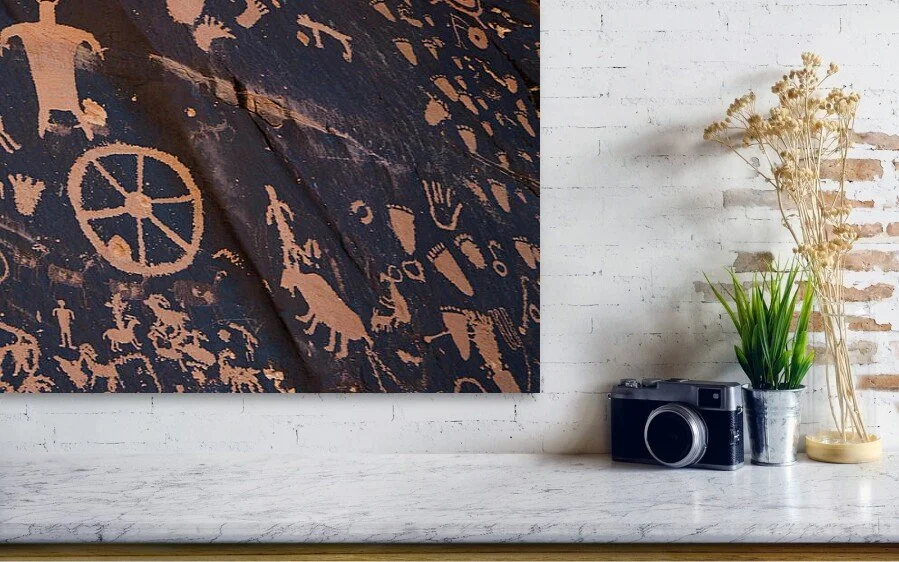 Image 4 of 5
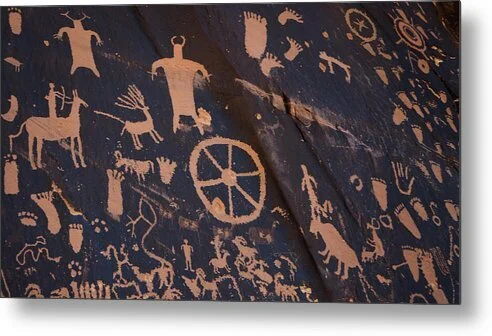 Image 5 of 5
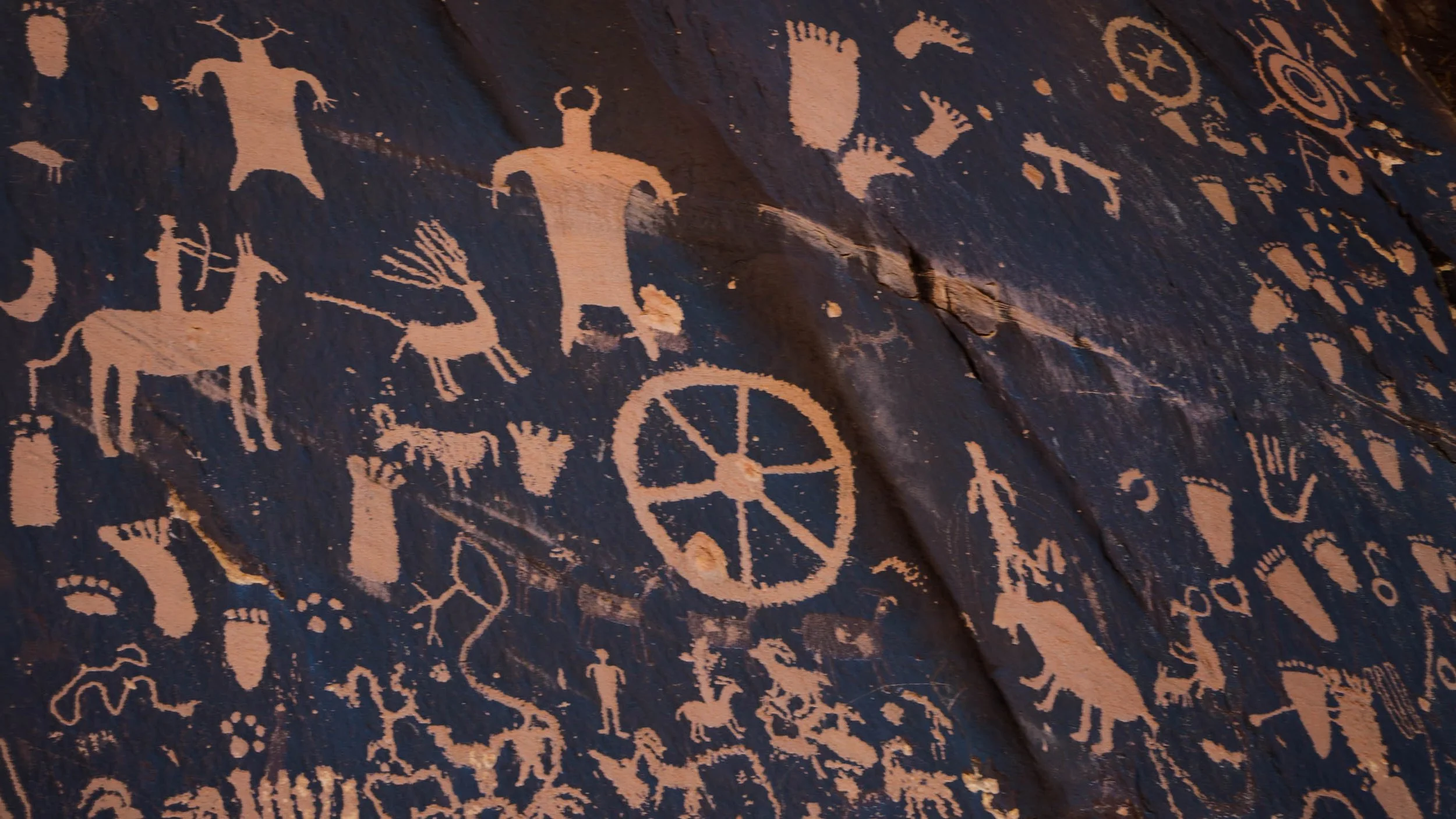
Long before there was an alphabet, people left their stories on the rock. Before the Alphabet is a photograph of the Newspaper Rock panel along Indian Creek in southeastern Utah, where figures, animals, footprints and symbols were carved into dark, weathered sandstone across many centuries. Terracotta marks stand out against charcoal rock, and the whole wall reads like a page.
The eye goes first to the spoked wheel at the center, the one shape that is both large and nearly whole, then up to the horned figure above it and across to the rider and horse on the left. From there it drifts down through the smaller figures below and out along the diagonal fold in the rock, which crosses the wall like a seam. Footprints and hands fill the right side, so the panel feels as if it continues past the frame in every direction.
It belongs to the tradition of Aaron Siskind, who turned marks on walls into pictures by choosing, cropping and waiting until the surface became a composition. The marks here were made by Basketmaker and Ancestral Puebloan people and later by the Ute, according to the BLM, and the photograph does not try to explain them.
Before the Alphabet suits lodges, hotels, Southwest restaurants, offices, libraries, studies and long hallway walls where a piece with real depth of time is wanted. The terracotta and charcoal sit well beside leather, saddle tan, walnut, stone, iron and turquoise, and the wide 16:9 format suits a mantel, a sofa wall, a console or a stair landing.
Three companions, each connected in a different way:
For the same part of Utah: Pair with Hours in Stone, Church Rock near Moab in low, warm light, its banded sandstone glowing against a pale blue sky. Both pictures are about time written in rock, one by wind and water and the other by human hands.
For marks left by people: Pair with The Stones They Leave Behind, the weathered stones of the Jewish Cemetery in Prague. A different place and era, but the same subject: what people leave in stone so that it outlasts them.
For another wide Utah view: Pair with The First Aperture (Panorama), sunrise through Mesa Arch in Canyonlands, in the same 16:9 format. Warm light against cool rock here, the reverse of the warm marks on dark rock in this picture.
Available as a signed and numbered limited edition of fifteen (15) prints in ChromaLuxe® Metal (Gloss, Semi-Gloss or Matte), TruLife acrylic, archival paper (framed or unframed), canvas and wood. ChromaLuxe® Metal (Matte) is the recommendation: the dark rock stays deep and the terracotta marks stay clean, without the reflections of a gloss surface. TruLife low-glare acrylic is the alternative if you want the figures to sit slightly forward of the rock. Archival paper, framed, suits a quieter, more traditional presentation.
Note: Custom and oversized photographic prints are available. Please contact the studio directly to discuss custom framing, matting, or specialized museum glass options.