
 Image 1 of 5
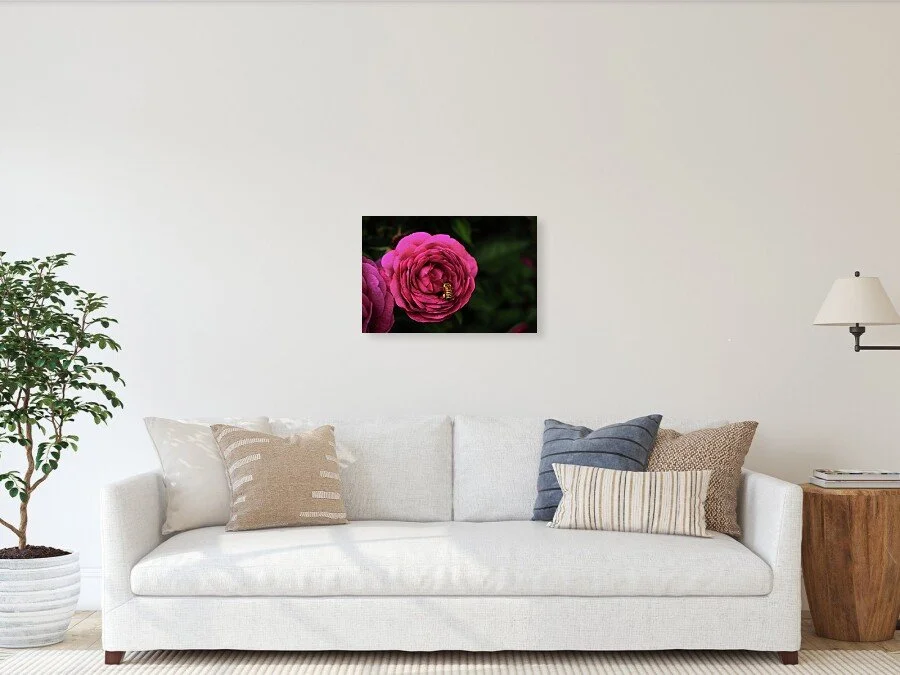 Image 2 of 5
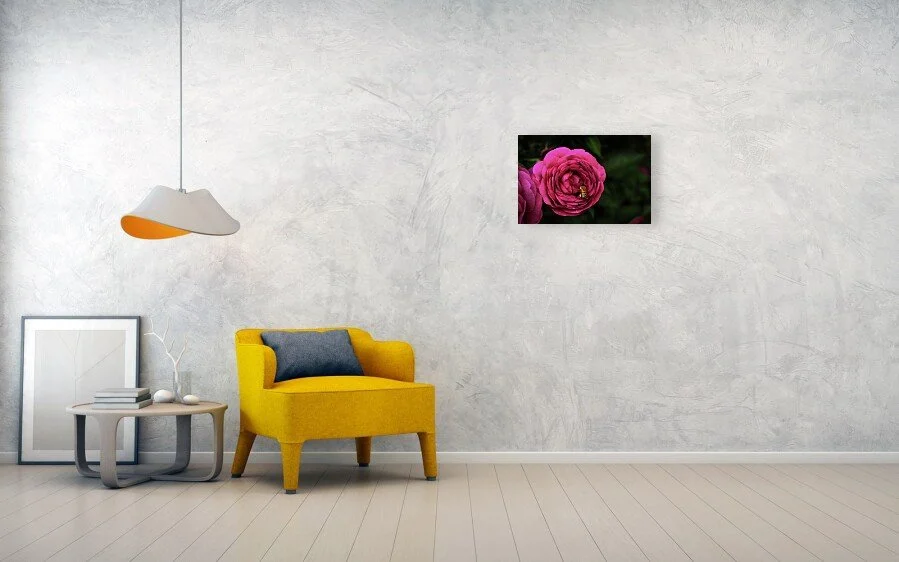 Image 3 of 5
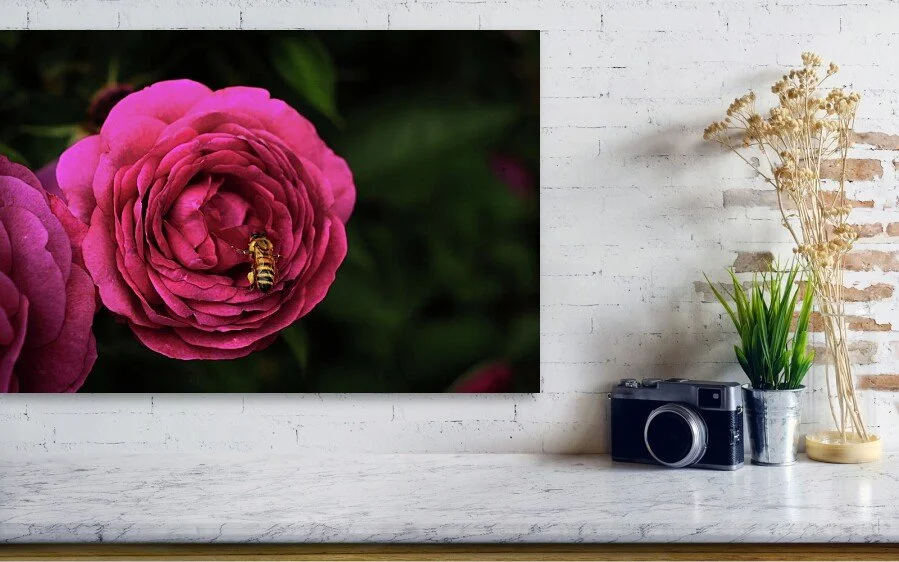 Image 4 of 5
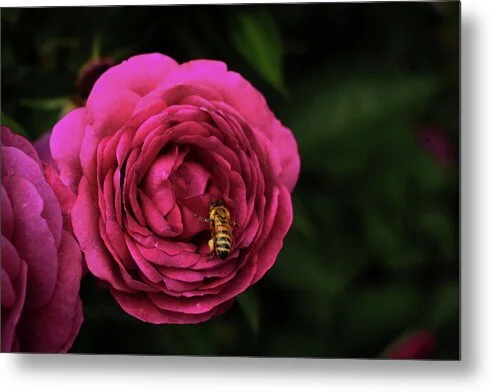 Image 5 of 5
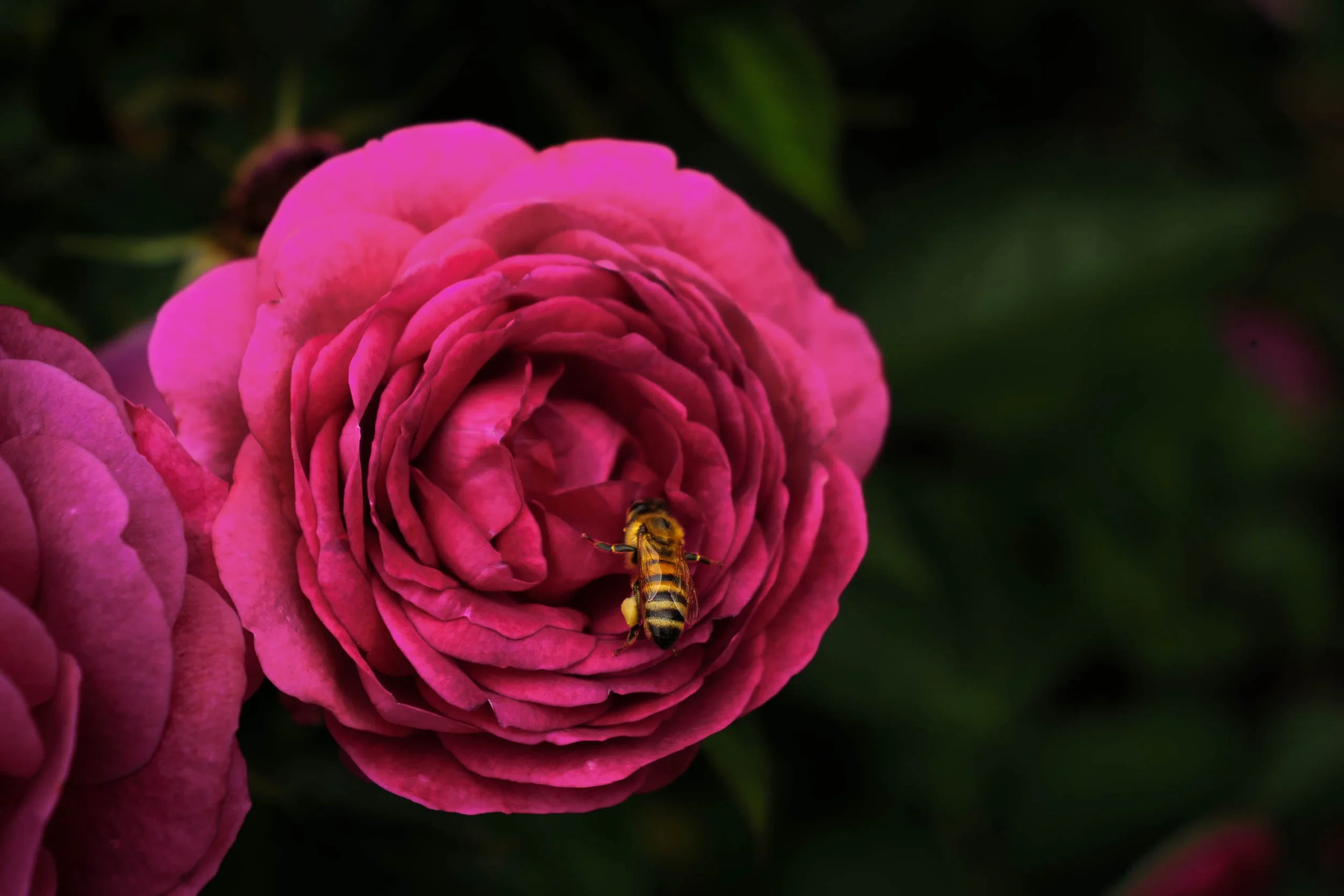
Roses are usually photographed for their beauty. Deep in the Rose is about the work going on inside one. At the Missouri Botanical Garden's Rose Garden, a honeybee burrows into the heart of a magenta bloom, a bright yellow load of pollen packed on its leg, and the dark green garden falls away behind it.
The eye lands on the rose first, because it is enormous and the color is the loudest thing in the frame. It then follows the spiral of petals inward and down to the bee, the only black and gold in the picture, seen from behind with its head buried in the flower. Only then does the pollen basket on its leg come into focus, a detail that waits for a closer look. A second rose at the left edge anchors the frame, and the open, shadowed green to the right gives the bloom room.
The saturated color held against near-black is Ernst Haas territory, color doing the work that light usually does. A single bloom filling the frame with this much presence owes something to Georgia O'Keeffe's flower paintings, where the flower is treated as a landscape to be entered.
Magenta, deep green and a note of gold suit dining rooms, boutique hotels, restaurants, executive offices and wine rooms. The 3:2 format fits a wall over a sideboard, console, bar or dining table. The near-black ground works beside charcoal, walnut, cream and natural linen, and the pink makes one confident accent in an otherwise quiet room.
Three companions, each connected in a different way:
For the same pollinator: Pair with The Moment Red Remembers, a saturated deep-red bloom emerging from shadow with a bee. Both are dark, velvety botanical studies where a single color carries the frame.
For the same flower family: Pair with Summer's Unfolding, a peony at full maturity, layered petals unfolding from a luminous center. One is a rose in shadow and the other a peony in light.
For the same garden: Pair with First Light, Clear Water, a duckling on a water lily pad at the Missouri Botanical Garden. The pink and the cool green are the two halves of the same garden.
Available as a signed and numbered limited edition of fifteen (15) prints in ChromaLuxe® Metal, TruLife acrylic, archival paper (framed or unframed) and canvas. ChromaLuxe® Metal is the recommendation: the saturated magenta and the deep green gain the most from metal's luminous color and contrast. Low-glare acrylic gives the petal folds more depth. Framed archival paper is the quieter alternative, and it gives the bee's fine hair and pollen a more tactile read.
Note: Custom and oversized photographic prints are available. Please contact the studio directly to discuss custom framing, matting, or specialized museum glass options.