
 Image 1 of 5
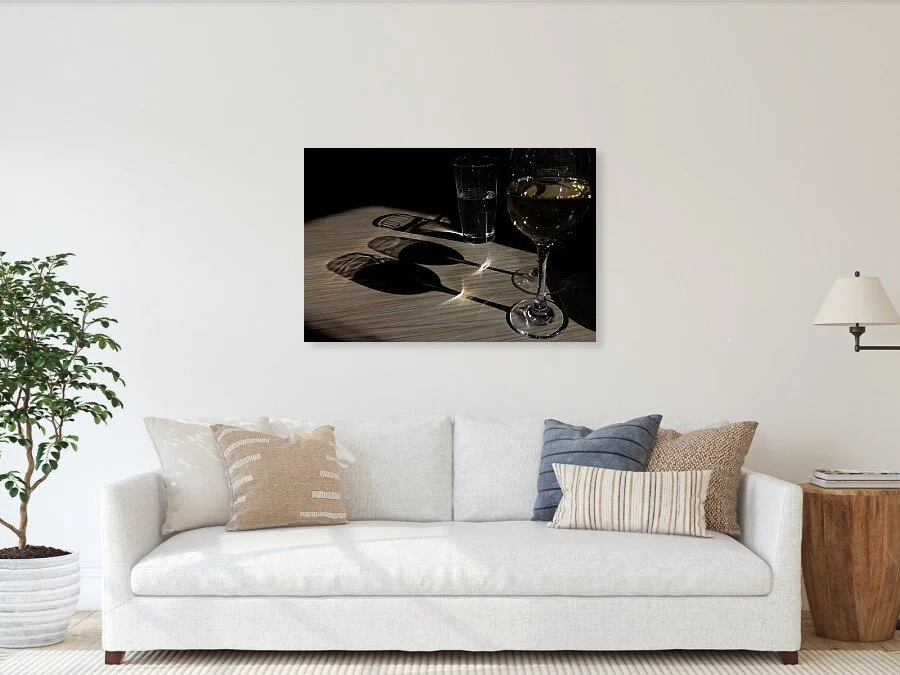 Image 2 of 5
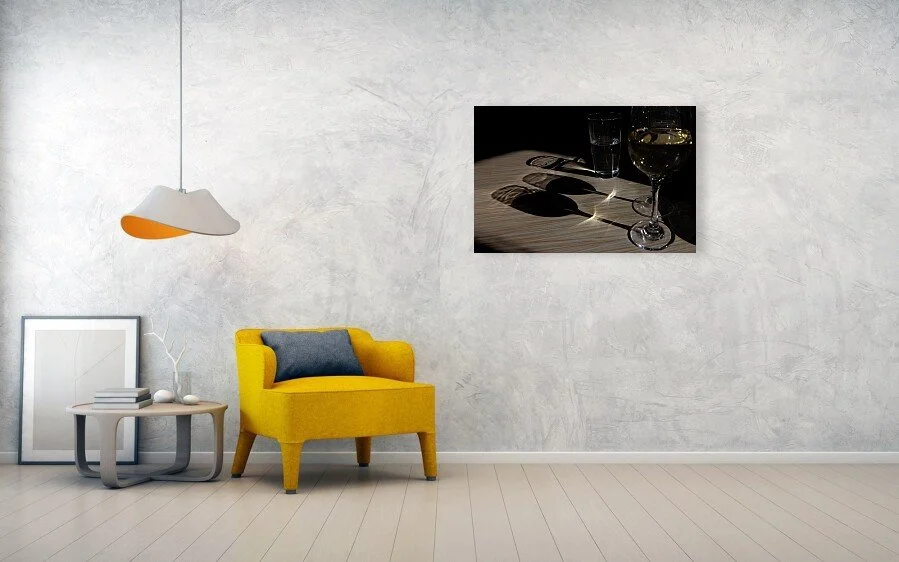 Image 3 of 5
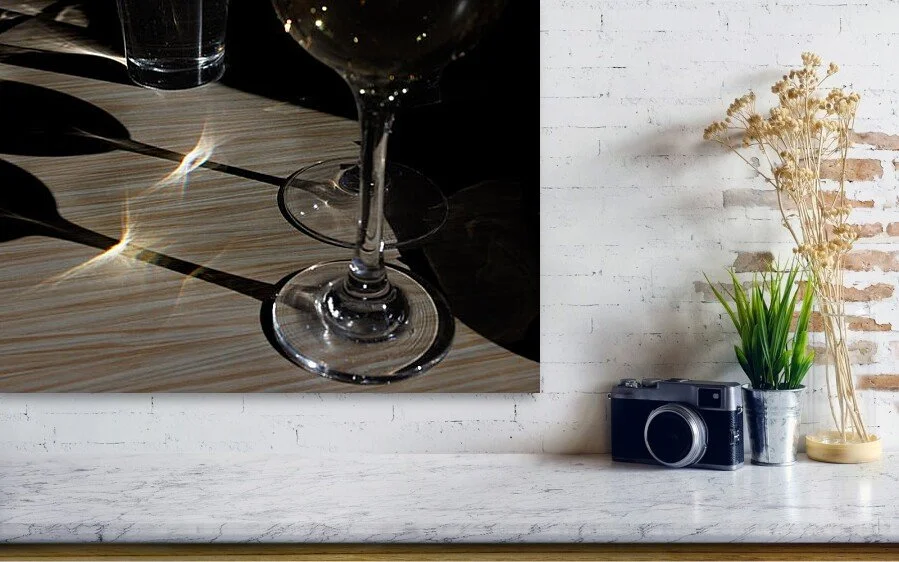 Image 4 of 5
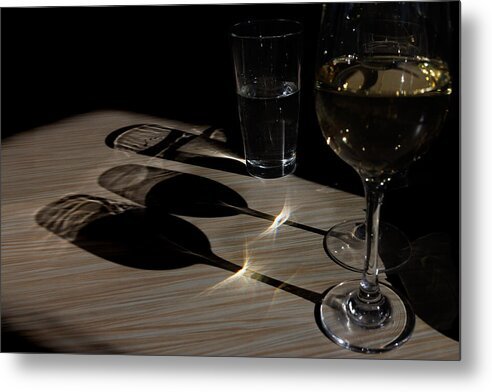 Image 5 of 5
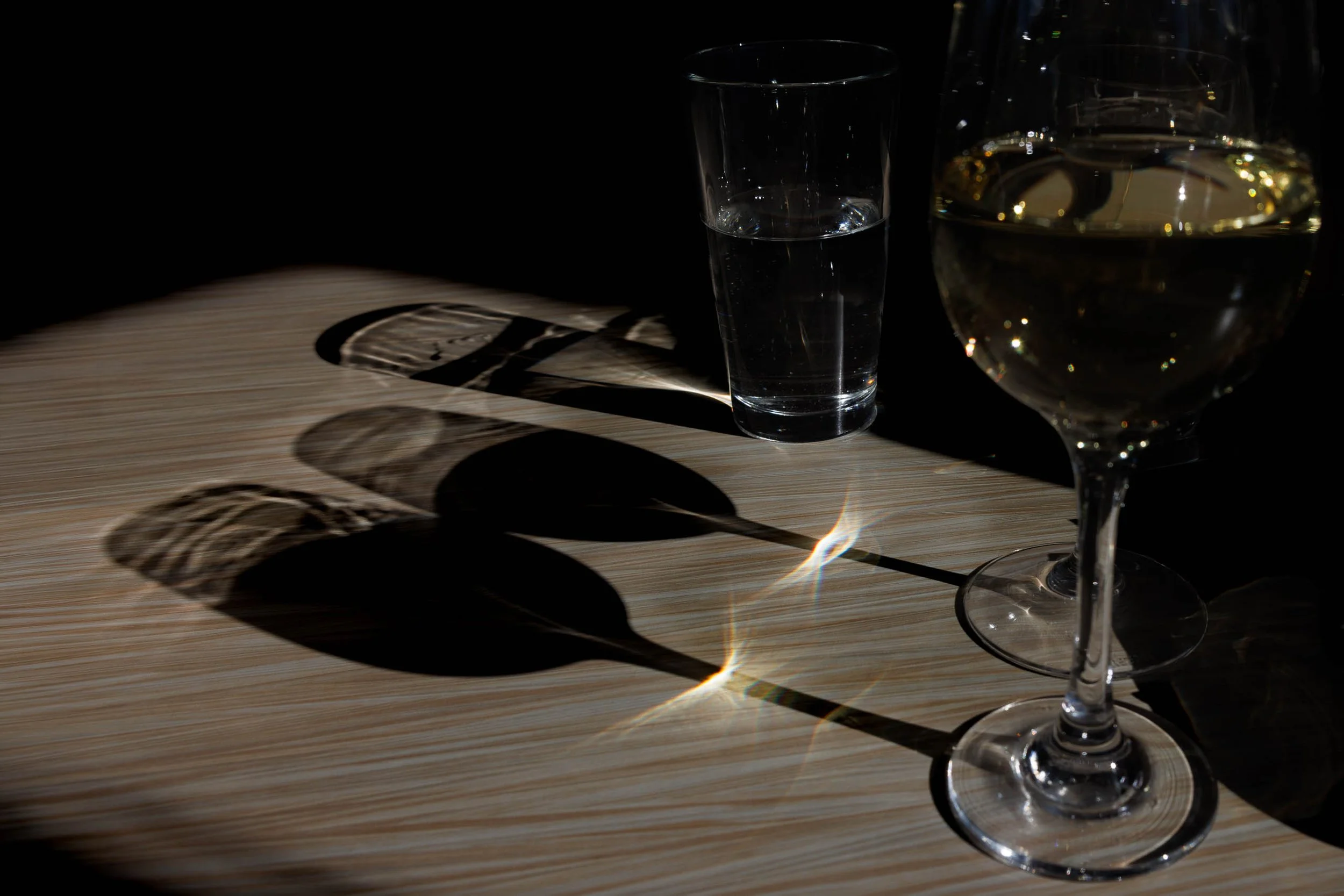
The most interesting thing on this table is not the glass. What the Glass Throws sets a wine glass and a water glass on blond wood in the dining room at Crystal Bridges in Bentonville, Arkansas, in 2024, in low, hard light against a black ground, and lets what they cast do the talking: two long, doubled shadows sweeping across the grain, and two small caustic flares where the light bends through the glass and lands as a fringe of color.
The eye goes first to the wine glass at the right edge, cut by the frame, its gold bowl the brightest large shape. Then the shadows pull it left, along the diagonal, past the water glass and over the horizontal grain of the wood. The lower flare is where it stops, a small flame of light crossing the long dark line of the stem's shadow. Only after that does the eye go back to the objects that made all of it.
The picture sits in the line of Edward Hopper, for the way a low light turns a plain interior into a stage, and of André Kertész, for the way a shadow of an ordinary object becomes a shape of its own. Nothing in it is staged for drama. The light is.
What the Glass Throws suits wine bars, restaurants and tasting rooms, hotel lounges and bars, dining rooms, kitchens and the rooms near them where a quiet picture about light is wanted. As an Arkansas image made at Crystal Bridges, it is a natural keepsake for anyone with ties to Bentonville or the museum. The blond wood and gold sit well beside walnut and oak, brass, cream and charcoal, and the black ground gives a wall real depth in a dim or evening room. The 3:2 horizontal works over a banquette, a sideboard, a bar back or a dining table.
Three companions, each connected in a different way:
For glass and reflected light: Pair with Reflections of Glass and Stone, a museum façade in autumn light where glass turns stone into soft blue reflection. Both pictures are about what glass does to light, one in architecture and one on a table.
For a single object in a dark room: Pair with The Last Note, an antique gramophone horn catching soft window light in black and white. The same quiet, the same patient light on one ordinary object, in monochrome beside this one's warm wood and gold.
For shadow as a subject: Pair with Where She Paused, a woman pausing in the Louvre's long gallery. Light and shadow carry that picture as they carry this one, indoors and unhurried.
Available as a limited edition print, signed and numbered, in framed or unframed archival paper, ChromaLuxe® Metal (Gloss, Semi-Gloss or Matte), TruLife acrylic, canvas and wood. ChromaLuxe® Metal in Gloss is the recommendation: the black ground, the gold of the wine and the two small flares are the luminous parts of this picture, and metal carries that depth and light best. TruLife low-glare acrylic is the alternate where the wall faces a window, and framed archival paper on Photo Rag gives a quieter, more graphic reading with a soft black. Canvas is the least suited, because the weave works against the fine grain of the wood.
Note: Custom and oversized photographic prints are available. Please contact the studio directly to discuss custom framing, matting, or specialized museum glass options.