
 Image 1 of 1
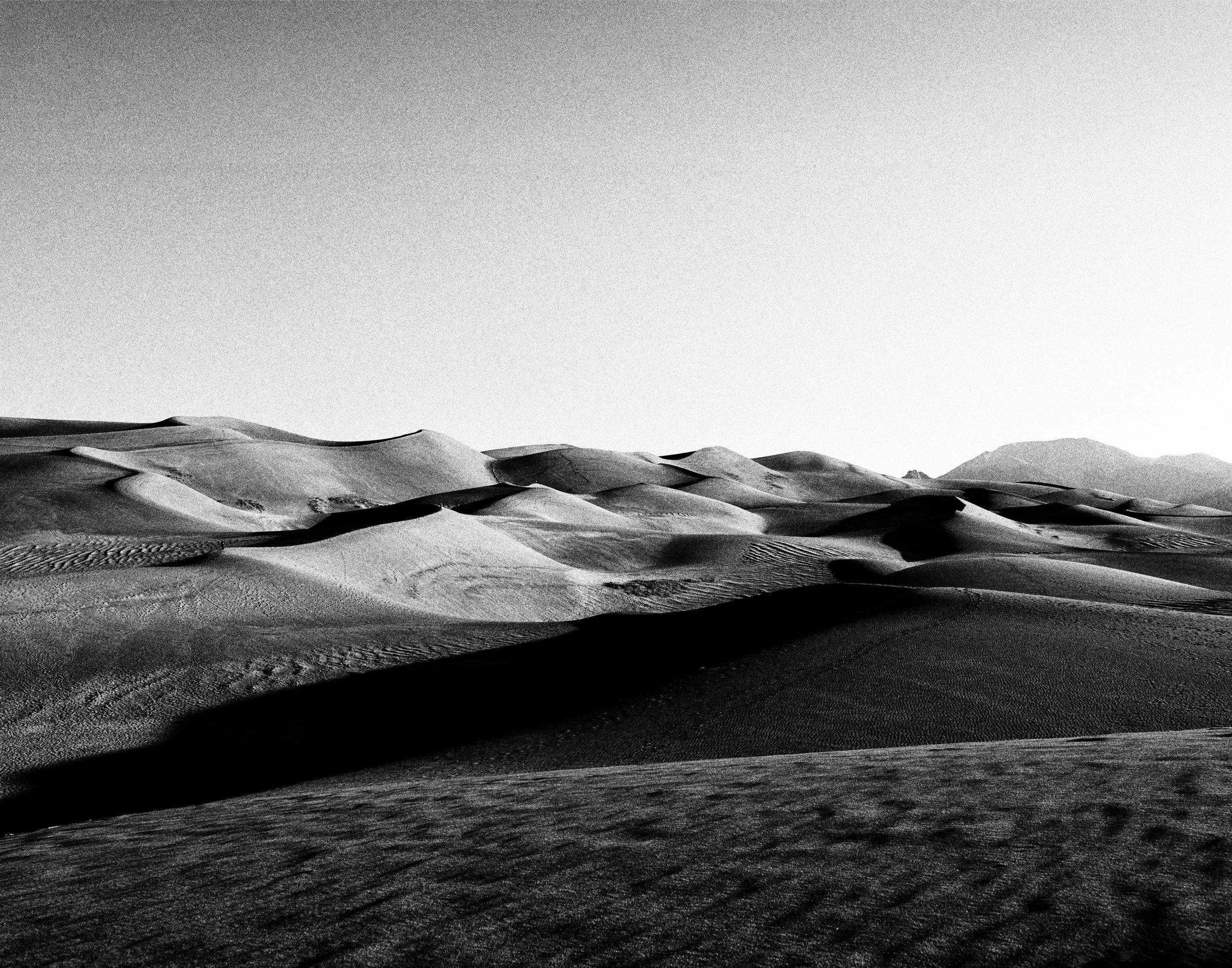
The Shape of Silence (Monotone) is a stark, deeply contemplative exploration of organic geometry, light, and desert minimalism. Capturing the razor-sharp ridges, sweeping wind-sculpted contours, and ink-like shadows of Great Sand Dunes National Park, this monochrome composition focuses on a profound sense of isolation and environmental scale. Heavily influenced by the legendary high-contrast structural landscapes of Ansel Adams and the quiet, emotionally charged realism of Andrew Wyeth, the image masterfully transforms shifting desert sands into a timeless, abstract visual meditation on form, permanence, and silence.
Great Sand Dunes National Park, in Colorado's San Luis Valley, holds the tallest dunes in North America. In monochrome their ridges read as pure line, and the shadows on the leeward faces give the sand a sculptural weight.
Design & Styling
The razor-sharp ridges and ink-like shadows of The Shape of Silence (Monotone) make a sophisticated anchor for contemporary living spaces, professional offices, and studies. Its clean lines suit minimalist walls.
Curated Pairings
This is one of four treatments of the same Great Sand Dunes capture — consider displaying it alongside its companions:
The same dunes, in form: Pair with Sculpted in Silence, the same dunes reduced to pure abstract form in the register of Edward Weston.
The same dunes, held still: Complement with The Weight of Sand, a muted, restrained treatment in the register of Andrew Wyeth.
The same dunes, in motion: Complete the set with Where Light Runs Wild, the same capture rendered in a warm, kinetic Ernst Haas register.
Fine Art Presentation
Available as a signed fine art print on ChromaLuxe® Metal (gloss, semi-gloss, or matte), Glossy Anti-Glare Acrylic (TruLife), canvas, wood, and archival paper (framed or unframed). ChromaLuxe® Metal is the recommended presentation: it elevates the sharp ridges and the ink-like shadows of the dunes. Framed archival paper is the alternative for a classic, tactile read.
Note: Custom and oversized photographic prints are available. Please contact the studio directly to discuss custom framing, matting, or specialized museum glass options.
The Shape of Silence (Monotone) is a stark, deeply contemplative exploration of organic geometry, light, and desert minimalism. Capturing the razor-sharp ridges, sweeping wind-sculpted contours, and ink-like shadows of Great Sand Dunes National Park, this monochrome composition focuses on a profound sense of isolation and environmental scale. Heavily influenced by the legendary high-contrast structural landscapes of Ansel Adams and the quiet, emotionally charged realism of Andrew Wyeth, the image masterfully transforms shifting desert sands into a timeless, abstract visual meditation on form, permanence, and silence.
Great Sand Dunes National Park, in Colorado's San Luis Valley, holds the tallest dunes in North America. In monochrome their ridges read as pure line, and the shadows on the leeward faces give the sand a sculptural weight.
Design & Styling
The razor-sharp ridges and ink-like shadows of The Shape of Silence (Monotone) make a sophisticated anchor for contemporary living spaces, professional offices, and studies. Its clean lines suit minimalist walls.
Curated Pairings
This is one of four treatments of the same Great Sand Dunes capture — consider displaying it alongside its companions:
The same dunes, in form: Pair with Sculpted in Silence, the same dunes reduced to pure abstract form in the register of Edward Weston.
The same dunes, held still: Complement with The Weight of Sand, a muted, restrained treatment in the register of Andrew Wyeth.
The same dunes, in motion: Complete the set with Where Light Runs Wild, the same capture rendered in a warm, kinetic Ernst Haas register.
Fine Art Presentation
Available as a signed fine art print on ChromaLuxe® Metal (gloss, semi-gloss, or matte), Glossy Anti-Glare Acrylic (TruLife), canvas, wood, and archival paper (framed or unframed). ChromaLuxe® Metal is the recommended presentation: it elevates the sharp ridges and the ink-like shadows of the dunes. Framed archival paper is the alternative for a classic, tactile read.
Note: Custom and oversized photographic prints are available. Please contact the studio directly to discuss custom framing, matting, or specialized museum glass options.