
 Image 1 of 1
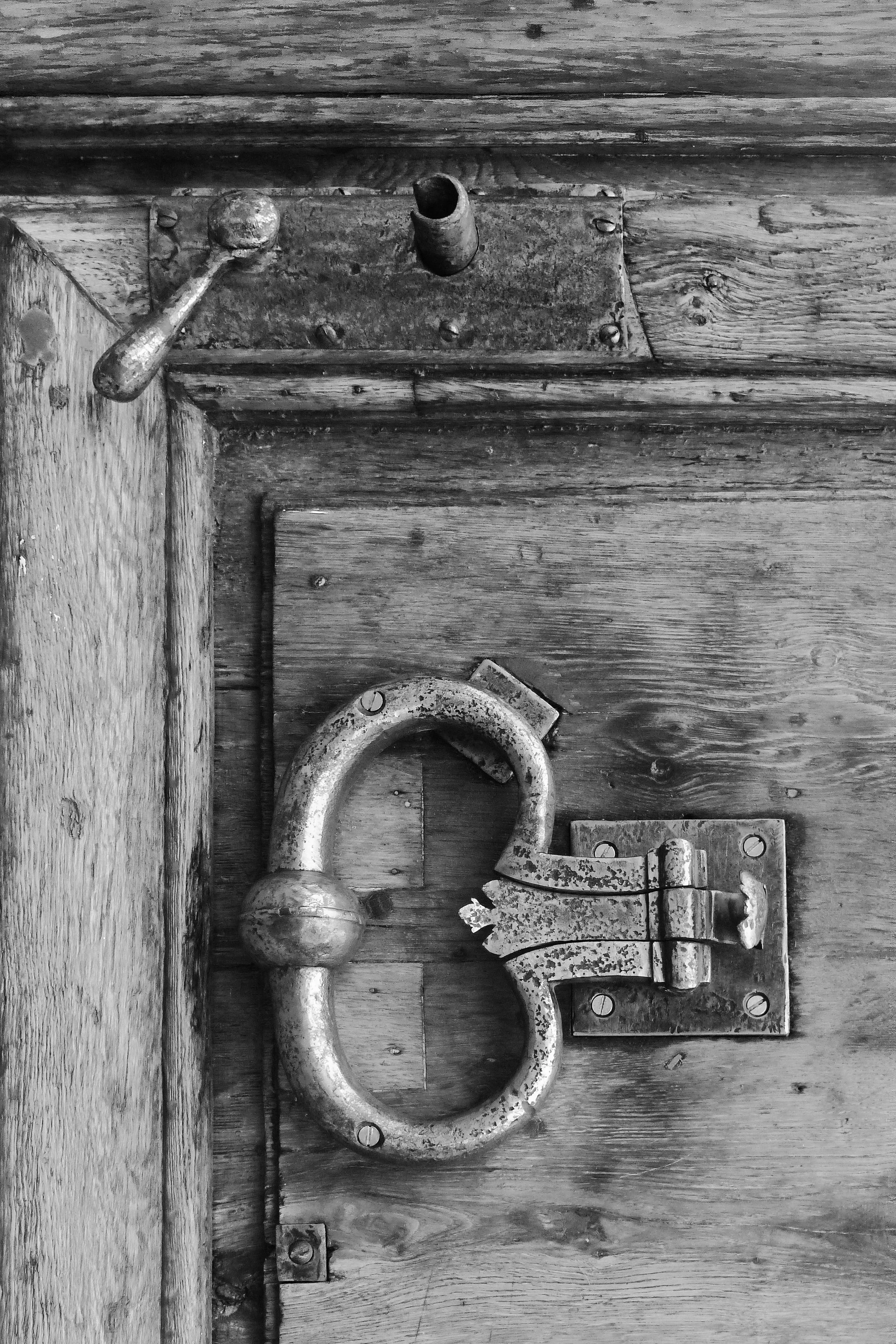
What the Door Remembers: Stripped to black and white, What the Door Remembers becomes a study of tone and texture. The ornate ring-pull knocker and the iron latch on this aged Paris cabinet door are separated by brightness alone, the polished metal catching light against the grain around it. Rather than documenting the door as a whole, the photograph isolates this quiet corner of use and wear, where decades of hands and weather have left their mark.
Without color to separate the materials, the image relies on tonal contrast: the polished metal of the ring-pull catches light and reads distinctly brighter than the surrounding wood grain, while the secondary latch mechanism sits quieter in the frame, subordinate to the main form. A vertical composition follows the door's own structure, connecting the two hardware pieces along a single line of sight.
Drawing directly on the black-and-white object studies of Josef Sudek, the image treats old hardware not as documentation but as a quiet meditation on time, use, and the particular beauty of things worn rather than new — rendered here in the medium Sudek himself worked in most.
Design & Styling
With its restrained black-and-white palette and quiet, textural presence, What the Door Remembers works well in studies, libraries, and contemplative interiors — as well as healthcare and hospitality spaces seeking a dignified, non-jarring black-and-white piece.
Curated Pairings
To build a wall around texture, patina, and quiet detail, consider these companion pieces:
For the same subject, a different register: Pair with What the Door Remembers (Color), the color treatment of the same hardware.
For a shared black-and-white register: Complement with Rock with Wings – Tsé Bitʼaʼí, another black-and-white study built on tonal contrast and restraint.
For the same Paris trip: Pair with Between Frames, a Tuileries Garden couple in black and white, where quiet tonal separation does the same work on people.
Fine Art Presentation
Available as a signed fine art print on ChromaLuxe® Metal (gloss, semi-gloss, or matte), Glossy Anti-Glare Acrylic (TruLife), canvas, wood, and archival paper (framed or unframed). Framed archival paper is the recommended presentation: its matte, silvery surface suits a Sudek-style object study and preserves the full tonal range in the wood grain and metal patina. ChromaLuxe® Metal is the alternative for brighter highlights on the polished ring-pull.
Note: Custom and oversized photographic prints are available. Please contact the studio directly to discuss custom framing, matting, or specialized museum glass options.
What the Door Remembers: Stripped to black and white, What the Door Remembers becomes a study of tone and texture. The ornate ring-pull knocker and the iron latch on this aged Paris cabinet door are separated by brightness alone, the polished metal catching light against the grain around it. Rather than documenting the door as a whole, the photograph isolates this quiet corner of use and wear, where decades of hands and weather have left their mark.
Without color to separate the materials, the image relies on tonal contrast: the polished metal of the ring-pull catches light and reads distinctly brighter than the surrounding wood grain, while the secondary latch mechanism sits quieter in the frame, subordinate to the main form. A vertical composition follows the door's own structure, connecting the two hardware pieces along a single line of sight.
Drawing directly on the black-and-white object studies of Josef Sudek, the image treats old hardware not as documentation but as a quiet meditation on time, use, and the particular beauty of things worn rather than new — rendered here in the medium Sudek himself worked in most.
Design & Styling
With its restrained black-and-white palette and quiet, textural presence, What the Door Remembers works well in studies, libraries, and contemplative interiors — as well as healthcare and hospitality spaces seeking a dignified, non-jarring black-and-white piece.
Curated Pairings
To build a wall around texture, patina, and quiet detail, consider these companion pieces:
For the same subject, a different register: Pair with What the Door Remembers (Color), the color treatment of the same hardware.
For a shared black-and-white register: Complement with Rock with Wings – Tsé Bitʼaʼí, another black-and-white study built on tonal contrast and restraint.
For the same Paris trip: Pair with Between Frames, a Tuileries Garden couple in black and white, where quiet tonal separation does the same work on people.
Fine Art Presentation
Available as a signed fine art print on ChromaLuxe® Metal (gloss, semi-gloss, or matte), Glossy Anti-Glare Acrylic (TruLife), canvas, wood, and archival paper (framed or unframed). Framed archival paper is the recommended presentation: its matte, silvery surface suits a Sudek-style object study and preserves the full tonal range in the wood grain and metal patina. ChromaLuxe® Metal is the alternative for brighter highlights on the polished ring-pull.
Note: Custom and oversized photographic prints are available. Please contact the studio directly to discuss custom framing, matting, or specialized museum glass options.