
 Image 1 of 5
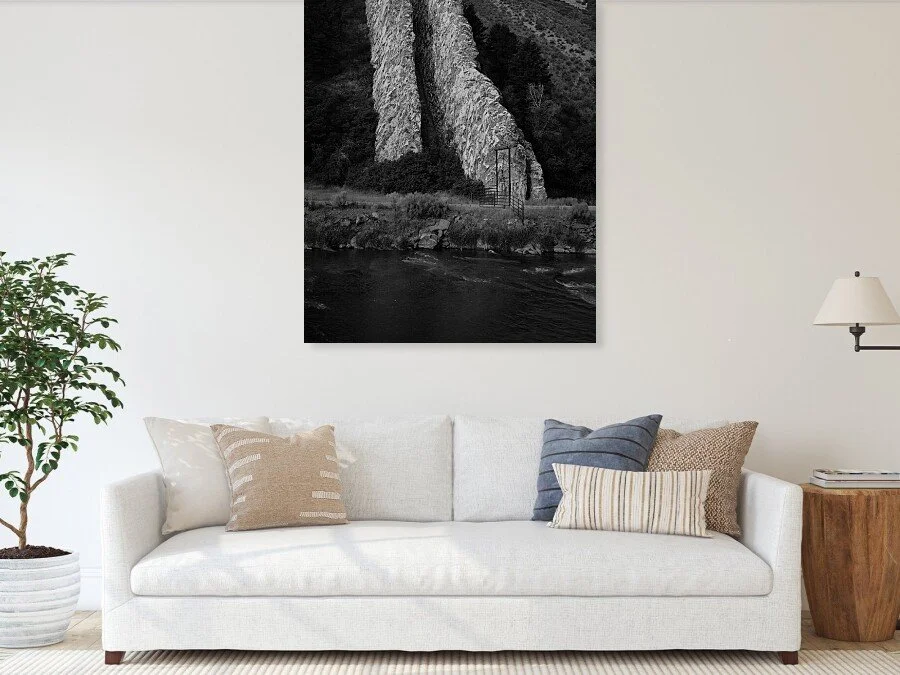 Image 2 of 5
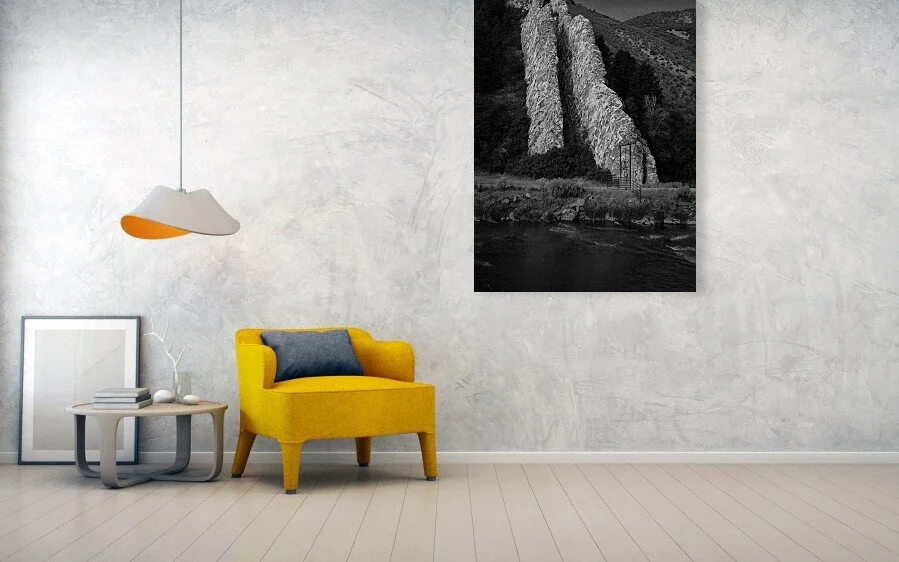 Image 3 of 5
 Image 4 of 5
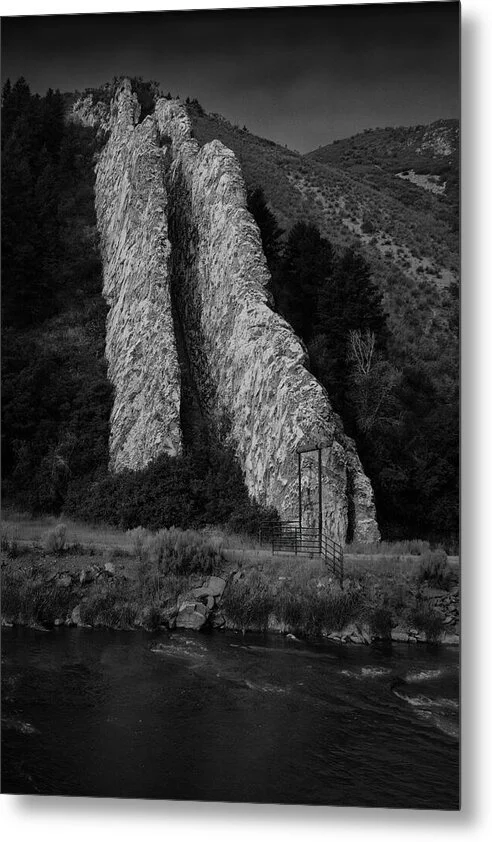 Image 5 of 5
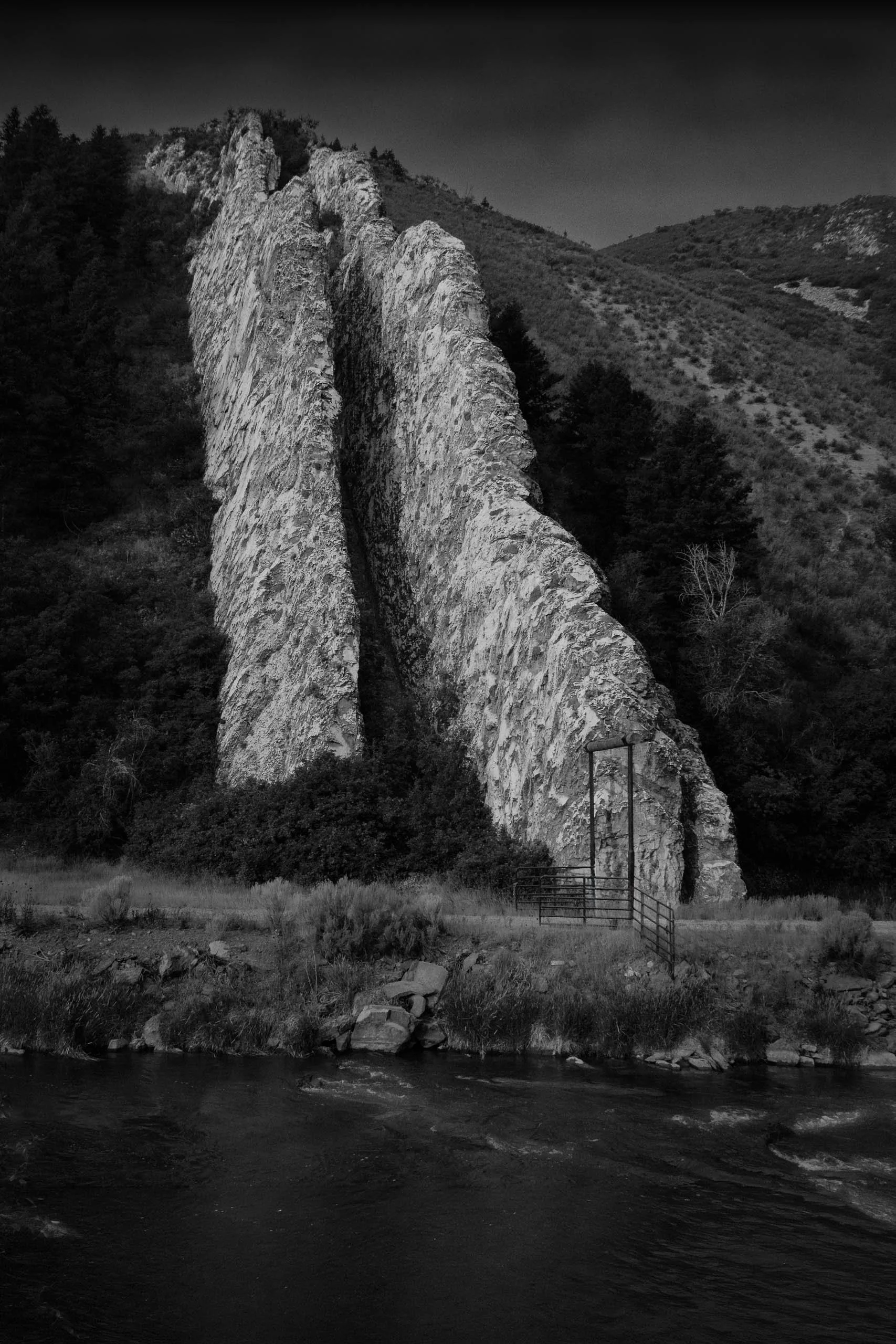
Some places post their own warnings. Beneath a wall of pale limestone that was tilted on end some 75 million years ago, a pipe gate stands at the water's edge with a small skull set on its crossbar, and the rock above it seems to agree. What the Gate Warns is a black-and-white photograph of the Devil's Slide in Weber Canyon, Utah, where two slabs of limestone rise out of a dark hillside above the Weber River.
The eye enters at the brightest, most broken part of the fin, where light and shadow stack up in hard facets, then drops down the dark cleft between the two slabs to the base of the rock. There it meets the gate, a thin frame of pipe against the stone, and only then, in the quiet after the rock has let go of the eye, does the small skull on the crossbar appear. Below, the river carries a few bands of white water across the lower frame and sends the eye back along the shoreline, while the dark hillside and a near-black sky close the picture around the fin.
This is black-and-white western landscape photography in the tradition of Ansel Adams, with a dark sky and a rock face carried through its full range of tone, and with the dry, patient attention to one small object in a large country that runs through Andrew Wyeth. The skull is not announced. It rewards the person who stays with the print.
What the Gate Warns suits lodge and hotel lobbies, steakhouses, whiskey bars and lounges, where the dark tones and the hidden detail start conversations, as well as executive offices, libraries and studies. In mountain and ranch homes the vertical format fits a narrow wall, a stairwell or the space beside a fireplace or doorway. It sits well with dark walnut, leather, charcoal and black steel, or hung against a pale plaster wall for contrast. It is a natural gift for anyone from Utah or the Wasatch, or who has driven Interstate 84 through Weber Canyon.
For the same Utah monolith in monochrome: Pair with Sentinel of the Plain, a lone sandstone butte photographed in black and white with the sky taken nearly black, the same pale-stone-against-dark-sky contrast this fin is built on.
For the same scale against stone: Pair with The Measure of Stone, where a couple resting beneath a monumental Arches formation gives the rock its size, much as the small gate and skull do here.
For the same mark left on rock: Pair with Before the Alphabet (Panorama), the Newspaper Rock petroglyph panel, where small figures carved into dark sandstone are the whole story and only close looking finds them.
Available as a signed, numbered limited edition print (edition of 15) in Gallery Metal, ChromaLuxe® Metal (Gloss, Semi-Gloss or Matte), TruLife Acrylic, archival paper, canvas, and wood. ChromaLuxe® Metal in Semi-Gloss is the strongest choice: the fine limestone texture and the full range from white rock to near-black forest hold their separation there, and the semi-gloss keeps the large dark areas of hillside and river from mirroring the room. Archival paper is the alternative for the closest match to a traditional darkroom print.
Note: Custom and oversized photographic prints are available. Please contact the studio directly to discuss custom framing, matting, or specialized museum glass options.