
 Image 1 of 5
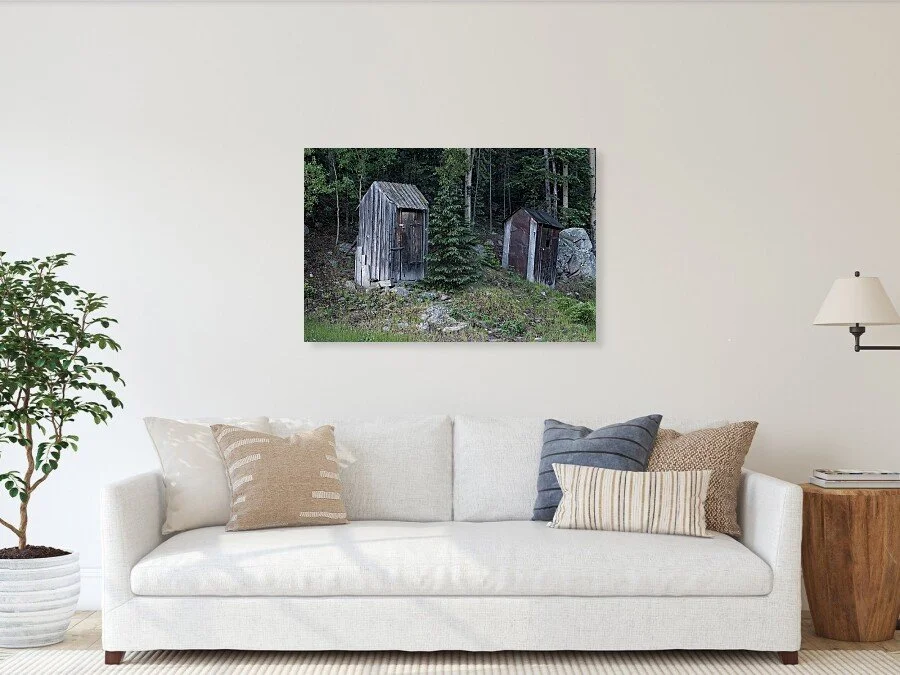 Image 2 of 5
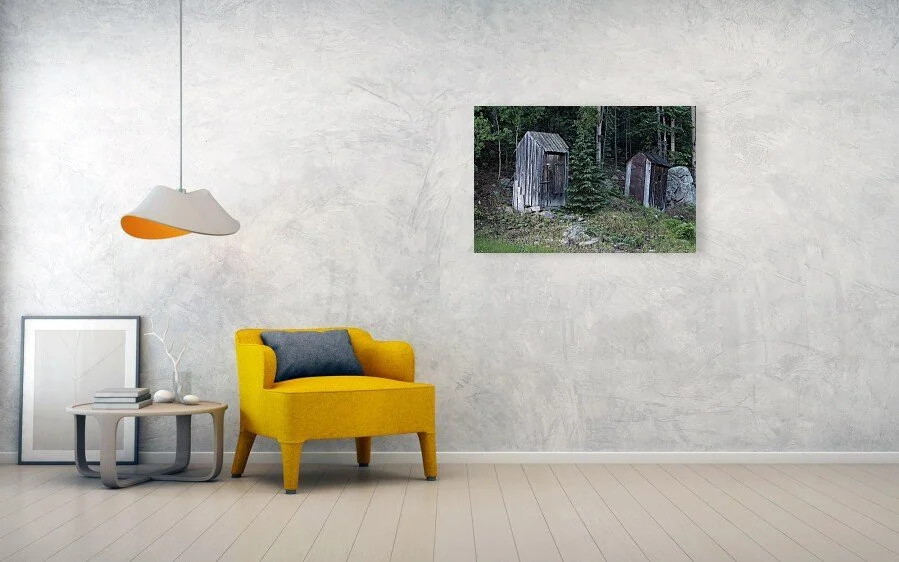 Image 3 of 5
 Image 4 of 5
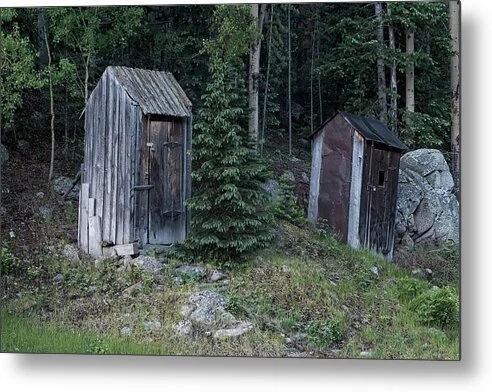 Image 5 of 5
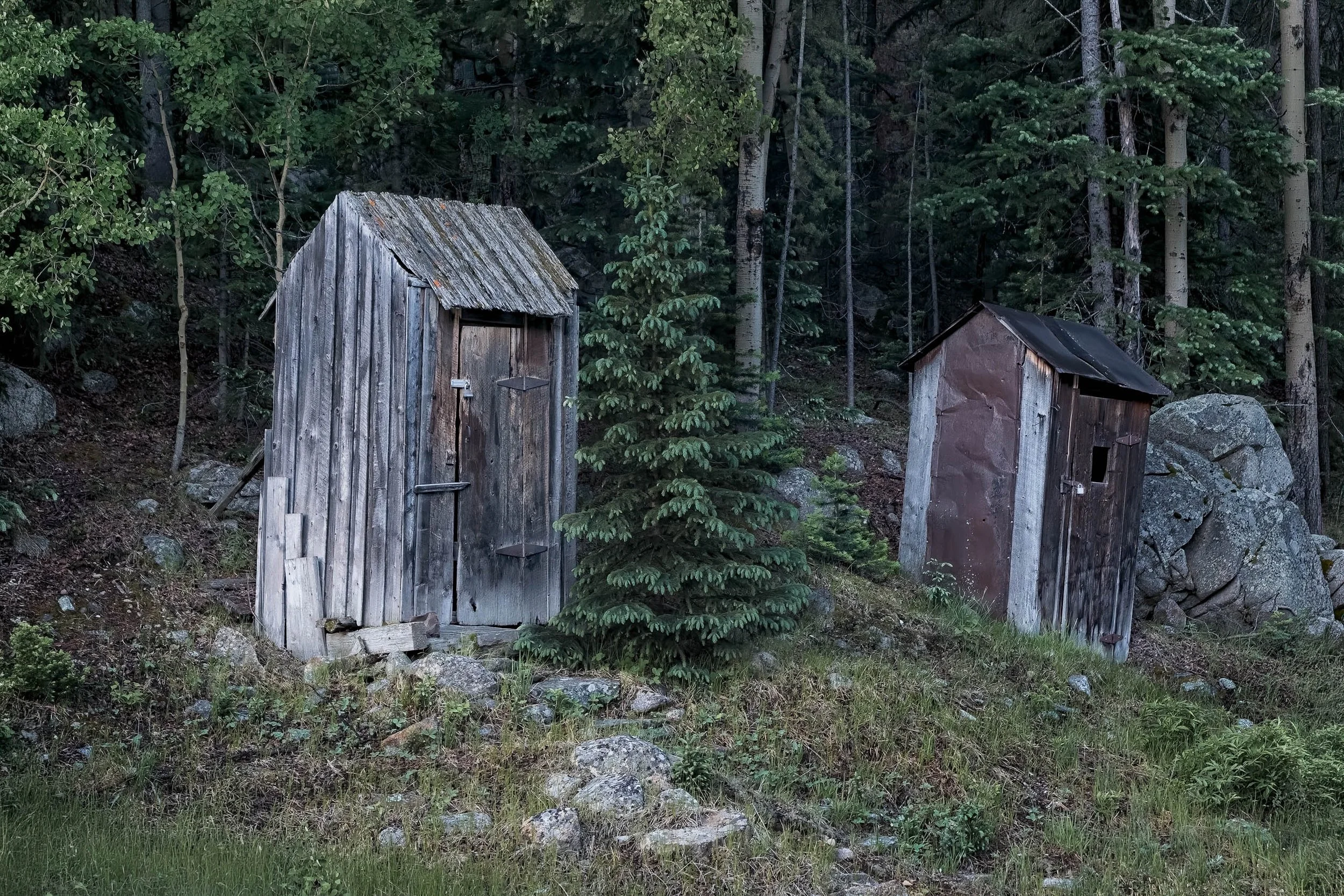
Occupied, Some doors are shut so firmly that the sign on them hardly matters. In St. Elmo, Colorado, Occupied stands two weathered outhouses side by side, one in gray plank with a shingled roof, the other in rust-red metal, each with its own small padlock, in a forest of deep green aspen and spruce.
The eye starts on the left, at the gray plank door and its padlock, then follows the long diagonal of the shingled roof across to the spruce that stands between the two buildings like a neighbor. From there it crosses to the right outhouse, where the rusted sheet metal, the square cut-out of a window and a second padlock repeat the first one's message in a different material. The pale aspen trunks and the granite boulder at the right hold the frame open, and the dark forest behind keeps the weathered boards glowing at the center.
The plain, frontal way of looking at a vernacular building belongs to Walker Evans, who treated a shed or a storefront with the same seriousness as a monument. The muted palette and the grain of the aging wood owe something to Andrew Wyeth.
Occupied brings dry humor and Colorado mountain character to lodges, cabins, brewpubs, restaurants, mudrooms, powder rooms and hallway walls. The weathered gray and forest green sit comfortably beside timber, stone, leather and wrought iron, and the 3:2 format fits over a bench, a console, a fireplace or a stair landing.
Three companions, each connected in a different way:
For the same Colorado era: Pair with Hanging On, Creede, Colorado, a rain-darkened mining shack in the San Juan Mountains. Both photograph the weathered wood left behind by Colorado's mining past, in the same muted, quiet light.
For a structure alone: Pair with Held Against the Sky, a single cabin under open Colorado sky. Where Occupied is about two buildings and a forest, this one gives a single building all the room.
For the hardware of a closed door: Pair with What the Door Remembers, antique door hardware in Paris, in monochrome. A deliberate change of place and period: ornate ironwork against a plain padlock, both of them about what a door keeps in.
Available as a signed and numbered limited edition of fifteen (15) prints in ChromaLuxe® Metal (Gloss, Semi-Gloss or Matte), TruLife acrylic, archival paper (framed or unframed), canvas and wood. Framed archival paper is the recommendation: its matte surface suits the muted palette and the weathered grain of the planks, and it stays closest to the documentary tradition the image comes from. Wood is the alternative, where the grain of the print can echo the boards in the picture. Metal is the choice if you want the forest greens to glow.
Note: Custom and oversized photographic prints are available. Please contact the studio directly to discuss custom framing, matting, or specialized museum glass options.