
 Image 1 of 1
Aghaałą́ (Where the Land Stands)
Aghaałą́ (Where the Land Stands)
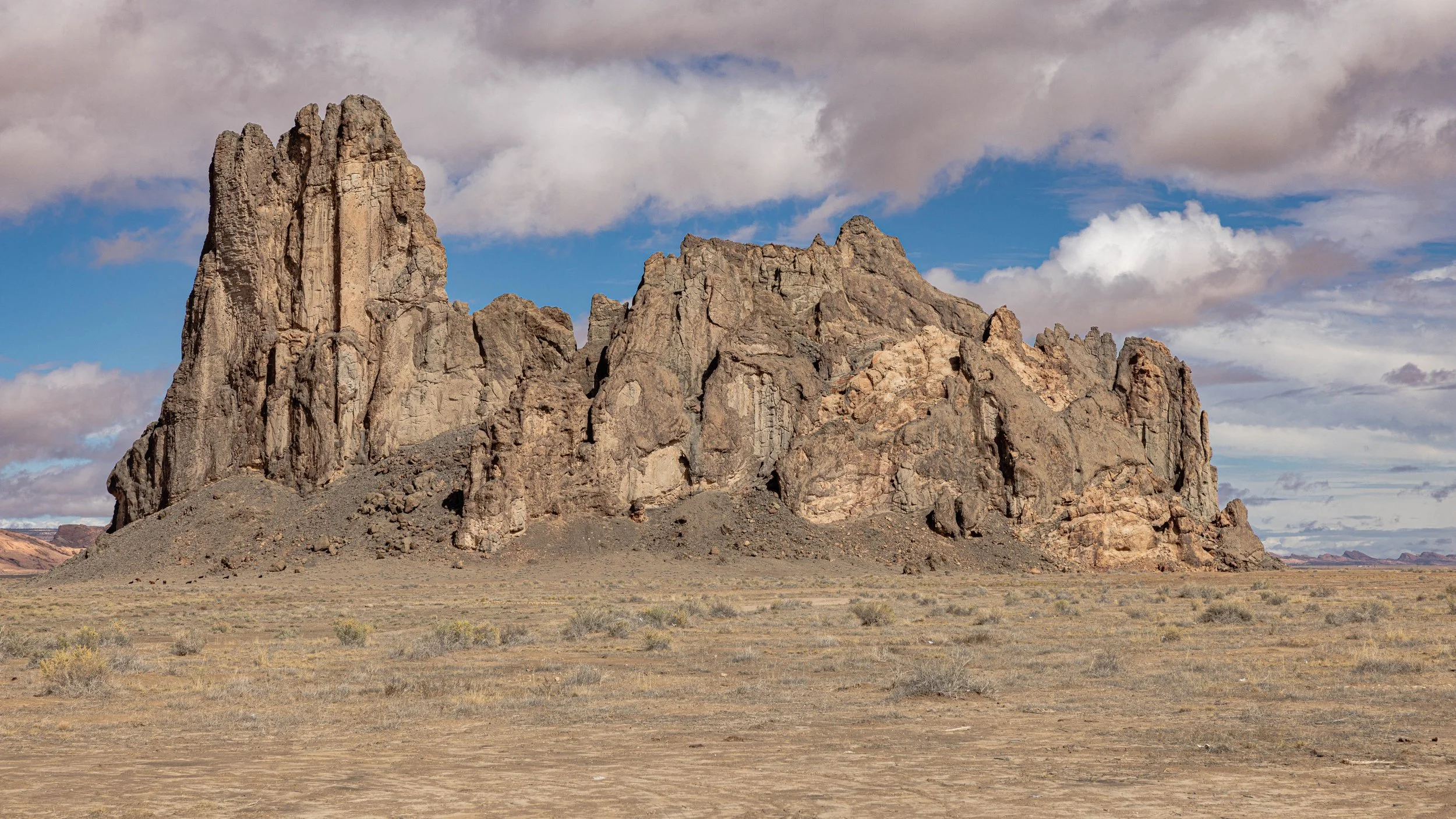
Aghaałą́ (Where the Land Stands) is a study of geological presence, permanence, and the immense forces that shape the American Southwest. Photographed near Monument Valley along the high desert plains of northern Arizona, the image portrays Aghaałą́, a volcanic neck rising abruptly from the surrounding landscape. Known in English as Agathla Peak, the formation carries a Navajo name often translated as "much wool," a reference to animal wool and hair that historically caught on the rough volcanic rock.
Rather than emphasizing dramatic light or atmospheric spectacle, the photograph focuses on the mountain's sculptural character. The massive stone formation occupies the frame with quiet authority, revealing intricate textures, fractured surfaces, and layers of volcanic history carved by centuries of weather. A broad desert foreground reinforces the scale of the formation while passing clouds create subtle variations of light across the rock face, revealing details that might otherwise remain hidden.
The image explores themes that recur throughout the American West: endurance, isolation, and the relationship between landscape and time. The volcanic neck appears less as a scenic backdrop and more as a solitary presence standing against an immense sky. The resulting photograph becomes a portrait of stone itself—an examination of form, structure, and the enduring character of the desert.
Drawing inspiration from the contemplative landscape traditions of Ansel Adams and Edward Weston, Aghaałą́ (Where the Land Stands) invites viewers to slow down and consider the deep geological history written across the landscape.
Available in archival paper, framed archival paper, metal, acrylic, wood, canvas, and framed canvas. Most images are available up to 40×60 inches, with select wood prints available up to 48×32 inches.
Design & Styling
With its neutral earth tones, expansive sky, and strong architectural form, Aghaałą́ (Where the Land Stands) works particularly well in contemporary homes, mountain residences, professional offices, healthcare environments, and spaces designed around natural materials. The image pairs naturally with stone, wood, steel, and minimalist interiors while providing a sense of permanence and calm.
Curated Pairings
For a cohesive gallery wall, consider these companion pieces:
For geological continuity: Pair with Enduring Forms to explore the sculptural character of the American Southwest through studies of stone, texture, and enduring form.
For a dialogue of presence and permanence: Complement this piece with Enduring Silence, creating a powerful conversation between two iconic desert formations shaped by time, weather, and geological history.
For a broader Western narrative: Pair with Shelter Beneath a Restless Sky, balancing the monumentality of stone with the human stories and cultural landscapes that define the American West.
Fine Art Presentation
The intricate textures of the volcanic rock, subtle tonal transitions, and sculptural character of the formation are particularly well suited to larger presentations. Semi-gloss metal prints reveal exceptional detail and depth, while wood prints provide a natural presentation that complements the earthy tones and geological subject matter. Acrylic presentations create remarkable dimensionality and visual presence, especially in contemporary interiors.
Recommended presentations:
24×36 Metal Print
30×45 Metal Print
40×60 Metal Print
48×32 Wood Print
Note: Custom and oversized photographic prints are available. Please contact the studio directly to discuss custom framing, matting, or specialized museum glass options.
Aghaałą́ (Where the Land Stands)
Aghaałą́ (Where the Land Stands) is a study of geological presence, permanence, and the immense forces that shape the American Southwest. Photographed near Monument Valley along the high desert plains of northern Arizona, the image portrays Aghaałą́, a volcanic neck rising abruptly from the surrounding landscape. Known in English as Agathla Peak, the formation carries a Navajo name often translated as "much wool," a reference to animal wool and hair that historically caught on the rough volcanic rock.
Rather than emphasizing dramatic light or atmospheric spectacle, the photograph focuses on the mountain's sculptural character. The massive stone formation occupies the frame with quiet authority, revealing intricate textures, fractured surfaces, and layers of volcanic history carved by centuries of weather. A broad desert foreground reinforces the scale of the formation while passing clouds create subtle variations of light across the rock face, revealing details that might otherwise remain hidden.
The image explores themes that recur throughout the American West: endurance, isolation, and the relationship between landscape and time. The volcanic neck appears less as a scenic backdrop and more as a solitary presence standing against an immense sky. The resulting photograph becomes a portrait of stone itself—an examination of form, structure, and the enduring character of the desert.
Drawing inspiration from the contemplative landscape traditions of Ansel Adams and Edward Weston, Aghaałą́ (Where the Land Stands) invites viewers to slow down and consider the deep geological history written across the landscape.
Available in archival paper, framed archival paper, metal, acrylic, wood, canvas, and framed canvas. Most images are available up to 40×60 inches, with select wood prints available up to 48×32 inches.
Design & Styling
With its neutral earth tones, expansive sky, and strong architectural form, Aghaałą́ (Where the Land Stands) works particularly well in contemporary homes, mountain residences, professional offices, healthcare environments, and spaces designed around natural materials. The image pairs naturally with stone, wood, steel, and minimalist interiors while providing a sense of permanence and calm.
Curated Pairings
For a cohesive gallery wall, consider these companion pieces:
For geological continuity: Pair with Enduring Forms to explore the sculptural character of the American Southwest through studies of stone, texture, and enduring form.
For a dialogue of presence and permanence: Complement this piece with Enduring Silence, creating a powerful conversation between two iconic desert formations shaped by time, weather, and geological history.
For a broader Western narrative: Pair with Shelter Beneath a Restless Sky, balancing the monumentality of stone with the human stories and cultural landscapes that define the American West.
Fine Art Presentation
The intricate textures of the volcanic rock, subtle tonal transitions, and sculptural character of the formation are particularly well suited to larger presentations. Semi-gloss metal prints reveal exceptional detail and depth, while wood prints provide a natural presentation that complements the earthy tones and geological subject matter. Acrylic presentations create remarkable dimensionality and visual presence, especially in contemporary interiors.
Recommended presentations:
24×36 Metal Print
30×45 Metal Print
40×60 Metal Print
48×32 Wood Print
Note: Custom and oversized photographic prints are available. Please contact the studio directly to discuss custom framing, matting, or specialized museum glass options.