

Introducing Dorothea Lange
Dorothea Lange believed photography could do more than record events. It could reveal human experience. Her photographs remain among the most powerful examples of how a camera can foster empathy, understanding, and connection.
The Human Side of Photography
Few photographers have demonstrated the power of photography more clearly than Dorothea Lange.
Working during some of the most challenging decades of American history, Lange created photographs that continue to shape how we understand poverty, migration, labor, and resilience. Her images are among the most recognizable in photographic history, yet their power comes not from spectacle but from humanity.
Lange began her career as a portrait photographer in San Francisco. During the Great Depression, however, she turned her attention outward. As economic hardship spread across the country, she felt compelled to document the lives of people facing extraordinary challenges.
The result was a body of work that helped define documentary photography.
Her most famous image, Migrant Mother, has become an enduring symbol of the Great Depression. Yet Lange's achievement extends far beyond a single photograph. Throughout her career, she consistently focused on individuals whose stories might otherwise have been overlooked.
What distinguishes Lange's work is her empathy.
She approached her subjects not as statistics or symbols but as people. Her photographs communicate dignity, vulnerability, strength, and complexity. They encourage viewers to see beyond circumstances and recognize shared humanity.
Lange also understood that photographs carry social responsibility. She believed photography could raise awareness, challenge assumptions, and encourage engagement with the world.
At the same time, her images remain deeply personal. They succeed not because they make arguments, but because they create connections.
Looking at a Dorothea Lange photograph, we often feel that we are encountering a person rather than a subject.
That ability to bridge distance—between photographer and subject, between viewer and image—is one of her greatest achievements.
More than eighty years after many of her photographs were made, Lange's work continues to remind us that photography is ultimately about people.
Not simply how they look.
But how they live, endure, and persevere.

What I Learned from Ansel Adams
What I admire most about Ansel Adams is not simply his technical mastery. It is his belief that a photograph should communicate an experience. That idea continues to shape the way I approach landscapes, printing, and the craft of photography.
Light, Landscape, and Craftsmanship
If Edward Weston taught me to see form and Frederick H. Evans taught me to see light, Ansel Adams taught me to respect craftsmanship.
Adams understood something that remains true today.
The camera does not create the photograph.
The photographer does.
His famous landscapes were never simply records of places. They were interpretations of experience. Every exposure, every tonal decision, and every darkroom adjustment contributed to a final image that communicated what he felt standing before the landscape.
That philosophy continues to influence my own work.
When I photograph Monument Valley, Shiprock, Canyonlands, Arches, or the Flint Hills, I am not simply documenting a location. I am trying to create a photograph that conveys atmosphere, scale, and emotional connection.
I see Adams' influence most clearly in photographs such as The First Aperture, Enduring Silence, Valley of Fire, Interrupted Silence, and Stillness After Rain.
These images depend on many of the same qualities that Adams valued.
Patience.
Timing.
Light.
Weather.
And perhaps most importantly, careful craftsmanship after the shutter is released.
Adams famously compared the negative to a musical score and the print to a performance. That idea resonates strongly with me because so much of my photographic process happens after capture.
Editing is not an afterthought.
Printing is not an afterthought.
Presentation is not an afterthought.
They are part of the creative process.
Whether I am refining tonal relationships in Lightroom, making selective adjustments in Photoshop, preparing a file for metal printing, or evaluating a final print under gallery lighting, I am continuing the conversation that began when I made the photograph.
Adams also reminds me to think about permanence.
Many of my favorite subjects are landscapes shaped by geological time. Monument Valley, Shiprock, Canyonlands, and the sandstone formations of the Southwest existed long before I arrived and will remain long after I am gone.
Photographs such as Enduring Silence and The First Aperture are, in part, responses to that realization.
They attempt to communicate the feeling of standing before something ancient and enduring.
Perhaps that is why Adams' work continues to matter.
His photographs are not merely beautiful.
They encourage viewers to pay attention.
To appreciate light.
To appreciate wilderness.
To appreciate craftsmanship.
And to recognize that photography can be both an artistic practice and a way of connecting more deeply with the world around us.
That remains one of the most valuable lessons Ansel Adams has to offer.
Introducing Ansel Adams
Few photographers are more closely associated with the American landscape than Ansel Adams. His photographs of mountains, deserts, rivers, and national parks helped shape both the history of photography and the way generations of people experience the natural world.
The Art of Seeing the Landscape
Few photographers have left a larger mark on photography than Ansel Adams. In fact one can argue that he was the most influential artists for every photographer. I wanted to wait to think about other photographers that influenced me so I could think about how to talk about Ansel Adams.
For many people, Adams is synonymous with the American landscape. His photographs of Yosemite, the Sierra Nevada, and the American West have become some of the most recognizable images ever created. Yet reducing Adams to simply a landscape photographer overlooks the depth of his contribution to the medium.
Adams was not merely photographing scenery.
He was interpreting it.
Working primarily in black and white, Adams developed photographs of extraordinary tonal richness and technical precision. Through careful exposure, meticulous darkroom craftsmanship, and an intimate understanding of light, he transformed mountains, clouds, forests, and rivers into powerful visual experiences.
One of his most important contributions was the development of the Zone System, a method that allowed photographers to visualize and control tonal values from the moment an image was conceived. The system remains influential today because it encourages photographers to think intentionally about light, contrast, and the final print.
What makes Adams' work endure is not simply technical excellence. Countless photographers have mastered technique. Adams combined technical skill with emotional response.
His photographs communicate awe.
They communicate scale.
They communicate the feeling of standing before something larger than oneself.
The landscapes in his photographs are not passive scenery. They become expressions of light, weather, atmosphere, and geological time.
Adams was also a committed conservationist. His photographs helped inspire appreciation for public lands and contributed to broader efforts to protect wilderness areas throughout the American West.
For Adams, photography was more than documentation.
It was a way of communicating the experience of being present in nature.
More than half a century later, his work continues to influence photographers around the world because it demonstrates a timeless truth: a great landscape photograph is not simply about where it was made. It is about what the photographer felt while standing there.
That connection between observation, craftsmanship, and emotional response remains Ansel Adams' enduring legacy.
What I Learned from Edward Weston
What I admire most about Edward Weston is his ability to find significance in ordinary subjects. His photographs remind me that a compelling image begins not with a dramatic location, but with the willingness to truly see.
Form, Texture, and Seeing:
When photographers talk about Edward Weston, they often mention his famous peppers.
I think the peppers matter less than the way he saw them.
Weston possessed an extraordinary ability to look beyond a subject's identity and recognize its visual character. He saw curves, lines, textures, shadows, and relationships. The object itself became secondary to the experience of seeing.
That lesson has influenced my own photography more than any specific technique.
Many of my favorite photographs begin with subjects that might seem ordinary at first glance. A flower. A seed head. A weathered surface. A reflection. A detail that others might pass without notice.
The challenge is not finding extraordinary subjects.
The challenge is seeing ordinary subjects extraordinarily well.
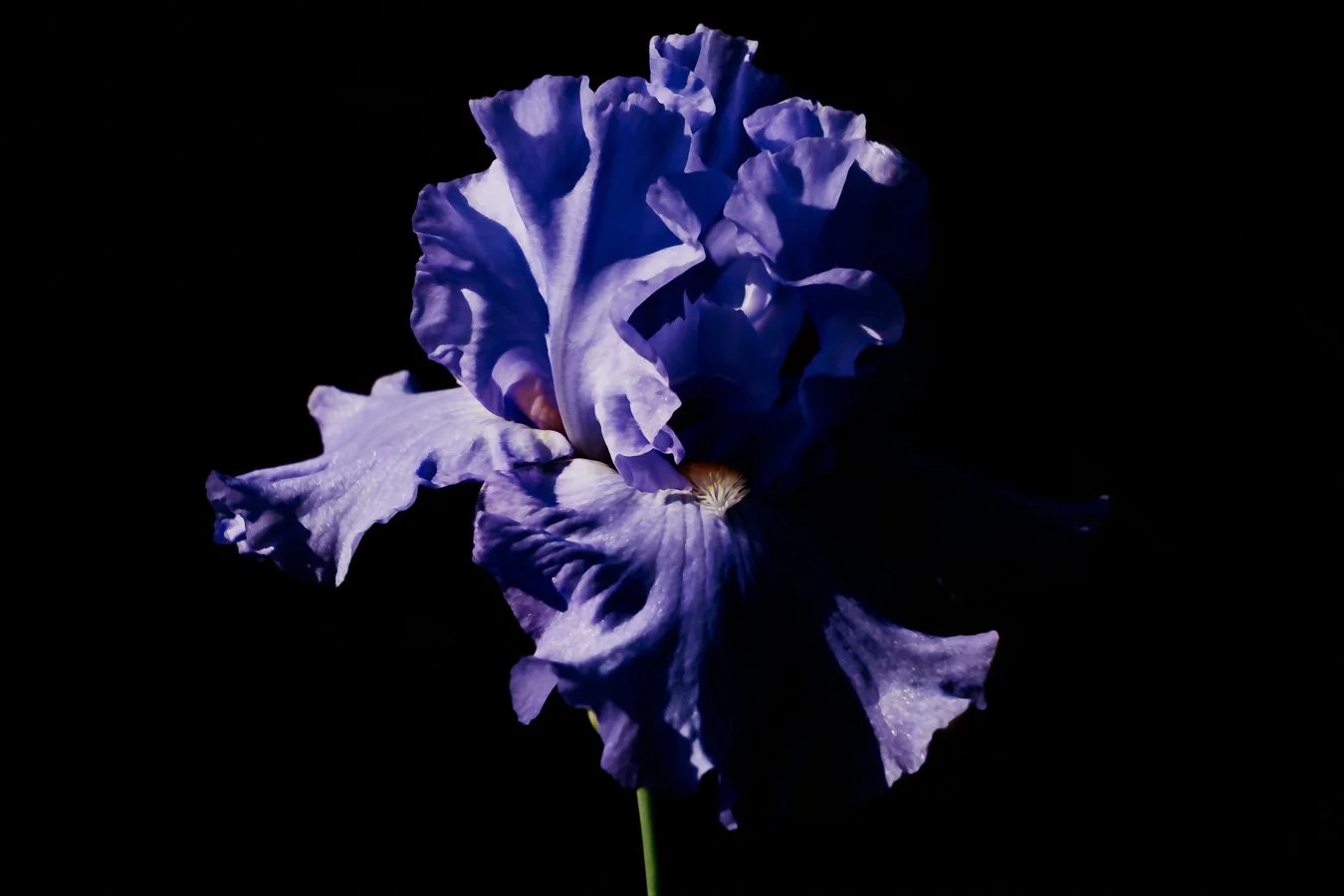
I see Weston's influence most clearly in my botanical work. Images such as Lavender Iris, Seeds of the Meadow, After the Heat, and many of my floral studies depend less on color and more on form. The shape of a petal, the texture of a seed head, or the rhythm of repeating structures becomes the foundation of the photograph.
Weston also reminds me of the importance of craftsmanship.
His photographs are meticulously composed. Every edge matters. Every tonal transition matters. Nothing feels accidental.
That same attention to detail influences the way I edit and print my photographs. Whether I am working on a macro botanical image or a large landscape, I want the final photograph to reward close viewing.
The longer I photograph, the more I appreciate Weston's commitment to observation.
Modern photography often encourages speed. We photograph more images than ever before and move quickly from one subject to the next.
Weston worked differently.
He studied.
He simplified.
He refined.
He looked again.
That process continues to resonate with me.
Some of my strongest photographs have emerged not from dramatic discoveries but from spending time with a subject and allowing it to reveal itself gradually. A flower becomes an abstract study of color and shape. A weathered object becomes a study of texture. A reflection becomes a meditation on form.
Weston reminds me that photography is ultimately an act of attention.
The camera records what stands before it.
The photographer decides what is worth seeing.
That remains one of Edward Weston's most enduring lessons.
Introducing Edward Weston
Edward Weston transformed peppers, shells, dunes, and everyday objects into some of the most iconic photographs in history. His work helped define modern photography by proving that beauty could be found through careful observation rather than manipulation.
The Pursuit of Pure Photography
Few photographers changed the course of photography as profoundly as Edward Weston.
Working during the first half of the twentieth century, Weston became one of the leading voices of what came to be known as "straight photography"—an approach that emphasized clarity, precision, and the inherent qualities of the photographic medium. Rather than imitating painting or relying on heavy manipulation, Weston believed photography should embrace what made it unique.
His subjects were often surprisingly simple.
Peppers.
Shells.
Driftwood.
Dunes.
Rocks.
Leaves.
Yet through careful composition and extraordinary attention to light, Weston transformed these ordinary objects into photographs of remarkable power and elegance.
What distinguished Weston was not the subject itself, but the way he saw it. He had an exceptional ability to recognize shape, texture, rhythm, and form. A pepper became sculpture. A shell became architecture. A sand dune became an abstract study of line and shadow.
His photographs encourage viewers to look more carefully at the world around them.
Weston believed that photography could reveal beauty hidden in plain sight. He often worked with large-format cameras, creating negatives rich in detail and tonal subtlety. The resulting prints possess a remarkable sense of presence, inviting viewers to engage with every curve, texture, and surface.
His influence extended beyond technique. Weston helped establish photography as a serious artistic medium and inspired generations of photographers to trust observation rather than manipulation.
Today, his work remains a reminder that extraordinary photographs do not require extraordinary subjects.
Sometimes the most compelling images begin with a simple act of attention.
Edward Weston teaches us that photography is not merely about recording what exists. It is about seeing what others overlook.
What I Learned from Edward S. Curtis
Edward S. Curtis devoted more than three decades to documenting Native American cultures across North America. His photographs remain some of the most influential, celebrated, and debated images in the history of photography.
Atmosphere, Memory, and Place
Edward Curtis is often remembered as a documentarian.
I appreciate him for a different reason.
What draws me to Curtis is his ability to create photographs that feel larger than the moment in which they were made. His images are grounded in specific people and places, yet they often carry a sense of timelessness that allows them to resonate far beyond their historical context.
That quality continues to influence the way I approach photography.
Curtis understood that atmosphere matters. Light matters. Composition matters. The emotional character of an image matters.
His photographs are rarely rushed. They feel deliberate and carefully considered. Every element contributes to the overall mood of the image.
I find myself pursuing a similar goal in my own work.
Whether I am photographing Monument Valley, Shiprock, Prague, or a quiet river at dawn, I am interested in creating images that invite contemplation rather than immediate explanation.
I want viewers to spend time with a photograph.
To notice details.
To feel a connection to a place.
To discover their own meaning within the image.
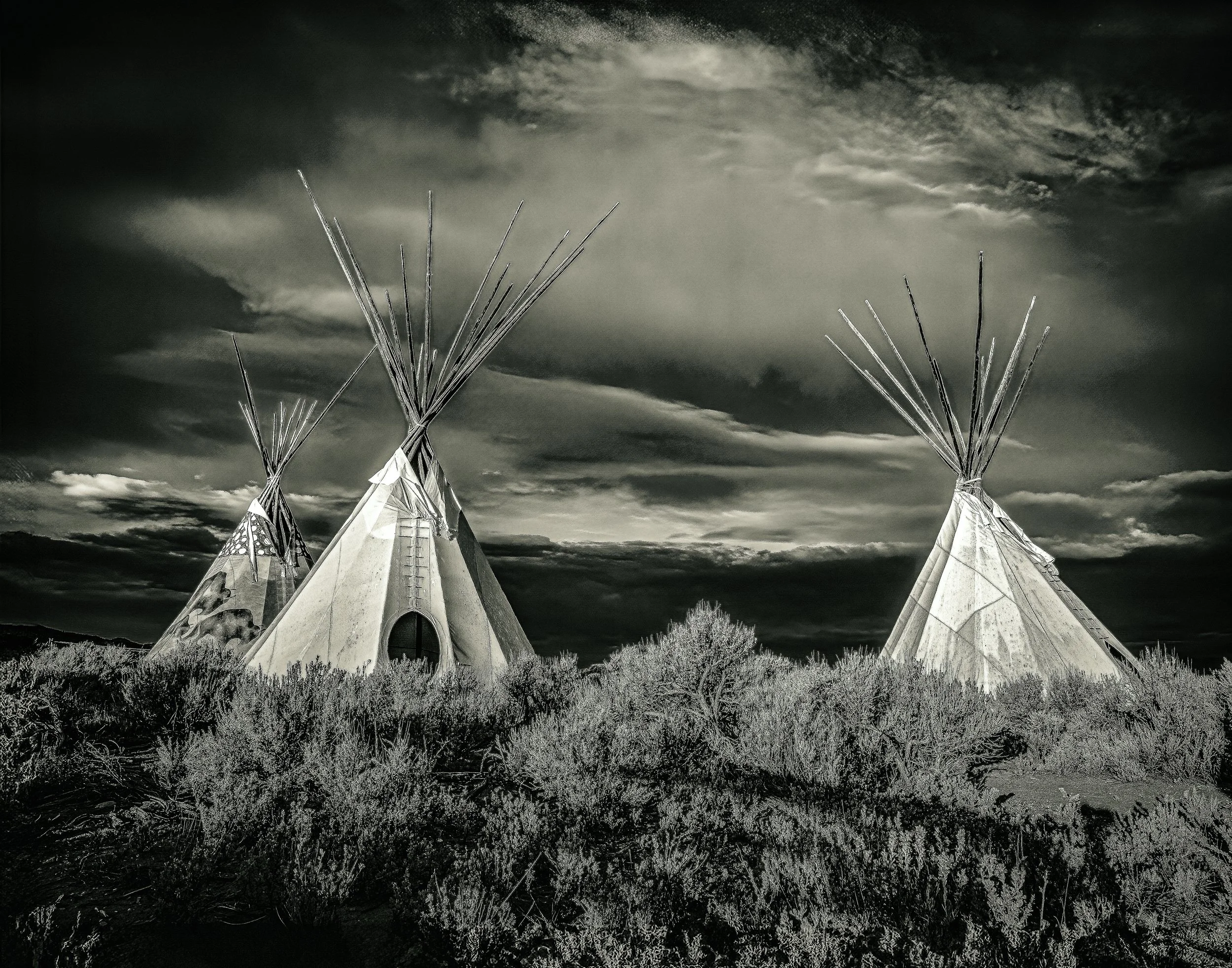
I see Curtis' influence most strongly in photographs such as Enduring Silence, Standing Grace, The Last Sentinel, and Where the Bells Remain. These images are not intended as documentary records. They are attempts to communicate something about presence, memory, and the enduring character of a landscape.
Curtis also reminds me of the importance of respect.
The strongest photographs often emerge from curiosity rather than certainty. They begin with observation rather than assumptions. They require photographers to approach subjects with patience and humility.
That lesson extends beyond portraiture.
It applies equally to landscapes, architecture, and places carrying cultural significance.
Many of the locations I photograph have histories far older than my presence there. Monument Valley, Shiprock, Taos, and countless other places in the American Southwest contain layers of meaning that deserve thoughtful attention.
Curtis' work encourages me to remember that photographs are not only about what we see. They are also about how we see.
They reflect our values, our questions, and our relationship with the world around us.
More than a century after he began his project, Curtis continues to remind photographers that the camera can be a tool for observation, preservation, and respect.
That remains one of his most enduring lessons.
Introducing Edward S. Curtis
Edward S. Curtis devoted more than three decades to documenting Native American cultures across North America. His photographs remain some of the most influential, celebrated, and debated images in the history of photography.
Edward S. Curtis and the Preservation of a Vanishing World
Few photographers have undertaken a project as ambitious as Edward S. Curtis.
Beginning in the late nineteenth century, Curtis set out to document the lives, traditions, ceremonies, and histories of Native American peoples across North America. What began as a photographic interest grew into a life's work that would occupy more than thirty years and result in one of the largest documentary projects ever attempted.
The culmination of that effort was The North American Indian, a twenty-volume publication containing thousands of photographs and extensive ethnographic writings. Curtis traveled widely, visiting dozens of tribal nations and creating portraits, landscapes, and cultural records that remain historically significant today.
His photographs are instantly recognizable. Faces emerge from shadow. Figures stand against dramatic landscapes. Traditional clothing, ceremonies, and daily life are rendered with remarkable attention and dignity.
Curtis possessed an extraordinary ability to create portraits that feel both intimate and timeless. Many of his subjects appear calm, thoughtful, and self-possessed. The photographs invite viewers to slow down and engage with individuals rather than stereotypes.
At the same time, Curtis remains a complex figure in photographic history.
His work has been praised for preserving invaluable visual records of cultures facing immense pressures from government policies, displacement, and forced assimilation. Yet it has also been criticized for presenting Native peoples through a romantic lens and sometimes removing evidence of contemporary life that conflicted with his vision.
These debates remain important because they remind us that photographs are never entirely objective. Every image reflects choices made by the photographer.
Despite these complexities, Curtis's photographs continue to hold remarkable power. Their strength lies not only in their historical value but also in their emotional resonance. The images communicate respect, presence, and a profound connection between people and place.
More than a century later, Edward S. Curtis remains one of photography's most influential figures—not because he documented a disappearing world, but because he created photographs that continue to encourage conversation about history, memory, identity, and representation.
What I Learned from Frederick H. Evans
What I admire most about Frederick H. Evans is not simply his photographs of architecture. It is his belief that light reveals the true character of a place. That idea continues to shape the way I approach photography today.
Light Reveals the Place
Every photographer has artists whose work quietly shapes the way they see.
For me, Frederick H. Evans is one of those photographers.
Unlike many contemporary photographers, Evans worked with subjects that rarely moved. Cathedrals, stairways, arches, and historic interiors became his primary focus. At first glance, that might seem limiting. Yet his photographs reveal extraordinary depth because they are ultimately about something larger than architecture.
They are about light.
Evans understood that a building could look entirely different depending on the quality of light entering a space. A shaft of sunlight, a glowing window, or a subtle transition from shadow to highlight could transform an ordinary scene into something transcendent.
That lesson continues to influence my own photography.
When I photograph architecture, I am rarely interested in creating a purely documentary record. I want the image to communicate what it felt like to stand there.
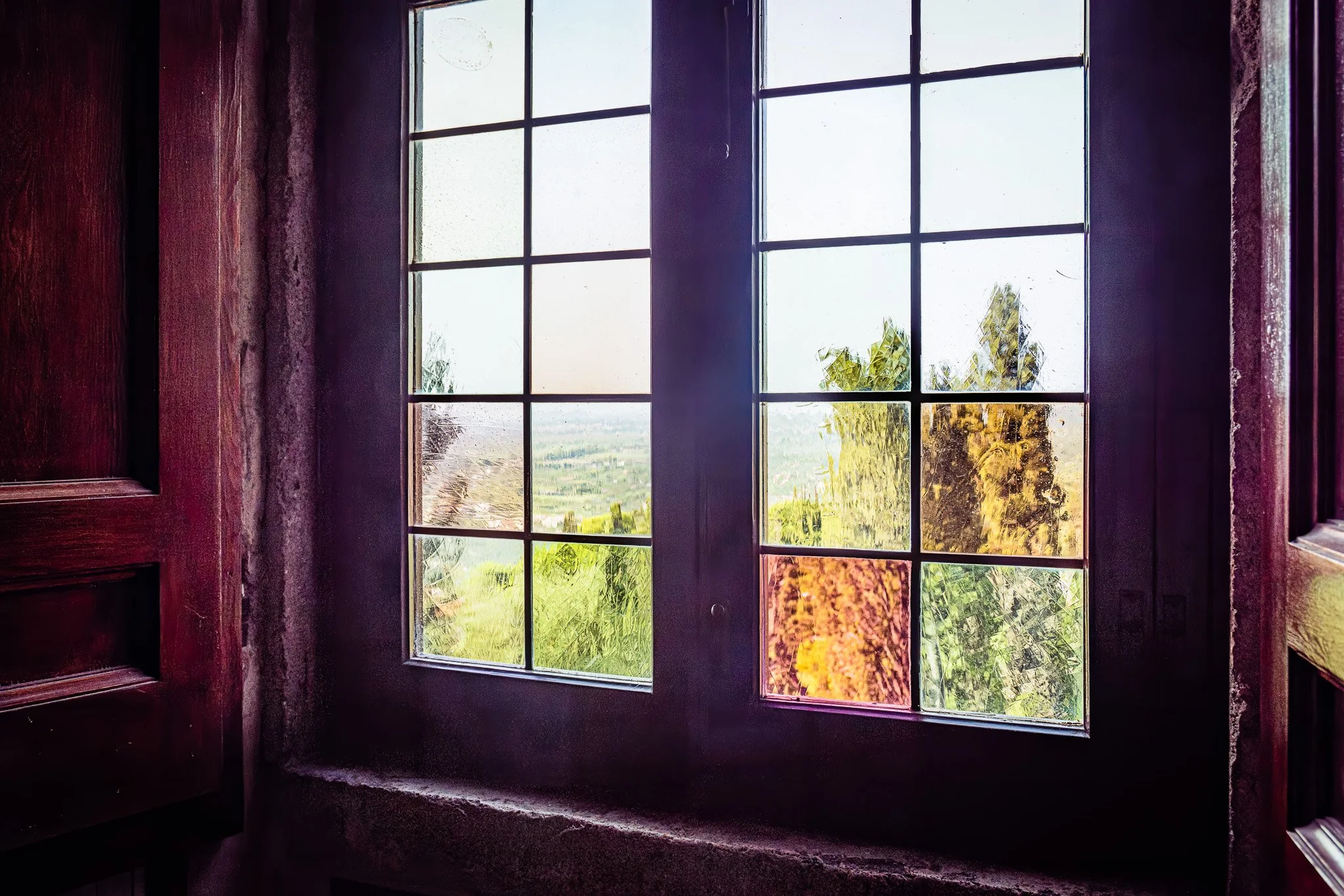
I see Evans' influence in photographs such as Old Friends, where light and atmosphere help define the emotional character of the scene. I see it in architectural images such as The First Aperture, Evening at the Pavilion, and Reflections of Glass and Stone, where structure and light work together to create a sense of place.
Perhaps most of all, I see Evans' influence in the importance of patience.
Many of my favorite photographs happened because I waited.
I waited for clouds to move.
I waited for rain to stop.
I waited for blue hour.
I waited for a figure to enter the frame.
I waited for the light to become something more than illumination.
Evans reminds me that photography is often less about finding subjects and more about recognizing moments when light reveals them.
His work also reinforces my appreciation for craftsmanship. Strong compositions, careful tonal relationships, and attention to detail are not limitations on creativity. They are tools that allow an image to communicate more effectively.
Although our subjects differ, I find myself returning to Evans' photographs for the same reason I return to the work of other great artists. They encourage me to slow down.
To observe more carefully.
To trust patience.
And to remember that light is often the true subject of every photograph.
More than a century after they were made, Frederick H. Evans' photographs continue to demonstrate a simple truth: places reveal themselves to those willing to wait.
Introducing Frederick H. Evans
Long before photography was widely accepted as a fine art, Frederick H. Evans demonstrated that a camera could do more than document a building. Through patience, craftsmanship, and a remarkable sensitivity to light, he created photographs that transformed architecture into something spiritual and timeless.
The Architecture of Light
Among the pioneers of fine art photography, few photographers are as revered—and perhaps as overlooked today—as Frederick H. Evans.
Working during the late nineteenth and early twentieth centuries, Evans became known for his extraordinary photographs of cathedrals, churches, and historic architecture. While many photographers of his era focused on pictorial effects or manipulated printing techniques, Evans pursued clarity, precision, and the expressive power of light itself.
His most famous photographs were made inside great European cathedrals, particularly those in England and France. Rather than treating these structures as historical documents, Evans approached them as living spaces shaped by light, shadow, and atmosphere.
His photographs often depict soaring arches, columns, stairways, and windows illuminated by natural light. Yet the buildings themselves are only part of the story. What truly distinguishes Evans' work is his ability to reveal the emotional and spiritual qualities of a space.
He was famously patient. Evans often returned to the same location repeatedly, waiting for the precise conditions he envisioned. He understood that architecture changes throughout the day as light moves through windows, across stone surfaces, and into hidden corners.
In many ways, Evans photographed light as much as he photographed buildings.
His compositions are remarkably balanced and thoughtful. Every line contributes to the overall structure of the image. Every highlight and shadow feels intentional. The result is work that remains visually powerful more than a century after it was created.
Evans also played an important role in photography's struggle for recognition as a legitimate artistic medium. His photographs demonstrated that technical excellence and artistic vision could coexist. He helped establish photography as something more than mechanical reproduction.
Today, his influence can be seen in architectural photography, fine art landscape work, and any photographic practice that values patience, observation, and craftsmanship.
Frederick H. Evans reminds us that great photography is not always about dramatic subjects. Sometimes it is about standing quietly in a beautiful space and waiting for the light to reveal its character.
What I Learned from Wim Wenders
Wim Wenders is best known as a filmmaker, but his photography stands on its own as a remarkable exploration of place, solitude, and atmosphere. Through images of empty roads, overlooked landscapes, and quiet urban scenes, Wenders invites viewers to slow down and discover the stories hidden within ordinary spaces.
Place, Atmosphere, and the Human Trace:
If Hiroshi Sugimoto taught me to think about time, Wim Wenders taught me to think about place.
When I first encountered Wenders' photography, I was struck by how little seemed to happen within many of his images. There was no dramatic action, no decisive moment, no obvious subject demanding attention.
Instead, there were roads.
Buildings.
Empty spaces.
Weather.
Light.
And somehow, those simple elements felt deeply human.
That idea has stayed with me as I have developed my own photography.
Many of my photographs begin with a location, but they are rarely about the location itself. I am more interested in atmosphere than documentation. I want viewers to feel what it was like to stand in a place rather than simply know where the photograph was made.
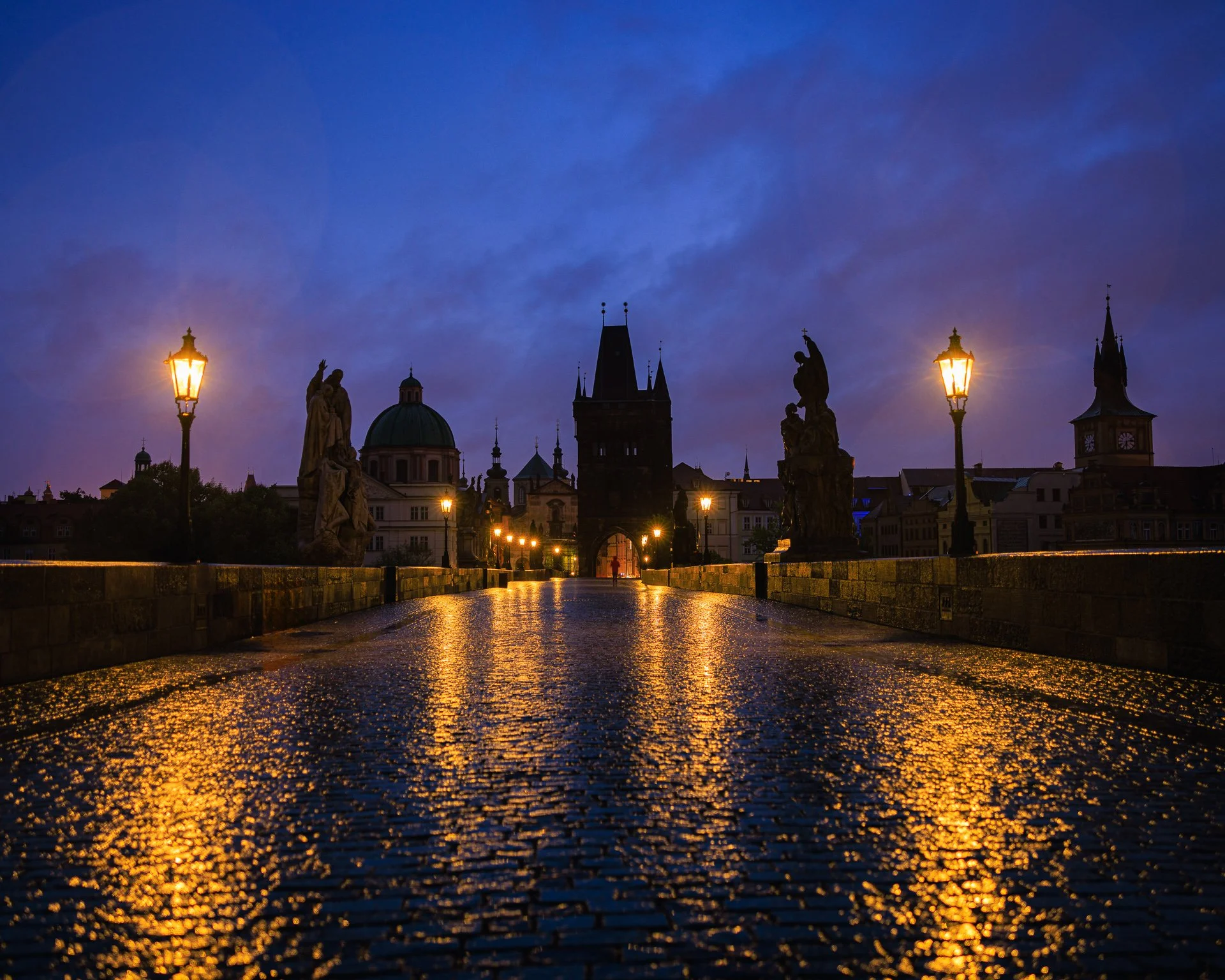
I see that influence most clearly in photographs such as Before the City Wakes. The image is not really about Prague. It is about anticipation. The city becomes a stage for a feeling rather than a destination.
The same is true of Waiting for a Ride. The architecture, light, and solitary figure work together to create a narrative that remains unresolved. The photograph invites questions rather than providing answers.
Even in landscapes such as Between Us, The Field or Where Winter Waited, I find myself drawn to the emotional character of a place. The land becomes more than scenery. It becomes part of a larger story about distance, memory, and human experience.
One of Wenders' great gifts is his ability to reveal traces of human presence even when people are absent. Roads suggest travelers. Buildings suggest lives lived within them. Empty spaces feel inhabited by memory.
I often find myself responding to places in much the same way.
A bridge after snowfall.
A rain-soaked street before dawn.
A road disappearing into Monument Valley.
A bartender standing beneath soft light.
A solitary figure crossing a historic square.
The photographs that interest me most are rarely about grand events. They are about moments when a place seems to hold a story just beneath the surface.
Wenders reminds me that photography can be an act of listening.
Not listening to people.
Listening to places.
Many of my favorite photographs begin when I stop searching for subjects and start paying attention to atmosphere. The light changes. Weather moves in. A person enters the frame. A space that seemed ordinary becomes something more.
That is what I admire most about Wim Wenders' work.
He shows us that places are never just places.
They are containers for memory, emotion, and possibility.
As a photographer, that remains one of the most valuable lessons I have learned.
Introducing Wim Wenders
Wim Wenders is best known as a filmmaker, but his photography stands on its own as a remarkable exploration of place, solitude, and atmosphere. Through images of empty roads, overlooked landscapes, and quiet urban scenes, Wenders invites viewers to slow down and discover the stories hidden within ordinary spaces.
Wim Wenders and the Poetry of Place
Many people know Wim Wenders as an acclaimed filmmaker. Films such as Paris, Texas and Wings of Desire helped establish him as one of the most distinctive visual storytellers of the last half-century. Yet alongside his filmmaking, Wenders has built an equally compelling body of photographic work.
His photographs are often quiet. Roads stretch toward distant horizons. Buildings stand empty beneath expansive skies. Motel rooms, storefronts, gas stations, and overlooked landscapes become subjects worthy of contemplation. Human figures appear only occasionally, and when they do, they are often small within the larger environment.
What makes Wenders' photography so compelling is his ability to transform ordinary places into something more meaningful. He is not searching for famous landmarks or dramatic events. Instead, he looks for moments where atmosphere, light, and place come together to create a sense of mystery.
Many of his images were made while traveling, yet they rarely feel like travel photography. They are less concerned with documenting a location than with capturing its emotional character. A road in the American Southwest becomes a meditation on distance. An empty building suggests forgotten stories. A city street feels suspended between past and present.
Wenders has often spoken about the importance of observation. His photographs encourage viewers to slow down and pay attention to places that might otherwise be ignored. In a world increasingly focused on speed and distraction, his work reminds us that meaning can often be found in stillness.
Perhaps that is why his photographs resonate so deeply with photographers and viewers alike. They suggest that every place has a story, even when no one is present to tell it.
The best photographs do not always provide answers. Sometimes they simply invite us to linger a little longer.
That invitation lies at the heart of Wim Wenders' photography.