
 Image 1 of 5
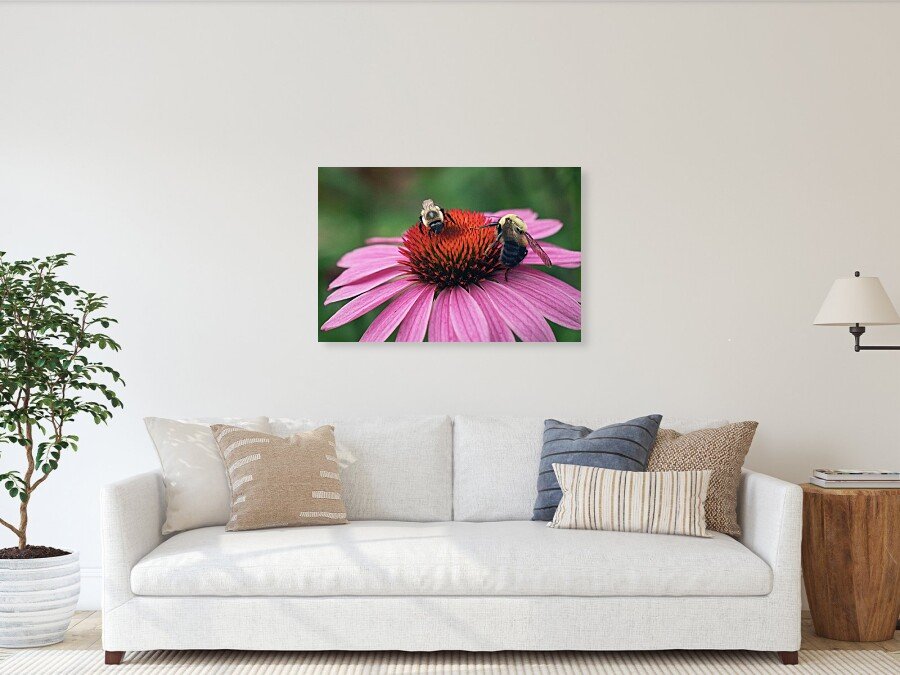 Image 2 of 5
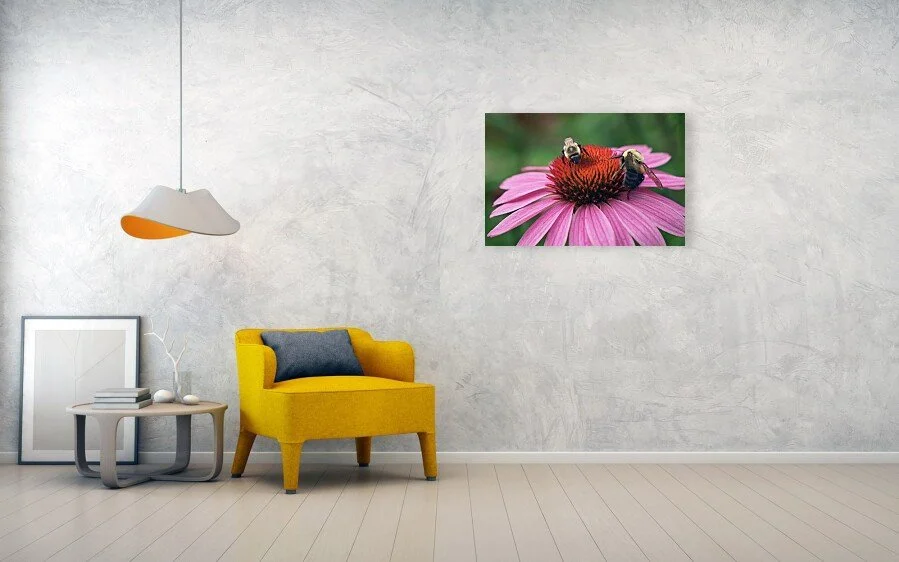 Image 3 of 5
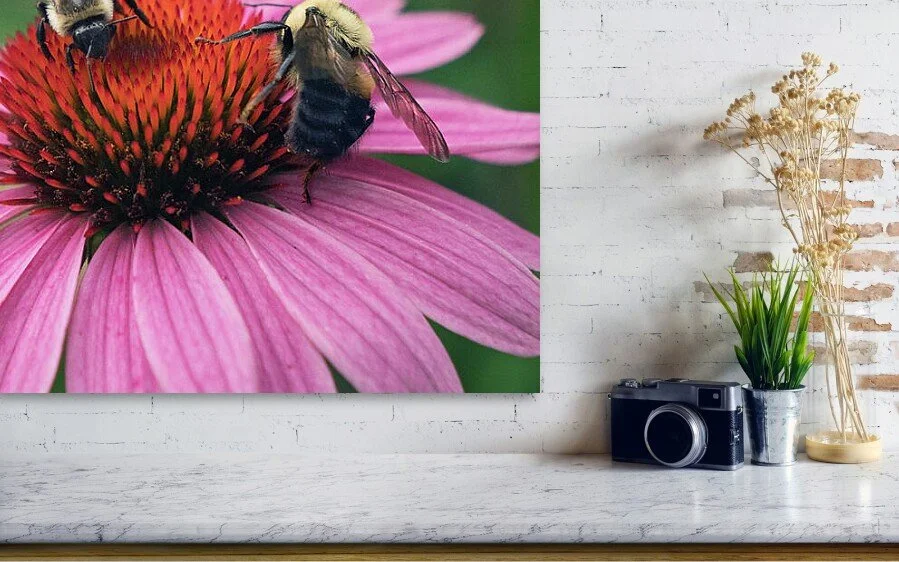 Image 4 of 5
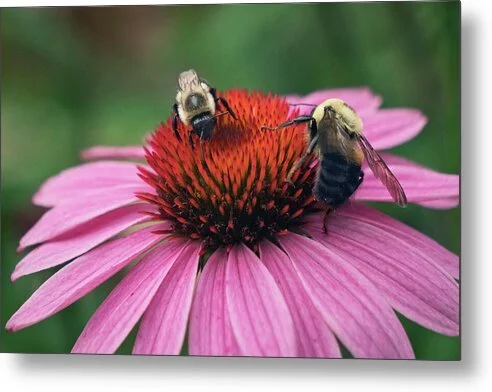 Image 5 of 5
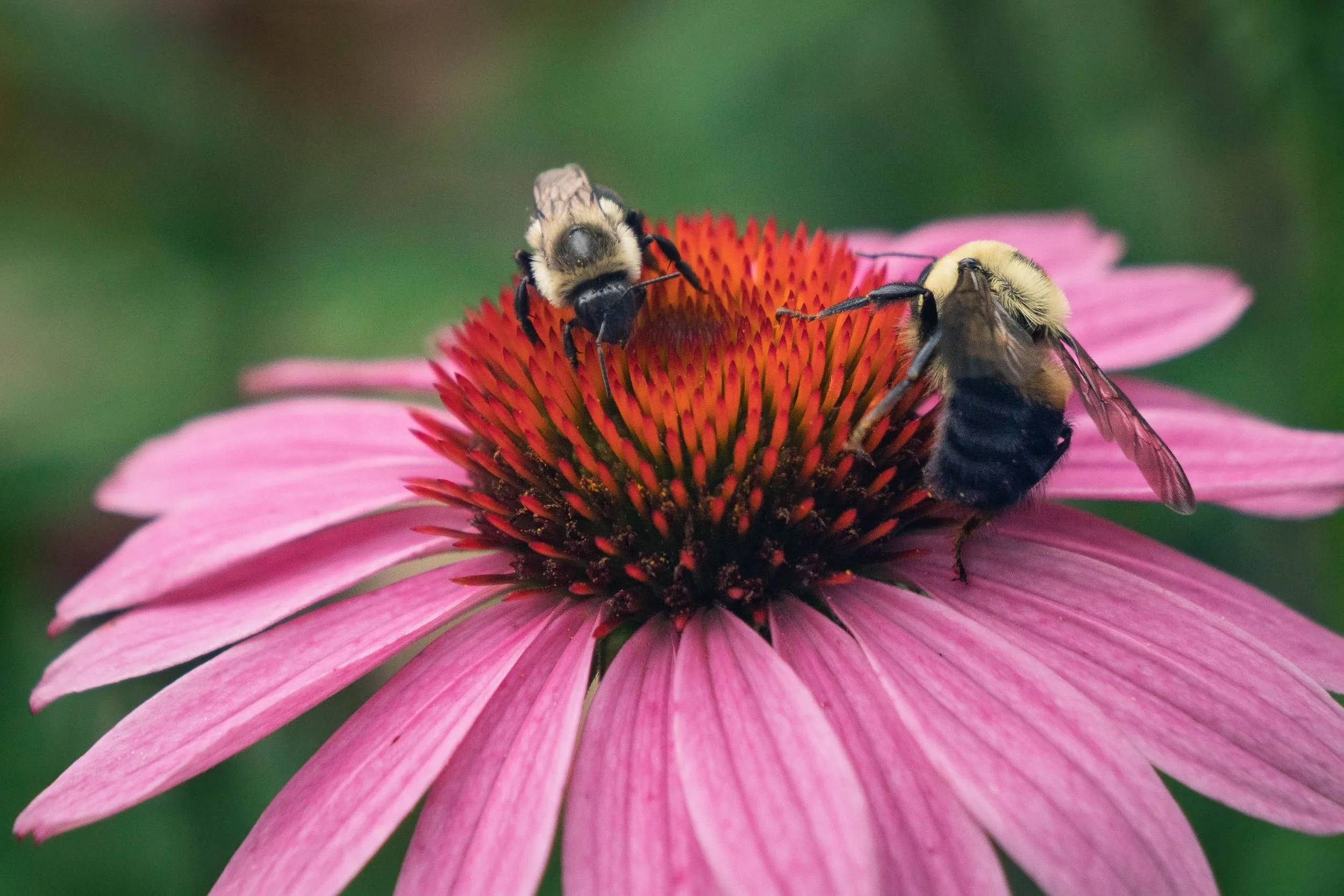
A garden at its busiest is also a garden at its most generous. At the Missouri Botanical Garden, Room for Two finds two bumblebees sharing the orange cone of a pink coneflower, one facing the camera, the other reaching a leg across the flower, and the green garden falls away behind them in soft focus.
The eye lands on the left bee first, where the black face and fine antennae are the sharpest detail against the glowing orange. It then follows the other bee's outstretched leg back across the cone, the one gesture that turns two bees on a flower into an encounter. Only then do the quieter details come forward: the translucent wing at the right, the rows of spiked florets each tipped in red, and the flecks of yellow pollen scattered across them. The pink petals ring the cone like a skirt and give the scene its scale.
Pink against orange against green is Ernst Haas territory, color doing the work that light usually does. The close attention to the cone's architecture, treated as seriously as a landscape, owes something to Edward Weston.
Pink, orange and garden green suit cafes, restaurants, boutique hotels, sunrooms, kitchens and garden-themed dining rooms. The 3:2 format fits a wall over a banquette, sideboard, console or breakfast table. The saturated color holds its own beside cream, natural linen, walnut and charcoal, and one confident pink accent can lift an otherwise quiet room.
Three companions, each connected in a different way:
For the same small visitor: Pair with Uninvited Guest, a small fly landed on the pollen-dusted center of a magenta-throated Rose of Sharon. In both, an insect sits at the heart of the bloom and the garden dissolves into soft color behind it.
For the same fire at the core: Pair with Gold and Ember, a yellow peony whose center burns red-orange like a flame. In both, a soft field of petals surrounds a core of intense color.
For the opposite temperament: Pair with Meadow Radiance, a single white cornflower alone against deep green. Both are rayed flowers around a tufted center, one busy and saturated, the other quiet and luminous.
Available as a signed and numbered limited edition of fifteen (15) prints in ChromaLuxe® Metal (Gloss, Semi-Gloss or Matte), TruLife acrylic, archival paper (framed or unframed) and canvas. ChromaLuxe® Metal is the recommendation: the saturated pink and the red-orange cone gain the most from metal's luminous color and contrast. Low-glare acrylic gives the spiked florets more depth. Framed archival paper is the quieter alternative, and it gives the fine hair on the bees and the veins in the wing a more tactile read.
Note: Custom and oversized photographic prints are available. Please contact the studio directly to discuss custom framing, matting, or specialized museum glass options.