
Botanical Studies
Botanical Studies: Macro Flower & Nature Photography
A Closer Look
Explore the finer details of each photograph by hovering over an image to reveal subtle focus and texture, or click to expand the work into a distraction-free viewing environment. This immersive view allows each botanical study to be experienced at its full scale and proportion.
Nature rarely reveals itself all at once. The photographs in this collection explore the smaller details often overlooked in everyday life—the patterns of petals, the geometry of seed heads, the texture of leaves, and the subtle ways light transforms the natural world.
Rather than documenting plants as scientific subjects, these images focus on atmosphere, form, color, and discovery. A single flower may become a study in abstraction. A fading blossom can reveal unexpected structure and resilience. Morning light, changing seasons, and shifting weather each contribute to the character of the final photograph.
Many of these images were created close to home in gardens, parks, and natural spaces throughout Missouri and the American Midwest. Others were discovered during travels through botanical gardens and landscapes across the country. Together they reflect an ongoing fascination with the beauty found in ordinary places and the quiet moments that reward careful observation.
Influenced by the color sensibilities of Ernst Haas, the organic forms celebrated by Georgia O'Keeffe, and the botanical precision of Karl Blossfeldt, these photographs balance artistic interpretation with a respect for the natural world. The goal is not simply to record a flower or plant, but to create images that encourage viewers to slow down, look more closely, and appreciate details that might otherwise pass unnoticed.
These botanical studies are designed to bring a sense of calm, color, and connection to interior spaces. Whether displayed in healthcare environments, hospitality settings, offices, or homes, they offer a reminder that beauty often resides in the smallest and most familiar corners of the world.

“To see a world in a grain of sand and a heaven in a wild flower.”
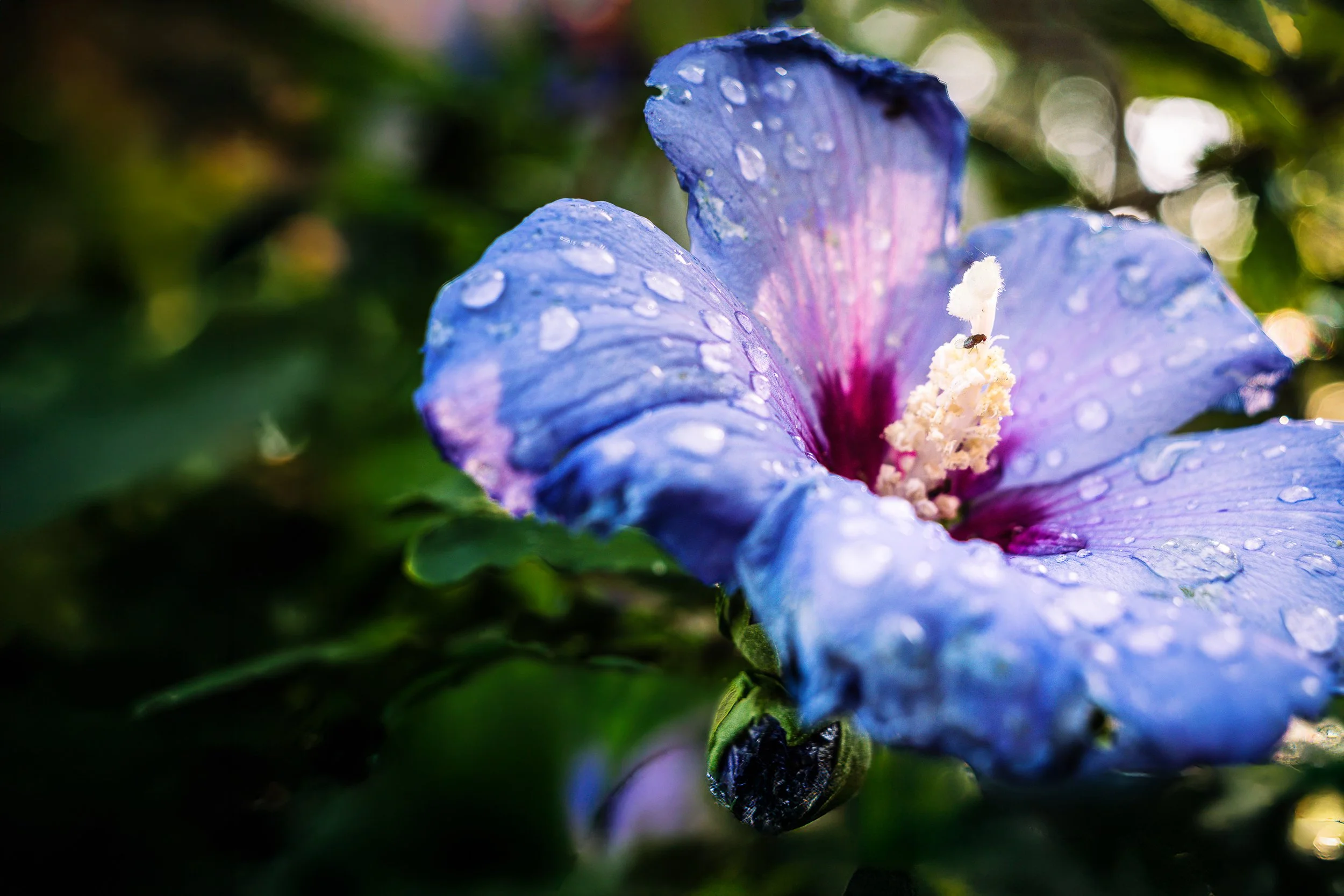
Uninvited Guest finds its subject in the pause after rain — a single Rose of Sharon bloom, petals still beaded with water, opening toward a small fly that has landed on its pollen-dusted stamen. The flower's deep violet-blue petals fold outward from a magenta throat, each one catching scattered droplets that hold tiny points of reflected light. At the center, the cream-white stamen column rises like a small sculpture, and the fly — barely the size of a grain of rice — becomes, almost by accident, the true subject of the frame.
The composition builds in a loose triangle, three petals fanning outward and funneling the eye back to the reproductive column at the heart of the bloom. The rain droplets do double duty, adding texture across every surface while catching just enough light to keep the eye moving rather than settling. Behind the flower, soft golden bokeh dissolves the garden into warm, indistinct light — a quiet counterpoint to the cool blue-violet of the petals themselves.
The work draws its clearest lineage from Georgia O'Keeffe, whose magnified floral studies first found monumental form in the ordinary architecture of a flower's center. Where O'Keeffe often worked in near-abstraction, this piece keeps one foot in the literal — the droplets, the insect, the specificity of a single rain-soaked morning — letting the small, uninvited visitor carry the emotional weight the composition is built around.
Design & Styling
With its rich violet-blue palette and soft, glowing background, Uninvited Guest brings a calm, organic presence to interior spaces — particularly well suited to spa and wellness environments, boutique hotel rooms, and residential spaces seeking a quiet, nature-forward accent. Its close-up intimacy also makes it a strong choice for smaller wall placements — powder rooms, reading nooks, bedside walls — where a viewer is meant to look closely.
Curated Pairings
To build a cohesive botanical grouping, consider these companion pieces:
For rain-photography continuity: Pair with After the Rain, continuing the study of a single bloom in the quiet aftermath of rainfall.
For lineage continuity: Complement with Held in Light, extending the Wyeth-influenced study of a single flower held in soft, diffused light.
For compositional continuity: Pair with Center of Grace, sharing the same centered, reproductive-column-as-anchor structure in a monochrome register.
Fine Art Presentation
Available as a signed fine art print in metal, framed paper, framed canvas, and acrylic presentation formats. Acrylic prints are produced on low-glare TruLife acrylic; framed and unframed paper prints are produced on Photo Rag unless otherwise specified. Chromaluxe Metal is especially recommended for this piece — its reflective quality will make the water droplets and stamen highlights feel genuinely luminous.
Note: Custom and oversized photographic prints are available. Please contact the studio directly to discuss custom framing, matting, or specialized museum glass options.
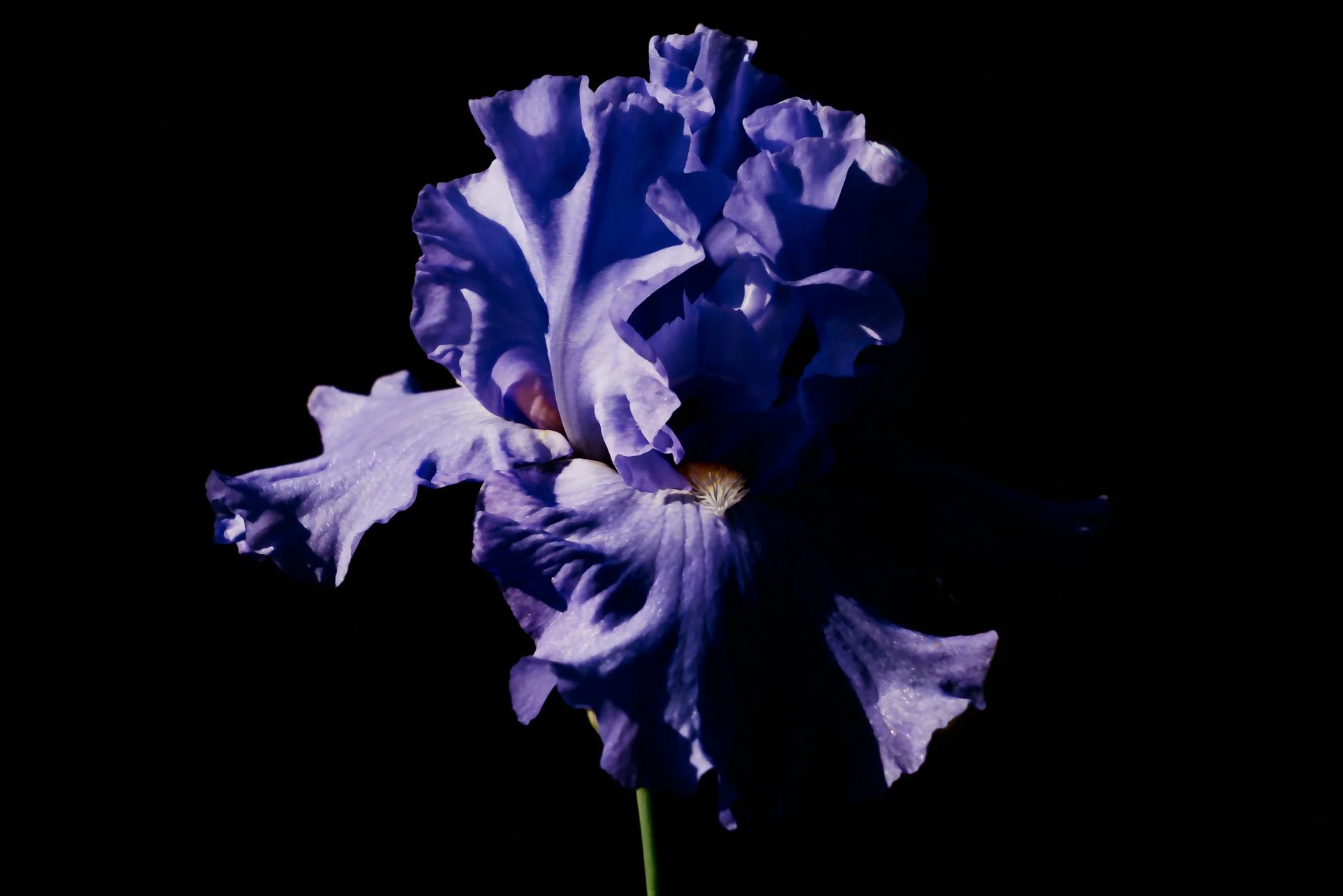
Lavender Rhapsody is a fine art botanical photograph featuring the rich purple petals and sculptural textures of a blooming iris captured in dramatic natural light. The minimalist composition and deep shadow tones transform the flower into an atmospheric study of color, form, and quiet movement.
This striking piece isolates the elegant, rich purple petals of a blooming iris, capturing the delicate, velvety textures and deep, saturated tones as they dance in a gentle light. Embracing a sophisticated, minimalist composition and a dark, moody background, the photograph transforms a classical botanical subject into a dramatic study of organic form and fluid grace. Strongly influenced by the sharp, sculptural realism of Edward Weston and the deep tonal values of fine art printmaking, it celebrates the exquisite, quiet majesty found within a single bloom.
Design & Styling
With its bold, majestic palette and flowing organic geometry, Lavender Rhapsody introduces a sense of timeless calm, depth, and sophisticated elegance to modern residential living spaces, boutique hospitality suites, or contemporary wellness interiors. To build a compelling, high-contrast gallery display that beautifully juxtaposes rich floral color against de ep shadows, consider these two companions:
For a moody contrast: Pair with The Moment Red Remembers to echo the dark, atmospheric background of this piece.
For textural harmony: Complement the velvet petals with Seeds of the Meadow to highligh t the intricate, fine-line details found throughout the collection.
Fine Art Presentation
Available as a signed fine art print in premium metal, acrylic, canvas, and archival photo paper formats. To best emphasize the intricate, velvety textures of the pet als and ensure the dee p, saturated purples pop with maximum vibrancy, a Metal Presentation or Acrylic Presentation is highly recommended for this specific print.
Note: Custom and oversized photographic prints are available. Please contact the studio directly to discuss custom framing, matting, or specialized museum glass options.
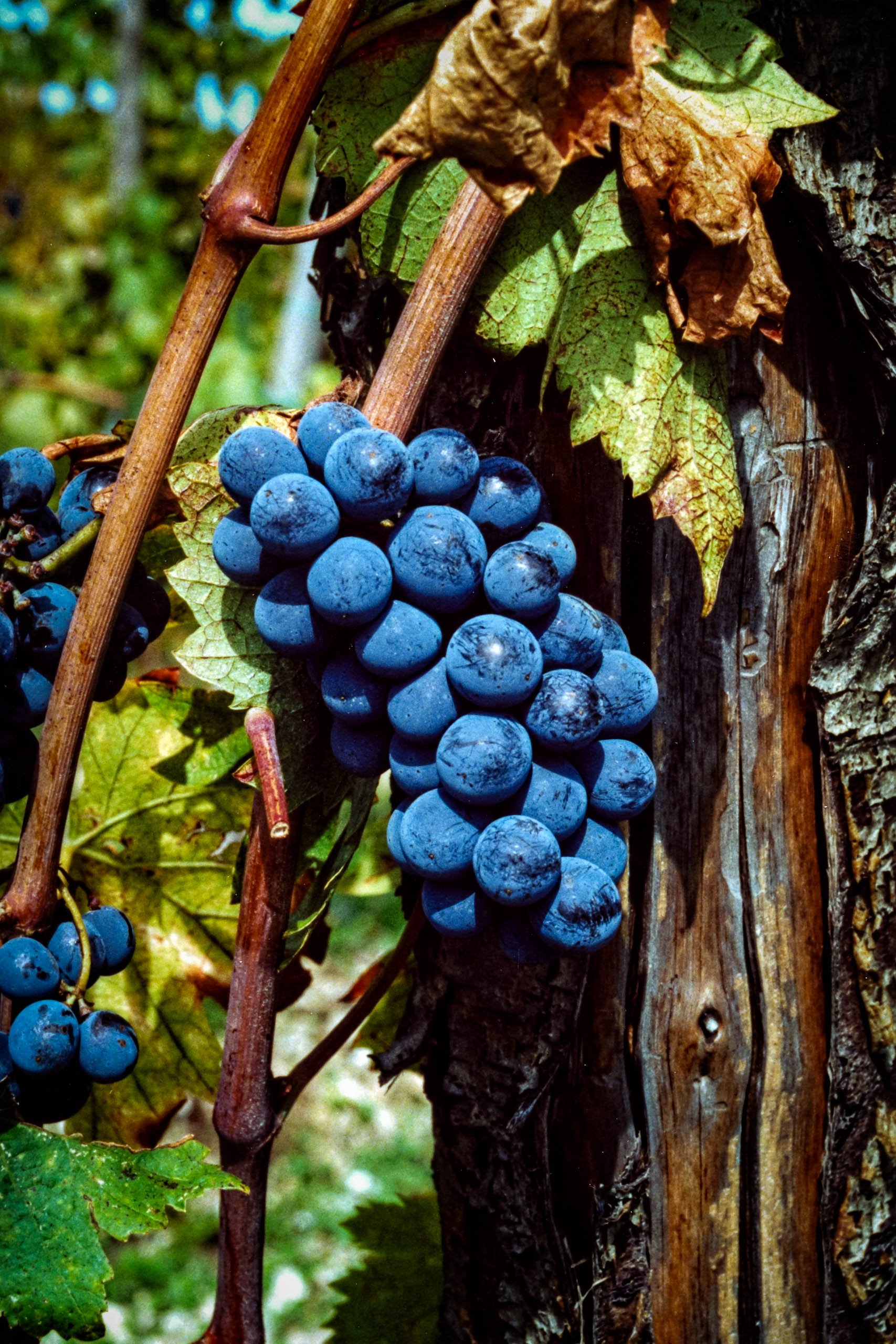
Before the Crush was photographed in the hills of Chianti, one or two days before the Sangiovese grapes came off the vine — the fruit at its absolute peak, still carrying a faint sheen from rain the day before. Deep blue-purple clusters catch strong directional light against a backdrop of drying autumn leaves and a weathered wooden vineyard post, the kind of working, unglamorous structure that holds up an entire harvest.
The dried leaf curling at the top of the frame isn't incidental — it's a seasonal marker, the vine naturally shedding color in the final days before crush. Paired with the grapes' full ripeness and the last trace of rain-borne sheen on their skins, the image captures a narrow, specific window: the fruit is ready, the season is turning, and harvest is only a day or two away.
Design & Styling:
Before the Crush works especially well in wine cellars, tasting rooms, restaurant and hospitality spaces, and healthcare or senior living environments looking for warm, appetite-associated, non-clinical imagery. Its rich, saturated color makes it a strong statement piece rather than a background accent.
Curated Pairings:
For narrative harmony, pair with After the Rain, continuing the theme of fresh rain and its lingering trace on plant life.
For color harmony, complement with Lavender Rhapsody, another vividly saturated botanical study built around strong, direct light.
For textural contrast, pair with The Long Way Across, bringing a smaller-scale macro study into the same wall grouping.
Fine Art Presentation:
Available as a signed open edition print in metal, acrylic, wood, canvas, framed canvas, luster paper, and framed paper presentation formats. Metal or acrylic is recommended to hold the depth and saturation of the grape skins.
Note: Custom and oversized photographic prints are available. Please contact the studio directly to discuss custom framing, matting, or specialized museum glass options.

Scarlet Crown is an intimate exploration of color, structure, and the remarkable architectural beauty hidden within a single flower. Photographed at macro scale, the image reveals the intricate center of a vibrant red poppy, transforming a familiar garden subject into an abstract study of form and detail. The striped seed capsule rises above a delicate ring of stamens, creating a natural crown-like structure that becomes the focal point of the composition. Drawing inspiration from the color sensitivity of Ernst Haas and the close observational traditions of botanical photography, the image celebrates the extraordinary complexity often overlooked within the natural world.
Rather than presenting the flower as a whole, the photograph invites viewers into its inner architecture. The luminous red petals dissolve into soft fields of color surrounding the sharply rendered center, creating a visual transition between abstraction and realism. The delicate stamens radiate outward in all directions, while subtle textures and repeating patterns within the seed pod provide structure and rhythm. The result is a composition that feels simultaneously organic and sculptural, revealing the elegance that exists at nature's smallest scales.
Color plays a central role throughout the image. Brilliant reds, warm oranges, and subtle magenta tones create an immersive environment that surrounds the pale seed capsule, allowing it to emerge with remarkable clarity. The contrast between the softness of the petals and the intricate detail of the reproductive structures creates a dynamic visual balance that rewards close observation. The photograph becomes not only a botanical study, but also an exploration of symmetry, texture, and natural design.
Design & Styling
With its rich color palette, elegant symmetry, and contemporary botanical character, Scarlet Crown works especially well in healthcare environments, hospitality spaces, executive offices, contemporary residences, wellness centers, and nature-inspired interiors. The image introduces warmth, vitality, and visual energy while maintaining a sophisticated fine art presence. Its combination of vivid color and refined detail allows it to function equally well as a standalone statement piece or as part of a larger floral collection.
Curated Pairings
For a cohesive gallery wall, consider these companion pieces:
For botanical continuity: Pair with Lavender Iris to explore contrasting color palettes and floral forms while maintaining a strong emphasis on natural design.
For color harmony: Complement this piece with After the Heat, extending the warm color relationships and organic textures found throughout the composition.
For visual contrast: Pair with Study in Blue and Orange #11, creating a dialogue between natural structure and abstract form.
Fine Art Presentation
Available as a signed fine art print in premium presentation formats including framed archival paper, metal, canvas, and gallery-grade acrylic. To fully preserve the delicate textures of the seed capsule, the fine detail of the stamens, and the luminous color transitions throughout the petals, Framed Archival Photo Paper or Hahnemühle Photo Rag Bright White presentation is highly recommended. These materials enhance the image's refined detail while maintaining a sophisticated fine art appearance.
Note: Custom and oversized photographic prints are available. Please contact the studio directly to discuss custom framing, matting, or specialized museum glass options.
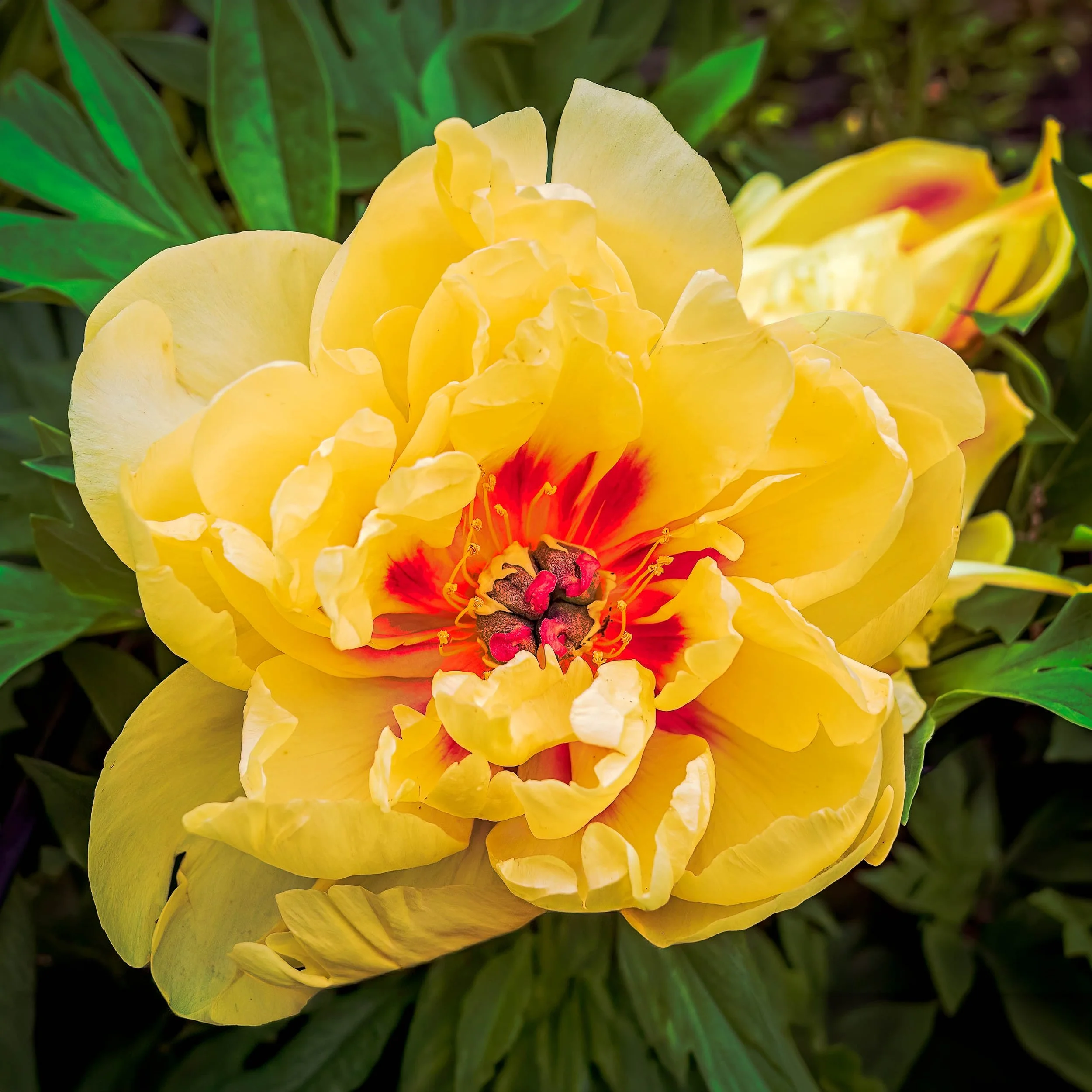
Gold and Ember is a study in contrast — the soft, ruffled abundance of a fully open yellow peony giving way at its center to a burst of red-orange so vivid it reads almost like flame. Photographed close and direct, the image lets the flower's own architecture do the composing: layer after layer of crepe-thin petals spiraling inward, opening onto a core where color intensifies suddenly, radiating outward in streaks before settling around a cluster of dark, textured seed pods tipped in bright pink.
The composition is built on that single transition — cool, pale yellow at the edges warming steadily toward the saturated center — with the stamens' fine gold filaments threading through the red like sparks caught mid-air. A second, softly out-of-focus bloom rests in the upper right, present but deliberately unresolved, giving the eye a sense of the fuller garden without competing with the main subject.
Where much of the surrounding botanical work leans toward restraint and quiet, Gold and Ember is unapologetically bold — a piece built for color and presence rather than subtlety, treating the peony's natural fire-at-the-heart structure as the entire subject.
Design & Styling
With its saturated yellow-to-red palette and confident, graphic center, Gold and Ember works best as a statement piece — entryways, great rooms, dining spaces, or any wall that can hold a bold color anchor. It's a strong fit for spaces wanting warmth and energy rather than a calming, neutral presence.
Curated Pairings
To build a cohesive botanical grouping, consider these companion pieces from the Botanical Studies collection:
For tonal harmony: Pair with Golden Solitude, extending the warm yellow palette in a quieter, more solitary botanical study.
For color echo: Complement with Scarlet Crown, carrying the same vivid red into a poppy's more delicate, papery form.
For narrative continuity:Pair with When The Field Ignites, continuing the fire-and-bloom visual language in a wider macro composition.
Fine Art Presentation
Available as a signed fine art print in metal, acrylic, canvas, and paper presentation formats, in square sizing from 12×12 up to 60×60. Given the saturation in the center burst, ChromaLuxe Metal or Gallery Metal presentation is recommended to hold the red-orange gradient cleanly; Acrylic will intensify the color further for a more dramatic presentation.
Note: Custom and oversized photographic prints are available. Please contact the studio directly to discuss custom framing, matting, or specialized museum glass options.

Stone and Spine pairs two very different kinds of endurance: a massive, deeply weathered boulder — its surface pocked with dark hollows carved slowly by wind and salt air — and a stand of tall, ribbed organ-pipe cacti rising in sharp vertical lines before it. Photographed on the island of Aruba under a clear midday sky, the image finds quiet drama in contrast: the boulder's soft, ancient curves against the cacti's rigid, spined verticality.
The composition uses the cacti as a natural foreground frame, their strong vertical rhythm leading the eye up and across the boulder's sculptural face. Small dark hollows in the stone — worn by decades of coastal wind — add texture and a sense of deep time, while the surrounding dry scrub grounds the scene in its true arid, coastal-desert character.
Part of the Botanical Studies collection, this piece extends Robert's interest in solitary, textural subjects into a Caribbean desert setting distinct from his American Southwest work — same visual language of restraint and singular focus, different geography entirely.
Design & Styling
With its warm sandstone tones and strong graphic structure, Stone and Spine works well in coastal or desert-modern interiors, spa and wellness settings, and any space seeking a botanical piece with real textural weight rather than a purely decorative plant study.
Curated Pairings
To create a cohesive gallery wall, consider these companion pieces:
For desert kinship: Pair with Where the Desert Meets Night, extending the exploration of arid landscapes and solitary desert forms into a nocturnal Monument Valley setting.
For sentinel imagery:Complement with The Last Sentinel, continuing the theme of solitary, enduring natural forms standing watch over open landscape.
Fine Art Presentation
Available as a signed fine art print in ChromaLuxe® metal, acrylic, framed and unframed archival paper, and canvas presentation formats. The rich texture in both the boulder and cactus ribbing is best preserved on ChromaLuxe® Metal or Acrylic presentation.
Note: Custom and oversized photographic prints are available. Please contact the studio directly to discuss custom framing, matting, or specialized museum glass options.
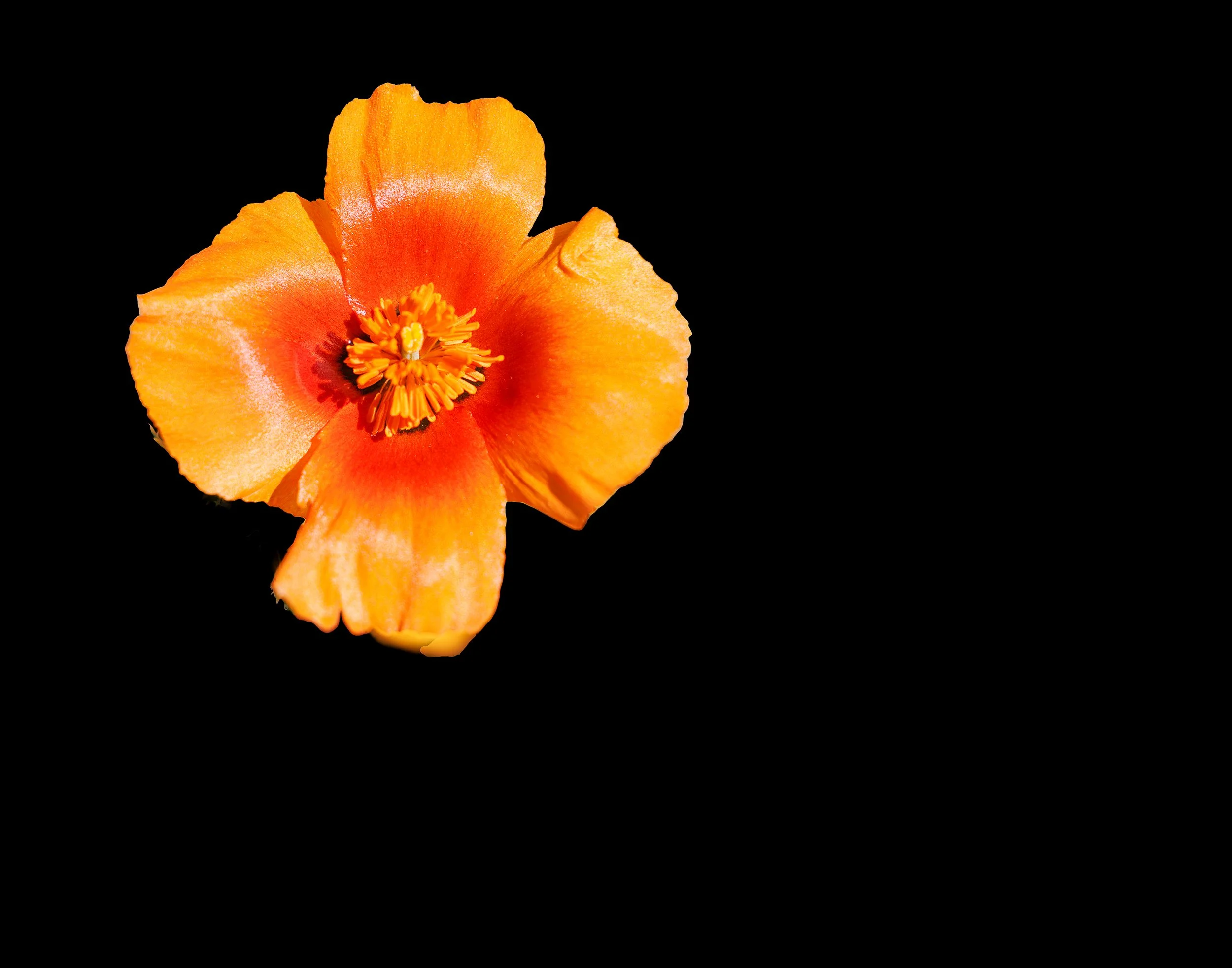
Amber Morning In the quiet, low-light hours of the morning, my garden transforms into a theater of soft reflections and hidden life. Amber Morning captures a singular moment of stillness in my own garden—a fragile, young duckling resting upon a broad, textured water lily pad. I was drawn to the interplay of light as it danced across the water, catching the delicate, golden-hued edges of the leaves and the gentle ripples surrounding the subject. Influenced by the observational honesty of Andrew Wyeth and the cinematic warmth of Ernest Haas, this piece is a meditation on the peaceful coexistence between the garden's wild inhabitants and their lush, sheltered environment.
Design & Styling With its soothing palette of deep, saturated greens and warm, honeyed light, Amber Morning brings a sense of grounded tranquility to any space. It is particularly well-suited for bedrooms, reading nooks, or professional wellness spaces where a quiet, restorative focal point is desired.
Curated Pairings To build a narrative-driven gallery display that explores the intimate textures of nature, consider these two botanical companions:
For a complementary focal point: Pair with After the Rain to echo the organic, water-touched textures of the garden.
For tonal harmony: Complement the rich greens of this piece with Unfolding Light, which mirrors the soft, organic forms found throughout this collection.
Fine Art Presentation Available as a signed fine art print in premium metal, acrylic, canvas, and archival photo paper formats. To best emphasize the soft, atmospheric warmth of the morning light and the intricate, sharp details of the lily pad’s surface, a Satin Metal Print or Low-Glare Acrylic is highly recommended.
Note: Custom and oversized photographic prints are available. Please contact the studio directly to discuss custom framing, matting, or specialized museum glass options.
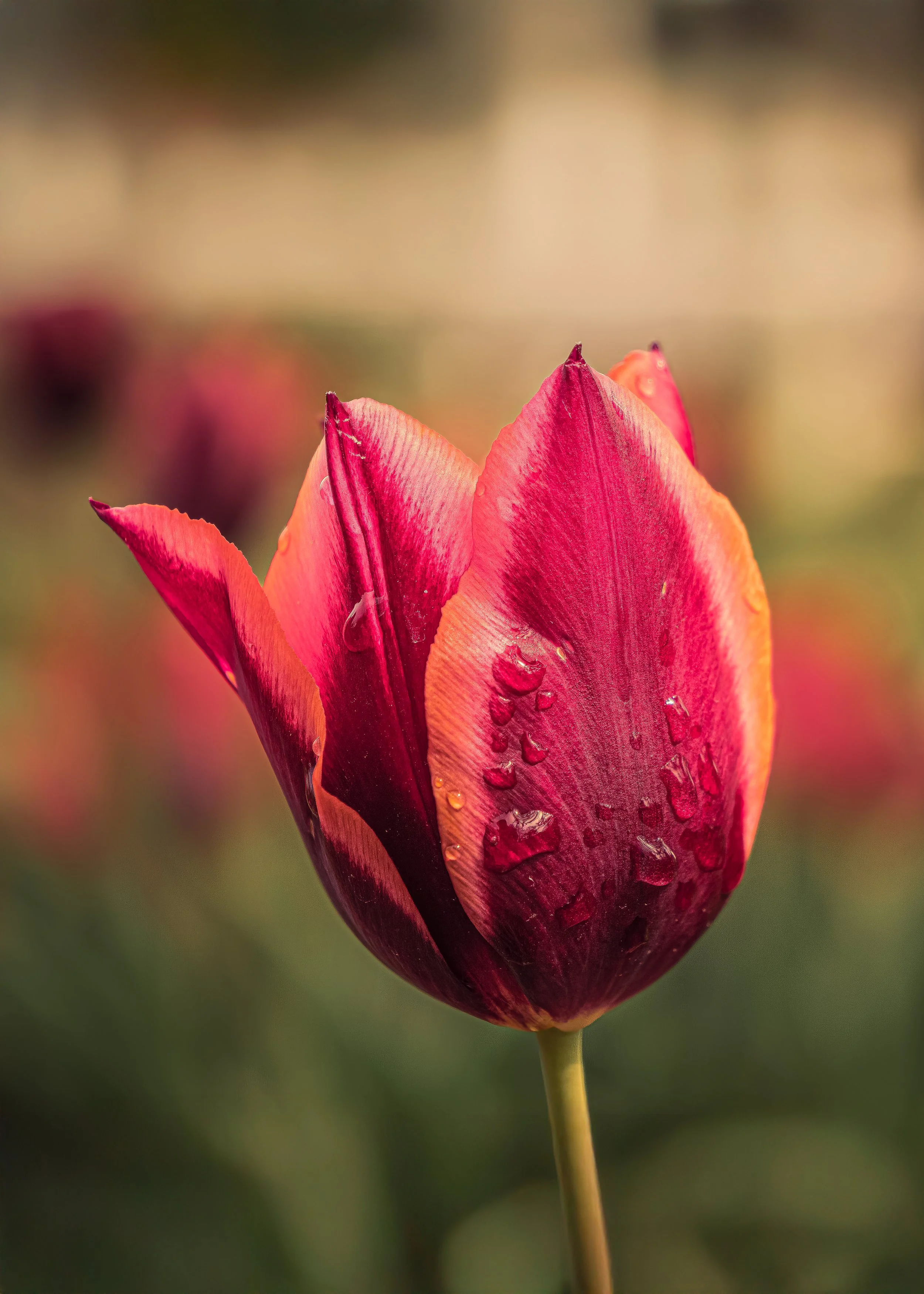
After the Rain — A Tulip Rests captures a deeply intimate, serene moment of quiet beauty in the wake of a spring shower. This striking macro study focuses on the soft, elegant curves of a pristine tulip, capturing the delicate glistening water droplets clinging to its vibrant petals. Embracing a sophisticated, minimalist composition and an atmospheric background, the photograph transforms a fleeting natural occurrence into a poetic study of form, renewal, and gentle light. Strongly influenced by the sharp formal precision of Edward Weston and the soft, contemplative atmosphere of traditional printmaking, it celebrates the exquisite stillness found in moments of natural pause.
Design & Styling
With its calming color palette and graceful, fluid lines, After the Rain — A Tulip Rests introduces an immediate sense of peaceful serenity and sophisticated elegance to modern residential spaces, quiet bedrooms, or contemporary wellness interiors. To build a captivating gallery wall focused on the intricate, fresh textures of the botanical world, it pairs beautifully as a companion piece alongside Gold Inversion or Seeds of the Meadow.
Curated Pairings
To build a gallery grouping around the mood of rain, consider pairing with:
For direct thematic echo: pair with Stillness After Rain, another quiet study of the moment just after rainfall.
For atmospheric harmony: complement with Mountain Rain, extending the theme into a wider Colorado landscape setting.
For a human-presence counterpoint: pair with A Pause in the Rain, bringing the same rain-soaked mood into a Prague street scene.
Fine Art Presentation
Available as a signed fine art print in premium metal, acrylic, canvas, and archival photo paper formats. To best accentuate the razor-sharp details of the water droplets and ensure the soft petal gradients pop with maximum clarity, an Acrylic Presentation or Metal Presentation is highly recommended for this specific piece.
Note: Custom and oversized photographic prints are available. Please contact the studio directly to discuss custom framing, matting, or specialized museum glass options.
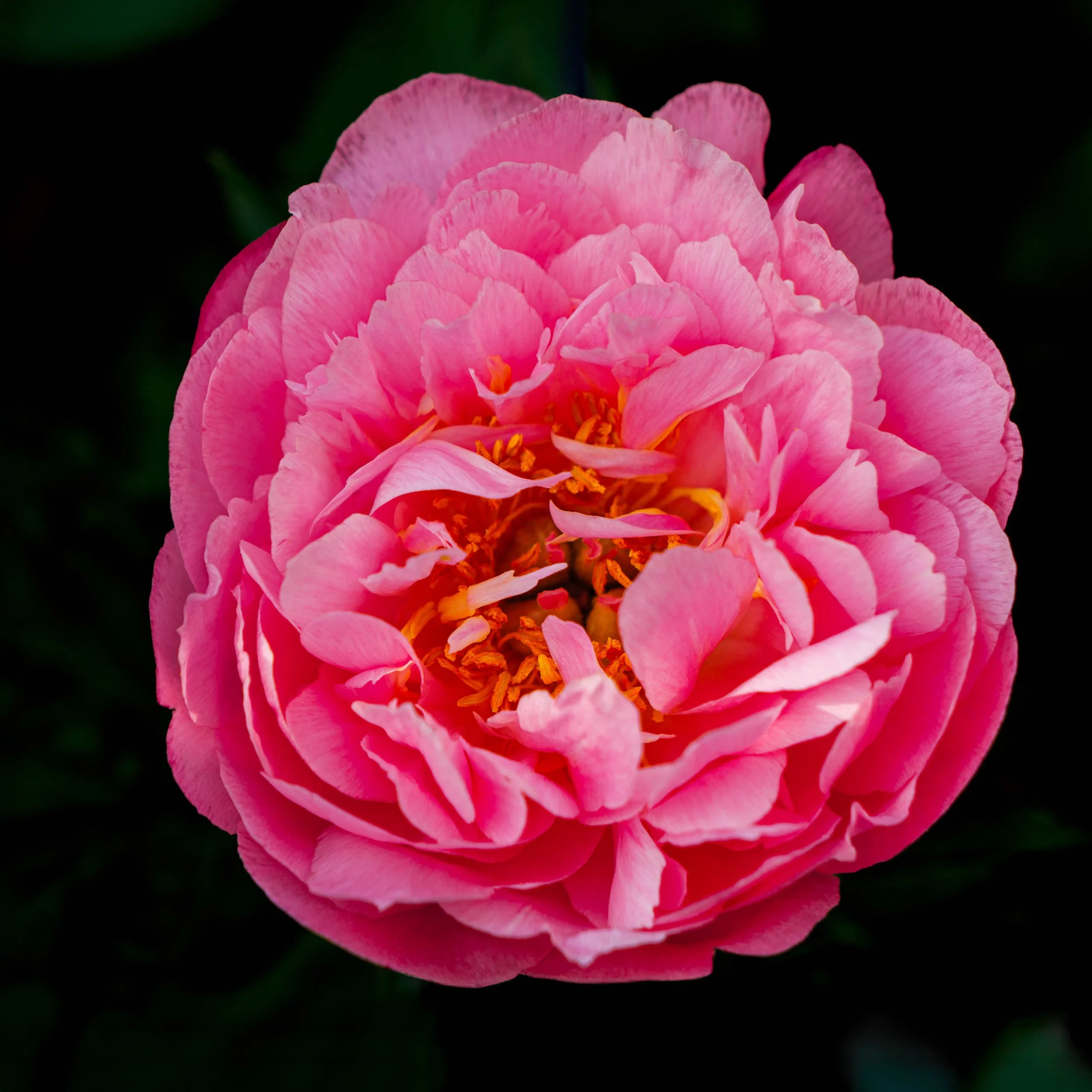
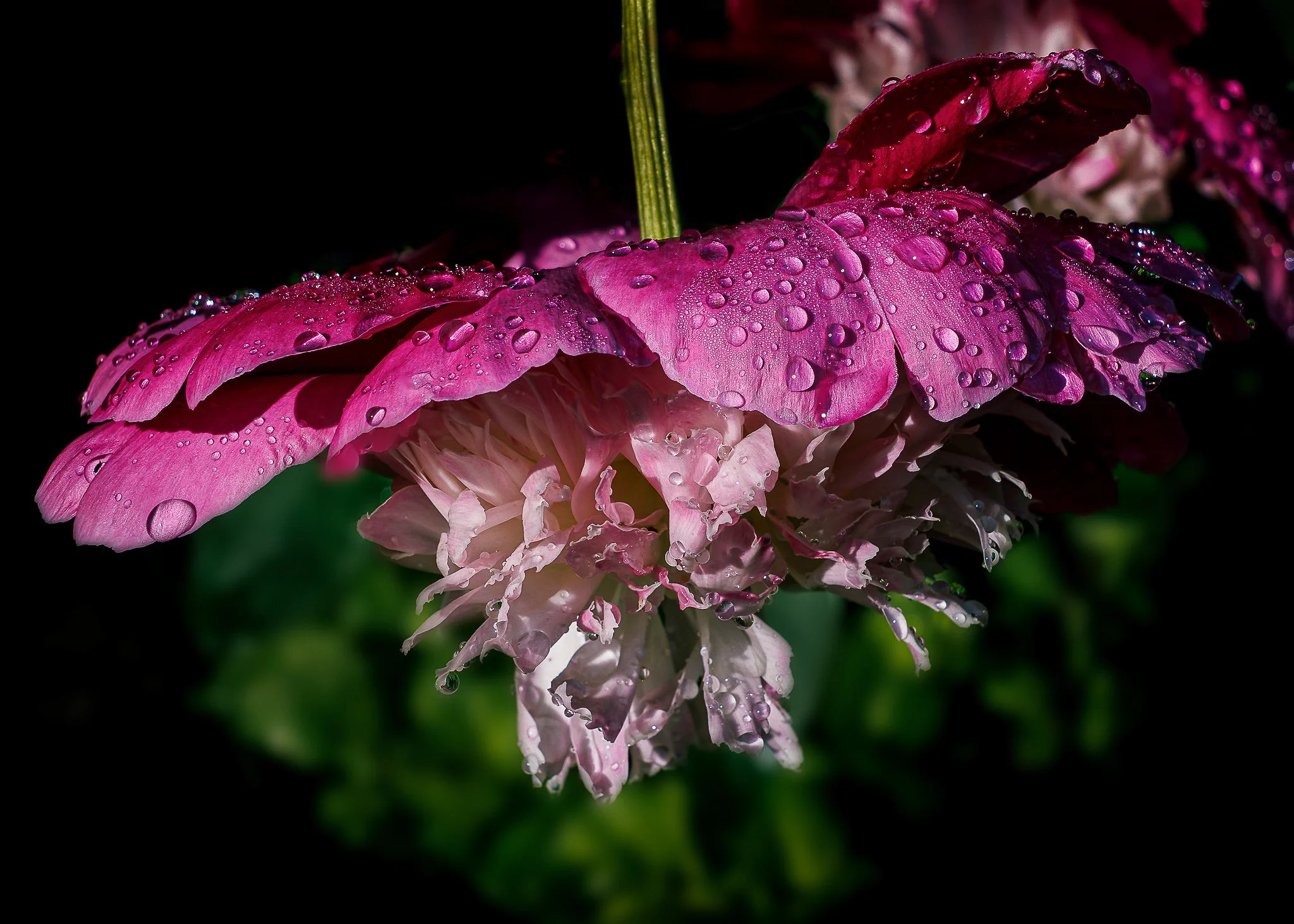
Summer's Unfolding is an intimate exploration of color, form, and the fleeting beauty of a flower at the height of its bloom. Photographed as a peony reaches full maturity, the image reveals a remarkable arrangement of layered petals unfolding outward from a luminous center. What might appear at first glance to be a simple garden flower becomes a study of texture, structure, and natural abundance. Drawing inspiration from the color sensitivity of Ernst Haas and the close observational traditions of botanical photography, the photograph celebrates the extraordinary complexity hidden within familiar subjects.
Rather than emphasizing the flower's surroundings, the composition isolates the bloom against a dark, subdued background, allowing its intricate architecture to become the primary focus. Layers of soft pink petals overlap and curl in countless directions, creating a visual rhythm that feels both organic and sculptural. The eye is drawn inward toward the warm golden stamens before wandering through the intricate patterns and subtle tonal variations that define the flower's structure. The result is a composition that balances delicacy and presence while inviting prolonged observation.
Color plays a central role throughout the image. Rich pinks, subtle magentas, and warm golden accents emerge from the surrounding darkness, creating a luminous focal point that appears suspended in space. The contrast between the velvety petals and the intricate detail of the flower's center provides both visual depth and texture. The photograph becomes not only a botanical study, but also an exploration of growth, impermanence, and the quiet elegance found within the natural world.
Design & Styling
With its vibrant color palette, elegant symmetry, and contemporary botanical character,Summer's Unfolding works especially well in healthcare environments, hospitality spaces, executive offices, wellness centers, contemporary residences, and nature-inspired interiors. The image introduces warmth, vitality, and visual interest while maintaining a refined fine art presence. Its combination of luminous color and intricate detail allows it to function equally well as a standalone statement piece or as part of a larger botanical collection.
Curated Pairings
For a cohesive gallery wall, consider these companion pieces:
For botanical continuity:Pair with Lavender Iris to explore contrasting floral forms and complementary color palettes while maintaining a strong connection to the natural world.
For seasonal harmony:Complement this piece with First Light, First Water, extending themes of growth, renewal, and the quiet beauty found in nature's smaller moments.
For visual contrast:Pair with The Garden's Glow, creating a dialogue between close botanical observation and atmospheric color while maintaining a unified natural aesthetic.
Fine Art Presentation
Available as a signed fine art print in premium presentation formats including framed archival paper, metal, canvas, and gallery-grade acrylic. To fully preserve the delicate textures of the petals, the subtle tonal transitions, and the intricate detail within the flower's center, Framed Archival Photo Paper, Canson Platine Fibre Rag, or Hahnemühle Photo Rag Baryta presentation is highly recommended. These materials enhance the image's refined detail and luminous color while maintaining a sophisticated fine art appearance.
Note: Custom and oversized photographic prints are available. Please contact the studio directly to discuss custom framing, matting, or specialized museum glass options.
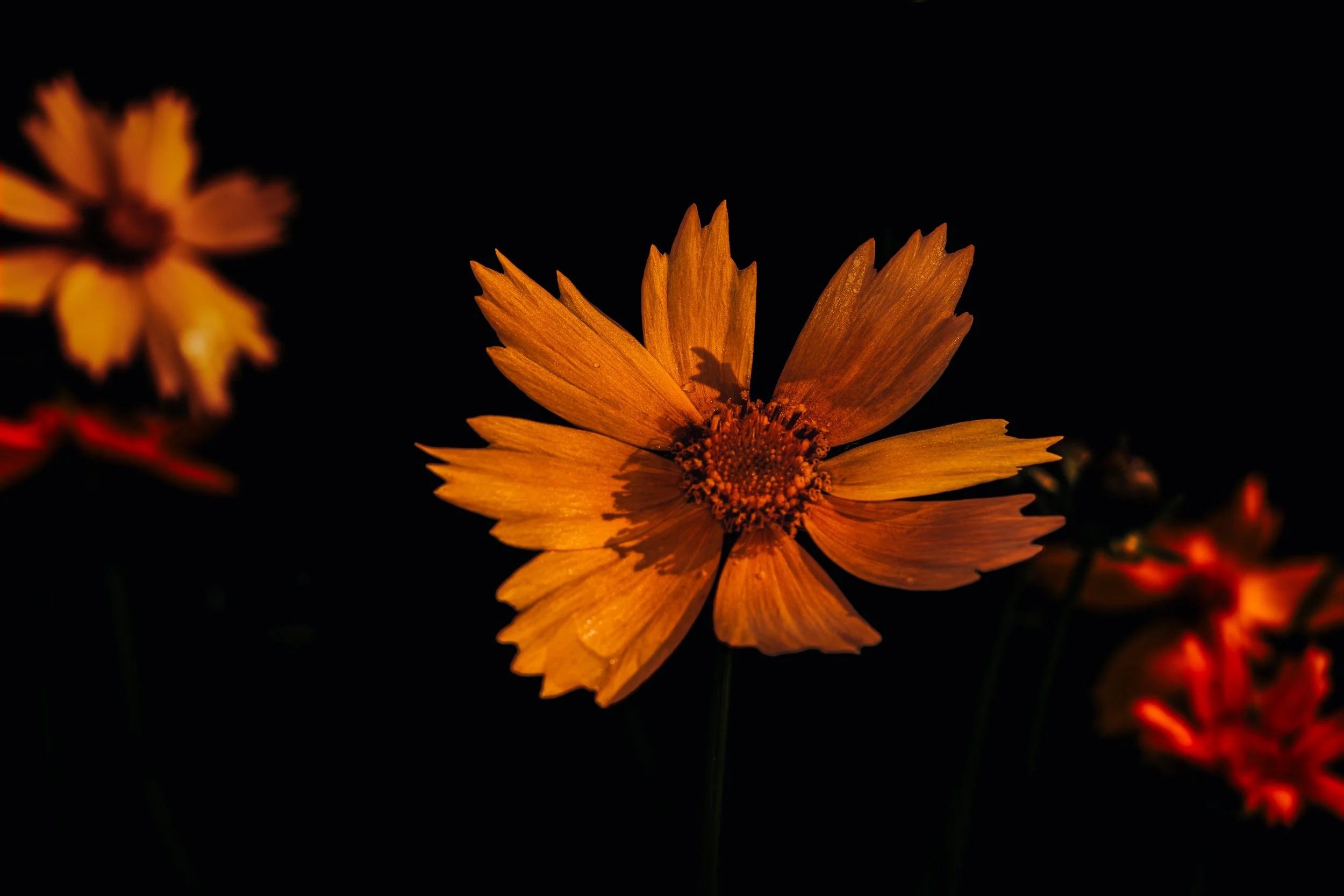
The Garden’s Glow The Garden’s Glow is a vibrant study of light and form, captured in the quiet, golden hours of my own garden. This macro photograph focuses on the intricate, fire-like petals of a singular flower as it catches the morning sun. I was drawn to the contrast between the saturated, warm tones of the blossom and the deep, receding shadows of the foliage, creating a sense of luminosity that feels almost suspended in time. Drawing inspiration from the dramatic chiaroscuro of classic fine art and the sharp, observational precision of Edward Weston, this work transforms a fleeting garden moment into a permanent, glowing focal point.
Design & Styling With its rich amber and golden palette, The Garden’s Glow adds a sophisticated, warm energy to any space. It is particularly effective when placed in minimalist interiors, sun-drenched breakfast nooks, or professional creative offices where a vibrant splash of organic color is desired.
Curated Pairings To build a cohesive gallery display that explores the warmth and intensity of the garden, consider these two companions:
For a complementary focal point: Pair with The Long Way Across to echo the warm, gold-toned brilliance.
For tonal harmony: Complement the intense amber hues with Gold Inversion, which mirrors the sun-drenched, luminous quality found throughout this collection.
Fine Art Presentation Available as a signed fine art print in premium metal, acrylic, canvas, and archival photo paper formats. To best emphasize the glowing, backlit quality of the petals and the sharp, microscopic detail of the texture, a Satin Metal Print or Low-Glare Acrylic is highly recommended.
Note: Custom and oversized photographic prints are available. Please contact the studio directly to discuss custom framing, matting, or specialized museum glass options.
The Garden’s Quiet Anchor this piece serves as a rhythmic study of grace, fragility, and the architecture of a botanical sanctuary. Captured at the Missouri Botanical Garden, i t features a lone duckling resting upon a textured water lily pad, utilizing a disciplined color palette to emphasize the vibrant greens and the soft, atmospheric light reflecting off the water. Drawing from the cinematic color theory of Ernest Haas, the work explores a moment of quiet resilience within the garden’s aquatic landscape—presenting a narrative of peaceful, unblinking clarity.
Design & Styling
With its intricate textures and soft to nal range, The Garden’s Quiet Anchor serves as a restorative visual anchor for healthcare environments, modern residential nurseries, or private galleries. It adds a sense of grounded, peaceful gravity to any professional space. To build a cohesive, thematic display, consider these two botanical companions:
For a complementary focal point: Pair with After the Rain to echo the lush, water-touched textures of the garden.
For tonal harmony: Complement the rich greens of this piece with Unfolding Light, which mirrors the soft, organic forms found throughout this collection.
Fine Art Presentation
Available as a signed fine art print in metal, framed paper, framed canvas, and acrylic presentation formats. To preserve the sharp details of the lily pad’s ridges and the delicate textures of the bird, the Satin Metal Print or Low-Glare Acrylic is highly recommended.
Note: Custom and oversized photographic prints are available. Please contact the studio directly to discuss custom framing, matting, or specialized museum glass options.
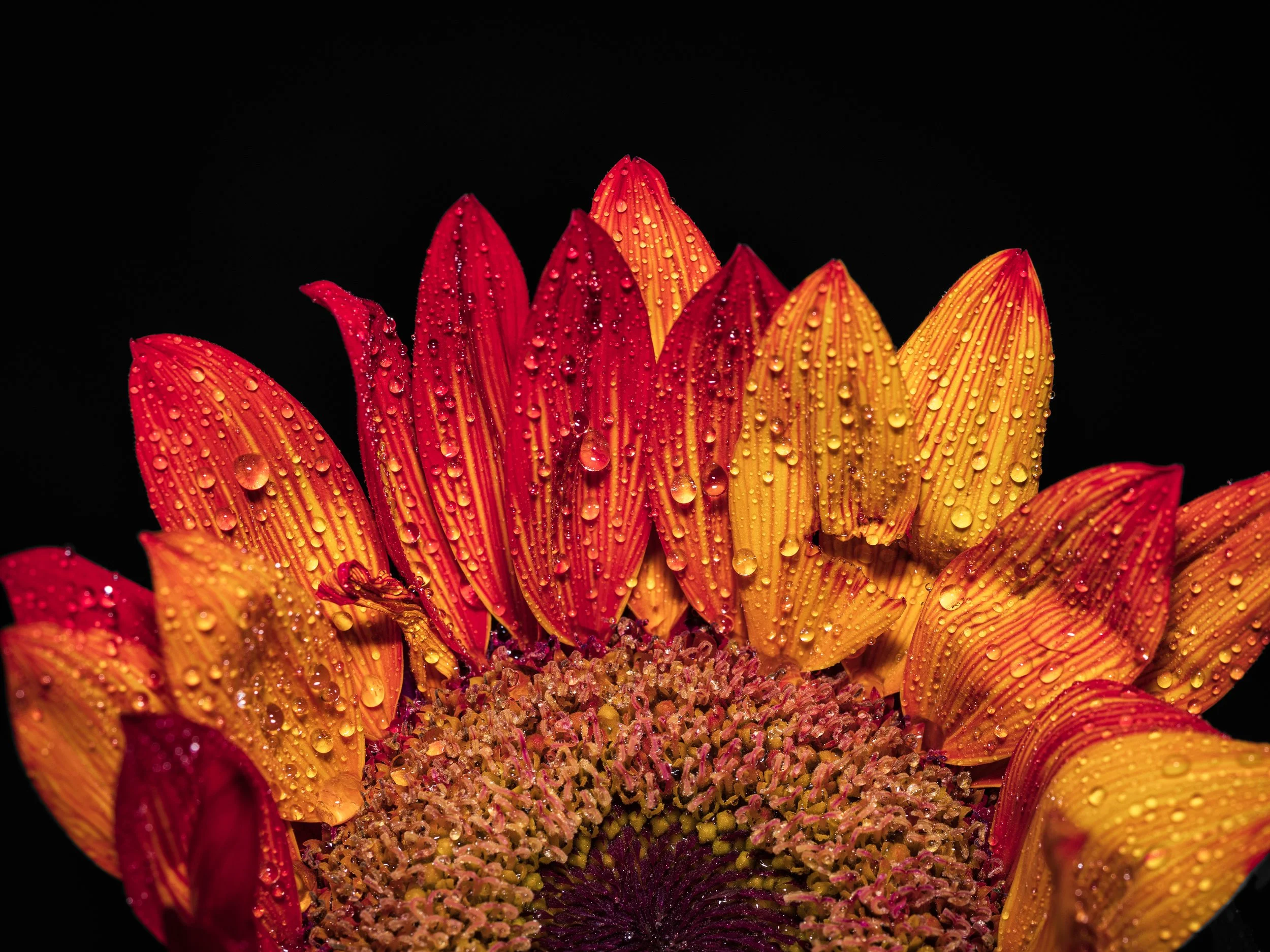
After the Heat captures the resilient, striking beauty of a sunflower as it transitions past the peak intensity of summer. This intimate macro study moves beneath the surface, focusing on the deep textures, structural geometry, and intricate organic details of the flower's center and maturing petals. Bathed in a low, dramatic, directional light, the composition emphasizes rich contrast and a deeply saturated, warm palette emerging from atmospheric shadows. Strongly influenced by the raw formal precision of Edward Weston and the deep, soulful tonal values of traditional printmaking, this photograph explores themes of persistence, aging, and the quiet majesty found in nature's late-season forms.
Design & Styling
With its rich, amber-gold palette and bold structural lines, After the Heat introduces a layer of grounding warmth, sophisticated texture, and contemplative depth to modern living spaces, rustic-modern dining rooms, or executive office interiors. To build an impactful, high-contrast gallery wall that celebrates the intricate structures of the natural wor ld, consider these two companions:
For tonal harmony: Pair with Gold Inversion to mirror the vibrant, sun-drenched warm tones.
For textural contrast: Complement the rich, complex details with The Long Way Across to ec ho the intricate, sharp macro details found within this collection.
Fine Art Presentation
Available as a signed fine art print in premium metal, acrylic, canvas, and archival photo paper formats. To best accentuate the crisp, micro-textures of th e se ed head patterns and bring out the incredible depth of the surrounding shadows, a Metal Presentation or Acrylic Presentation is highly recommended for this specific piece.
Note: Custom and oversized photographic prints are available. Please contact the studio directly to discuss custom framing, matting, or specialized museum glass options.
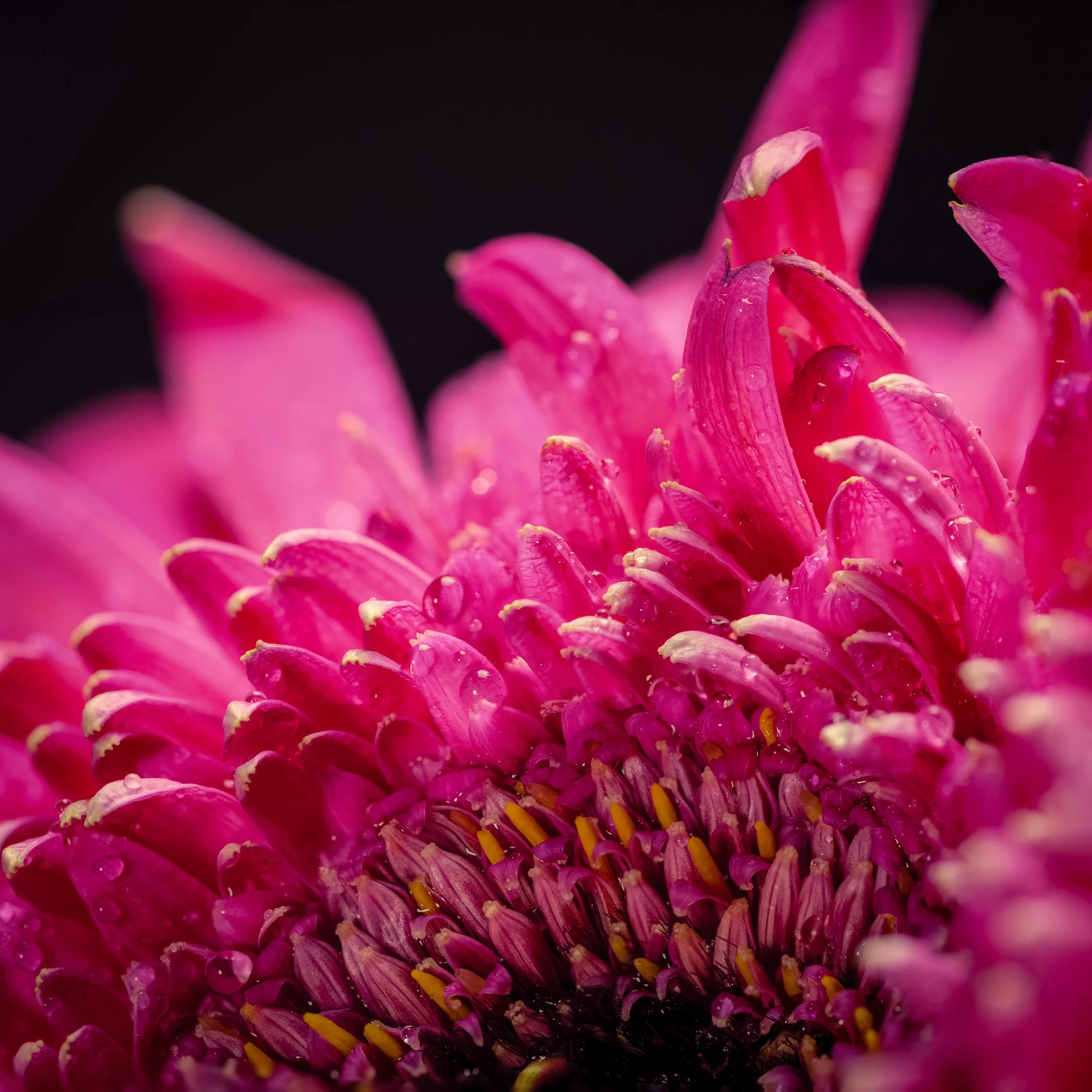
Unfolding Light is a macro botanical photograph capturing translucent flower petals illuminated by warm morning light. This atmospheric floral study explores organic curves, luminous texture, and the quiet geometry of natural growth.This intimate macro study focuses on the translucent layers of petals as they catch the directional morning light, revealing a complex web of fine veins and soft, organic curves. Embracing a glowing, warm color palette against an atmospheric background, the photograph transforms a fleeting botanical detail into a brilliant exploration of form and illumination. Strongly influenced by the clean, organic lines of traditional printmaking and the formal precision of Edward Weston, this piece celebrates the quiet, majestic energy of natural growth.
Design & Styling
With its bright, radiant tones and elegant geometric patterns, Unfolding Light introduces an immediate layer of warmth, vitality, and sophisticated grace to modern living spaces, light-filled dining areas, or contemporary studios. To build a captivating gallery display that explores the rich, luminous textures of the natural wo rld, consider these two botanical companions:
For tonal harmony: Pair with Gold Inversion to mirror the vibrant, sun-drenched warm tones.
For textural contrast: Complement the radiant petals with After the Rain to echo the organic, water-touched textures of the garden.
Fine Art Presentation
Available as a signed fine art print in premium metal, acrylic, canvas, and archival photo paper formats. To best accentuate the back-lit brilliance of the petals and ensure the sharp micro-textures pop with maximum depth, a Metal or Acrylic Presentation is highly recommended for this specific landscape.
Note: Custom and oversized photographic prints are available. Please contact the studio directly to discuss custom framing, matting, or specialized museum glass options.
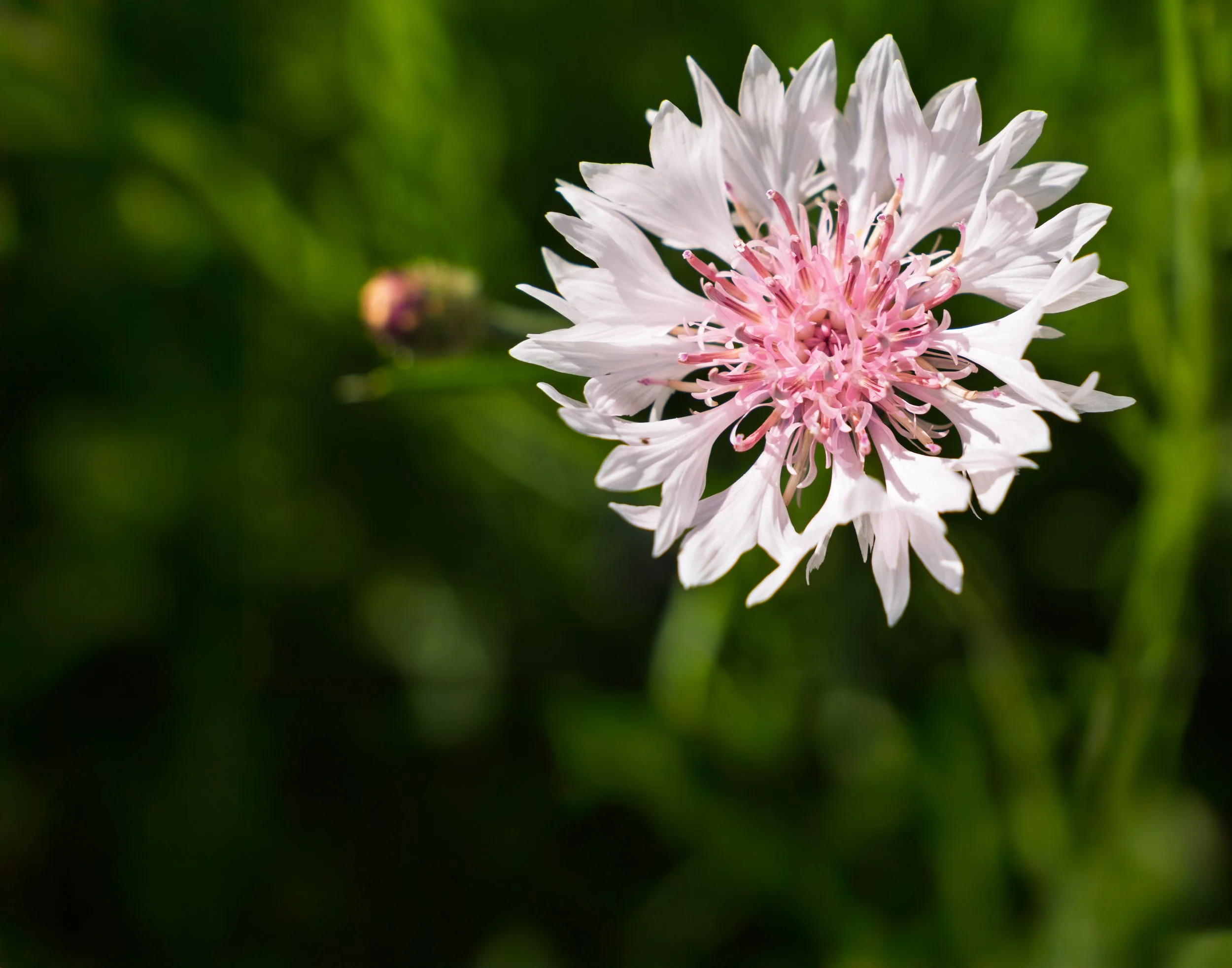
Meadow Radiance is an intimate, high-contrast macro study that explores the quiet, intricate geometry of the natural world. The composition isolates a single, beautifully detailed wild bloom, capturing the delicate radiating layers of pink and white petals against a deeply diffused, organic green background. Bathed in a soft, natural light, the photograph shifts focus away from the expansive landscape to celebrate the formal precision and texturized brilliance of a fleeting botanical detail. Strongly influenced by the earthy, grounded realism of Andrew Wyeth and the sharp tonal clarity of traditional fine art printmaking, this piece offers a contemplative meditation on growth, structure, and quiet resilience.
Design & Styling
With its fresh, organic color palette and sophisticated geometric lines, Meadow Radiance introduces an immediate sense of natural calm, vitality, and refined grace to modern living spaces, light-filled dining rooms, or contemporary wellness studios. To create a captivating, cohesive gallery display that celebrates the rich textures of the natural world, it pairs beautifully alongside A Brief Landing or After the Rain — A Tulip Rests.
Fine Art Presentation
Available as a signed fine art print in premium metal, acrylic, canvas, and archival photo paper formats. To best accentuate the razor-sharp micro-textures of the petals and ensure the luminous depths of the green background pop with maximum dimension, a Metal or Acrylic Presentation is highly recommended for this specific print.
Note: Custom and oversized photographic prints are available. Please contact the studio directly to discuss custom framing, matting, or specialized museum glass options.
To explore more pieces from this collection, view the full Botanicals gallery.
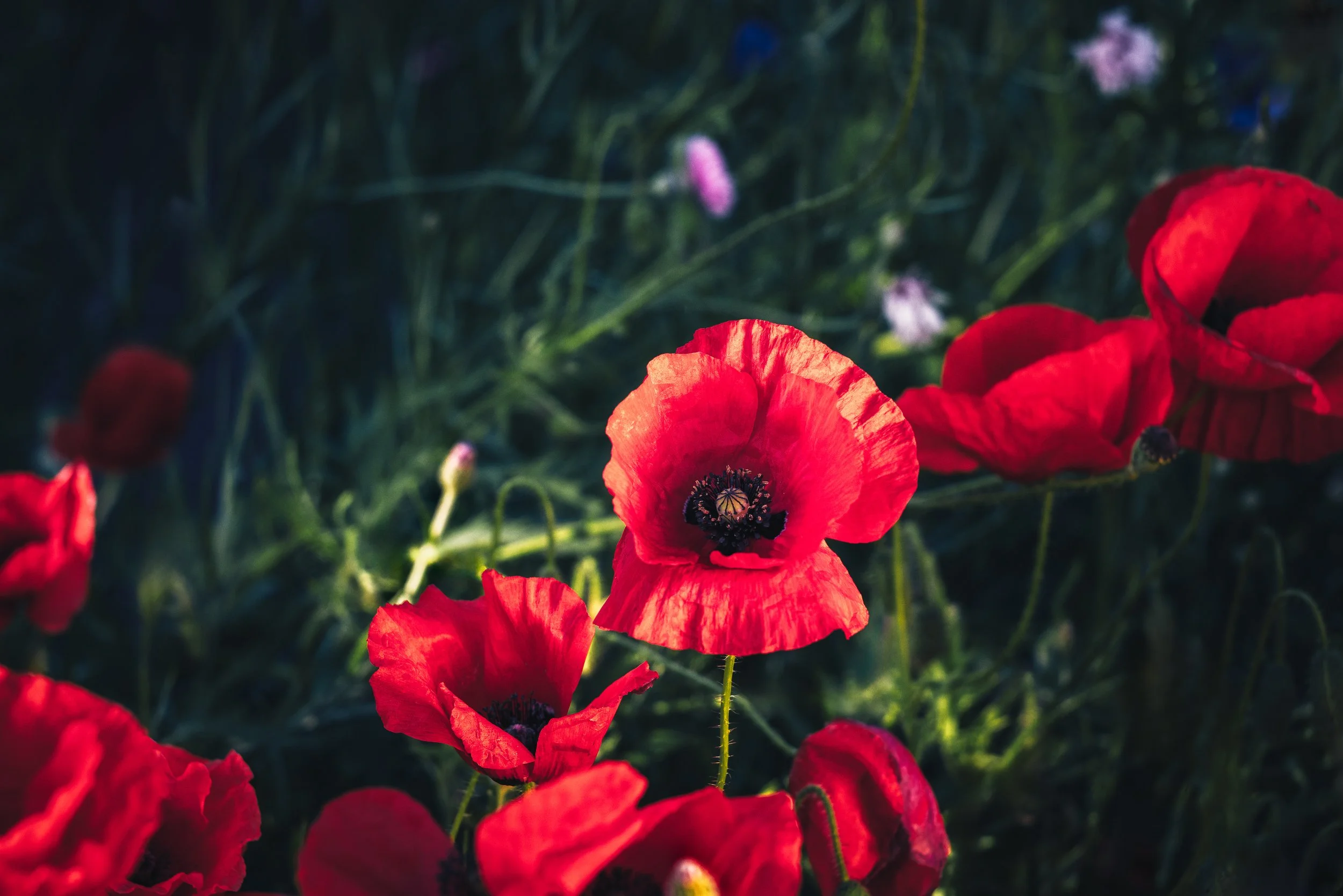
When The Field Ignites captures an explosive, breathtaking moment of natural color and brilliant illumination. This intimate macro study focuses on the radiant, fiery petals of a blooming flower as they catch the intense, directional afternoon sun. Embracing a vibrant, warm color palette that ranges from deep crimson to glowing amber, the photograph isolates the delicate, translucent details and fluid, organic curves against a dark, atmospheric background. Strongly influenced by the expressive color palettes of Ernest Haas and the sharp formal precision of Edward Weston, this piece transforms a single blossom into a dramatic, glowing celebration of natural energy and light.
Design & Styling
With its rich, fiery palette and magnificent sense of warmth, When The Field Ignites serves as a powerful, commanding focal piece for modern living spaces, dynamic entryways, or contemporary dining rooms. It introduces an immediate layer of vitality and sophisticated warmth to minimalist or neutral interiors. To build an impactful gallery wall that explores the dramatic, glowing textures of the natural world, consider these two companions:
For tonal harmony: Pair with Gold Inversion to mirror the vibrant, sun-drenched warm tones.
For textural contrast: Complement the fiery reds with The Long Way Across t o echo the intricate, sharp macro details found within this collection.
Fine Art Presentation
Available as a signed fine art print in premium metal, acrylic, canvas, and archival photo paper formats. To maximize the intense, backlit radiance of the fiery petals and ensure the deep background shadows retain their rich, ink-like depth, a Metal Presentation or Acrylic Presentation is highly recommended for this specific print.
Note: Custom and oversized photographic prints are available. Please contact the studio directly to discuss custom framing, matting, or specialized museum glass options.

Where Morning Lingers is a quiet study of texture, light, and the small persistence of growth. Photographed low against a weathered stone wall near Crested Butte, Colorado, the image holds three kinds of time in a single frame: the slow patience of lichen and moss claiming old rock, the brief sparkle of dew still clinging to grass and leaf before the sun burns it away, and the passing warmth of morning backlight glowing through the aspen grove behind. Drawing from the intimate botanical studies of Eliot Porter and the tonal restraint of Fay Godwin, the photograph treats an ordinary corner of ground as a small, complete world.
The composition holds close focus against a soft, glowing field of green and gold, letting the eye move from the coarse grain of the stone to the fine, backlit blades of grass to a single leaf just beginning to turn red at its edge. Nothing here announces itself loudly. Instead the image asks for a slower look, the kind that notices dew, texture, and the first hint of season change happening quietly at ground level.
The result is a photograph that rewards patience, offering the same unhurried attention the scene itself seemed to ask for.
Design & Styling
With its warm, grounded palette and intimate, close-focus botanical detail, Where Morning Lingers works well in reading nooks, spa and wellness spaces, healthcare interiors, and residential settings looking for a calm, textural accent piece rather than a large statement work. Its close crop and rich detail also make it a strong choice for smaller wall groupings or a hallway series.
Curated Pairings
For a kindred close study: Pair with After the Rain, another quiet macro moment built around water clinging to a plant just after weather passes through.
For tonal warmth: Complement this piece with Amber Morning, echoing the same golden backlight and morning palette at a different scale.
Fine Art Presentation
Available as a signed fine art print in premium metal, acrylic, canvas, and archival photo paper formats. To carry the fine texture of the lichen, dew, and backlit grass, a Glossy Anti-Glare Acrylic or archival photo paper print is highly recommended.
Note: Custom and oversized photographic prints are available. Please contact the studio directly to discuss custom framing, matting, or specialized museum glass options.

Seeds of the Meadow offers a deeply intimate, poetic look into the intricate micro-ecosystems of the natural world. This striking macro study focuses on the delicate architecture of wild seed heads and emerging meadow flora, capturing the fine, hair-like textures and complex organic geometry as they catch a soft, filtering light. Embracing a minimal composition and a beautifully muted, earthy color palette, the photograph transforms an overlooked wayside detail into a profound study of form, patience, and silent renewal. Strongly influenced by the sharp formal precision of Edward Weston and the quiet, grounded realism of Andrew Wyeth, this piece celebrates the quiet elegance found in nature’s small beginnings.
Design & Styling
With its soft, organic lines and calming neutral palette, Seeds of the Meadow introduces a layer of timeless serenity and sophisticated texture to minimalist bedrooms, quiet reading alcoves, or light-filled modern living spaces. To build a narrative-driven gallery dis play, consider these two companions:
For a water-touched aesthetic: Pair with After the Rain to echo the organic, delicate textures of the garden.
For a tonal harmony: Complement this piece with Gold Inversion to mirror the soft, natural light found throughout this collection.
Fine Art Presentation
Available as a signed fine art print in premium metal, acrylic, canvas, and archival photo paper formats. To best accent the incredibly fine, razor-sharp textures of the seed structures and preserve the soft, painterly gradients of the background, the Archival Photo Paper (Matted & Framed) or Acrylic Presentation format is highly recommended.
Note: Custom and oversized photographic prints are available. Please contact the studio directly to discuss custom framing, matting, or specialized museum glass options.
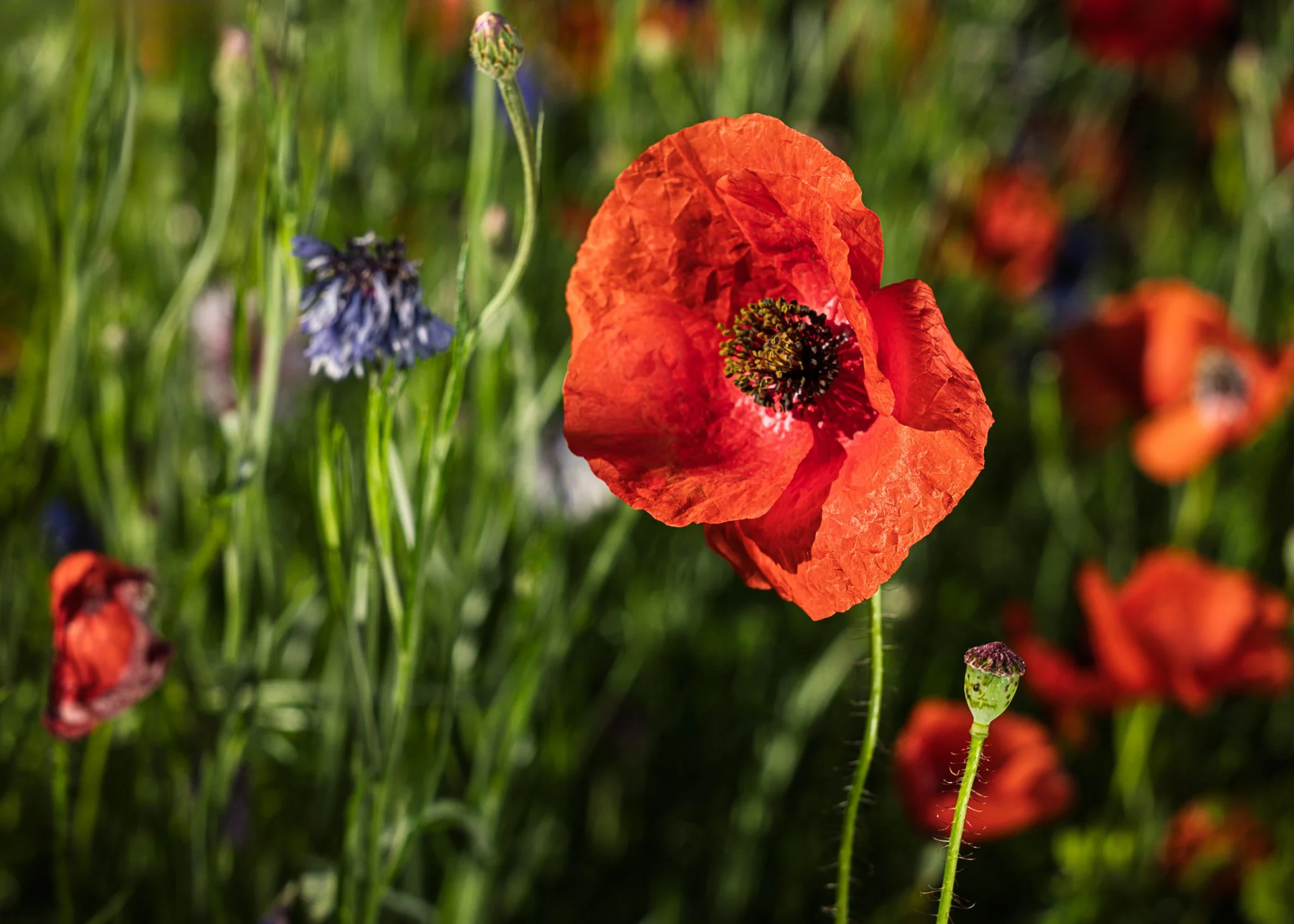
The Moment Red Remembers i s a cinematic botanical study that explores the psychological depth of color and organic form. This piece features a saturated, deep-red bloom emerging from a backdrop of atmospheric shadows, utilizing a "noir" aesthetic to emphasize the velvety texture of the petals. The composition focuses on a singular, rhythmic moment of peak vibration—a "painterly" meditation on memory, endurance, and the quiet intensity of the natural world. It is a study in how a single hue can define a landscape of stillness.
Design & Styling
With its bold, emotive palette and sophisticated to na l contrast, The Moment Red Remembers is an ideal focal point for modern residential suites, intimate gallery spaces, or luxury hospitality interiors. It brings a sense of warmth and dramatic narrative to any envi ronment.
Curated Pairings
To build a collection centered on botanical power and atmospheric depth, consider these two companions:
For textural harmony: Pair with After the Heat to echo the warm, evocative energy of this piece.
For a cohesive aesthetic: Complement the deep reds with Waiting For the Sun, which shares a similar focus on light-drenched, organic form.
Fine Art Presentation
Available as a signed fine art print in metal, framed paper, framed canvas, and acrylic presentation formats. The Acrylic Presentation is highly recommended to accentuate the incredible depth of the reds and the luminous clarity of the highlights.
Note: Custom and oversized photographic prints are available. Please contact the studio directly to discuss custom framing, matting, or specialized museum glass options.
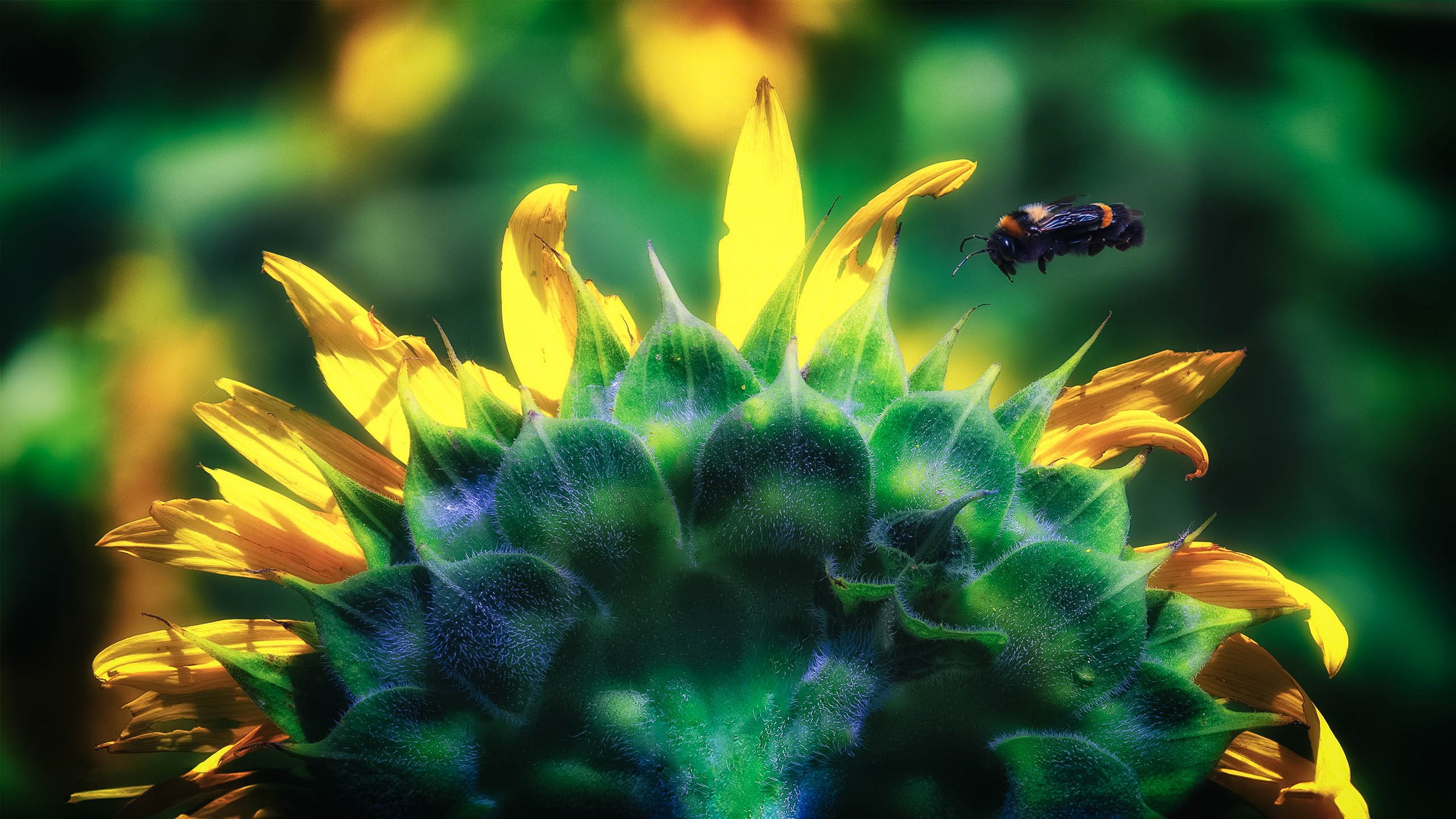
Gold Inversion offers an intimate, deeply focused look into the striking geometry and vibrant energy of the natural world. This piece isolates the brilliant, sun-drenched petals of a blooming yellow flower, capturing the delicate, translucent veins and rich textures as they filter the afternoon light. Embracing a minimalist composition and a warm, glowing color palette, the photograph transforms a simple botanical subject into a dramatic study of form and illumination. Strongly influenced by the clean, organic lines of traditional printmaking and modern macro aesthetics, it celebrates the exquisite, quiet details found in moments of natural perfection.
Design & Styling
With its radiant yellow tones and elegant, organic form, Gold Inversion brings an immediate sense of warmth, life, and sophisticated cheer to modern dining areas, sunlit kitchens, or contemporary wellness spaces.
Curated Pairings
To create a striking gallery display that contrasts rich floral color against deep, atmospheric shadows, consider these two botanical companions:
For dramatic contrast: Pair with The Moment Red Remembers, which balances the warmth of this piece with deeper, more saturated tones.
For tonal harmony: Complement the luminous yellow of this print with Lavender Rhapsody to echo the organic elegance found throughout this collection.
Fine Art Presentation
Available as a signed fine art print in premium metal, acrylic, canvas, and archival photo paper formats. To maximize the intense, back-lit radiance of the yellow petals and ensure the crisp details of the macro textures pop, a Metal or Acrylic Presentation is highly recommended.
Note: Custom and oversized photographic prints are available. Please contact the studio directly to discuss custom framing, matting, or specialized museum glass options.
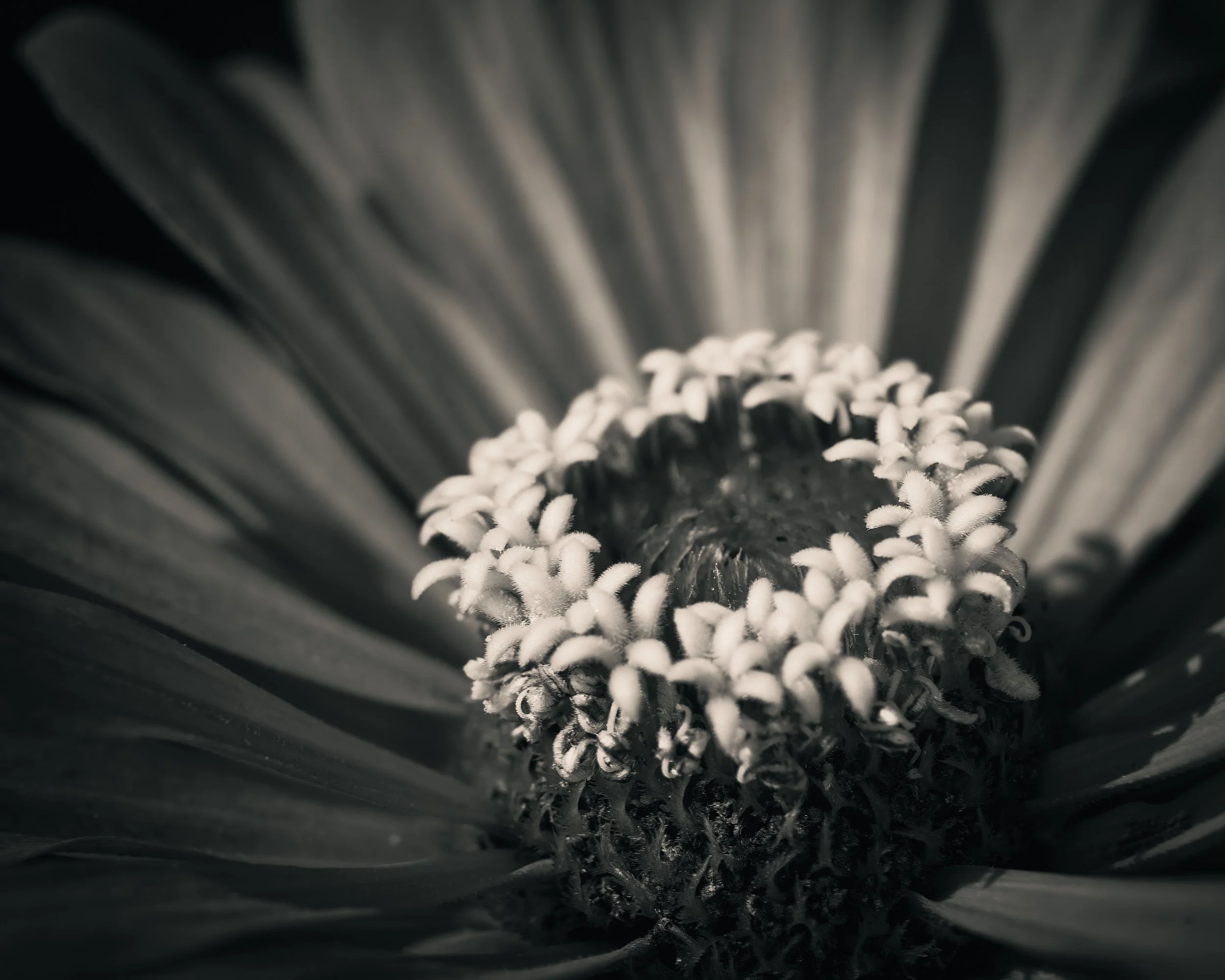
Center of Grace is an intimate, high-contrast exploration of organic geometry, texture, and natural rhythm. Focusing on the intricate, fringed petals and the intensely detailed, tactile core of a single bloom, this monochrome composition celebrates the complex architecture found within the natural world. Heavily influenced by the razor-sharp environmental precision of Ansel Adams and the quiet, rustic realism of Andrew Wyeth, the image masterfully transforms a solitary flower into a timeless, abstract meditation on structure, symmetry, and delicate endurance.
Design & Styling
With its bold graphic lines, rich tonal range, and minimalist presence, Center of Grace serves as a sophisticated visual anchor for contemporary living spaces, modern bedrooms, private studies, or design-forward corporate offices. It introduces an immediate sense of quiet elegance, organic texture, and focused calm to an interior.
Curated Pairings
For a highly cohesive botanical or monochrome gallery arrangement, pair with Glass and Gesture, echoing this piece's intricate structural detail through a different subject.
For nocturnal tonal harmony, complement with As the Glow Ends, extending the quiet, high-contrast mood into architectural night photography.
Fine Art Presentation
Available as a signed fine art print in premium presentation formats, including sleek metal, framed archival paper, canvas, and gallery-grade acrylic. To fully accentuate the razor-sharp micro-textures of the textured center and preserve the clean, ink-like black and white transitions, a Glossy Metal Print or a Custom Framed Archival Photo Paper with a Matte Finish presentation is highly recommended to provide the artwork with incredible museum-quality visual fidelity.
Note: Custom and oversized photographic prints are available. Please contact the studio directly to discuss custom framing, matting, or specialized museum glass options.
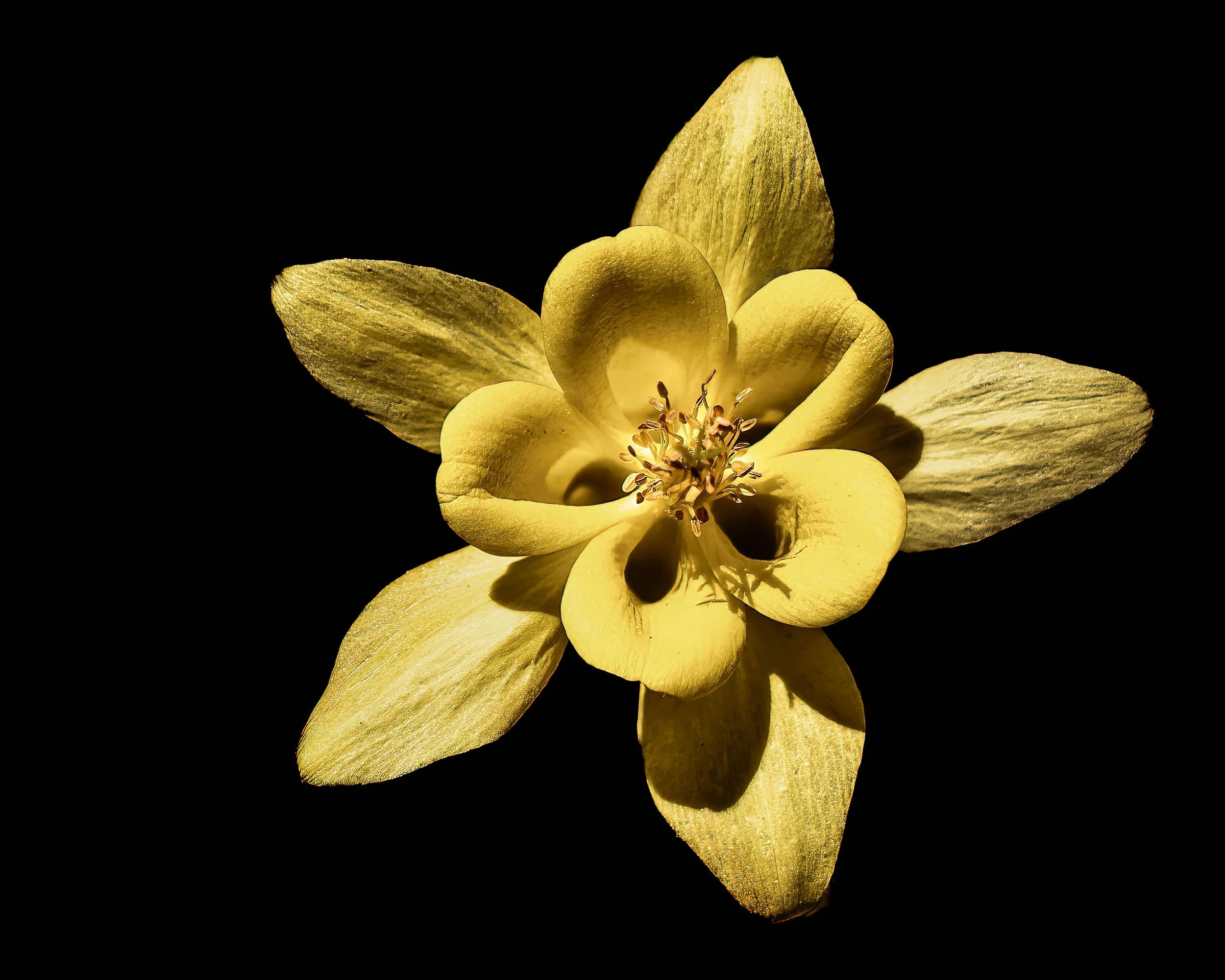
Golden Solitude is a quiet botanical study of light, form, and isolation. Photographed against a deep black background, the image presents a single yellow blossom emerging from darkness, its petals illuminated with a warm, restrained glow. The surrounding negative space removes the flower from any ordinary garden context, allowing it to become something more sculptural, intimate, and contemplative.
The composition is built around contrast and restraint. The black background gives the flower a sense of stillness and suspension, while the luminous yellow petals create a subtle visual tension between delicacy and presence. Rather than filling the frame with decorative abundance, the image focuses on one bloom and asks the viewer to slow down. The soft curves of the inner petals, the textured surfaces of the outer petals, and the intricate structure at the center all become part of a quiet study in natural form.
Color plays an essential role in the emotional character of the photograph. The yellow is warm and radiant, but not loud. It carries a sense of life and optimism while remaining grounded by the surrounding darkness. The result is an image that feels both simple and dramatic: a single moment of light held against silence.
Rather than presenting the flower as a purely decorative subject, Golden Solitude explores the quiet power of singular presence. It is a meditation on stillness, fragility, and the way light can transform a familiar natural form into something more mysterious and enduring.
Design & Styling
With its deep black background, warm golden tones, and clean botanical subject, Golden Solitude brings elegance, calm, and visual focus to a space. The photograph works especially well in residential interiors, healthcare environments, counseling offices, hospitality settings, and contemporary spaces where natural imagery is desired without visual clutter.
The strong contrast gives the image a refined, gallery-like presence, while the flower’s organic form softens the overall effect. It pairs well with neutral palettes, black or natural wood frames, warm accent lighting, and interiors that use restrained color, natural materials, or biophilic design principles.
Curated Pairings
For a botanical collection centered on color, intimacy, and close observation, pair Golden Solitude with Scarlet Crown and Lavender Rhapsody, creating a grouping that moves through yellow, red, and violet while maintaining a shared focus on natural structure and floral form.
For a softer, more contemplative floral grouping, complement Golden Solitude with Summer’s Unfolding and The Garden’s Glow, emphasizing warmth, quiet beauty, and the emotional presence of flowers seen at close range.
For a collection built around contrast, shadow, and luminous subjects emerging from darkness, pair Golden Solitude with Scarlet Crown and Blue Silence Beneath the Arch, linking botanical form with bold color, negative space, and a more dramatic sense of atmosphere.
Fine Art Presentation
Available as a signed fine art print in premium archival paper, framed paper, metal, acrylic, canvas, wood, and framed canvas formats. Archival paper and framed paper are especially recommended for preserving the subtle tonal transitions within the yellow petals and the depth of the black background. Acrylic can also work well for a more contemporary presentation, adding visual depth and polish to the luminous flower against the dark field.
Smaller and mid-sized presentations are particularly strong for this image, including 12x18, 16x24, and 20x30. These sizes preserve the intimate character of the photograph while allowing the flower to hold the wall with quiet visual strength.
Note: Custom and oversized photographic prints are available. Please contact the studio directly to discuss custom framing, matting, or specialized museum glass options.
Held in Light
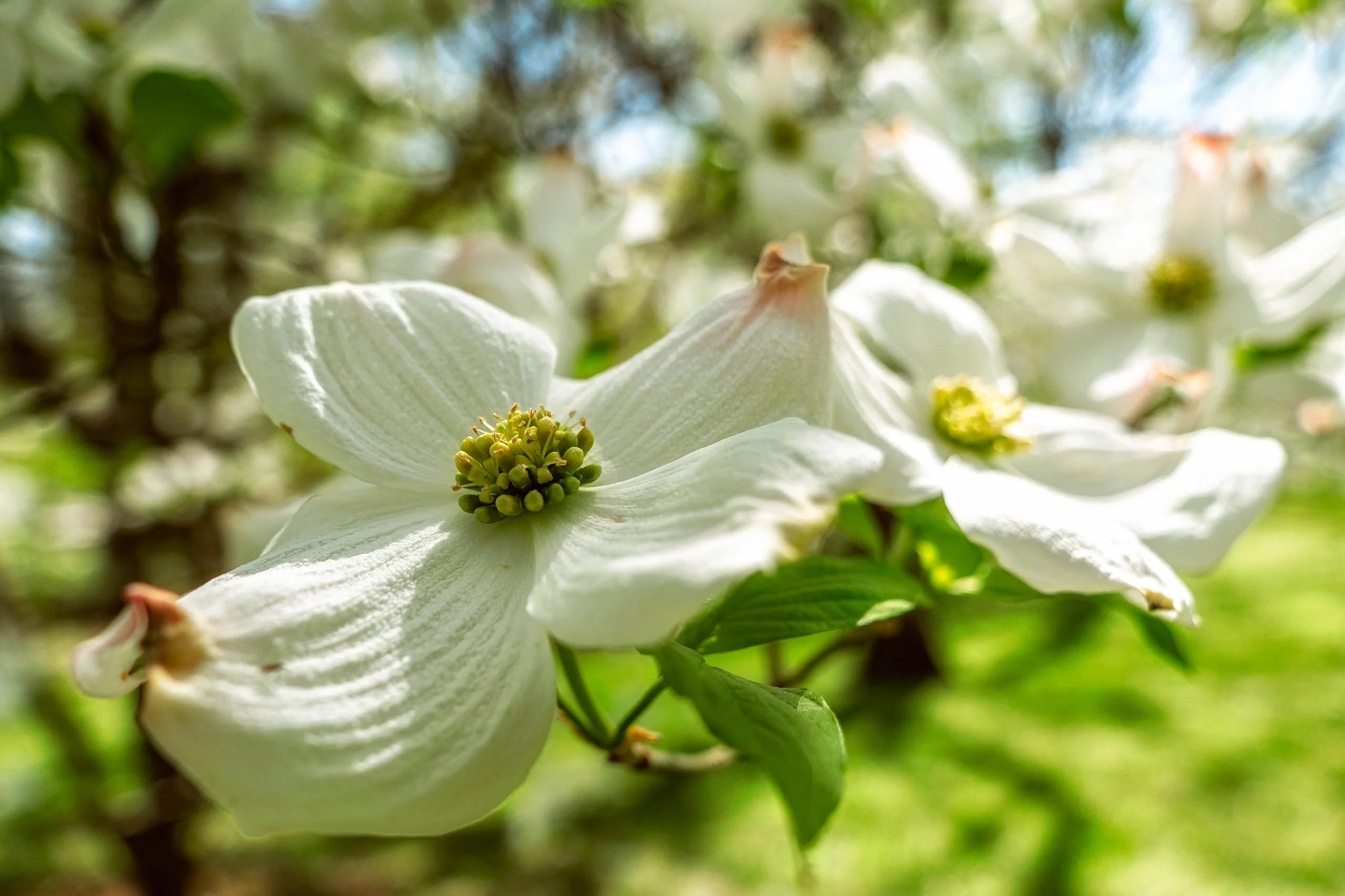
Dogwood blooms hold onto spring for only a few weeks each year, and this frame catches that fleeting window at its most luminous — backlit petals glowing translucent against a dissolved field of green, the kind of light that only exists for an hour or two on the right morning.
The composition draws the eye first to the stamens at the flower's center, a small cluster of structure amid soft, curving petal forms, then lets it wander outward along the visible veining in each petal before settling on the second bloom just behind, present but quiet, never competing for attention. The backlighting does most of the work here, revealing texture that would stay hidden in flat, even light.
There's a stillness to this image that owes more to Andrew Wyeth than to any of the western or urban work in this catalog — the same patient attention to organic form, the same sense that quiet subjects deserve quiet looking. It's a departure from rodeo dust and canyon light, and closer in spirit to Christina's World than to Haas or Adams: less about place and grandeur, more about a single, small, illuminated moment.
Design & Styling
This piece works well in spaces that want softness without sweetness — a reading nook, a bedroom, a hallway that gets morning light of its own. The pale palette and soft green ground make it a natural pairing with warm neutrals, aged wood tones, and linen textures; it holds its own in a gallery wall of botanical or nature-adjacent work without needing to dominate the arrangement. Given the Missouri dogwood's regional significance, this piece carries particular resonance in Midwest interiors and collections with a sense of place.
Curated Pairings
For collectors building a quieter, botanical-leaning wall: Iron Cathedral offers textural contrast if you want one piece of grounded structure alongside softer botanical work, and browsing the Botanicals collection surfaces other pieces built around the same close, patient attention to natural form.
Fine Art Presentation
Available on Chromaluxe Metal and TrueVue low-glare Acrylic for a luminous, gallery-ready finish that suits the translucency in the petals, or as a framed or unframed print on Photo Rag for a softer, more traditional paper presentation. Native resolution supports true 3:2 sizing up to 45x30 without upscaling; larger sizes are available and will note upscaling as part of the print process.
Custom sizing available on request — reach out directly to discuss dimensions beyond the standard offerings.
Shadows & Silence
Shadows & Silence
Filters
No results found
No results match your search. Try removing a few filters.
Have Questions?
To accommodate grand residential or corporate spaces, larger scale photographic prints and custom dimensions are available upon request.
For collectors seeking ready-to-hang presentations, we welcome the opportunity to collaborate on custom framing, museum-quality matting, and specialized glass selections tailored to your unique aesthetic.
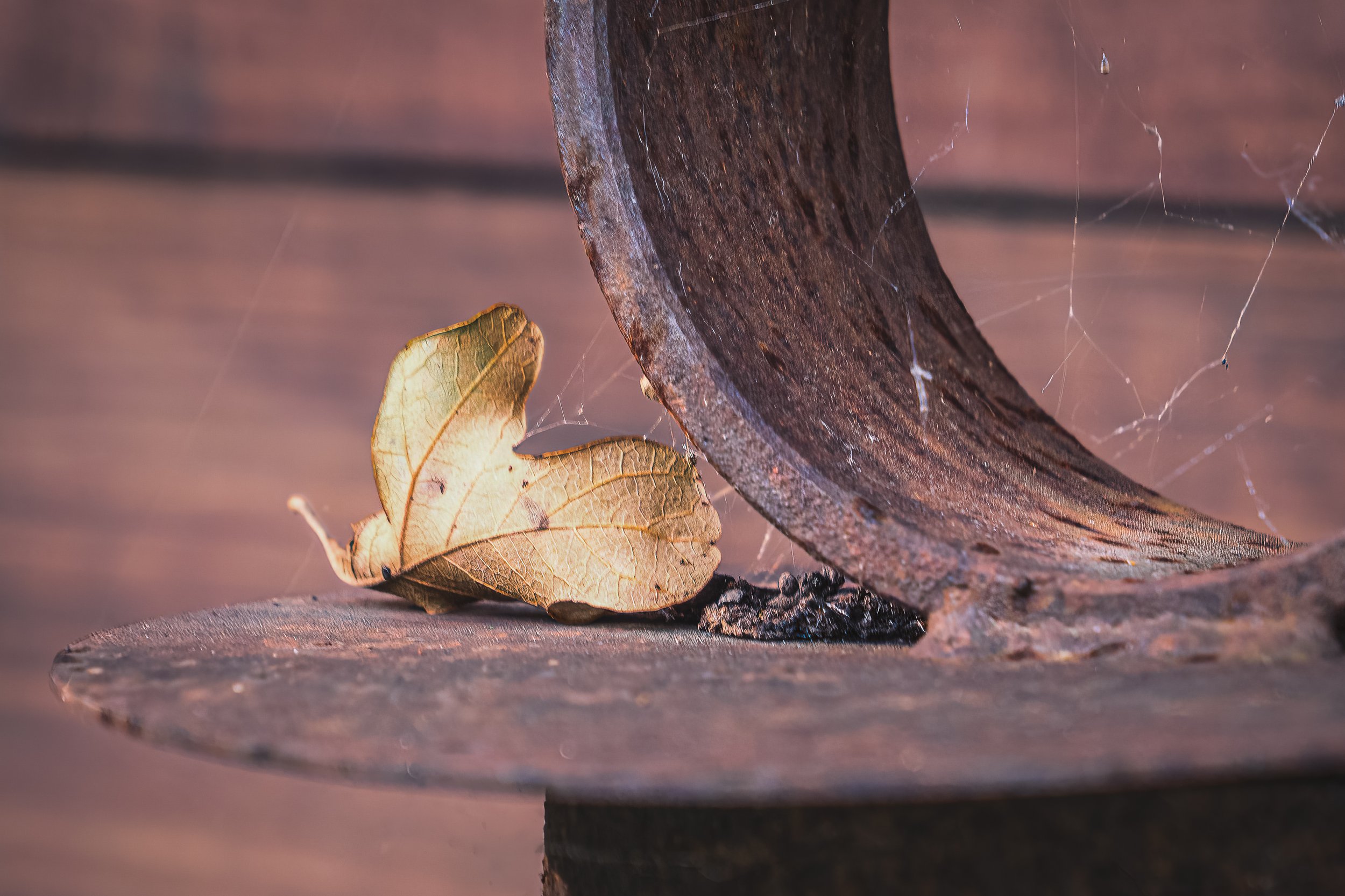
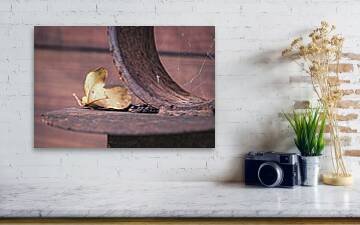
What the Web Kept is a quiet study in fragility and time — a single dried leaf, caught mid-fall in the threads of a spider's web, resting against the weathered curve of a rusted iron hook. Backlit by low, warm light, the leaf glows amber from within, its veins traced in fine red-gold lines, while the ironwork behind it curves away into shadow, dusted with the same threads that hold the leaf in place. Nothing here was arranged. The scene was found exactly as it appears — a small, overlooked corner where two very different kinds of decay, organic and industrial, happened to meet.
The composition moves from the glowing leaf at lower left, along the sweep of the rusted curve, and up into a loose scatter of web strands catching light in the upper right — three unrelated materials, wood, iron, and silk, unified by a single warm palette and a single fading light. The dark tangle of debris at the base of the hook anchors the frame with real shadow, giving the warm midtones somewhere to rest and the leaf's glow real contrast to push against.
Drawing on the quiet still-life tradition of Josef Sudek and the tightly rhymed found-object framing of Harry Callahan, with a restrained, autumnal warmth that also recalls Andrew Wyeth's interiors, the photograph treats a discarded leaf and a stretch of rusted hardware not as debris but as a small, self-contained composition — a reminder that the most rewarding subjects are often the ones that ask to be noticed rather than announced.
Design & Styling
With its warm amber-and-rust palette and intimate scale, What the Web Kept works well as an accent piece in reading nooks, home offices, and quiet residential corners, as well as in healthcare and hospitality settings where a calm, nature-adjacent image with no unsettling content is welcome — waiting rooms, patient corridors, and boutique guest rooms alike. It reads as a smaller, contemplative companion piece rather than a large-format anchor image; it rewards close viewing more than it commands a room from a distance.
Curated Pairings
To build a cohesive botanical or quiet-detail grouping, consider these companion pieces from the Botanical Studies collection:
For thematic echo: Pair with A Brief Landing, continuing the study of small, discovered creatures resting on natural forms.
For tonal harmony: Complement with Gold Inversion, extending the same warm amber-gold palette in a purely botanical register.
For quiet contrast: Pair with Center of Grace, introducing a monochrome counterpoint that shares the same restrained, close-looking sensibility.
Fine Art Presentation
Available as a signed fine art print in metal, framed paper, framed canvas, and acrylic presentation formats. Acrylic prints are produced on low-glare TruLife acrylic; framed and unframed paper prints are produced on Photo Rag unless otherwise specified. Given the fine detail in the leaf's venation and the web strands, Chromaluxe Metal or framed Photo Rag paper at a modest-to-mid size is recommended to preserve edge sharpness; the piece is better suited to intimate viewing distances than very large-format installation.