
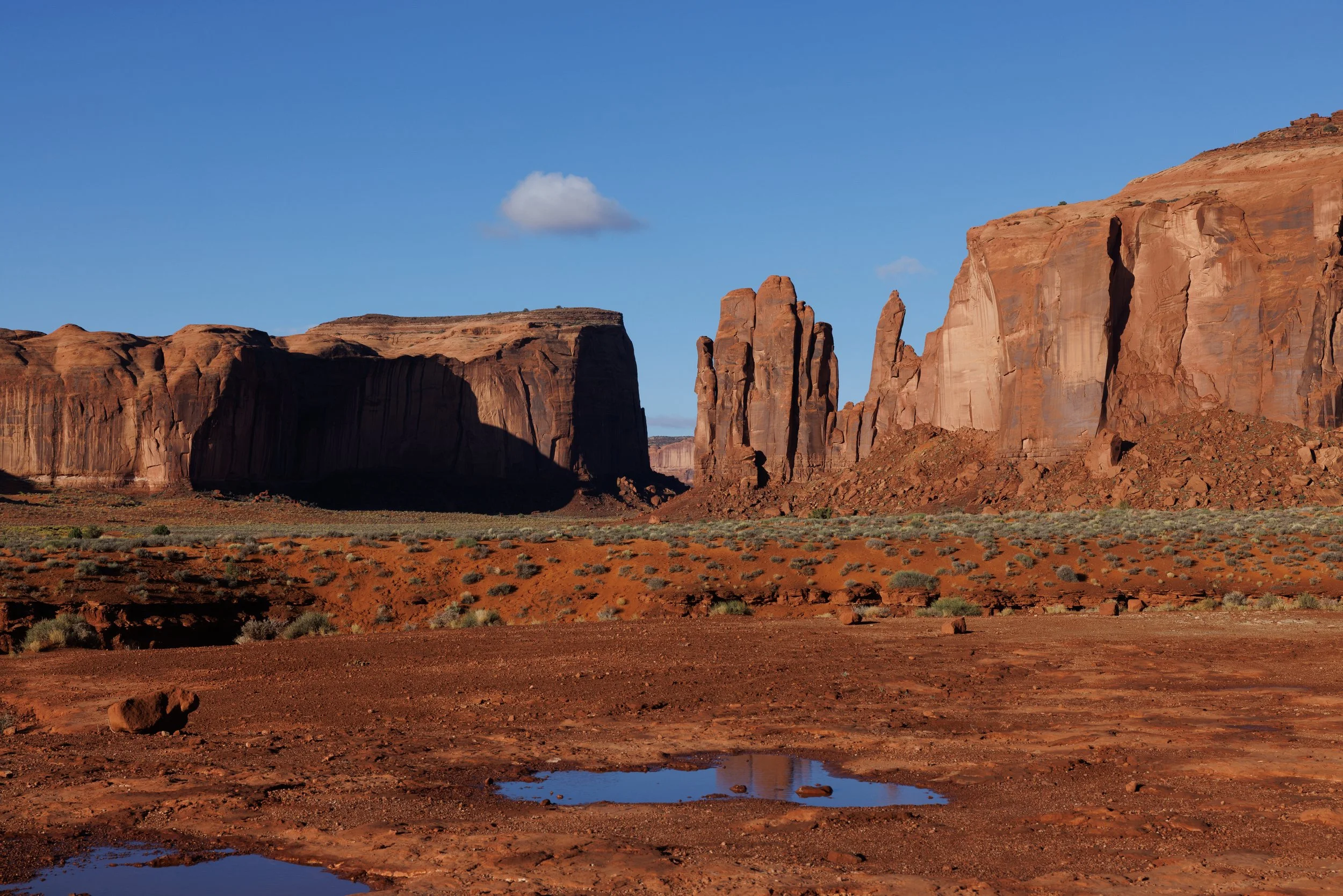
Western Silence
Western Silence: Southwest Desert Landscape Photography
A Closer Look
Explore the finer details of each photograph by hovering over an image to reveal subtle focus and texture, or click to expand the work into a distraction-free viewing environment. This immersive view allows each study of Silence through the American West to be experienced at its full scale and proportion.
Search for a specific photograph, series, or browse the curated collections. Looking for a particular format? Search by Square or 1:1, Landscape or 3:2, or Panorama or 16:9.
The American West has long been a place of distance, scale, and possibility. Its deserts, mesas, mountains, canyons, and open horizons invite a different way of seeing—one shaped by patience, solitude, and an awareness of the vast landscapes that stretch far beyond the limits of human presence. The photographs in this collection explore those quieter moments when the land itself becomes the primary voice.
Created throughout New Mexico, Utah, Arizona, Colorado, Wyoming, and the greater Southwest, these images focus on atmosphere, light, and the enduring character of the western landscape. Monumental rock formations, remote roads, weathered structures, desert skies, and changing weather become opportunities to explore both the physical beauty and emotional resonance of the region. Rather than emphasizing spectacle alone, the photographs seek moments of stillness that reveal a deeper connection to place.
Weather and light are central throughout the collection. Sunrise on sandstone cliffs, storms gathering across open desert, snow settling on distant mountains, and the final glow of evening all transform familiar landscapes into something timeless. These photographs often exist in the space between observation and reflection, where geography becomes memory and landscape becomes experience.
Influenced by the color sensibilities of Ernst Haas, the quiet realism of Andrew Wyeth, and the grand western traditions of photographers such as Ansel Adams, these images explore themes of solitude, resilience, endurance, and wonder. They are photographs about the American West, but they are equally about the feeling of standing within a landscape large enough to remind us of our place in the world.
Designed for collectors, healthcare environments, hospitality spaces, offices, and residential interiors, these photographs bring a sense of openness, tranquility, and visual depth while celebrating the enduring spirit of the American West.
“The West is not a place. It is a state of mind.”
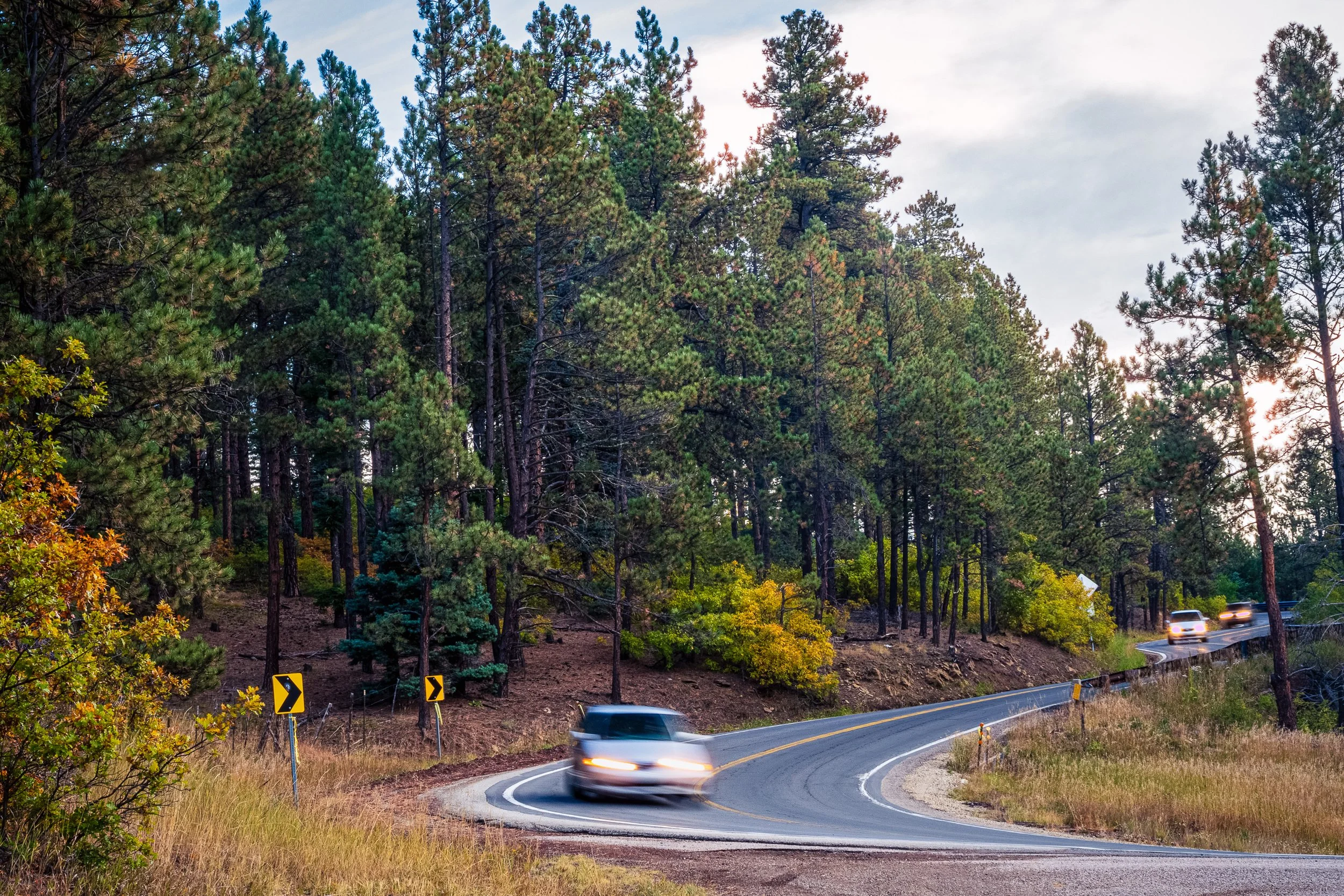
A silver sedan curls through the S-curve at the base of the Elliot Barker trailhead as dusk settles over the Sangre de Cristo Mountains near Angel Fire, New Mexico. The motion blur isn't a mistake — it's the subject, headlights and windshield dissolving into a soft streak of light as the car commits to the turn, chevron warning signs on the left setting up the bend before the road disappears into pine.
Behind it, two more sets of headlights recede along the same curve, climbing into the distance on the far side of the frame — a small but real sense of continued traffic, continued motion, beyond what the camera caught. Dark stands of ponderosa pine hold the road on both sides, early fall color just starting to show at their edges, the whole scene lit by flat, overcast dusk light rather than anything dramatic.
This is Ernst Haas territory — his treatment of motion blur and headlights as color and gesture rather than documentary record is the direct reference here, with a quieter Wenders undercurrent in the anonymous car moving alone through an empty mountain landscape at the end of the day.
Design & Styling
The cool dusk palette and sense of motion make this a strong fit for contemporary offices, lodges, and mountain-modern interiors wanting dynamic energy rather than a static landscape moment.
Curated Pairings
For the same trailhead: Pair with Elliot Barker Trail, photographed at the same location, on foot rather than from the road.
For mountain road continuity: Complement with The Road Beneath the Mesa, continuing the theme of road, motion, and Western terrain.
For motion and light continuity: Pair with Exit 280, another study built on headlights, motion blur, and the road itself as subject.
Fine Art Presentation
Available as a signed fine art print on archival paper (framed or unframed), ChromaLuxe® Metal (gloss, semi-gloss, or matte), framed canvas, and acrylic. Metal holds the cool dusk tones and headlight highlights especially well; for acrylic, TruLife low-glare acrylic is recommended.
Note: Custom and oversized photographic prints are available. Please contact the studio directly to discuss custom framing, matting, or specialized museum glass options.
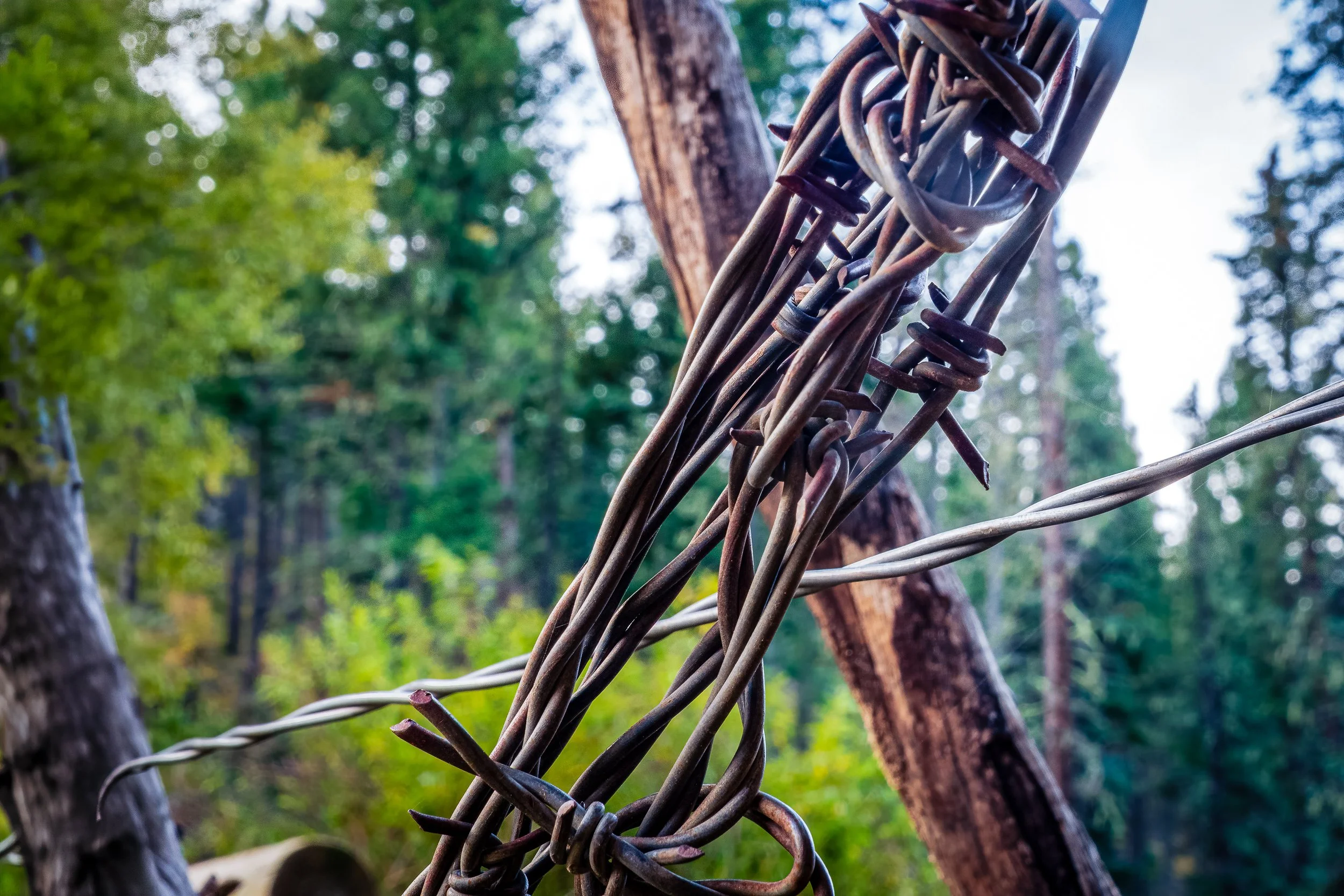
Years of mending accumulate into something almost sculptural at this gate post on the Elliot Barker Trail — strand after strand of barbed wire wrapped, re-wrapped, and twisted back on itself, each repair layered over the last until the fence line becomes less a barrier than a record. Nothing about it was designed to look like this. It's simply what happens when a working boundary gets tended for decades.
A single diagonal strand crosses the lower third of the frame, giving the eye a clear entry point before it climbs into the denser knot above — rust-brown wire held sharp against a soft wash of green forest bokeh, isolating the tangle completely from its surroundings. It's a small, overlooked thing at the edge of a trail, rewarding exactly the kind of close looking that rewards a second glance rather than a first.
This sits closer to Aaron Siskind's close-up studies of found rope and worn material than to any landscape tradition — utilitarian debris turned into near-abstraction through attention alone. There's a Wyeth undercurrent too, in the way a small, weathered, human-made object stands in for the passage of time at a place most people walk straight past.
Design & Styling
The warm rust tones and soft green background make this a strong fit for rustic-modern, lodge, and mountain-home interiors, as well as offices or galleries wanting a close, textural counterpoint to larger landscape pieces. Works well as a smaller-format accent piece alongside wider trail or forest work.
Curated Pairings
For the same trail and gate: Pair with Elliot Barker Trail, photographed at the same location.
For weathered material and texture continuity: Complement with What the Tree Kept, another close study of wire and metal reclaimed by time.
For discovered-detail continuity: Pair with What the Web Kept, sharing this piece's interest in small, overlooked, rust-toned detail.
Fine Art Presentation
Available as a signed fine art print on archival paper (framed or unframed), ChromaLuxe® Metal (gloss, semi-gloss, or matte), framed canvas, and acrylic. Metal is especially well suited here — it will hold the rust tones and sharp wire detail with real punch; for acrylic, TruLife low-glare acrylic is recommended.
Note: Custom and oversized photographic prints are available. Please contact the studio directly to discuss custom framing, matting, or specialized museum glass options.
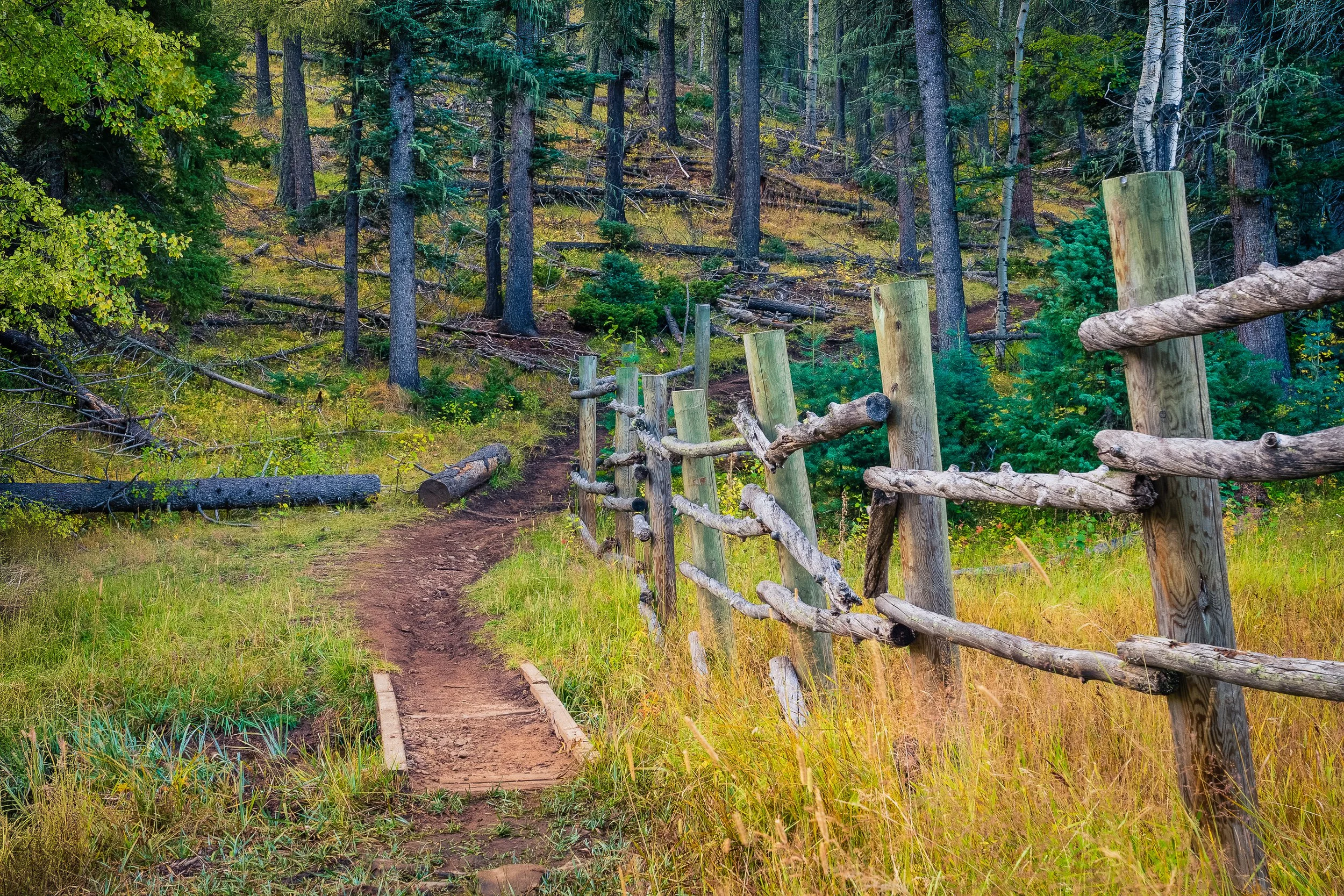
Three lines converge here, not two — the dirt trail curving in from the left, the buck-rail fence running the length of the frame, and a third, quieter line: the thinned, cleared understory of active fire mitigation work climbing the hillside beyond. All three point toward the same deeper stand of forest, turning what could read as a simple trailhead shot into something closer to triangulation — multiple paths the eye can take, all arriving at the same place.
The trail is the Elliot Barker Trail, climbing into National Forest above Angel Fire, New Mexico, named for Elliott S. Barker — the state's first game warden, and the man credited with finding the orphaned bear cub in 1950 that became Smokey Bear, the Forest Service's enduring symbol of fire prevention. That history sits quietly underneath the image itself: this is land under active management, the thinned trees and cleared deadfall on the hillside a working record of exactly the kind of fire prevention Barker's name still stands for.
Aspen leaves at the upper left, just turning gold at their edges, frame the composition softly against the darker stand of pine behind them — a small, unforced border rather than a hard crop edge.
This sits closer to Eliot Porter's intimate color forest studies than to grand landscape tradition, with the human-built fence and the visibly managed hillside both doing what Andrew Wyeth's structures often do — marking a place shaped by use and care, not left entirely to itself.
Design & Styling
The warm greens and early gold tones make this a natural fit for mountain homes, lodges, and rustic-modern interiors — a grounded complement to spaces already built around wood, stone, and the outdoors.
Curated Pairings
For the same Angel Fire location: Pair with Where the Water Waited, photographed in the same corner of New Mexico.
For a different side of the same place: Complement with Shovel Racer - Angel Fire, a human-presence counterpoint to this quiet trail study.
Fine Art Presentation
Available as a signed fine art print on archival paper (framed or unframed), ChromaLuxe® Metal (gloss, semi-gloss, or matte), framed canvas, and acrylic. Paper holds the natural, slightly muted forest color especially well; for acrylic, TruLife low-glare acrylic is recommended.
Note: Custom and oversized photographic prints are available. Please contact the studio directly to discuss custom framing, matting, or specialized museum glass options.

Devil Canyon Overlook, Bighorn Canyon National Recreation Area, on the Wyoming-Montana border. From a thousand feet above, the Bighorn River makes its dramatic, serpentine turn through canyon walls layered in gold, rust, and deep shadow — a narrow ribbon of dark water cutting through rock that took millions of years to carve.
The composition takes full advantage of the overlook's vantage: sunlit cliff faces frame the canyon on both sides, drawing the eye down and back along the river's bend toward a hazy, distant mesa on the horizon. The contrast between the warm, weathered rock and the cool, still water is the picture's real subject — scale and silence, held together in one frame, a thousand feet above where the water actually moves.
Design & Styling
The warm gold and rust tones against deep shadow give this piece real presence in Southwestern and mountain-lodge interiors, as well as contemporary spaces looking for a landscape with real geological drama. Its scale and depth make it a strong candidate for a large-format placement where the canyon's full sweep has room to register.
Curated Pairings
For canyon continuity — "Into the Canyon", another piece finding scale and drama in canyon geology.
For canyon anticipation — "Where the Canyon Waits", sharing this piece's interest in the vastness of Western canyon country.
For silence and stone continuity — "Silence Under Shiprock", another Western landscape built on quiet scale and geological weight.
Fine Art Presentation
Given the strong tonal range between the sunlit cliffs and shadowed canyon depths, this piece is especially well suited to ChromaLuxe® Metal (gloss, semi-gloss, or matte) print, which will hold the contrast cleanly and add real depth to the rock texture, or an archival paper print for a softer, more traditional presentation. Framed and unframed options available on request.
Note: Custom and oversized photographic prints are available. Please contact the studio directly to discuss custom framing, matting, or specialized museum glass options.
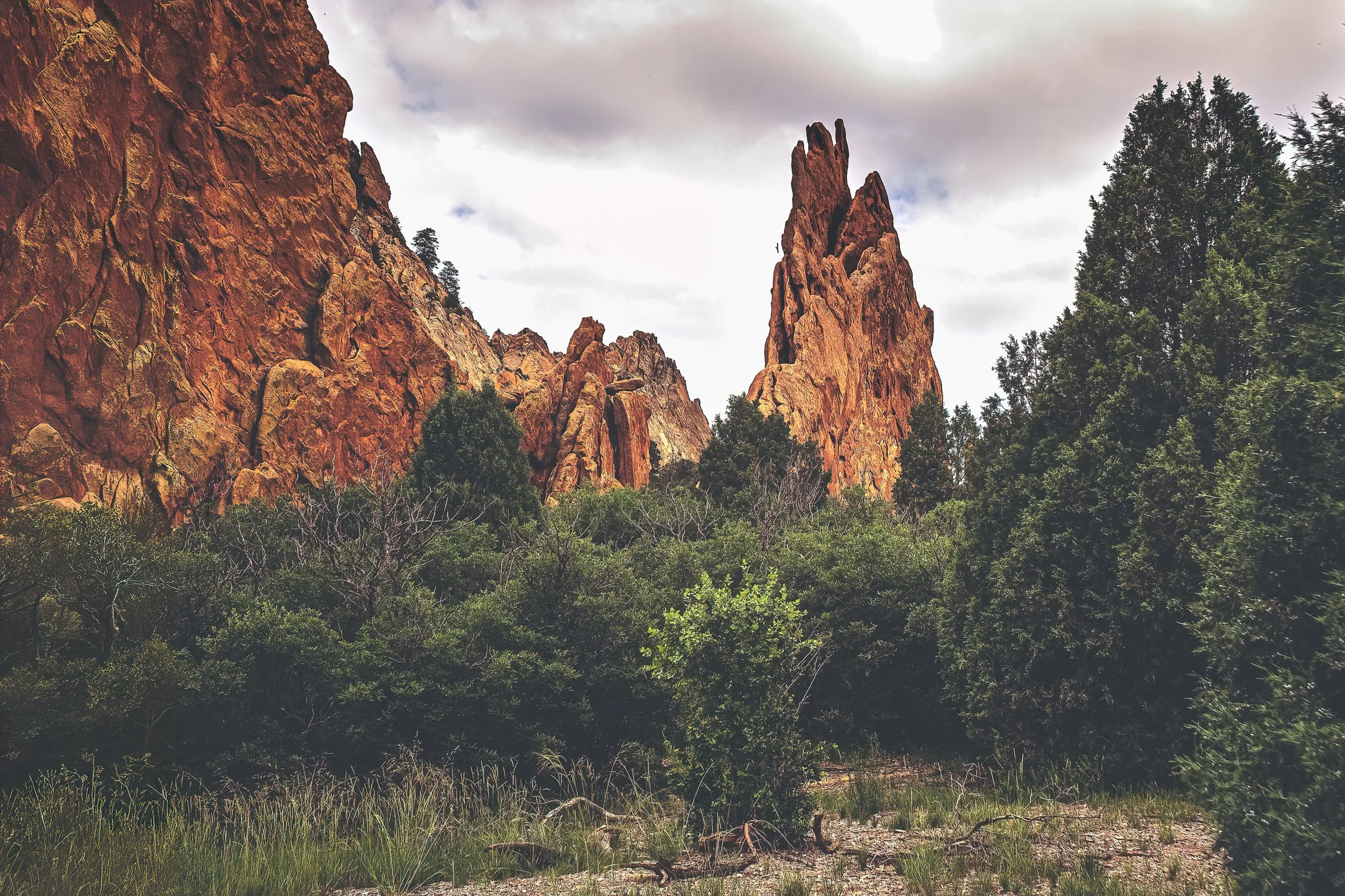
A weathered sandstone spire rises alone at Garden of the Gods, framed by a narrower formation to its left and a dense line of juniper and pine below. The sky sits heavy and diffuse overhead — soft, muted light rather than the postcard blue this location is usually photographed under, giving the whole scene a quieter, more atmospheric register than the typical Colorado Springs frame.
The composition works as a gateway: the massive cliff face on the left, the jagged secondary formations bridging the middle, and the isolated spire standing apart on the right, framed on both sides by dark tree lines that funnel the eye upward and through. There's a real sense of passage and enclosure here — not simply a record of the formation, but the experience of approaching it, of the land opening up ahead. A foreground of gravel, grass, and fallen branches grounds the frame in a specific standing place, giving the image genuine depth rather than a flattened, distant view.
This is a Western landscape treatment that resists over-dramatizing its sky or its light — the atmosphere stays honest to the day, letting the rock's own weathered texture and the spire's improbable, hand-like silhouette carry the piece.
Design & Styling
The warm sandstone tones against a muted, moody sky give this piece real presence in Southwestern and mountain-lodge interiors, as well as more contemporary spaces looking for a landscape with atmosphere rather than postcard clarity. It suits a large-format placement in a living room, office, or reading space where its slow, contemplative quality has room to be noticed over time.
Curated Pairings
For thematic continuity — "Before the Desert Opens", another piece built on the idea of a landscape opening ahead of the viewer.
For stone and silence continuity — "Between Stone and Silence", sharing this piece's interest in a single stone formation set against quiet, atmospheric sky.
For isolated formation continuity — "Standing Grace - Kayenta", another Southwestern rock formation treated with the same reverent, unhurried attention.
Fine Art Presentation
Given the warm rock tones and diffuse atmospheric sky, this piece is especially well suited to an archival paper print for a soft, painterly rendering of the light, or the new Canson BFK Rives fine art paper for an even more matte, textured presentation. A ChromaLuxe® Metal (gloss, semi-gloss, or matte) print is also available for a more contemporary, high-color treatment. Framed and unframed options available on request.
Note: Custom and oversized photographic prints are available. Please contact the studio directly to discuss custom framing, matting, or specialized museum glass options.

A single figure moves through snow between two towering, frost-rimed pines — small against the scale of the landscape, unhurried against the stillness of it. The high-key winter light flattens the scene toward white, leaving the trees' dark, textured silhouettes and the walker's blue jacket and red gaiter as the only real anchors in the frame.
The composition rests on a precise, almost mathematical relationship: the ratio between the figure's scale and the two pines' scale is the entire picture. Move the person a few feet closer or the trees a few feet farther and the quiet authority of the image collapses. This is not a generic outdoor-lifestyle photograph — it's a specific, considered study in how small a person becomes against enough winter and enough silence.
The near-monochrome palette, broken only by small warm accents of color, places this piece close to the restrained, architectural stillness of Hiroshi Sugimoto's seascapes, with a quiet, narrative solitude that also recalls Andrew Wyeth's winter fields. It rewards a slow look — the kind of patience the walker in the frame is clearly practicing.
Design & Styling
This piece's high-key, near-white palette makes it an unusually flexible interior choice — it reads as almost monochrome from a distance and adds color only on close inspection. It's a natural fit for ski lodge and mountain resort interiors, spa and wellness spaces, and hotel lobbies in alpine or winter-destination settings, where its quiet scale-and-silence quality matches the intended mood of the space. It also suits minimalist modern interiors with white or light neutral walls, where the piece can function almost as a graphic element until a viewer steps close enough to find the human figure within it.
Curated Pairings
For winter continuity — "Veil Over the Front Range", another Colorado winter mountain piece sharing this image's restrained, cold-season palette.
For scale and solitude — "Cathedral of Light", a vertical forest study working the same relationship between human scale and towering natural form.
For hospitality settings — "Where Winter Waited", a companion winter piece from the same Evergreen, Colorado area, well suited to the same lodge and resort interiors.
Fine Art Presentation
Given the high-key, near-monochrome palette, this piece is especially well suited to ChromaLuxe® Metal (gloss, semi-gloss, or matte) print, which will hold the subtle tonal gradation in the snow and sky without flattening it, or an archival paper print for a softer, more painterly rendering of the winter light. Acrylic face-mounting is also available for a glass-like presentation with added depth. Framed and unframed options available on request.
Note: Custom and oversized photographic prints are available. Please contact the studio directly to discuss custom framing, matting, or specialized museum glass options.
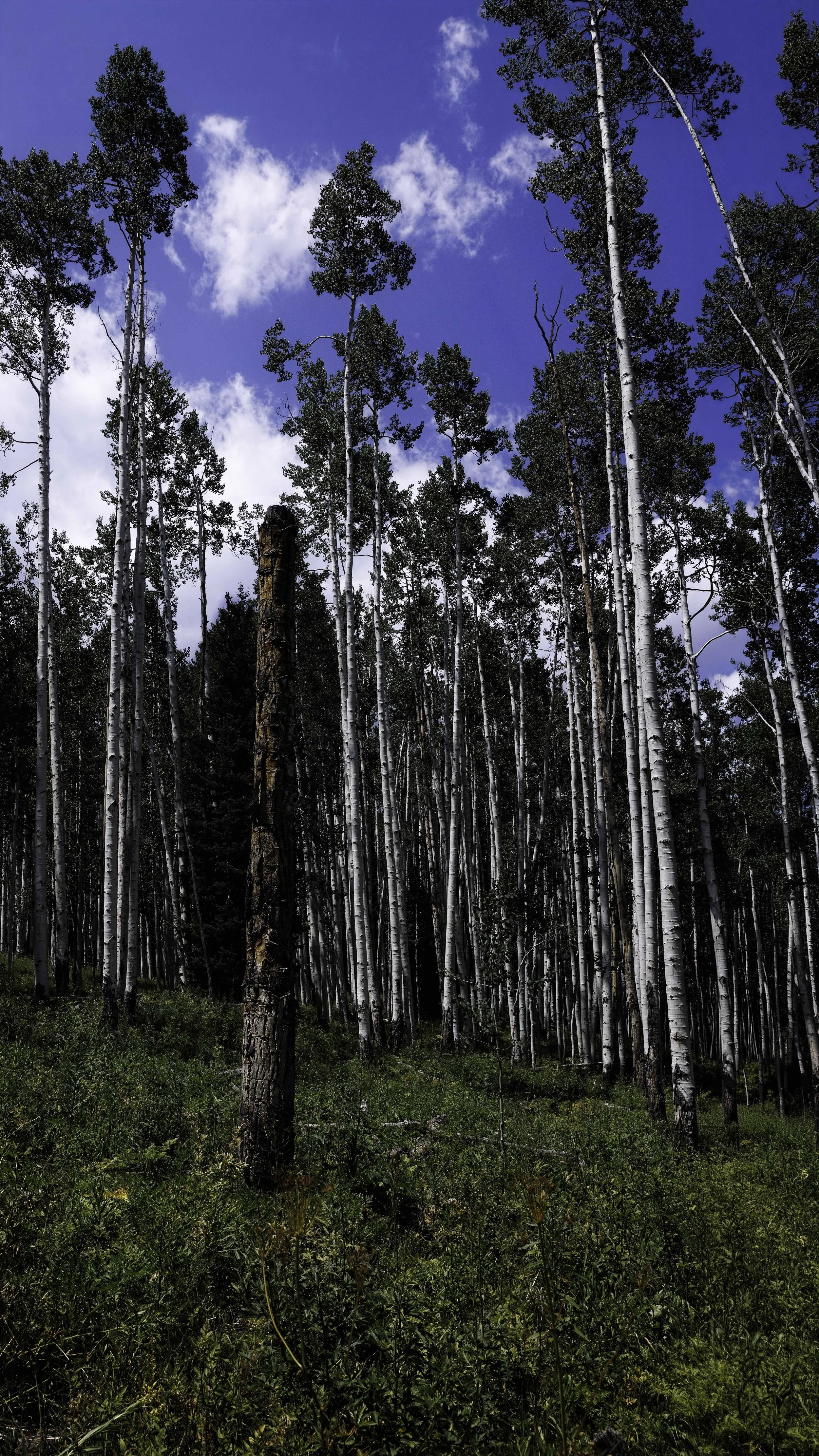
Totem finds a single blackened trunk standing upright among a dense grove of living aspens at Kebler Pass, its charred bark and stripped branches in stark contrast to the white, papery trunks surrounding it. Where the living aspens lean and sway in loose, natural rhythm, this one stands rigid and vertical — dark, weathered, marked by fire, and still standing long after whatever burned it has passed.
The composition leans into scale and repetition: dozens of pale trunks rising into a canopy of green against a saturated blue sky, with the charred totem planted almost dead-center, refusing to blend in. It's less a record of damage than a study in persistence — proof that something can be marked, hollowed, and blackened, and still hold its ground among the living.
Design & Styling
With its vivid blue sky and bold vertical rhythm, Totem works well as a statement piece in modern living spaces, mountain retreats, or offices looking for color and structure together. Its scale and contrast also suit larger wall placements where the repetition of trunks can read at full size.
Curated Pairings
For direct subject harmony, pair with Aspen Curtain, another vertical study of aspen trunks, here rendered through motion and color rather than stillness and contrast.
For monochrome counterpoint, complement with Reaching Sky Monochrome, treating the same aspen canopy in black and white with a different sense of scale.
For thematic echo, pair with The Last Sentinel, extending the idea of a single standing marker holding its ground within a larger landscape.
Fine Art Presentation
Available as a signed fine art print in ChromaLuxe® Metal (gloss, semi-gloss, or matte), acrylic, framed paper, canvas, and wood presentation formats. Metal or acrylic is recommended to hold the saturation of the blue sky against the charred trunk's deep blacks.
Note: Custom and oversized photographic prints are available. Please contact the studio directly to discuss custom framing, matting, or specialized museum glass options.

The Long Goodbye finds a single bare tree standing alone beside a gravel road outside Taos, New Mexico, its branches gesturing upward into a vast, layered sunset sky. For thirty years this tree marked the entrance and exit to town, a quiet fixture known locally as the Hello and Goodbye Tree — until a storm brought it down. This photograph, made not long before, has become something more than a landscape study: a record of a landmark that no longer stands.
The composition leans into stillness and scale rather than drama. A gravel road enters from the lower right, the tree's branches reach back to the left, and a warm diagonal band of cloud sweeps in from the upper left — three quiet lines of motion converging on a single point, with a weathered mailbox standing sentinel nearby as the only other sign of human presence. The vastness of the sky is not empty space to be filled; it is the subject, with the tree as a single, spare gesture within it.
The image carries a deliberate nod to Andrew Wyeth's muted American realism — restraint over spectacle, a quiet character study of the land rather than a dramatic vista. The title borrows its cadence from Raymond Chandler, whose novel of the same name concerns farewells that linger far longer than expected. Thirty years of standing watch, and one long, slow goodbye.
Design & Styling:
The Long Goodbye suits quiet residential spaces, reading rooms, and offices seeking a contemplative Southwest presence, as well as hospitality and wellness settings drawn to restrained, atmospheric color over bold statement pieces. Its wide panoramic format make it especially well suited to a long wall, hallway, or above a low console or headboard.
Curated Pairings:
For narrative harmony, pair with The Last Sentinel, continuing the theme of a solitary landmark standing watch over the land.
For compositional harmony, complement with Where the Sky Wanders, another study built around vast sky as the true subject of the frame.
For thematic harmony, pair with A Place Where Weather Waits, extending the quiet, Wyeth-adjacent study of the rural American West.
Fine Art Presentation:
Available as a signed fine art print in ChromaLuxe® Metal (gloss, semi-gloss, or matte), acrylic, framed paper, canvas, and wood presentation formats. Metal or acrylic is recommended to hold the depth of the sunset gradient and the tree's silhouette detail.
Note: Custom and oversized photographic prints are available. Please contact the studio directly to discuss custom framing, matting, or specialized museum glass options.

Some forests turn every line toward the light. Reaching Sky (Monochrome) looks straight up from the forest floor in a Colorado aspen grove, where towering pale trunks sweep in from every edge of a tall vertical frame and converge on a single sunburst breaking through the canopy.
Rendered in black and white, the image becomes an exercise in tonal separation: bright bark against dark foliage, sunlit fronds against black shadow, one star of light against the sky. The eye starts in the ferns at the bottom, where the light catches every frond, climbs the leaning trunks as they bow inward, and arrives at the sun at the center. A single bright trunk slashes diagonally across the top of the frame, and a bank of cloud in the upper right keeps the sky from feeling sealed. The ultra-wide vantage bends the trunks into an arch and closes the canopy in at the corners.
The luminous aspen bark and deep tonal range recall Ansel Adams's aspen studies, while the patient, quietly geometric view has something of Josef Sudek's attention — a study in scale, convergence, and the quiet architecture of a living forest.
Design & Styling
The strong converging lines and deep tonal range make Reaching Sky (Monochrome) well suited to wellness spaces, spas, and biophilic-design interiors, as well as mountain-view residences, lodges, and hospitality corridors. Its tall vertical composition suits stairwells, entryways, and tall wall spaces particularly well, and in black and white it sits comfortably with any color scheme.
Curated Pairings
To build a wall around Colorado light and forest, consider these companion pieces:
For Colorado high-country continuity: Pair with Before Guanella Pass, connecting forest and mountain within the same regional story.
For canopy and forest continuity: Complement this piece with The Quiet Cathedral, building a series around the same aspen grove.
For dramatic light continuity: Pair with Silver Thread, Silent Valley, connecting two pieces built around a break of sunlight.
Fine Art Presentation
Available as a signed fine art print on ChromaLuxe® Metal (gloss, semi-gloss, or matte), Glossy Anti-Glare Acrylic (TruLife), canvas, wood, and archival paper (framed or unframed). Framed archival paper is the recommended presentation: it suits the classic tonal range of a black-and-white aspen study and keeps the fern and bark detail smooth. ChromaLuxe® Metal is the alternative for the luminous sunburst and the deepest blacks, and wood is a natural fit for the subject, where the grain of the print echoes the trunks.
Note: Custom and oversized photographic prints are available. Please contact the studio directly to discuss custom framing, matting, or specialized museum glass options.

Some forests pull the eye upward and keep it there. Reaching Sky stands inside a Colorado aspen grove where towering trunks rise from every direction and converge toward a single point of light — the place where the sun breaks through the canopy above, beneath a blue sky and against rich greens.
Two trunks cross overhead like a natural gateway, framing the sky beyond, while a soft bank of cloud drifting through the blue balances the frame's upward pull. Below, ferns catch the filtered light on the forest floor, so the eye climbs from the green of the understory up the trunks and out through the gateway to the light. It is a study in scale, convergence, and the quiet architecture of a living forest.
Design & Styling
The strong converging lines and rich greens make Reaching Sky well suited to wellness spaces, spas, and biophilic-design interiors, as well as mountain-view residences and lodges. Its dynamic vertical composition suits stairwells, entryways, and tall wall spaces particularly well.
Curated Pairings
To build a wall around Colorado light and forest, consider these companion pieces:
For Colorado high-country continuity: Pair with Before Guanella Pass to connect forest and mountain within the same regional story.
For canopy and forest continuity: Complement this piece with The Quiet Cathedral to build a series around the same aspen grove.
For dramatic light continuity: Pair with Silver Thread, Silent Valley to connect two pieces built around a break of sunlight.
Fine Art Presentation
Available as a signed fine art print on ChromaLuxe® Metal (gloss, semi-gloss, or matte), Glossy Anti-Glare Acrylic (TruLife), canvas, wood, and archival paper (framed or unframed). ChromaLuxe® Metal is the recommended presentation for the fine detail in the aspen bark and fern texture. Wood is the natural alternative for this subject, where the grain of the print echoes the trunks, and canvas offers a softer, more organic reading suited to lodge and spa interiors.
Note: Custom and oversized photographic prints are available. Please contact the studio directly to discuss custom framing, matting, or specialized museum glass options.

Sculpted in Silence is one of four treatments of a single capture at Great Sand Dunes National Park, Colorado — stripped entirely to black and white, in the formal, sculptural register of Edward Weston. Where Weston found the nude and the pepper equally capable of pure abstract form, this treatment finds the same quality in the dunes themselves: line, curve, shadow, and light reduced to their essential structure.
Color and narrative both fall away here, leaving only tonal contrast and the dune ridgelines' own sculptural geometry — wind-carved curves that read as much like a study of form as a document of place. It's the most abstracted of the three versions, closer to a study in shape and light than a conventional landscape.
Design & Styling
With its high-contrast black-and-white treatment and sculptural composition, Sculpted in Silence suits contemporary and minimalist interiors, executive offices, and gallery-style installations where a bold, formally abstract landscape is preferred over color or narrative detail.
Curated Pairings
This piece is one of four treatments of the same Great Sand Dunes capture — consider displaying it alongside its companions:
The same dunes, in motion: Pair with Where Light Runs Wild, the same capture rendered in a warmer, Haas-influenced register.
The same dunes, held still: Complement with The Weight of Sand, the muted Wyeth treatment of the same landscape.
The same dunes, unaltered: Complete the set with The Shape of Silence (Monotone), the straight black-and-white record of the same dunes, before any homage treatment.
The same dunes, unaltered: Complete the set with The Shape of Silence (Monotone), the straight black-and-white record of the same dunes, before any homage treatment.
Fine Art Presentation
Available as a signed fine art print in ChromaLuxe® Metal (gloss, semi-gloss, or matte), framed paper, framed canvas, and acrylic presentation formats. To preserve the full tonal range and fine contrast, ChromaLuxe® Metal presentation is especially recommended.
Note: Custom and oversized photographic prints are available. Please contact the studio directly to discuss custom framing, matting, or specialized museum glass options.

The Weight of Sand is one of four treatments of a single capture at Great Sand Dunes National Park, Colorado. Where a companion version leans into color and motion, this one holds still — a muted, restrained palette in the register of Andrew Wyeth, where the dunes carry the same quiet emotional weight Wyeth found in weathered barns and empty fields.
The color here is deliberately subdued: sand rendered closer to bone and ash than gold, the ridgelines reading as structure and endurance rather than spectacle. It's the most narrative of the three versions — less a landscape to admire and more a place that seems to hold a story, told slowly, in the dry, patient language Wyeth used for the American land.
Design & Styling
With its muted, restrained palette, The Weight of Sand suits interiors seeking quiet gravity — traditional and transitional residential spaces, healthcare and wellness environments, and any setting where a subdued, contemplative Western landscape is preferred over a bold color statement.
Curated Pairings
This piece is one of four treatments of the same Great Sand Dunes capture — consider displaying it alongside its companions:
The same dunes, in motion: Pair with Where Light Runs Wild, the same capture rendered in a warmer, Haas-influenced register.
The same dunes, in form: Pair with Sculpted in Silence, the monochrome Weston treatment of the same landscape.
The same dunes, unaltered: Complete the set with The Shape of Silence (Monotone), the straight black-and-white record of the same dunes, before any homage treatment.
Fine Art Presentation
Available as a signed fine art print in ChromaLuxe® Metal (gloss, semi-gloss, or matte), framed paper, framed canvas, and acrylic presentation formats. To preserve the subtlety of the muted palette, framed archival paper or low-glare Acrylic presentation is recommended.
Note: Custom and oversized photographic prints are available. Please contact the studio directly to discuss custom framing, matting, or specialized museum glass options.
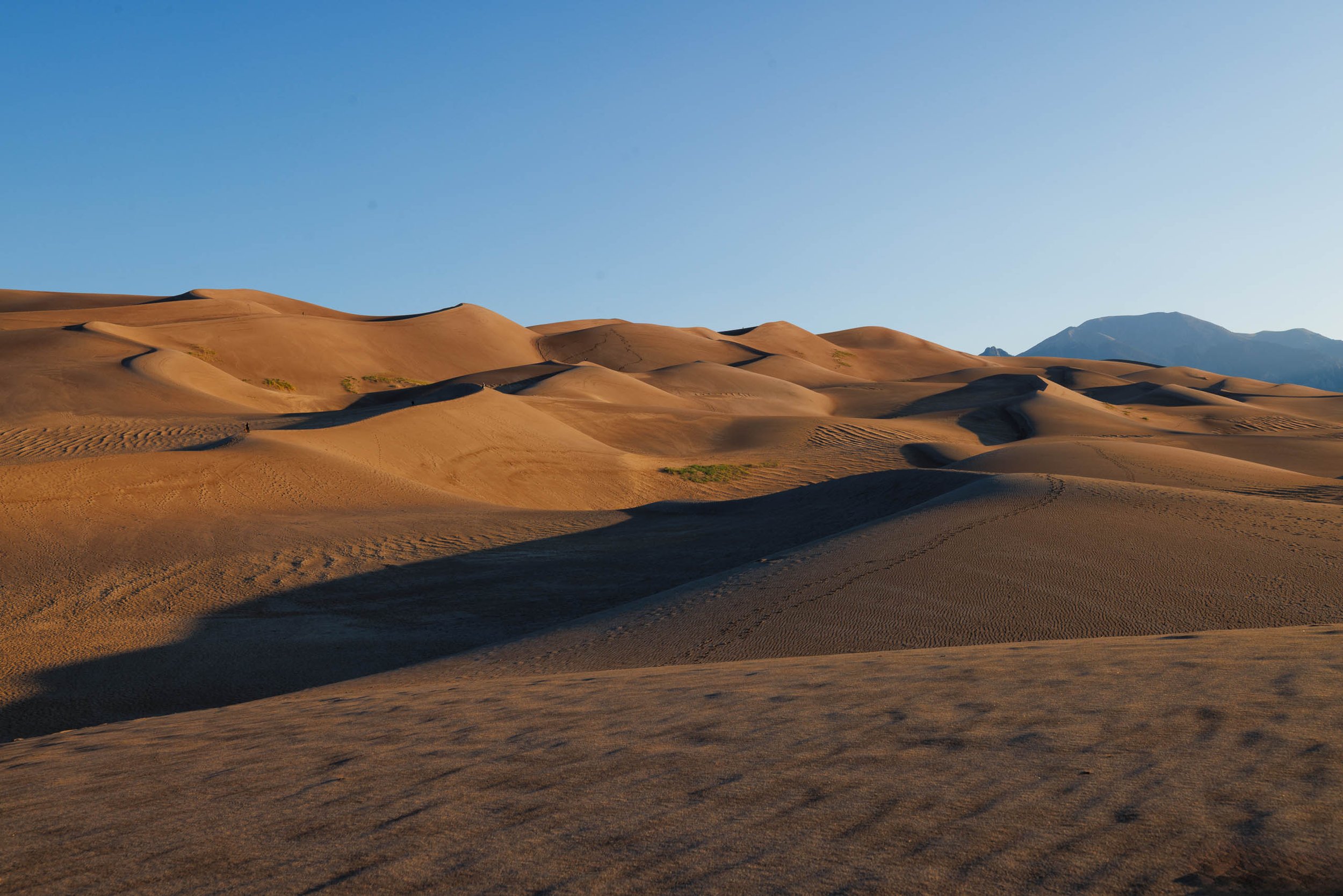
Where Light Runs Wild is one of four treatments of a single capture at Great Sand Dunes National Park, Colorado — the tallest dunes in North America, rising against the Sangre de Cristo range. This version leans into color: warm, saturated light moving across the ridgelines in the painterly, kinetic register of Ernst Haas, where light itself becomes the subject as much as the landscape it falls across.
Rather than treating the dunes as a static desert form, the color and light here suggest motion — the way wind constantly reshapes the ridgelines, and the way late light turns sand into something closer to flame or water than solid ground. It's the most vivid and energetic of the three versions, built on warmth and movement rather than the stillness that defines the rest of Robert's Western Silence work.
Design & Styling
With its warm, saturated palette, Where Light Runs Wild works well in spaces wanting a bold, energetic Western landscape — contemporary residences, hospitality lobbies, and corporate spaces seeking color and movement rather than a purely restrained, quiet piece.
Curated Pairings
This piece is one of four treatments of the same Great Sand Dunes capture — consider displaying it alongside its companions:
The same dunes, held still: Pair with The Weight of Sand, the same capture rendered in a quieter, Wyeth-influenced register.
The same dunes, in form: Pair with Sculpted in Silence, the monochrome Weston treatment of the same landscape.
The same dunes, unaltered: Complete the set with The Shape of Silence (Monotone), the straight black-and-white record of the same dunes, before any homage treatment.
Fine Art Presentation
Available as a signed fine art print in ChromaLuxe® Metal (gloss, semi-gloss, or matte), framed paper, framed canvas, and acrylic presentation formats. To preserve the warmth and saturation of the light, ChromaLuxe® Metal or Acrylic presentation is recommended.
Note: Custom and oversized photographic prints are available. Please contact the studio directly to discuss custom framing, matting, or specialized museum glass options.
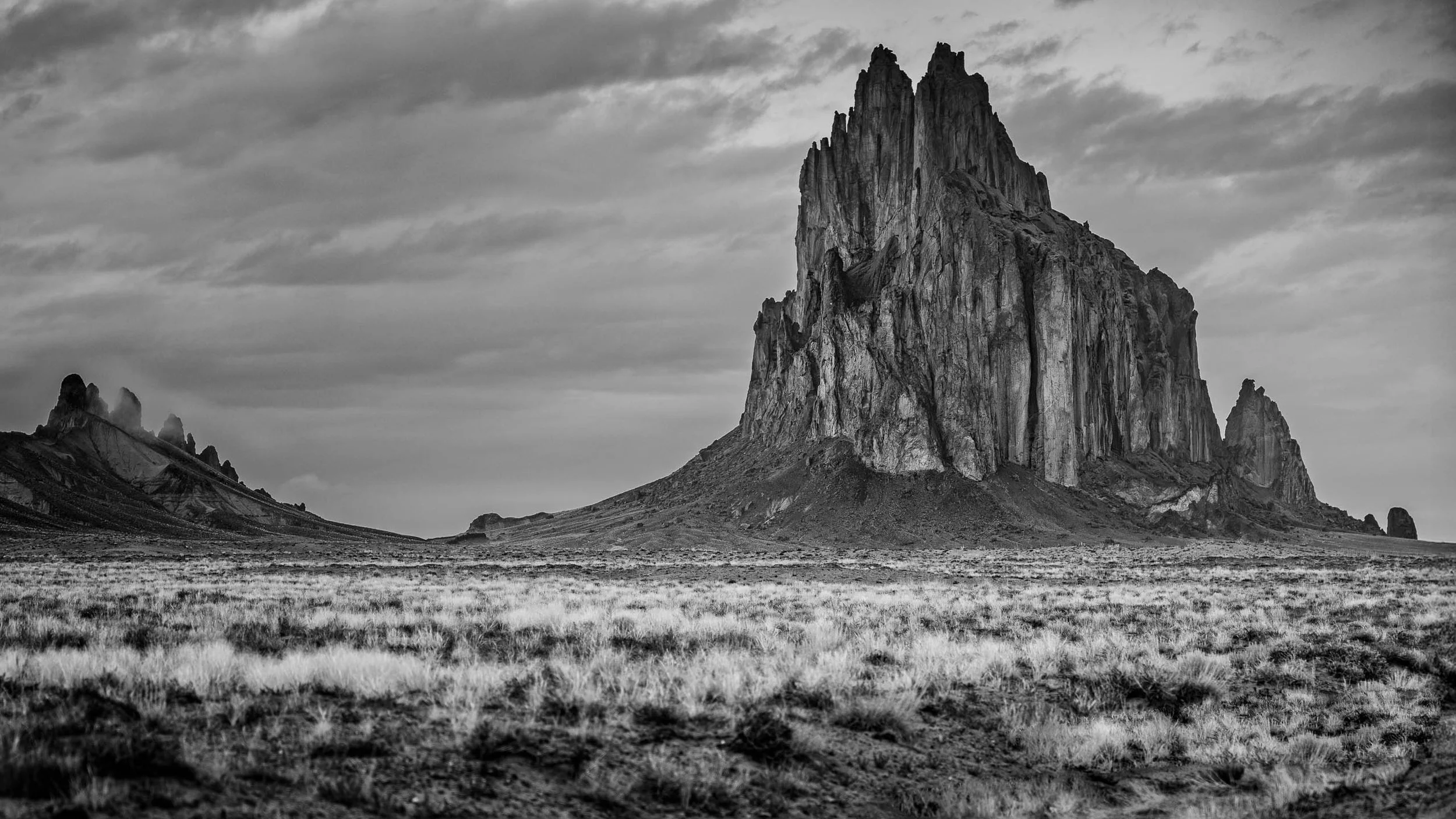
Rock with Wings is a monumental black & white study of Shiprock, the volcanic spire that rises nearly 1,600 feet above the high desert plain of northwestern New Mexico. Photographed from a low vantage point across open grassland, the image lets the formation's jagged, columnar peaks command the frame against a heavy, textured sky — a composition built in the spirit of Ansel Adams's zone-system landscapes, where tonal control does as much storytelling as the subject itself.
The title honors the formation's Navajo name, Tsé Bit'a'í, meaning "rock with wings." In Navajo tradition, the formation is said to be the remains of a great bird that carried the Navajo people from a distant, dangerous land to their present homeland, turning to stone upon landing. Shiprock remains a sacred site to the Navajo Nation, and this photograph was made respectfully, from public land, without approaching or climbing the formation.
Extensive work in the darkroom-equivalent digital process — a graduated tonal pull through the sky, targeted structure and texture enhancement on the rock face, and careful black-point control — gives the print the kind of depth and presence that rewards close viewing at large scale, while the foreground grassland grounds the formation's immensity in a human sense of place.
Design & Styling
With its bold graphic silhouette and restrained monochrome palette, Rock with Wings works especially well as a large-format anchor piece in executive offices, galleries, and residential spaces with a Southwest or contemporary Western sensibility. Its scale and tonal depth make it a strong candidate for oversized statement placement.
Curated Pairings
To create a cohesive gallery wall, consider these companion pieces from the Western Silence collection:
Pair with Enduring Silence, a misty, purple-toned color study of the same formation, for a striking two-treatment presentation of Shiprock in a single collection.
For tonal harmony: Complement with After the Storm Passed, continuing the exploration of this landmark's texture and scale.
For regional context: Pair with Where the Desert Meets Night, extending the Western Silence collection's exploration of iconic Southwest desert landmarks into a nocturnal register.
Fine Art Presentation
as a signed fine art print in ChromaLuxe® Metal (gloss, semi-gloss, or matte), acrylic, framed and unframed archival paper, and canvas presentation formats. Given the tonal range built into this edit, ChromaLuxe® Metal is highly recommended to preserve the deep blacks and highlight separation across the rock face and sky.
Note: Custom and oversized photographic prints are available. Please contact the studio directly to discuss custom framing, matting, or specialized museum glass options.

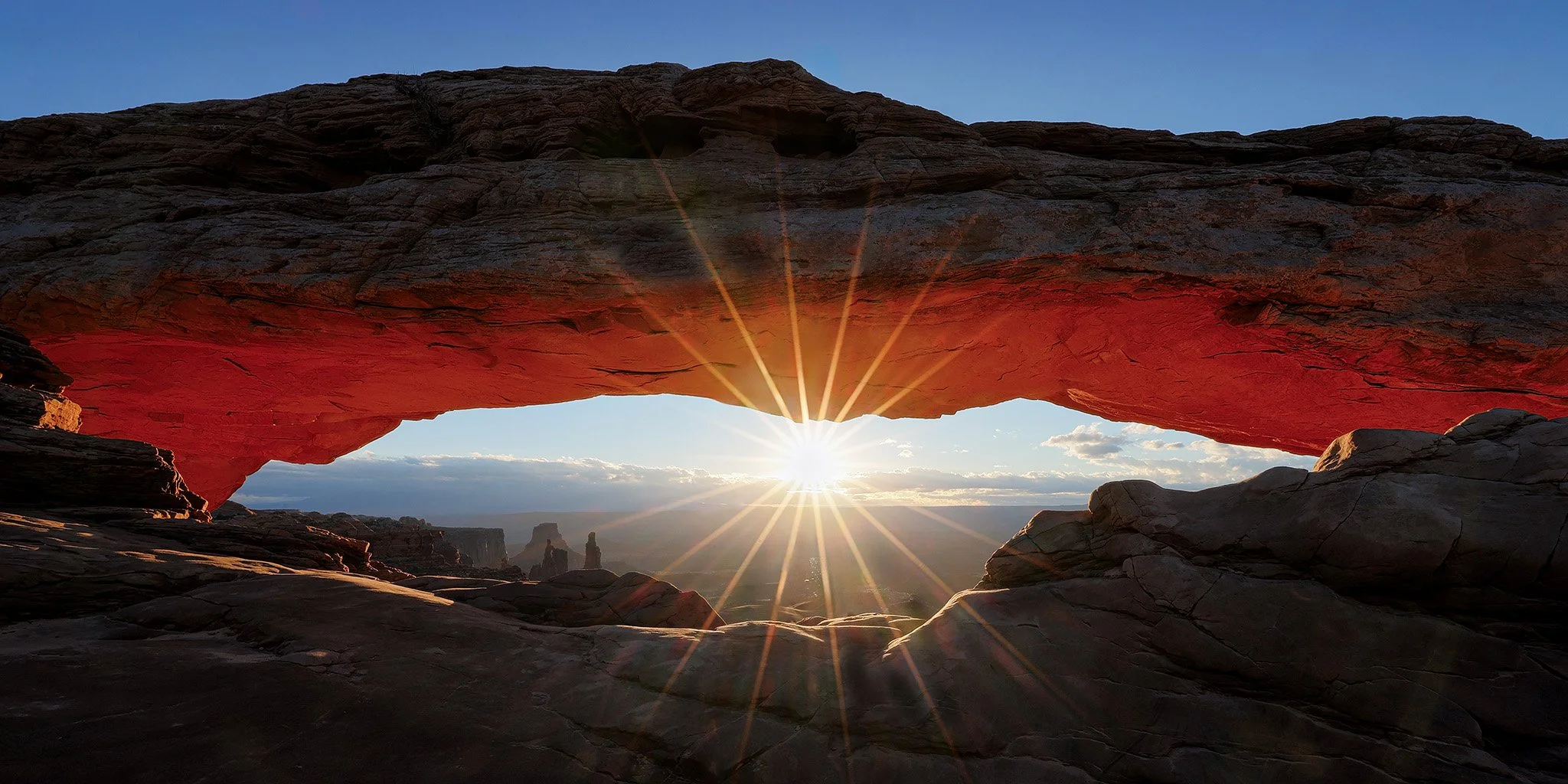
The First Aperture is a study of revelation, scale, and the relationship between earth and sky. Photographed at Mesa Arch in Canyonlands National Park, Utah, the image uses one of the Southwest's most iconic natural formations as a frame for the vast landscape beyond. In this panoramic presentation, the wider composition emphasizes the immense scale of the canyon country, allowing the viewer to experience the arch not merely as a subject, but as a gateway into the landscape itself.
The arch functions as nature's first lens—an opening through which light, distance, and perspective converge. Beyond it, layers of canyon walls, mesas, and open sky stretch toward the horizon, revealing the immense geological forces that shaped the Colorado Plateau over millions of years. The panoramic format enhances this sense of space, encouraging the eye to travel across the landscape and experience its breadth and depth.
Drawing inspiration from the color sensibilities of Ernst Haas and the grand traditions of Western landscape photography, The First Aperture explores the idea that every landscape offers a way of seeing. The photograph celebrates not only the beauty of the Southwest, but the act of discovery itself—the moment when a familiar view becomes something larger, more expansive, and more profound.
Design & Styling
With its sweeping composition, warm sandstone tones, and extraordinary depth, The First Aperture suits conference rooms, executive offices, hospitality spaces, and residences with a long wall, above a sofa, credenza, or fireplace, where the panoramic format can fully unfold.
Curated Pairings
To create a cohesive gallery wall, consider these Southwestern companions that share themes of scale, discovery, and the American West:
For a complementary focal point: Pair with Before the Night Speaks, to explore the canyon country through both daylight and the emerging night sky.
For tonal harmony: Complement the monumental scale of this piece with Enduring Silence, where another iconic Southwestern landform reflects the vastness of geological time.
For the approach: Pair with Before the Desert Opens, the road approaching Moab beneath towering summer clouds, the way in to the same canyon country this frame looks out over.
Fine Art Presentation
Available as a signed fine art print on ChromaLuxe® Metal (gloss, semi-gloss, or matte), Glossy Anti-Glare Acrylic (TruLife), canvas, wood, and archival paper (framed or unframed). ChromaLuxe® Metal is the recommended presentation at panoramic sizes: it holds the fine detail across the full width of the canyon country. Canvas is the warmer alternative, its texture suiting the sandstone palette, and framed archival paper gives a quieter, more traditional read for a study or gallery hallway.
Note: Custom and oversized photographic prints are available. Please contact the studio directly to discuss custom framing, matting, or specialized museum glass options.

Held in Balance captures one of the Southwest's most improbable landmarks at the quiet edge of day. Balanced Rock rises in silhouette against a dusk sky streaked with pink-tinged clouds, its massive boulder resting on a narrow sandstone pedestal in a balance that has held for millennia. A distant figure, small against the formation's scale, offers a quiet sense of just how large this quiet giant really is.
The warm alpenglow catching the rock's texture contrasts with the cool blue of the fading sky, giving the formation a sculptural, almost breathing presence. It's a study in tension and stillness — an enormous weight held in place by the smallest possible point of contact.
Design & Styling
With its warm desert palette and iconic subject, Held in Balance works well in Southwest-inspired interiors, residences, offices, and hospitality spaces looking for a recognizable sense of place. Its calming dusk tones also make it a strong fit for wellness centers, waiting rooms, and other spaces where a familiar, non-jarring landscape is welcome.
Curated Pairings
To build a wall exploring the sandstone formations of Arches National Park, consider these companion pieces:
For a shared location: Pair with Breath of Stone, Arches, another quiet study of sandstone form within the same park.
For formation and silence: Complement with Between Stone and Silence, a study of Turret Arch that shares this piece's restrained, contemplative mood.
For day-to-night contrast: Round out the wall with Where the Sky Breaks, a night view of Turret Arch under the Milky Way — a striking contrast to this piece's dusk silhouette.
Fine Art Presentation
Available as a signed fine art print in ChromaLuxe® Metal (gloss, semi-gloss, or matte), framed paper, framed canvas, and acrylic presentation formats. To preserve the warm texture of the sandstone against the cool dusk sky, ChromaLuxe® Metal or Acrylic presentation is recommended.
Note: Custom and oversized photographic prints are available. Please contact the studio directly to discuss custom framing, matting, or specialized museum glass options.
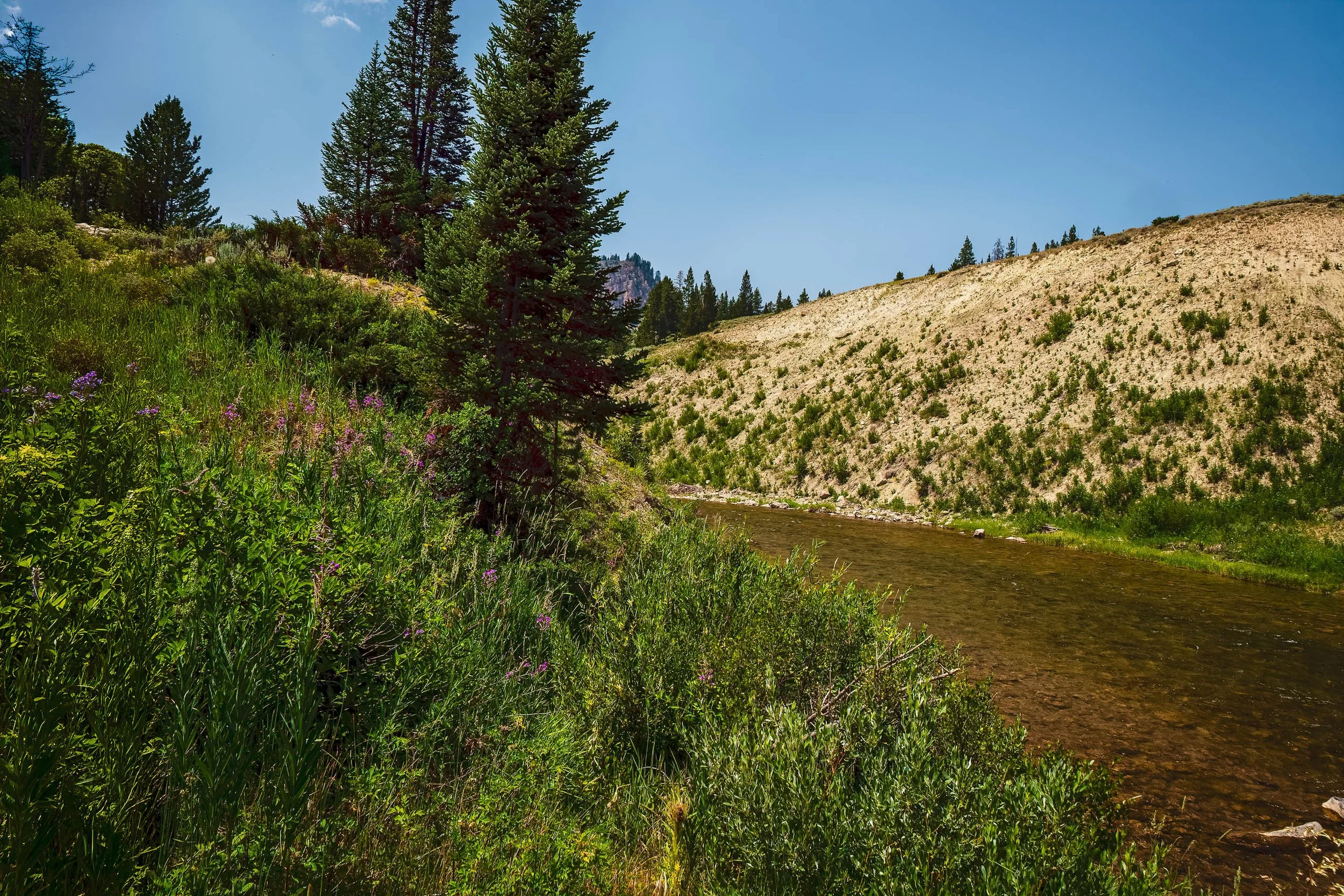
Where the Water Runs Clear follows a backcountry creek through a Yellowstone meadow, its amber-toned water clear enough to reveal the stones resting beneath the surface. Tall pines frame the foreground alongside blooming fireweed, their purple spikes catching the eye against deep summer green. Beyond, a sandy hillside rises toward a distant rock outcrop under an open blue sky.
The composition layers foreground detail — wildflowers, grasses, pine trunks — against the quiet middle distance of the creek and hillside, giving the frame both intimacy and depth. It's Yellowstone at its most unguarded: no geysers, no wildlife, just a quiet bend in a stream on a clear summer day.
The picture is built in layers. Fireweed and pine trunks sit close to the lens, the creek bends through the middle ground, and a sandy hillside rises toward a rock outcrop under an open blue sky. The eye enters at the purple fireweed, follows the curve of the creek, and climbs the slope, a path that takes in the whole meadow without ever leaving the foreground behind.
The color story is complementary and easy to read: the purple of the fireweed against deep summer green, and the amber of the water against the blue of the sky. Clear water is the quiet detail that rewards a longer look, since the stones beneath the surface can be picked out one by one. It is a Yellowstone frame without a landmark, which is the point.
Design & Styling
With its calming greens, clear water, and natural light, Where the Water Runs Clear works well in wellness centers, waiting rooms, residences, and offices seeking a peaceful, restorative presence. Its universally appealing subject also makes it a strong fit for hospitality and healthcare settings.
Curated Pairings
To build a wall exploring Yellowstone and quiet mountain water, consider these companion pieces:
For a shared location: Pair with Approach to Yellowstone, another view from the same park.
For a shared theme: Complement with Where the Water Rests, echoing this piece's quiet focus on still and moving water.
For mountain water: Round out the wall with Still Water, Small Boat, another Colorado mountain-water scene with a similarly calm, restorative mood.
Fine Art Presentation
Available as a signed fine art print in ChromaLuxe® Metal (gloss, semi-gloss, or matte), framed paper, framed canvas, and acrylic presentation formats. To preserve the natural color balance and fine detail in the pines and wildflowers, ChromaLuxe® Metal or Acrylic presentation is recommended.
Note: Custom and oversized photographic prints are available. Please contact the studio directly to discuss custom framing, matting, or specialized museum glass options.
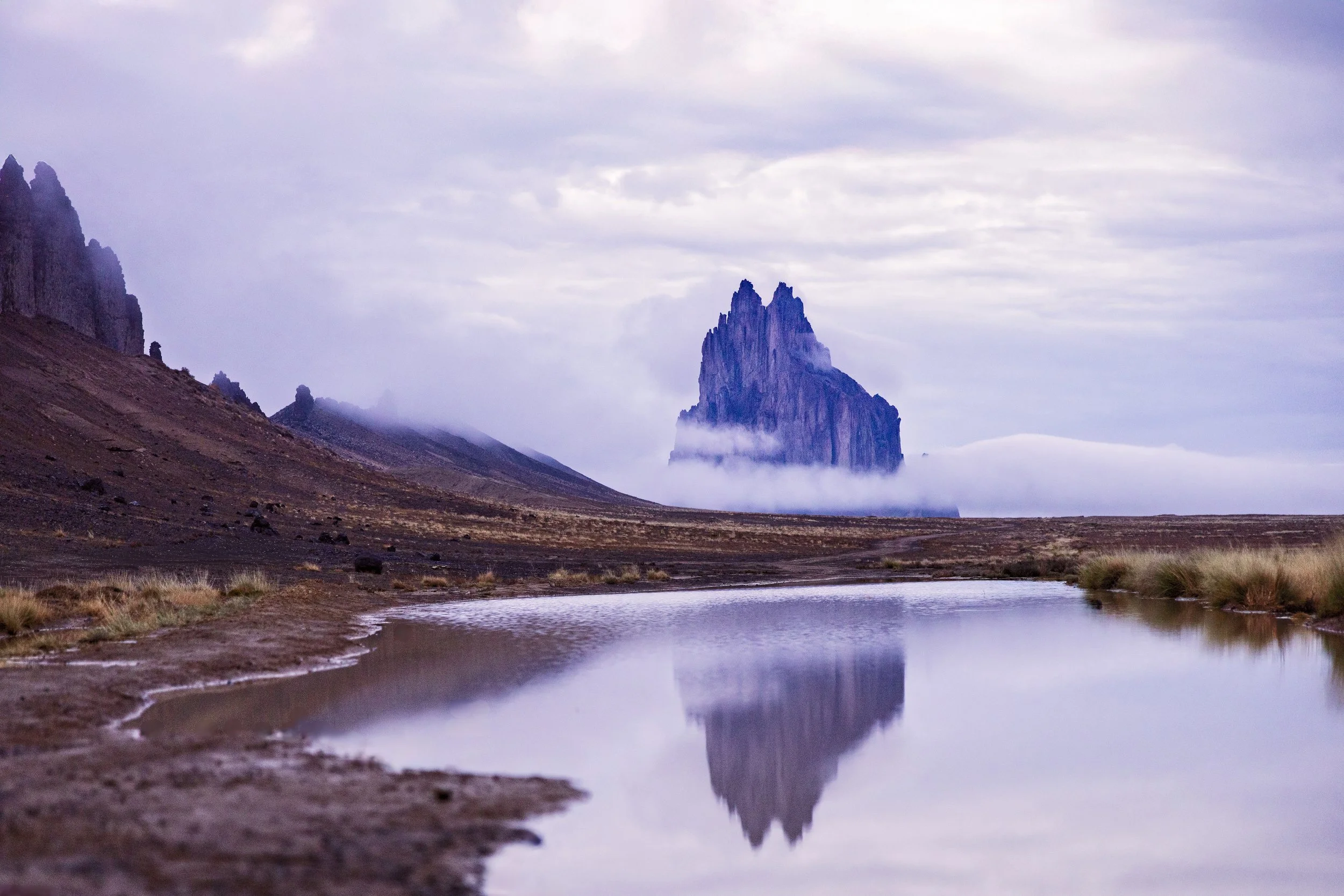
Silence Under Shiprock is a study in solitude, weather, and enduring presence. Photographed during low clouds and steady rain near Shiprock, New Mexico, this image captures one of the American Southwest's most iconic landforms under conditions rarely associated with desert landscapes. Rather than emphasizing grandeur or scale, the photograph focuses on atmosphere—the quiet tension between stone, sky, and weather as the volcanic monolith emerges from layers of drifting cloud.
Drawing inspiration from the contemplative landscapes of Andrew Wyeth and the atmospheric color sensibilities of Ernst Haas, the work explores a fleeting moment when the desert appears softened by moisture and silence. The subdued palette, muted earth tones, and veiled horizon create a sense of timelessness, inviting viewers to slow down and experience the landscape not as spectacle, but as presence.
Design & Styling
The restrained color palette and atmospheric mood make Silence Under Shiprock particularly well suited for healthcare environments, hospitality spaces, executive offices, and contemporary residential interiors. Its quiet visual rhythm provides a calming focal point while maintaining a strong sense of place and scale. The image pairs especially well with natural materials, warm wood tones, stone surfaces, and minimalist architectural settings.
Curated Pairings
To create a cohesive gallery wall, consider these two Southwest companions that share a similar sense of atmosphere and stillness:
For a complementary focal point: Pair with Enduring Silence to continue the theme of iconic Southwestern landforms presented with a contemplative, almost spiritual sense of scale.
For tonal harmony: Complement the muted weather and subdued palette of this piece with Where the Morning Waited, which echoes the quiet relationship between landscape, reflection, and changing light.
Fine Art Presentation
Available as a signed fine art print in ChromaLuxe® Metal (gloss, semi-gloss, or matte), framed paper, framed canvas, and acrylic presentation formats. For this image, ChromaLuxe® Metal is particularly recommended, preserving the subtle tonal transitions within the clouds that could distract from the atmospheric quality of the scene. Framed fine art paper also presents beautifully, emphasizing the photograph's painterly character and quiet tonal range.
Note: Custom and oversized photographic prints are available. Please contact the studio directly to discuss custom framing, matting, or specialized museum glass options.
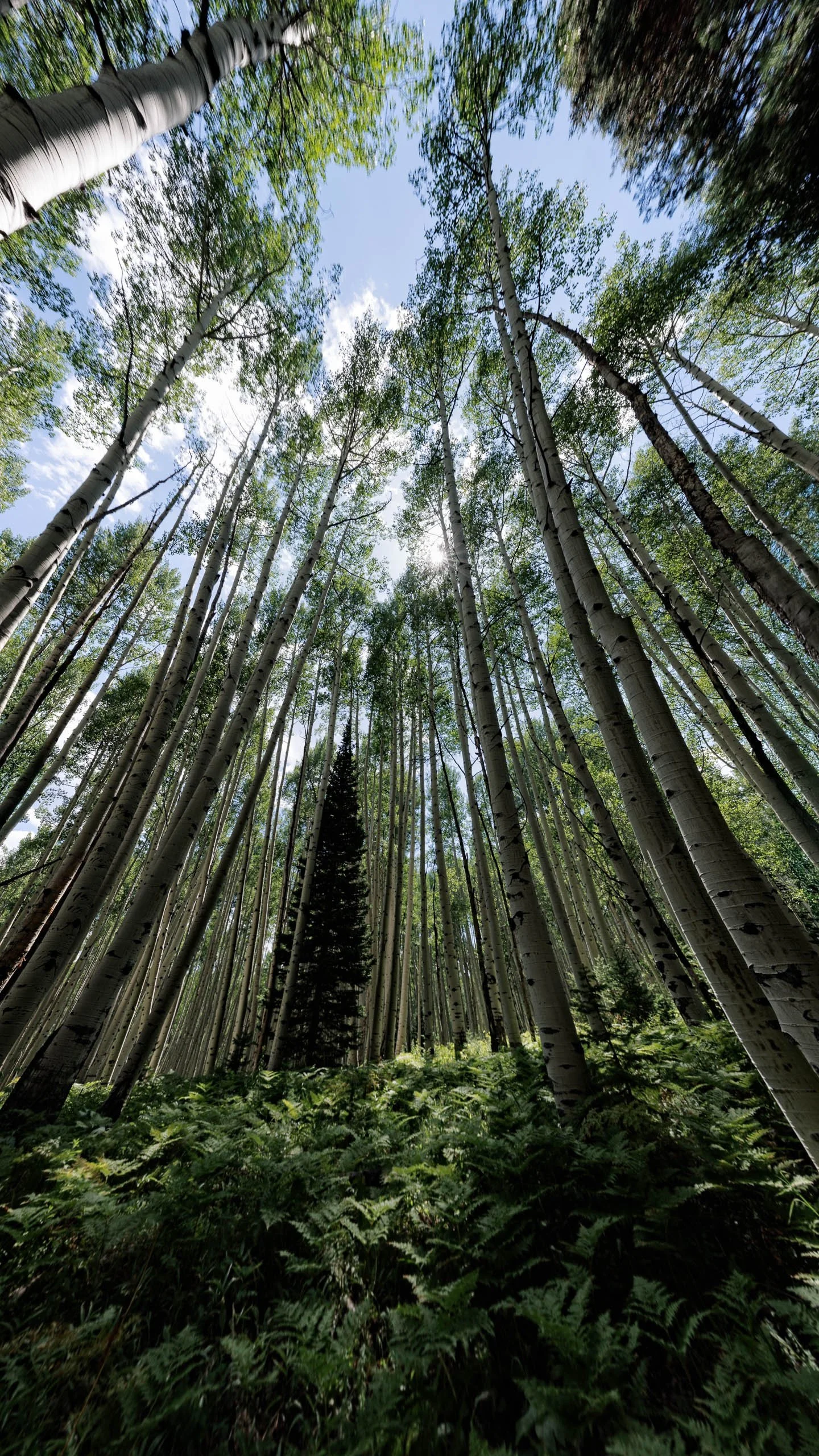
Towering white trunks rise on every side, converging toward a break in the canopy where sunlight breaks through a pale blue sky. At the center, standing apart from the pale birch and aspen around it, a single dark spire tree holds the frame — quiet, solitary, and unmoving. Below, a carpet of ferns catches the filtered light. The effect is less a forest than a sanctuary: vertical, hushed, and complete.
The trunks lean inward as they rise, converging toward a small opening of pale blue sky, and the single dark spire tree at the center is what keeps the picture from becoming pure pattern. Against so much white bark, one dark vertical reads instantly: it is the anchor, the pause, the point the eye returns to after wandering upward along the trunks.
The light is softer here than in Cathedral of Light: filtered rather than bursting through, so the ferns below hold a gentle glow instead of bright patches. The result is quieter and more symmetrical, a room rather than an event. Seen together, the two aspen-forest studies make a pair, one about a moment of sun and the other about stillness.
Design & Styling
The rich greens, natural texture, and strong vertical composition make this piece a natural fit for wellness spaces, spas, and biophilic-design interiors, as well as mountain-view residences and lodges. Its tall, converging lines suit stairwells, entryways, and other tall wall spaces particularly well.
Curated Pairings
For Colorado high-country continuity: pair with Before Guanella Pass to connect forest and mountain within the same regional story.
For botanical texture and detail: complement this piece with a selection from Botanical Studies to build a dialogue around natural pattern and close observation.
For dramatic light continuity: pair with Silver Thread, Silent Valley to connect two pieces built around a break of sunlight within darkness.
Fine Art Presentation
Available as a signed fine art print in ChromaLuxe® Metal (gloss, semi-gloss, or matte), acrylic, canvas, and archival paper. Metal or Acrylic is recommended to bring out the fine detail in the aspen bark and evergreen texture, while Canvas offers a softer, more organic interpretation suited to the subject.
Note: Custom and oversized photographic prints are available. Please contact the studio directly to discuss custom framing, matting, or specialized museum glass options.
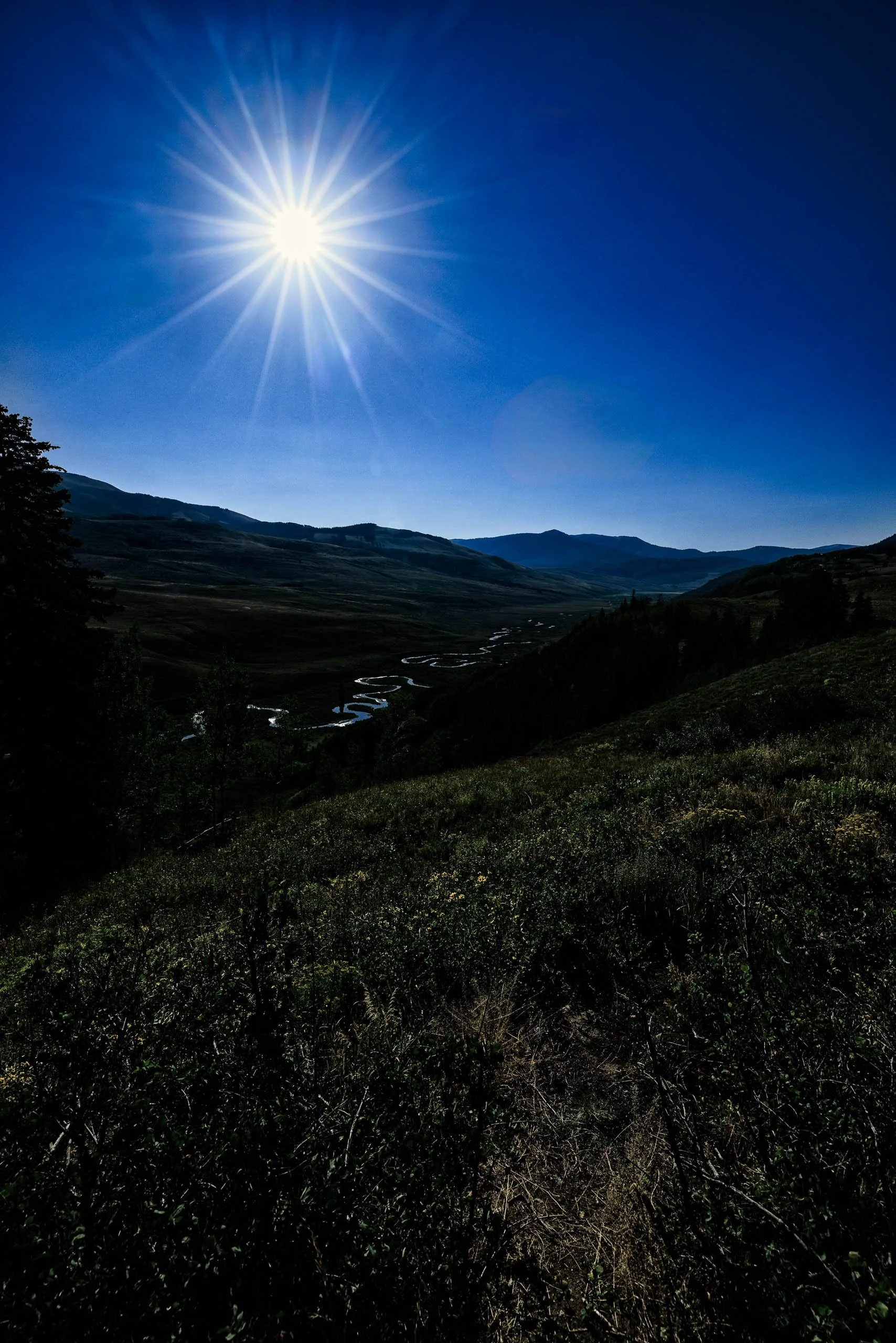
In the high country above Crested Butte, a river writes its own path through the valley floor — a single bright thread against a landscape reduced to near-total shadow. Overhead, the sun bursts into a sharp, radiant star against a deep sky, the only other point of light in the frame. This is a study in contrast and scale: darkness and dazzle, stillness and motion, holding the eye on a long, unhurried journey from the sky to the water below. Available in Color, with its rich violet-blue atmosphere, or Monochrome, where the composition's pure tonal architecture takes center stage.
Design & Styling
Its bold graphic contrast and dramatic scale make this piece well suited to contemporary residences, executive offices, and gallery-style hospitality spaces looking for a statement anchor. The strong silhouette and simplified composition also read powerfully at large scale from a distance, making it an effective focal piece for great rooms and lobbies. The Monochrome edition pairs especially well with minimalist and black-and-white photography collections.
Curated Pairings
For Colorado mountain continuity: pair with Before Guanella Pass to extend the high-country Colorado narrative.
For dramatic light and contrast: complement this piece withStorm Gate to build a dialogue between two of the collection's boldest light studies.
For water/reflection continuity: pair with Emerald Lake at Dawn, Crested Butte to connect two Crested Butte pieces with contrasting moods — quiet stillness and dramatic scale.
Fine Art Presentation
Available as a signed fine art print in Color or Monochrome. Both versions are offered in metal, acrylic, canvas, and archival paper. To preserve the full tonal range — from the deep, near-black foreground to the sunstar's fine rays — ChromaLuxe® Metal (gloss, semi-gloss, or matte) is highly recommended for either version.
Note: Custom and oversized photographic prints are available. Please contact the studio directly to discuss custom framing, matting, or specialized museum glass options.
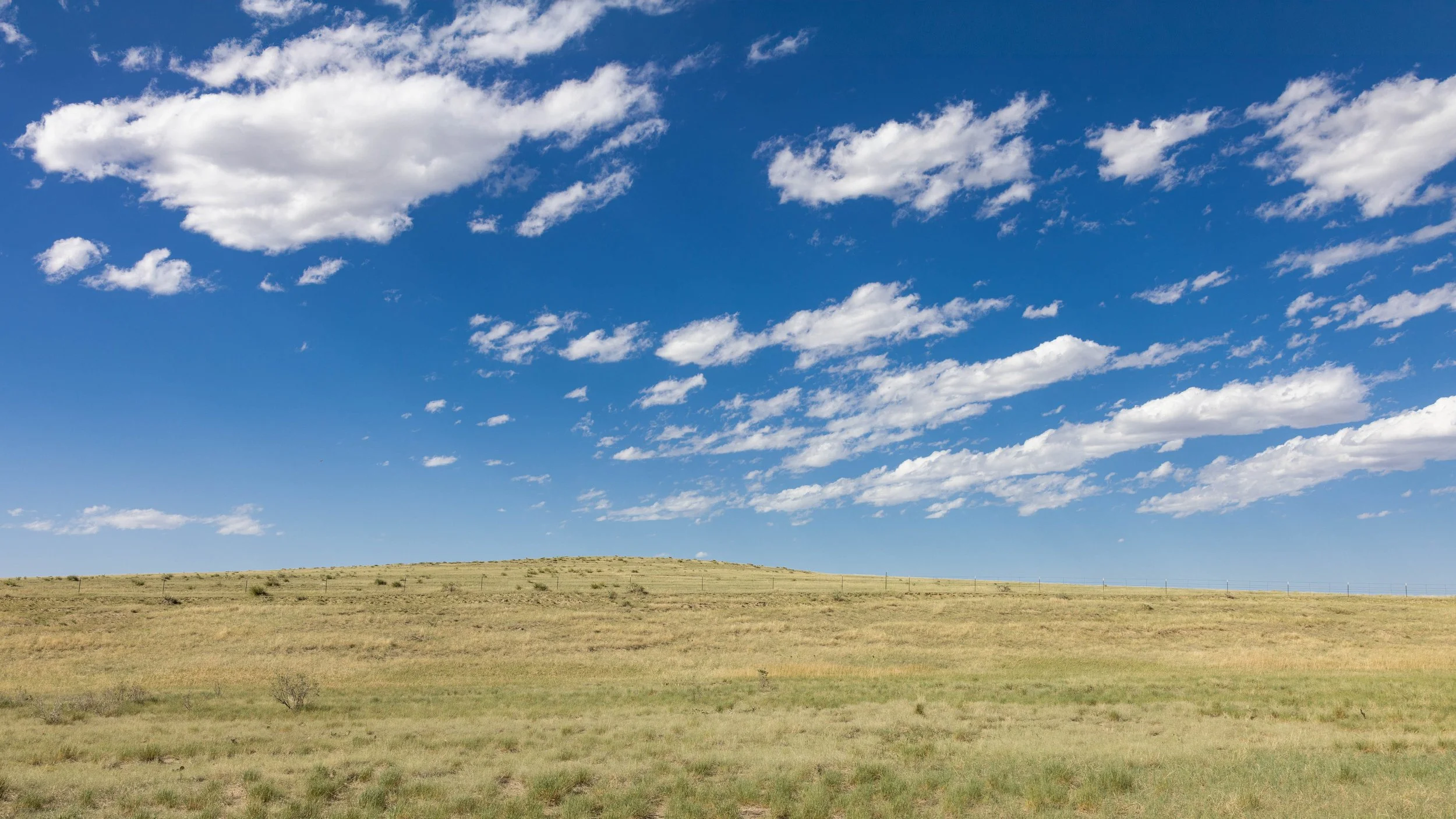
Where the Sky Wanders is a meditation on openness, movement, and the vast sense of possibility found within the American High Plains. Photographed beneath a brilliant summer sky, the image captures a gently rolling prairie stretching toward a distant horizon while scattered clouds drift overhead in rhythmic formations. The simplicity of the landscape allows the atmosphere itself to become the subject, transforming an ordinary scene into a study of space, light, and quiet observation.
The composition is built upon balance and restraint. The low horizon emphasizes the immense scale of the sky, while the subtle rise of the prairie provides just enough structure to anchor the scene. Above, the clouds move across the frame like brushstrokes, creating a visual rhythm that guides the eye from one side of the image to the other. The relationship between earth and sky becomes less about geography and more about the experience of standing within an expansive landscape where distance seems limitless.
Drawing inspiration from the observational traditions of photographers such as Wim Wenders and the atmospheric color studies of Ernst Haas, the image embraces subtlety rather than spectacle. There are no dramatic mountains, storms, or iconic landmarks competing for attention. Instead, the photograph celebrates the quiet beauty of open country and the contemplative moments that emerge when the landscape is allowed to speak for itself.
The result is an image that evokes freedom, stillness, and reflection—an invitation to pause and experience the enduring character of the American West.
Design & Styling
With its expansive sky, calming color palette, and understated sense of scale, Where the Sky Wanders works beautifully in living rooms, studies, offices, hospitality spaces, and healthcare environments. The photograph pairs particularly well with contemporary, transitional, western, and minimalist interiors where openness and visual calm are desired.
Curated Pairings
Pairs beautifully with:
Fine Art Presentation
Available as a museum-quality archival paper print, framed archival paper print, canvas, framed canvas, ChromaLuxe® Metal (gloss, semi-gloss, or matte) print, or acrylic print.
For the strongest presentation, ChromaLuxe® Metal emphasizes the luminous blues of the sky while preserving the subtle textures of the prairie. Larger panoramic sizes enhance the photograph's sense of scale and openness.
Note: Custom and oversized photographic prints are available. Please contact the studio directly to discuss custom framing, matting, or specialized museum glass options.

In the high country above Crested Butte, a river writes its own path through the valley floor — a single bright thread against a landscape reduced to near-total shadow. Overhead, the sun bursts into a sharp, radiant star against a deep sky, the only other point of light in the frame. This is a study in contrast and scale: darkness and dazzle, stillness and motion, holding the eye on a long, unhurried journey from the sky to the water below. Available in Color, with its rich violet-blue atmosphere, or Monochrome, where the composition's pure tonal architecture takes center stage.
Design & Styling
Its bold graphic contrast and dramatic scale make this piece well suited to contemporary residences, executive offices, and gallery-style hospitality spaces looking for a statement anchor. The strong silhouette and simplified composition also read powerfully at large scale from a distance, making it an effective focal piece for great rooms and lobbies. The Monochrome edition pairs especially well with minimalist and black-and-white photography collections.
Curated Pairings
For Colorado mountain continuity: pair with Before Guanella Pass to extend the high-country Colorado narrative.
For dramatic light and contrast: complement this piece withStorm Gate to build a dialogue between two of the collection's boldest light studies.
For water/reflection continuity: pair with Emerald Lake at Dawn, Crested Butte to connect two Crested Butte pieces with contrasting moods — quiet stillness and dramatic scale.
Fine Art Presentation
Available as a signed fine art print in Color or Monochrome. Both versions are offered in metal, acrylic, canvas, and archival paper. To preserve the full tonal range — from the deep, near-black foreground to the sunstar's fine rays — ChromaLuxe® Metal (gloss, semi-gloss, or matte) is highly recommended for either version.
Note: Custom and oversized photographic prints are available. Please contact the studio directly to discuss custom framing, matting, or specialized museum glass options.
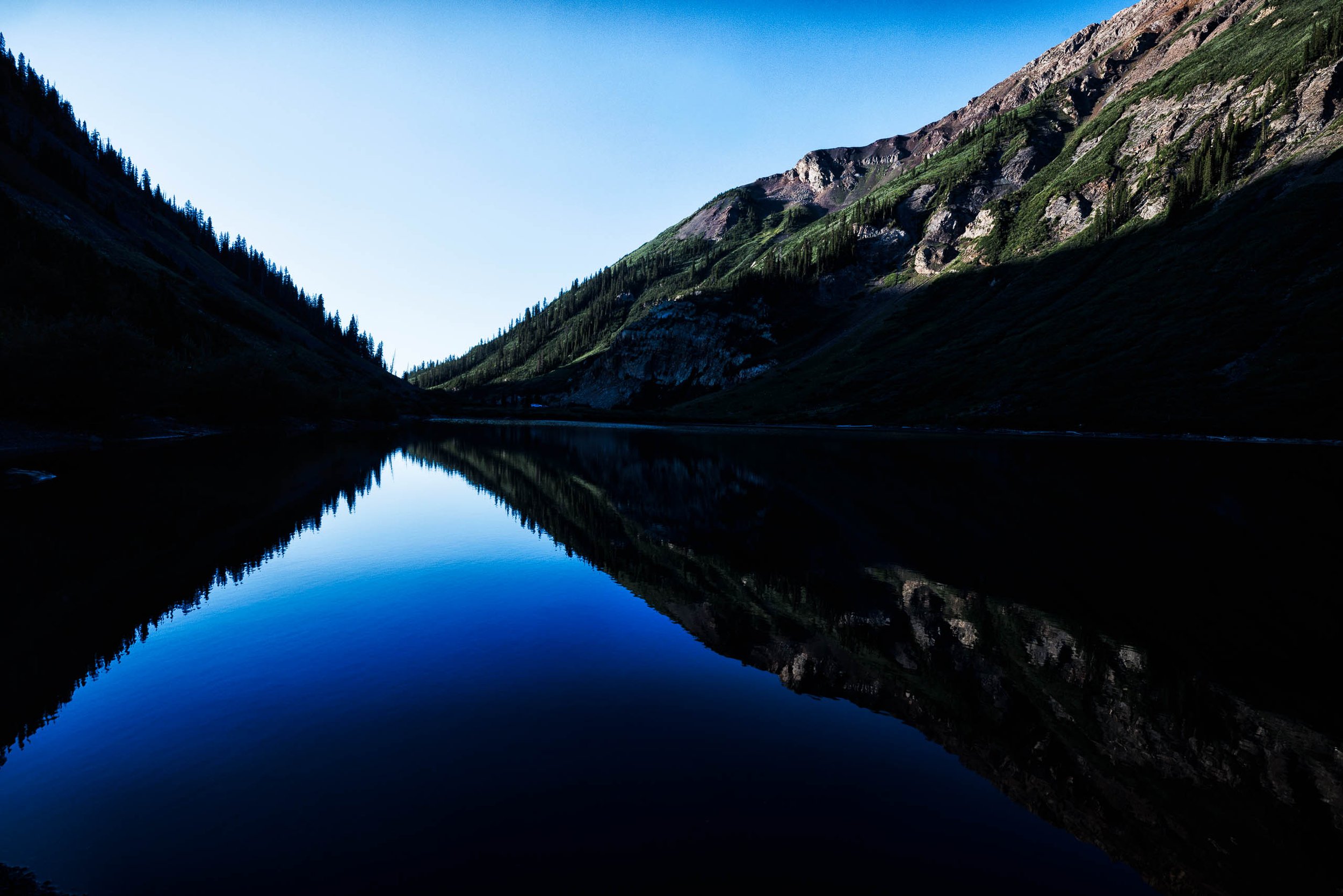
In the hour before full light, Emerald Lake near Crested Butte holds its valley in perfect stillness. The surrounding slopes fall into deep shadow, their forms softened to near-silhouette, while a single sunlit ridge catches the first warmth of morning — its rock and grass rendered in gold against a cool, lavender-blue sky. The water below returns every line of the ridge without distortion, doubling the mountain and deepening the sense of quiet enclosure. This is a study in patience: the kind of light that exists for only a few minutes before the valley wakes.
Alpine lakes are calmest in the first light, before the wind rises, which is why dawn gives the surface its mirror quality. The photograph catches the valley at that hour, with the ridges still dark and one edge of gold.
Design & Styling
The pre-dawn stillness, deep shadow, and single gold ridge of Emerald Lake at Dawn, Crested Butte bring a calm, cool serenity to wellness spaces, spas, mountain-view homes, and offices. It suits pale and neutral walls.
Curated Pairings
To create a cohesive display around Colorado mountain stillness, consider these companion pieces:
For Colorado mountain continuity: Pair with Before Guanella Pass, extending the theme of high-country atmosphere and layered morning light.
For mirrored stillness: Complement this piece with Still Water, Stone Standing, continuing the study of mirrored stillness.
For enclosed, silent water: Pair with Where Stone Meets Water, a dialogue of enclosed, silent water scenes.
Fine Art Presentation
Available as a signed fine art print on ChromaLuxe® Metal (gloss, semi-gloss, or matte), Glossy Anti-Glare Acrylic (TruLife), canvas, wood, and archival paper (framed or unframed). Acrylic is the recommended presentation: its depth carries the deep shadow detail and the glow of the first light on the ridge. Framed archival paper is the alternative for a quieter, more traditional read.
Note: Custom and oversized photographic prints are available. Please contact the studio directly to discuss custom framing, matting, or specialized museum glass options.
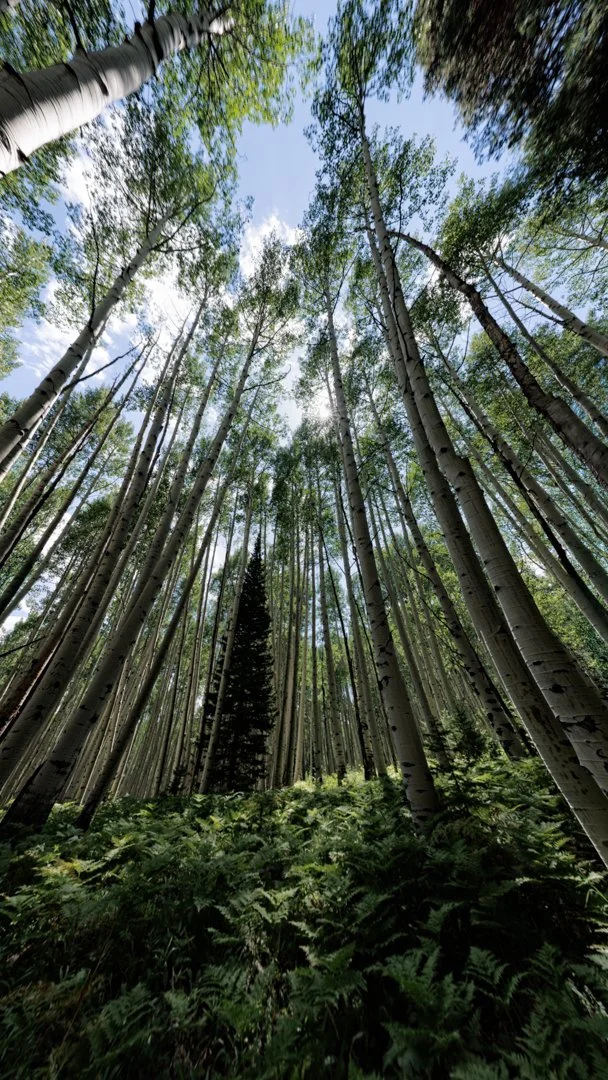
Standing beneath a stand of towering Colorado aspens, the eye is pulled straight upward — white bark rising in parallel lines toward a canopy of green, framed on one side by the dense shadow of an evergreen and, breaking through its branches, a single burst of sunlight. Below, a carpet of ferns catches the same light in dappled patches, grounding the composition before it lifts skyward. An immersive, textural study of scale and stillness within the forest itself.
The frame works because of what it leaves out. There is no horizon and no distant view, only trunks, canopy, and the one point where the light gets in. White aspen bark reflects more than it absorbs, so the trunks glow against the dark evergreen on the left, and the sunburst at the top is the brightest thing in the picture. The ferns at the bottom repeat that light in small dappled patches, so the eye is handed from the floor to the sky by the same quality of light at two different scales.
It is a picture about being small in a tall place. The parallel trunks give the forest a vertical, architectural order, which is where the title comes from, and the viewer stands where a visitor would stand in a nave, looking up. The quiet observation of Josef Sudek and the patient reading of light in Ansel Adams both sit behind it, in a forest that needs no drama beyond a few minutes of sun.
Design & Styling
The rich greens and natural texture make this piece a strong fit for wellness spaces, spas, and biophilic-design interiors, as well as mountain-view residences and lodges looking to bring the forest indoors. Its vertical composition suits tall wall spaces, stairwells, and entryways particularly well.
Curated Pairings
For Colorado high-country continuity: pair with Before Guanella Pass to connect forest and mountain within the same regional story.
For botanical texture and detail: complement this piece with a selection from Botanical Studies to build a dialogue around natural pattern and close observation.
For dramatic light continuity: pair with Silver Thread, Silent Valley to connect two pieces built around a sunburst breaking through darkness.
Fine Art Presentation
Available as a signed fine art print in ChromaLuxe® Metal (gloss, semi-gloss, or matte), acrylic, canvas, and archival paper. Metal or Acrylic is recommended to bring out the fine detail in the aspen bark and fern texture, while Canvas offers a softer, more organic interpretation suited to the subject.
Note: Custom and oversized photographic prints are available. Please contact the studio directly to discuss custom framing, matting, or specialized museum glass options.
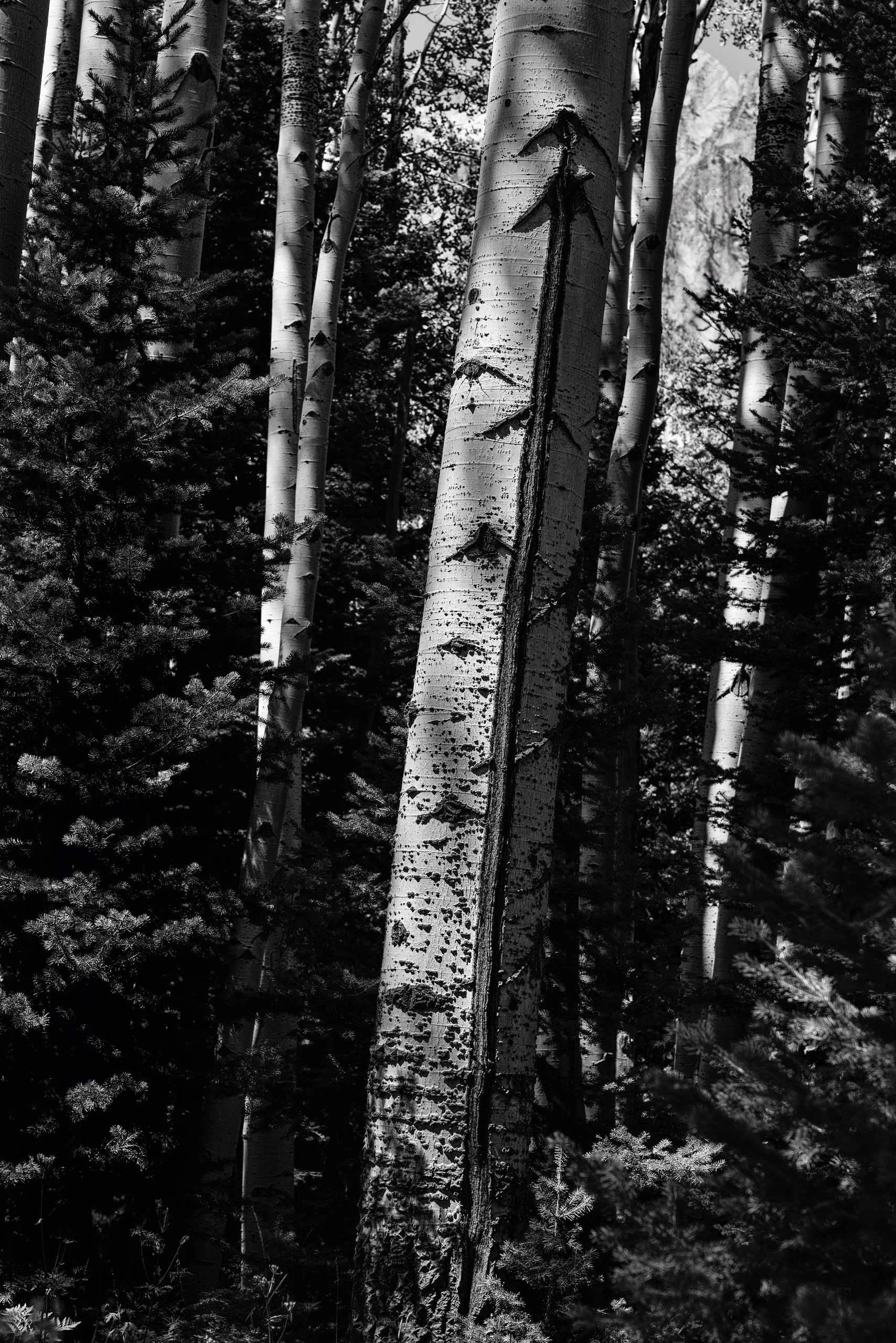
What the Bark Remembers is a study in contrast, history, and quiet endurance. A single aspen trunk stands lit against a dense wall of dark pine, its bark marked by old scars, claw marks and rub lines left by decades of wildlife passing through. Beyond it, barely visible through the trees, a granite peak catches the light. Drawing from the tonal discipline of Ansel Adams and the quiet formalism of Wynn Bullock, the photograph treats a single marked tree as a record of everything that has moved through this patch of forest without ever being seen.
The composition is built on restraint: nearly the entire frame sits in deep shadow, and that darkness is not absence but atmosphere, the felt presence of a forest at rest. Against it, the trunk's texture reads with unusual clarity, every scar and knot rendered in fine tonal detail, while the distant peak offers a quiet second point of interest for anyone willing to look twice.
The result is a black and white photograph built for a slow read: bold enough to hold a wall from across a room, detailed enough to reward standing close.
Design & Styling
The single lit aspen trunk against dark pine in What the Bark Remembers makes a bold, graphic statement for offices, lodges, mountain homes, and hospitality spaces. Its stark contrast suits plain, pale walls.
Curated Pairings
To create a cohesive display around aspens, scars, and memory, consider these companion pieces:
For a companion in the same forest: Pair with The Quiet Cathedral, another vertical study of Colorado aspens.
For tonal contrast: Complement this piece with Reaching Sky, the aspens in color, looking up through the canopy to the sun.
For the same theme of remembering: Pair with What the Door Remembers, another surface that keeps the marks of time, in black and white.
Fine Art Presentation
Available as a signed fine art print on ChromaLuxe® Metal (gloss, semi-gloss, or matte), Glossy Anti-Glare Acrylic (TruLife), canvas, wood, and archival paper (framed or unframed). ChromaLuxe® Metal is the recommended presentation: it holds the deep blacks and the fine texture of the bark. Framed archival paper is the alternative for a classic black-and-white reading.
Note: Custom and oversized photographic prints are available. Please contact the studio directly to discuss custom framing, matting, or specialized museum glass options.
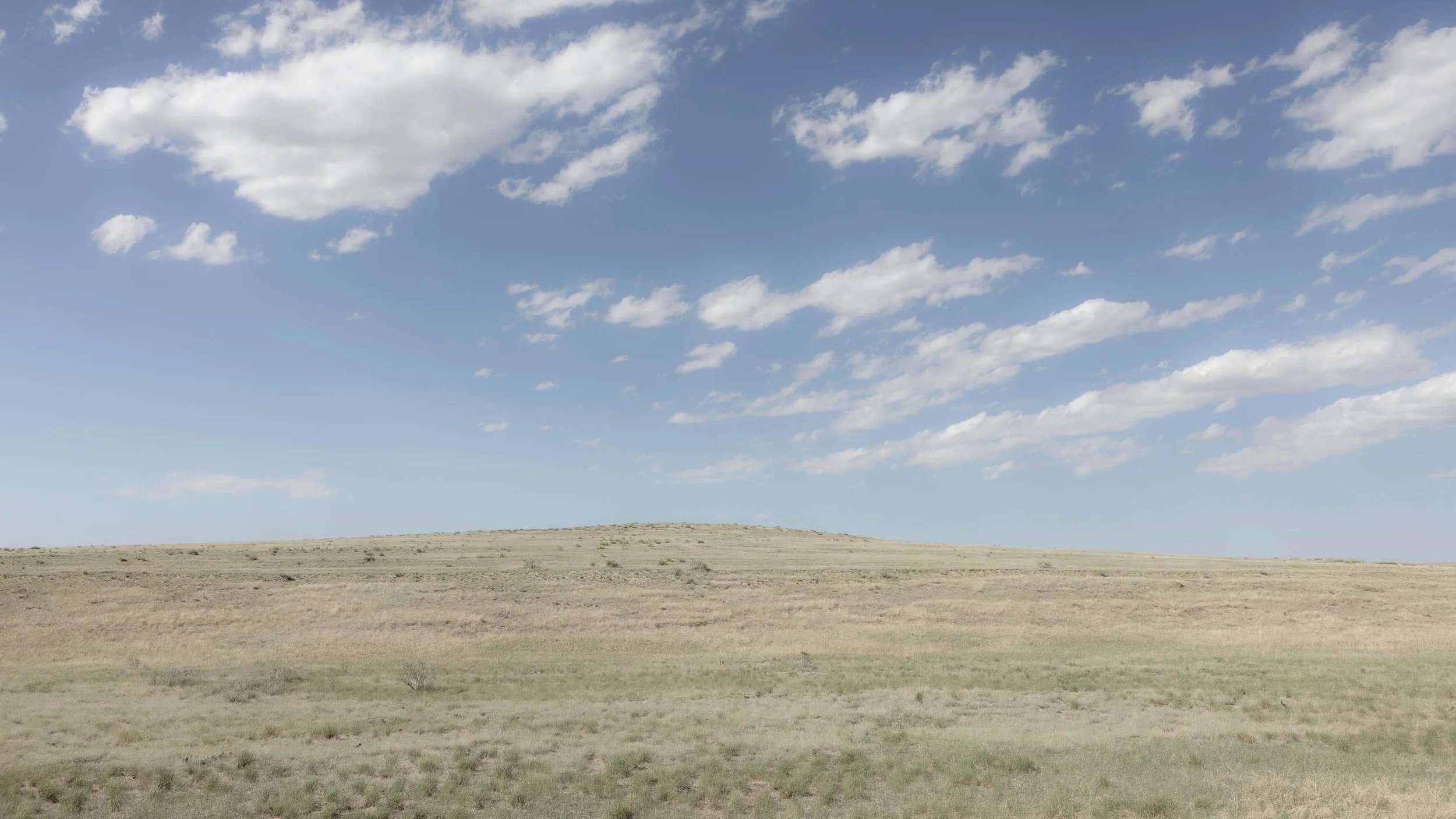
The Shape of Distance is a meditation on scale, perception, and the quiet emotional power of open space. Photographed on the high plains of eastern Colorado, the image reduces the landscape to its most essential elements: a low rise along the horizon, an expansive field of grass, and a procession of clouds moving across an immense sky. Stripped of dramatic weather, recognizable landmarks, or conventional focal points, the photograph invites viewers to slow down and consider the subtle ways distance reveals itself across the landscape.
The composition is built upon a quiet visual dialogue between permanence and transience. A solitary hill rises gently from the prairie, echoing the form of a large cloud suspended above it. One shape is geological and enduring; the other temporary and ever-changing. Between them lies a broad expanse of open space that becomes the true subject of the photograph. Rather than documenting a specific location, the image explores the experience of looking across great distances and the sense of contemplation that such landscapes can inspire.
The restrained palette and minimal structure transform the scene into something more conceptual than descriptive. The grasslands become a field of subtle tones, the horizon a delicate boundary, and the clouds markers of movement within an otherwise still world. The resulting image exists somewhere between landscape and abstraction, encouraging reflection on how we experience scale, isolation, memory, and place.
Drawing inspiration from the contemplative minimalism of Hiroshi Sugimoto, the spiritual landscapes of Minor White, and the quiet observations of the American West, The Shape of Distance explores the relationship between land, sky, and perception. The photograph asks not simply what we see when we look across a landscape, but how distance itself shapes the way we understand the world around us.
Available in archival paper, framed archival paper, metal, acrylic, wood, canvas, and framed canvas. Most images are available up to 40×60 inches, with select wood prints available up to 48×32 inches.
Design & Styling
With its restrained palette, minimalist composition, and contemplative atmosphere, The Shape of Distance works particularly well in contemporary residences, executive offices, healthcare environments, hospitality spaces, libraries, and interiors emphasizing calm, openness, and visual restraint.
The photograph's simplicity allows it to create a sense of spaciousness without dominating a room, making it especially effective in settings designed to encourage reflection, focus, and quiet observation.
Curated Pairings
For themes of scale and permanence: Pair with Enduring Silence, creating a dialogue between geological presence and open space.
For a meditation on weather and atmosphere: Complement this piece with Storm Gate, extending themes of horizon, sky, and emotional landscape.
For contemplative western landscapes: Pair with Before the Desert Opens, exploring distance, anticipation, and the visual language of the American West.
Fine Art Presentation
This image is exceptionally well suited to framed archival paper and museum-quality cotton rag papers, where the subtle tonal transitions and minimalist composition can be fully appreciated. The quiet nature of the photograph benefits from non-reflective presentation methods that reinforce its contemplative character. ChromaLuxe® Metal is also available, in matte or semi-gloss to stay closer to that quiet character (gloss, semi-gloss, or matte are all offered).
Larger formats, particularly 30×45 and 40×60 inches, allow the relationship between horizon, cloud, and open space to unfold naturally, creating an immersive viewing experience that emphasizes the photograph's exploration of scale, distance, and perception.
Note: Custom and oversized photographic prints are available. Please contact the studio directly to discuss custom framing, matting, or specialized museum glass options.
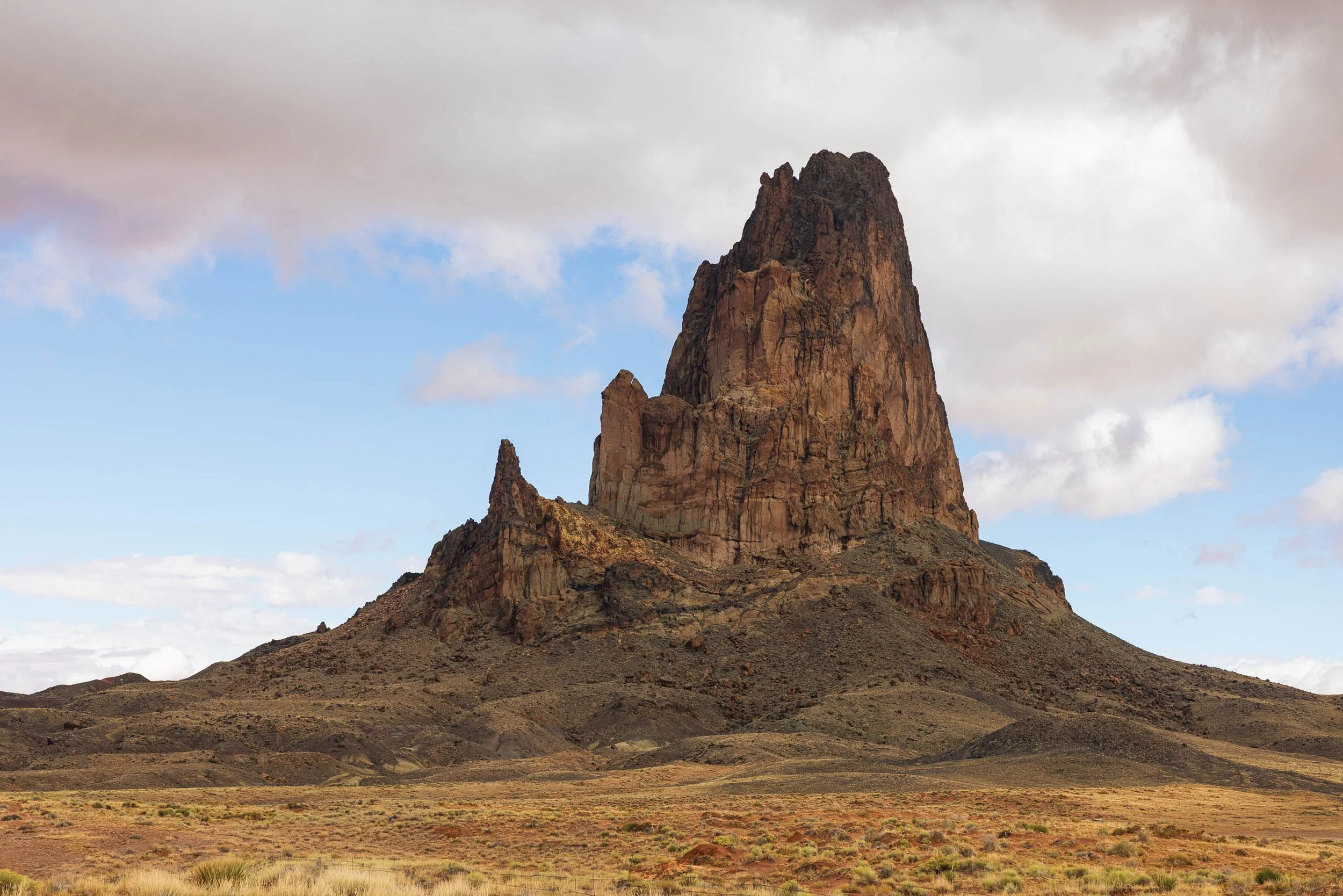
Standing Grace is a study of presence, resilience, and the quiet grandeur of the American Southwest. Photographed near Kayenta on the Navajo Nation, the image portrays the formation known as Church Rock rising above the surrounding desert landscape beneath the lingering clouds of a passing storm. Its cathedral-like silhouette dominates the horizon, creating a natural monument that appears both timeless and solitary within the vast expanse of the high desert.
Rather than emphasizing dramatic weather or vivid sunset color, the photograph focuses on the relationship between stone, light, and atmosphere. Soft illumination reveals the intricate textures and weathered surfaces of the formation while a break in the clouds introduces a subtle opening of blue sky. The resulting balance between shadow and light creates a contemplative mood, allowing the rock to command attention through presence rather than spectacle.
The composition explores a recurring theme throughout the American West: the contrast between permanence and change. Clouds gather and disperse, seasons come and go, and weather continually reshapes the landscape, yet the stone endures. The formation stands as a visual reminder of geological time, offering a sense of stability within an environment defined by movement and transformation.
Drawing inspiration from the landscape traditions of Ansel Adams and the observational approach of Edward Weston, Standing Grace invites viewers to slow down and consider the quiet beauty that emerges when land, light, and weather align in perfect balance. The photograph celebrates not only the physical character of the Southwest, but also the sense of stillness and reflection that such places inspire.
Available in archival paper, framed archival paper, metal, acrylic, wood, canvas, and framed canvas. Most images are available up to 40×60 inches, with select wood prints available up to 48×32 inches.
Design & Styling
With its warm earth tones, architectural form, and contemplative atmosphere, Standing Grace works particularly well in mountain homes, contemporary residences, healthcare environments, executive offices, hospitality spaces, and interiors designed around natural materials. The image introduces a sense of permanence and calm while maintaining a strong connection to the landscape of the American West.
Curated Pairings
For a cohesive gallery wall, consider these companion pieces:
For a study of geological form: Pair with Where the Land Stands to explore two distinctive volcanic formations shaped by time, weather, and the forces that created the Southwest.
For a dialogue of atmosphere and permanence: Complement this piece with After the Storm Passed, creating a conversation between stone, weather, and the changing moods of the desert landscape.
For a broader Western narrative: Pair with Enduring Silence, linking three iconic formations that embody the scale, mystery, and enduring character of the American Southwest.
Fine Art Presentation
The sculptural qualities of the formation, subtle tonal transitions, and expansive atmosphere are particularly well suited to larger presentations. ChromaLuxe® Metal (gloss, semi-gloss, or matte)s reveal exceptional detail and depth while preserving the image's natural appearance. Acrylic presentations emphasize dimensionality and tonal richness, while wood prints provide an organic presentation that complements the earthy palette and geological subject matter.
Recommended presentations:
24×36 Metal Print
30×45 Metal Print
40×60 Metal Print
48×32 Wood Print
Note: Custom and oversized photographic prints are available. Please contact the studio directly to discuss custom framing, matting, or specialized museum glass options.
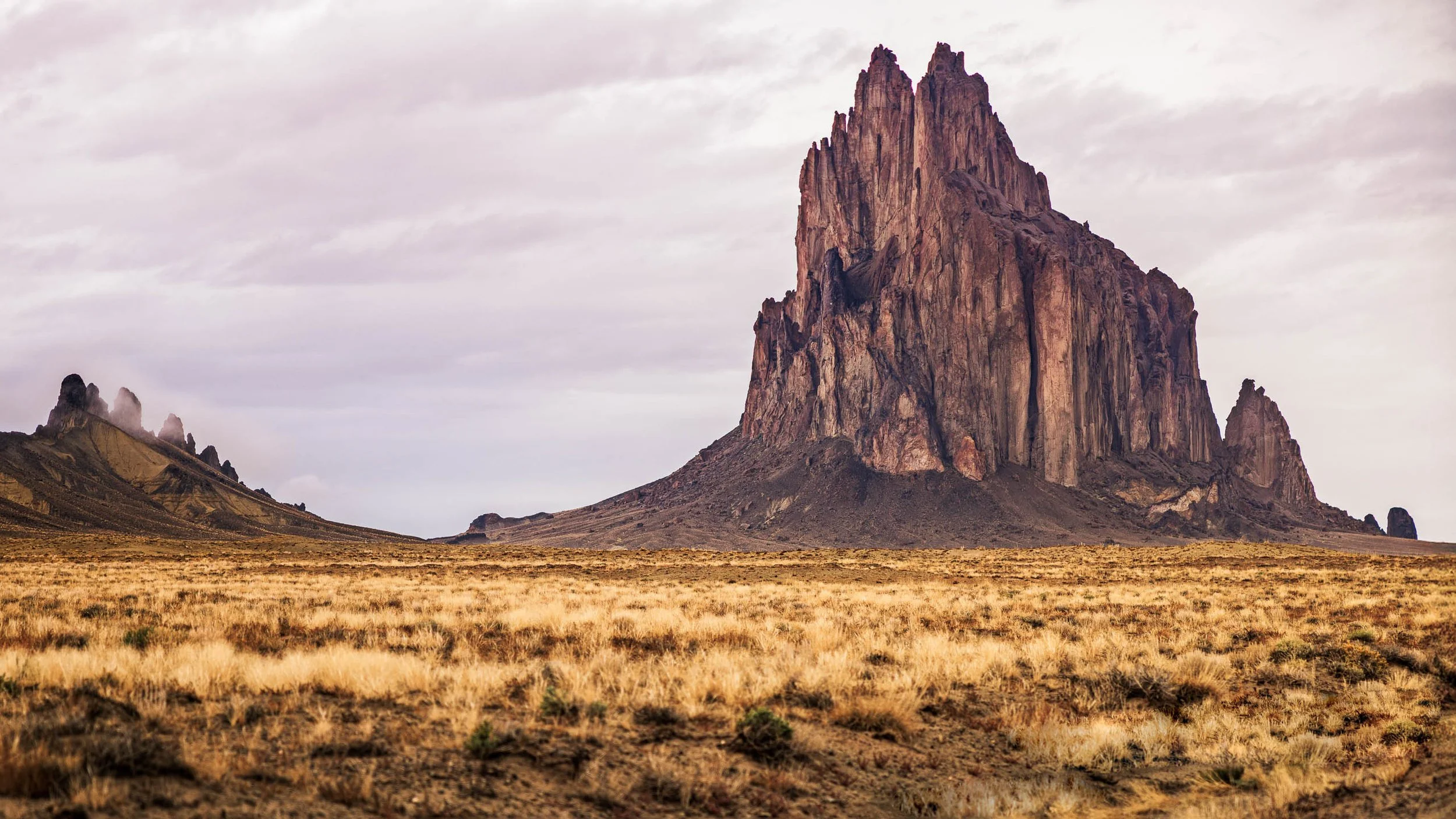
After the Storm Passed is a meditation on weather, endurance, and the quiet moments that emerge once nature's drama has moved on. Photographed near Shiprock in northwestern New Mexico, the image captures the iconic volcanic formation beneath a sky still marked by the remnants of a departing storm. Rather than emphasizing the violence of the weather itself, the photograph focuses on the calm that follows—a fleeting interval when clouds begin to break, light returns to the landscape, and the land settles into stillness.
Rising abruptly from the high desert plain, Shiprock stands as both geological monument and cultural landmark. Sacred to the Navajo people and visible for miles across the surrounding landscape, the formation has become one of the most recognizable features of the American Southwest. In this image, however, it is not presented as an isolated icon but as part of a larger relationship between stone, sky, and weather. Soft light reveals the textures of the volcanic rock while muted clouds drift overhead, creating an atmosphere that feels contemplative rather than dramatic.
The golden grasses of the foreground provide a subtle counterpoint to the cool tones of the sky, introducing warmth and balance to the composition. The contrast between the enduring permanence of the rock and the temporary nature of the passing storm becomes the central theme of the photograph. What remains is a study of resilience and time—an image that acknowledges both the power of change and the stability of the land that endures beyond it.
Drawing inspiration from the atmospheric traditions of Ernst Haas and the landscape sensibilities of Ansel Adams, After the Storm Passed explores the emotional character of place as much as its physical form. The photograph invites viewers to pause within a moment of transition and to consider the quiet beauty that often follows periods of turbulence.
Available in archival paper, framed archival paper, metal, acrylic, wood, canvas, and framed canvas. Most images are available up to 40×60 inches, with select wood prints available up to 48×32 inches.
Design & Styling
With its muted palette, expansive sky, and sense of calm, After the Storm Passed works particularly well in mountain homes, healthcare environments, hospitality spaces, executive offices, and contemporary residences. The image introduces a feeling of stability and reflection while maintaining a strong connection to the natural world. Its balance of warm earth tones and cool atmospheric color allows it to complement a wide range of interior styles.
Curated Pairings
For a cohesive gallery wall, consider these companion pieces:
For a study of weather and atmosphere: Pair with Shelter Beneath a Restless Sky, exploring different expressions of weather across the American West.
For a dialogue of permanence and change: Complement this piece with Enduring Silence, creating a conversation between two iconic Southwestern formations shaped by time, weather, and geology.
For a broader Western landscape narrative: Pair with The Long Way West, connecting themes of journey, place, and the vast open spaces that define the American Southwest.
Fine Art Presentation
The subtle tonal transitions, expansive sky, and remarkable texture within the volcanic formation are particularly well suited to larger presentations. ChromaLuxe® Metal (gloss, semi-gloss, or matte)s reveal exceptional detail and depth while preserving the image's natural atmosphere. Acrylic presentations emphasize dimensionality and tonal richness, while wood prints provide an organic presentation that complements the landscape's earth tones and geological character.
Recommended presentations:
24×36 Metal Print
30×45 Metal Print
40×60 Metal Print
48×32 Wood Print
Note: Custom and oversized photographic prints are available. Please contact the studio directly to discuss custom framing, matting, or specialized museum glass options.
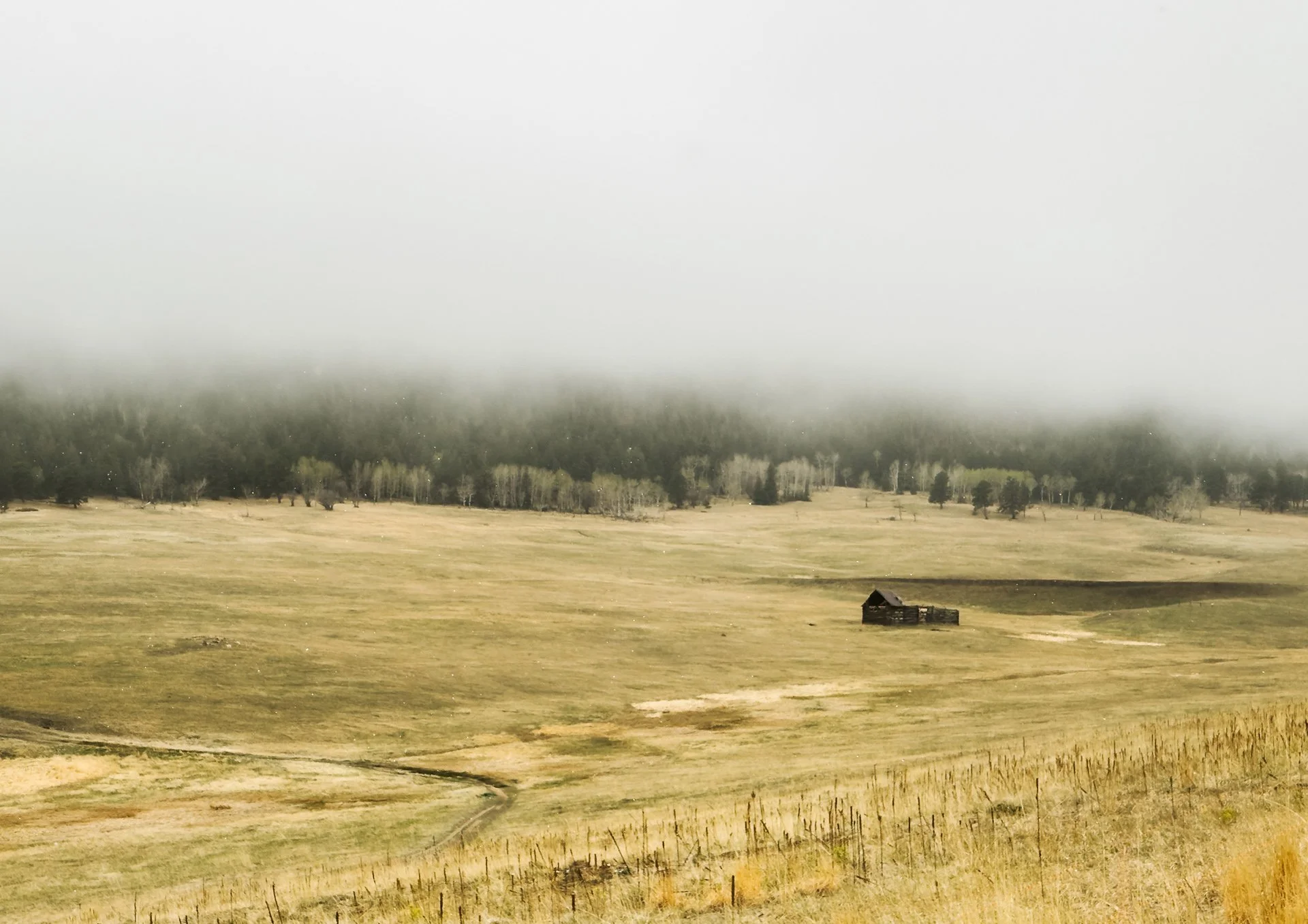
A Place Where Weather Waits is a meditation on patience, solitude, and the quiet endurance of the rural landscape. Photographed near Evergreen, Colorado during low clouds and falling snow, the image presents a lone barn standing against an expansive field as winter weather settles across the foothills. The scene is less about the structure itself than the atmosphere surrounding it—the suspended moment when land, sky, and weather seem to pause together.
Influenced by the contemplative landscapes of Andrew Wyeth and the atmospheric sensibilities of Ernst Haas, the photograph embraces subtle tones, muted color, and the emotional weight of open space. The approaching weather softens the horizon and reduces the landscape to its essential forms, transforming an ordinary agricultural scene into a study of resilience, isolation, and quiet beauty.
Design & Styling
With its restrained palette and sense of calm, A Place Where Weather Waits works particularly well in healthcare environments, executive offices, hospitality settings, mountain homes, and contemporary residential interiors. The image brings a feeling of stillness and reflection while maintaining a strong connection to place and season. Its neutral tones integrate naturally with wood, stone, and minimalist architectural spaces.
Curated Pairings
To create a cohesive gallery wall, consider these two landscape companions that share a similar atmosphere of weather and contemplation:
For a complementary focal point: Pair with Before the Road Disappears to continue the theme of winter weather, distance, and the uncertainty of what lies beyond the horizon.
For tonal harmony: Complement the snowy quiet of this piece with Where Winter Waited, which echoes the same sense of seasonal stillness and contemplative space found throughout the Colorado landscape.
Fine Art Presentation
Available as a signed fine art print in ChromaLuxe® Metal (gloss, semi-gloss, or matte), framed paper, framed canvas, and acrylic presentation formats. For this image, ChromaLuxe® Metal is particularly recommended, preserving the subtle tonal transitions within the clouds and snow. A framed fine art paper presentation also complements the photograph's Wyeth-inspired mood and understated tonal range.
Note: Custom and oversized photographic prints are available. Please contact the studio directly to discuss custom framing, matting, or specialized museum glass options.
Shadows & Silence
Shadows & Silence
Filters
No results found
No results match your search. Try removing a few filters.
Have Questions?
To accommodate grand residential or corporate spaces, larger scale photographic prints and custom dimensions are available upon request.
For collectors seeking ready-to-hang presentations, we welcome the opportunity to collaborate on custom framing, museum-quality matting, and specialized glass selections tailored to your unique aesthetic.
Between Seasons finds a single stand of golden aspen breaking the deep green monotony of the pine forest ringing Bear Lake in Rocky Mountain National Park, the whole scene doubled in the lake's still, clear water beneath an overcast autumn sky.
A large rock breaks the water's surface in the foreground, its texture and the submerged stones beneath it visible through the lake's remarkable clarity — a quiet anchor before the eye travels across calm water to the one patch of turning color on the far shore, then up to the granite face of Hallett Peak rising through the mist. The reflection doubles nearly the entire scene, mountain and forest both mirrored in the glass-still surface below.
Bear Lake is among the most photographed vantage points in Rocky Mountain National Park, but the flat, overcast light and the deliberate isolation of a single aspen stand — rather than a broad sweep of peak fall color — pull this away from the postcard version of the view, continuing the same interest in a quiet, singular detail found in pieces like What the Bark Remembers.
Design & Styling
With its muted, atmospheric palette and unmistakable Rocky Mountain setting, Between Seasons is well suited to mountain lodge and cabin interiors, ski resort lobbies, and healthcare or senior-living settings where a calm, non-jarring nature subject is preferred.
Curated Pairings
For shared place: Pair with Held at Rest, photographed in the same park — an elk herd rather than a lake, but the same quiet, muted Rocky Mountain register.
For shared formal device: Complement with What the Bark Remembers, which uses the identical visual idea of a single lit aspen note set against a dense wall of dark pine.
For shared formal treatment: Pair with The Silent Assembly, which shares the same device of a still, mirror-calm water surface doubling the scene above it against a darkened forest backdrop.
Fine Art Presentation
Available as a signed, numbered limited edition print (edition of 15) in Gallery Metal, ChromaLuxe® Metal, TruLife Acrylic, archival paper, canvas, and wood presentation formats. The clear, reflective water suits TruLife (Low-Glare) Acrylic particularly well, giving the reflection real depth and luminosity; canvas is a strong alternative for a softer, more painterly rendering of the misty, overcast palette.
Note: Custom and oversized photographic prints are available. Please contact the studio directly to discuss custom framing, matting, or specialized museum glass options.